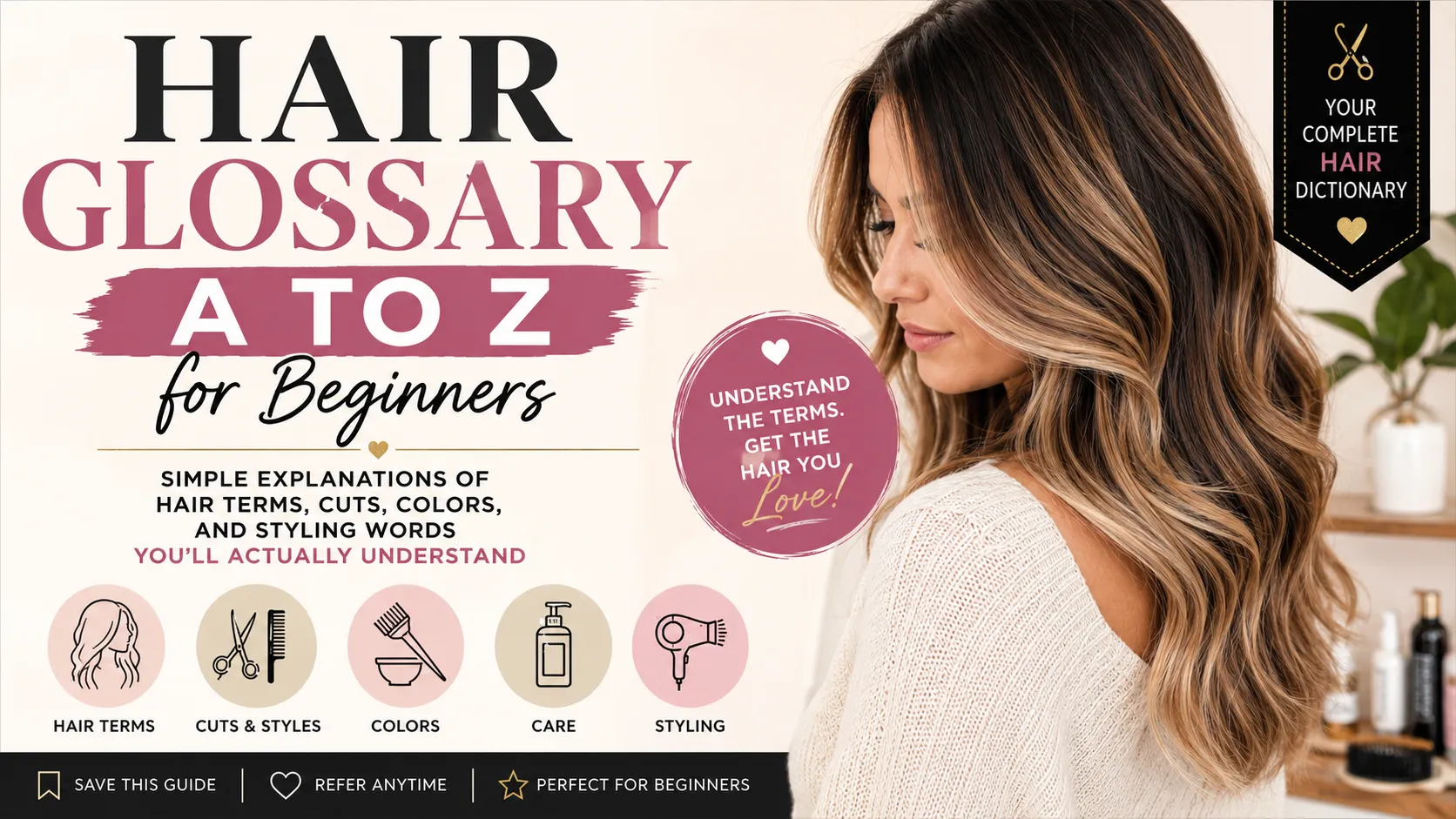
Hair Glossary A to Z for Beginners
Hair terminology can feel like a different language, especially when you’re sitting in a salon chair trying to explain what you want.
You hear words like balayage, porosity, or root melt… and just nod.
This guide fixes that.
Not with textbook definitions but with real explanations you’ll actually understand and use.
Save this now. It’s the kind of guide you come back to again and again.
Before You Read: How to Actually Use This
Instead of memorizing everything:
- Skim once
- Save it
- Come back when you see a confusing term
That’s how it sticks.
How to Talk to Your Stylist (Beginner-Friendly Guide)
Knowing the terms is helpful, but using them correctly matters more.
Here’s how to make sure you actually get the result you want:
- Bring 2–3 reference photos (and one you don’t like)
- Be clear about your goal: volume, length, low maintenance, or color change
- Mention your natural texture and routine
- Ask about maintenance before committing
This avoids confusion and helps your stylist adjust the look to suit you.
A
All Over Color
Color applied evenly from roots to ends across the entire head. It’s used to fully change your shade, cover grays, or make faded color look even and fresh again.
Ashy
A cool-toned shade that reduces warm tones like orange or yellow. It gives hair a softer, slightly smoky finish that looks more toned and modern.
Asymmetrical Cut
A haircut where one side is longer than the other or uneven on purpose. It adds shape and makes even simple styles look more styled and eye-catching.
Air-Drying
Letting your hair dry naturally without heat tools like a blow dryer. It helps reduce damage and works best when enhancing your natural texture.
Anti-Frizz
A general term for products that smooth hair and control flyaways. These help protect against humidity and keep hair looking more polished.
Angle (Haircut)
The direction hair is cut instead of straight across. Angles are used to create shape, like shorter in the back and longer in the front.
Read More : 11 Reasons Your Hair Is So Frizzy (And How to Fix It)
B
Babylights
Very fine, delicate highlights that mimic natural sun-kissed hair. They blend softly and are perfect if you want brightness without obvious streaks.
Balayage
A hand-painted coloring technique that creates a soft, blended look. It grows out naturally, so you don’t get harsh root lines like traditional highlights.
Base Color
Your main hair color before adding highlights or lowlights. It’s the foundation that determines how other tones will look on your hair.
Blowout:
A salon-style finish where hair is blow-dried into a smooth, bouncy look. It adds volume, shine, and a polished feel without cutting or coloring.
Blunt Cut
A haircut with straight, even ends and no layering. It makes hair look thicker, sharper, and more structured.
Brassy
Unwanted warm tones like yellow, orange, or gold that appear after lightening. Usually corrected with toner or purple/blue shampoo.
C
Clarifying Shampoo
A deep-cleansing shampoo that removes buildup from oils, products, and minerals. It’s great for a reset but shouldn’t be used too often as it can feel drying.
Co-Wash (Conditioner Wash)
Washing your hair using conditioner instead of shampoo. It’s popular for curly or dry hair because it cleans gently without stripping moisture.
Crown
The top-back area of your head. Stylists often focus on this section when adding volume, layers, or highlights.
Curl Pattern
The natural shape your hair forms, straight, wavy, curly, or coily. Knowing your pattern helps you choose the right styles and products.
Cuticle
The outer layer of each hair strand that protects it. When it lies flat, hair looks smooth and shiny; when raised, hair looks frizzy and dull.
Color Correction
A process used to fix unwanted tones or uneven color. It often requires multiple steps to balance and achieve the desired shade.
D
Density
Refers to how much hair you have on your scalp. High density means thicker-looking hair, while low density means finer-looking overall volume.
Diffuser
A blow dryer attachment that spreads airflow gently. It helps curls and waves dry with less frizz and more definition.
Dimension
Variation in hair color tones that creates depth and richness. It prevents hair from looking flat or one solid shade.
Dry Cut
Cutting hair while it’s dry instead of wet. This allows the stylist to see the true length, shape, and natural movement.
Dusting
A very light trim that removes only split ends. It keeps your length while making the ends look cleaner and healthier.
Deep Conditioning
A more intense form of conditioning that restores moisture and strength. It’s especially helpful for dry, damaged, or chemically treated hair.
E
Elasticity
Refers to how much your hair can stretch and return without breaking. Good elasticity usually means your hair is healthy and strong.
Elevation
The angle at which hair is lifted while being cut. Higher elevation creates more layers, while lower elevation keeps the shape heavier.
Extensions
Added hair used to increase length, thickness, or both. They can be temporary or semi-permanent depending on the method.
Edge Control
A styling product used to smooth and hold baby hairs along the hairline. It helps create a neat, polished finish.
Even Cut
A haircut where all the ends are the same length. It creates a clean, simple shape with no layers.
Ends (Hair Ends)
The bottom part of your hair, which is the oldest and most prone to dryness and split ends. Regular trims help keep them healthy.
F
Face Framing
Shorter layers or lighter pieces placed around the face. They help highlight facial features and add shape to the haircut.
Fade
A haircut that gradually blends from very short hair into longer lengths. It creates a clean, smooth transition.
Feathering
A soft cutting technique that makes the ends look light and airy instead of thick or heavy.
Flat Iron
A heated styling tool used to straighten hair or create soft waves. It should always be used with heat protection.
Foiling
A coloring method where sections of hair are wrapped in foil to lighten or color them separately. It allows for precise placement.
Full Highlights
Highlights applied throughout the entire head. They create a brighter, more noticeable color change.
G
Glaze
A lightweight treatment that adds shine and refreshes hair color slightly. It helps make hair look smoother and more polished.
Gloss
A shine-boosting treatment that also adjusts tone after coloring. It enhances color and gives hair a healthier appearance.
Graduated Cut
A layered haircut where hair is stacked to create volume in certain areas. It’s often used in bobs for added shape.
Guide
The first section cut in a haircut that acts as a reference for the rest. It helps maintain consistency in length and shape.
Grow-Out
The process of your natural hair growing in after coloring or cutting. A good style blends well as it grows out.
Gray Coverage
Refers to how well a hair color hides or blends gray hairs. Different formulas offer different levels of coverage.
H
Hair Texture
Refers to the thickness of individual strands, fine, medium, or coarse. It affects how your hair feels, styles, and reacts to products.
Hair Type
Describes your overall pattern, such as straight, wavy, curly, or coily. It helps determine which styles and routines work best for you.
Highlights
Sections of hair that are lightened to add brightness and contrast. They create dimension and make hair look more dynamic.
Hold
The strength of a styling product in keeping your hair in place. It can range from flexible (soft) to strong (firm).
Heat Protectant
A product applied before using hot tools to reduce damage. It creates a barrier that helps prevent dryness and breakage.
Hydration (Hair Moisture)
Refers to how well your hair retains moisture. Proper hydration keeps hair smooth, soft, and less prone to frizz.
I
Inverted Bob
A haircut that is shorter in the back and longer in the front. It creates a sharp, angled shape with natural volume.
Iron (Flat/Curling Iron)
A heated styling tool used to straighten hair or create curls and waves. Heat protection is important before use.
Internal Layers
Layers added within the hair instead of on the surface. They reduce bulk without changing the outer shape too much.
Intensity (Hair Color)
Refers to how bold or vibrant a color appears. Higher intensity means brighter, more noticeable color.
Icy Blonde
A very cool-toned blonde with almost silver or pale tones. It requires toning to maintain and avoid yellow hues.
Invisible Layers
Subtle layers that add movement without making the haircut look obviously layered.
J
Jaw-Length Cut
A haircut that falls right around the jawline. It frames the face and works well for structured styles like bobs.
Jet Black Hair
A deep, rich black shade with high shine. It creates a bold and dramatic look.
Jagged Layers
Uneven, choppy layers that add texture and movement. They create a more relaxed, edgy finish.
Just-Cut Look
The fresh, clean appearance hair has right after a haircut, with sharp ends and defined shape.
K
Keratin Treatment
A smoothing treatment that reduces frizz and makes hair easier to manage. It doesn’t permanently straighten but gives a sleeker look for weeks.
Kinky Hair
A tightly coiled hair type with small, dense curls. It tends to be more fragile and benefits from extra moisture and gentle care.
Knotting (Hair Knots)
When strands tangle and twist together, especially in curly or dry hair. Regular conditioning helps reduce knots.
Keep Length (Haircut Request)
A common phrase used in salons when you want a trim without losing noticeable length.
K-Beauty Hair Care
Hair care inspired by Korean routines, focusing on scalp health, hydration, and gentle products.
L
Lightener (Bleach)
A chemical used to lift hair to a lighter shade before applying toner or color. It’s essential for blonde or vivid colors.
Lob (Long Bob)
A longer version of a bob that usually sits around the shoulders or collarbone. It’s versatile and easy to maintain.
Long Layers
Layers that keep most of the length while adding softness and movement. Ideal if you don’t want a dramatic cut.
Lowlights
Darker strands added to lighter hair to create depth and contrast. They help make color look more natural and balanced.
Line of Demarcation
The visible line between natural hair and previously colored hair. It becomes noticeable as hair grows out.
M
Mousse
A lightweight foam styling product used to add volume and hold. It works well for both straight styles and defining curls.
Money Piece
Bright, face-framing highlights at the front of the hair. It adds instant brightness and draws attention to your face.
Multidimensional Color
Hair color that uses multiple tones to create depth and richness. It looks more natural than a single flat color.
Mullet
A haircut that is shorter in the front and longer in the back. Modern versions are softer and more wearable.
Moisture Balance
The level of hydration in your hair. Balanced moisture keeps hair soft, smooth, and less prone to breakage.
Mid-Length Hair
Hair that falls between short and long, usually around the shoulders. It’s one of the most versatile lengths.
N
Nape
The lower back area of your neck where your hairline ends. Stylists often focus on this area when shaping short cuts or fades.
Natural Texture
Your hair’s original pattern without heat styling, straight, wavy, curly, or coily. Working with it makes styling easier and healthier.
Neutral Tone
A balanced hair color that isn’t too warm or too cool. It sits in between and looks more natural and soft.
Notching
A cutting technique used to remove bulk without creating a straight line. It helps add texture and movement.
No-Heat Styling
Styling methods that don’t use heat tools, like braiding or twisting. These reduce damage and maintain hair health.
Neckline (Haircut)
The shape of the hair at the back of the neck, rounded, square, or tapered. It affects how clean or soft a haircut looks.
O
Ombre
A color style where hair is darker at the roots and gradually becomes lighter toward the ends. It usually has a more noticeable contrast than balayage.
Overdirecting
Pulling hair away from its natural fall before cutting it. This technique helps preserve length and create specific shapes.
Oil Treatment
Applying oils to the hair to add moisture, shine, and softness. It’s often used before washing or as a finishing step.
One-Length Cut
A haircut where all the hair is cut to the same length. It creates a clean, thick, and even look.
Oxidation (Hair Color)
A chemical process that occurs during coloring, helping the color develop and stay in the hair.
Outgrowth
The visible roots that appear as your natural hair grows after coloring.
P
Porosity
Refers to how well your hair absorbs and holds moisture. High porosity absorbs quickly but loses moisture fast, while low porosity resists moisture.
Perm
A chemical treatment that changes your hair into curls or waves for a longer-lasting textured look.
Partial Highlights
Highlights placed only in certain areas, like the top or front. They create brightness without fully coloring the entire head.
Perimeter (Haircut)
The outer shape or outline of your haircut. It determines how the length looks overall.
Piecey
A styling finish where hair separates into small sections instead of blending smoothly. It creates texture and definition.
Point Cutting
A technique where scissors are angled into the ends instead of cutting straight across. It softens the look of the haircut.
Read More : Hair Porosity Quiz: Find Your Type & Routine (2-Min Tool)
Q
Quiff
A hairstyle where the front section is lifted upward and back. It adds volume and structure, often seen in short to medium-length styles.
Quick Dry Spray
A styling product that speeds up drying time when using heat tools. It also helps reduce heat exposure.
Quenching (Hair Hydration)
A term used for deeply moisturizing dry hair. It focuses on restoring softness and shine.
Quasi-Permanent Color
A very temporary hair color that fades quickly after a few washes. It’s often used for subtle tone changes.
Quilted Braids
A braid pattern that creates a textured, layered look. It adds visual detail to protective styles.
Quality (Hair Condition)
Refers to how healthy your hair looks and feels overall. Good quality hair appears smooth, shiny, and strong.
R
Razor Cut
A haircut done using a razor instead of scissors. It creates softer, feathered ends and more texture.
Root Melt
A coloring technique that blends the roots into lighter lengths. It creates a softer, more natural grow-out.
Root Shadow (Root Smudge)
A slightly darker tone applied at the roots to reduce contrast with lighter hair. It adds depth and dimension.
Root Touch-Up
Coloring only the new growth at the roots instead of the entire hair. It helps maintain color without over-processing.
Rough Dry
A quick blow-dry using hands instead of a brush. It removes moisture before detailed styling begins.
Resistant Hair
Hair that is harder to color or style because it doesn’t easily absorb products or chemicals.
S
Split Ends
Frayed or damaged ends of the hair strand. They cannot be repaired and need trimming to remove.
Sectioning
Dividing hair into smaller parts before cutting, coloring, or styling. It helps create more precise results.
Semi-Permanent Color
Hair color that gradually fades over time and doesn’t penetrate deeply. It’s less damaging than permanent dye.
Single Process Color
A coloring method where one formula is applied in one step. It’s often used for all-over color or root coverage.
Slip
How easily your fingers or comb move through your hair when product is applied. Good slip means easier detangling.
Sulfates
Cleansing ingredients found in shampoos that remove oil and buildup. Some people avoid them because they can feel drying.
T
Taper
A gradual shortening of hair length from one area to another. It creates a smooth, blended look, especially around the neckline and sides.
Toner
A product used after lightening to adjust the final shade. It helps cancel unwanted tones like yellow or orange.
Texture (Hair Texture)
Refers to how your hair feels and behaves, fine, medium, or coarse. It affects styling, volume, and product choice.
Texturizing
A cutting or styling method used to remove bulk and add movement. It helps hair feel lighter and less heavy.
Trim
A small haircut done to clean up ends and maintain shape. It helps prevent split ends from spreading.
Tension
The amount of pull applied to hair during cutting or styling. Too much tension can affect the final result or cause damage.
U
Undercut
A haircut where the lower section is cut very short or shaved while the top remains longer. It creates contrast and reduces bulk.
Updo
A hairstyle where the hair is pinned or styled up off the neck. It’s common for formal or special occasions.
Uneven Layers
Layers that vary in length to create texture and a more relaxed look. They are often intentional for styling effect.
Ultra-Glossy Finish
A super shiny, smooth hair look achieved with styling tools and shine products.
Untreated Hair
Hair that hasn’t been chemically processed, similar to virgin hair. It’s usually stronger and healthier.
U-Shape Cut
A haircut where the back forms a soft U shape. It keeps length while adding subtle movement.
V
Volume
The fullness or lift in your hair. It can be natural or created with layers, products, or styling techniques.
Virgin Hair
Hair that has never been chemically treated with color, bleach, or perm. It is usually stronger and easier to manage.
Vertex
The top area of your head, often where volume is most noticeable. Stylists focus here for shaping and layering.
V-Cut
A haircut where the back forms a V shape. It creates a more dramatic look compared to a straight or U-shape cut.
Velcro Rollers
Rollers used to create volume and soft curls without heat. They are often used after blow-drying.
Vibrant Color
Bold, bright hair colors like red, blue, or purple that stand out more than natural shades.
W
Waves
A loose, S-shaped hair pattern between straight and curly. They create a soft, relaxed look.
Weave (Highlighting)
A technique where small strands are selected for highlighting, creating a more blended result than thick sections.
Weave (Extensions)
Hair extensions that are sewn or attached into natural hair for added length or volume.
Weight Line
The area where the hair looks thickest or heaviest in a haircut. It affects the overall shape.
Wispy Bangs
Light, soft bangs with less thickness. They create a gentle, airy look around the face.
Wet Styling
Styling hair while it is still damp, often used for curls or sleek looks.
X
X-Style (Hair Design)
A hairstyle or braid pattern that forms an X shape. It adds a unique and eye-catching detail.
X-Factor Hair
A non-technical term used to describe a hairstyle that stands out or feels especially flattering.
Extra Volume
A styling result where hair appears fuller and lifted, often achieved with products or layers.
X-Texture
A term sometimes used for highly defined or noticeable texture in styled hair.
Y
Yellow Tones
Warm yellow shades that appear in blonde hair, often after lightening. These are usually corrected with purple shampoo.
Yaki Texture (Extensions)
A type of hair extension texture designed to mimic relaxed or natural textured hair.
Youthful Layers
Soft layers that add movement and make hair look fresher and lighter.
Y-Shaped Cut
A variation of layered cuts that create a subtle Y shape in the back for added movement.
Z
Zig-Zag Part
A parting style where the hair is divided in a zig-zag pattern instead of a straight line. It adds visual interest.
Zinc (Hair Care)
An ingredient commonly found in dandruff shampoos. It helps reduce flakes and soothe the scalp.
Zero Fade
A very short fade haircut that blends down to the skin. It creates a sharp, clean look.
Zone Coloring
Applying different colors to different sections of the hair. It allows for more customized results.
Common Hair Term Confusions (Cleared Simply)
Balayage vs Ombre
Balayage = soft, blended
Ombre = noticeable fade
Layers vs Texturizing
Layers = shape and structure
Texturizing = removes bulk and adds movement
Texture vs Density
Texture = thickness of strands
Density = amount of hair
Toner vs Dye
Toner = adjusts shade
Dye = changes color completely
Quick Cheat Sheet (Save This)
If you want fast results without overthinking:
- Want volume → layers + root lift
- Want smooth hair → keratin + serum
- Want less frizz → hydration + anti-frizz products
- Want cool tones → toner + purple shampoo
- Want low maintenance color → balayage or root melt
Beginner Mistakes to Avoid
Choosing trends over hair type
Not every style works for every texture or density.
Ignoring aftercare
Without the right routine, even the best haircut or color fades fast.
Overusing heat tools
Too much heat leads to dryness, breakage, and dullness.
Skipping trims
Split ends travel upward and make hair look unhealthy.
FAQs
1. What are the most important hair terms to know?
Porosity, texture, density, and cuticle are key terms that affect how your hair behaves and responds to products.
2. What is the difference between balayage and ombre?
Balayage is softly blended, while ombre has a more noticeable fade from dark to light.
3. How do I know my hair type?
Check your natural pattern straight, wavy, curly, or coily and how your hair behaves without styling.
4. Why does my hair turn brassy?
Brassy tones appear when warm pigments show after lightening and can be corrected with toner or purple shampoo.
Final Thought
Hair becomes much easier once you understand the language.
You stop guessing.
You choose styles that actually suit you.
And you finally get results that match what you had in mind.