11 Reasons Your Hair Is So Frizzy (And How to Fix It)

Your hair looks smooth when you style it… but the moment you step outside, it changes.
It gets bigger, puffier, and suddenly doesn’t sit the way you expect.
This isn’t random. It’s your hair responding to its environment.
Frizz usually happens when your hair can’t handle moisture properly, hair absorbs moisture from the air unevenly, which causes it to swell and lose shape.
What most people don’t realize is this:
Frizz isn’t just about dryness.
It’s a mix of how your hair behaves, the environment around you, and the small things you do every day.
And once you understand how these pieces connect, the reasons behind frizz start to feel much clearer.
Quick Answer
If your hair is frizzy, it’s usually because it’s dry, damaged, or reacting to humidity.
The fastest way to reduce frizz is to add moisture and then seal it with a light oil or serum.
Who This Helps
This guide will help if your hair:
• gets frizzy after washing
• becomes puffy in humidity
• feels dry even after using products
What Frizzy Hair Means
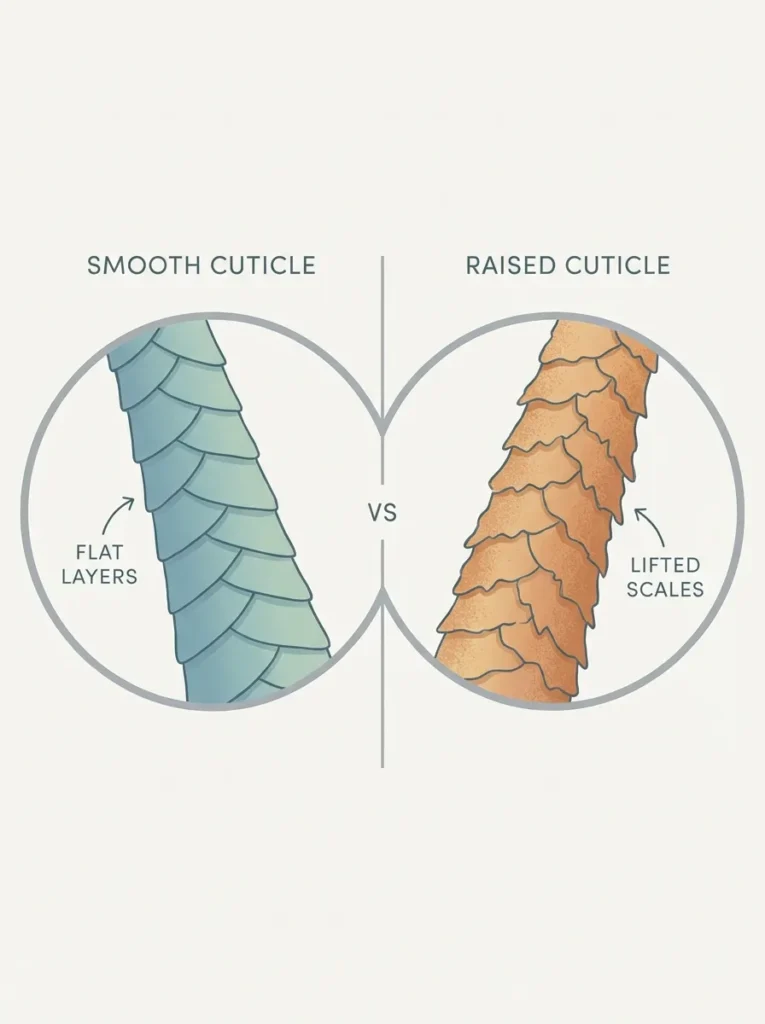
Imagine your hair like tiny overlapping layers.
When they stay flat → smooth, shiny hair
When they lift → strands separate, expand, and lose definition
This is why frizz often looks like extra volume, but without smoothness.
• Straight hair → cuticle lifts mostly from damage or dryness
• Wavy/curly hair → naturally more prone to frizz because bends in the strand make it harder for oils to travel down
Both types experience frizz, but the pattern and timing of frizz looks very different.
Understanding Hair Porosity
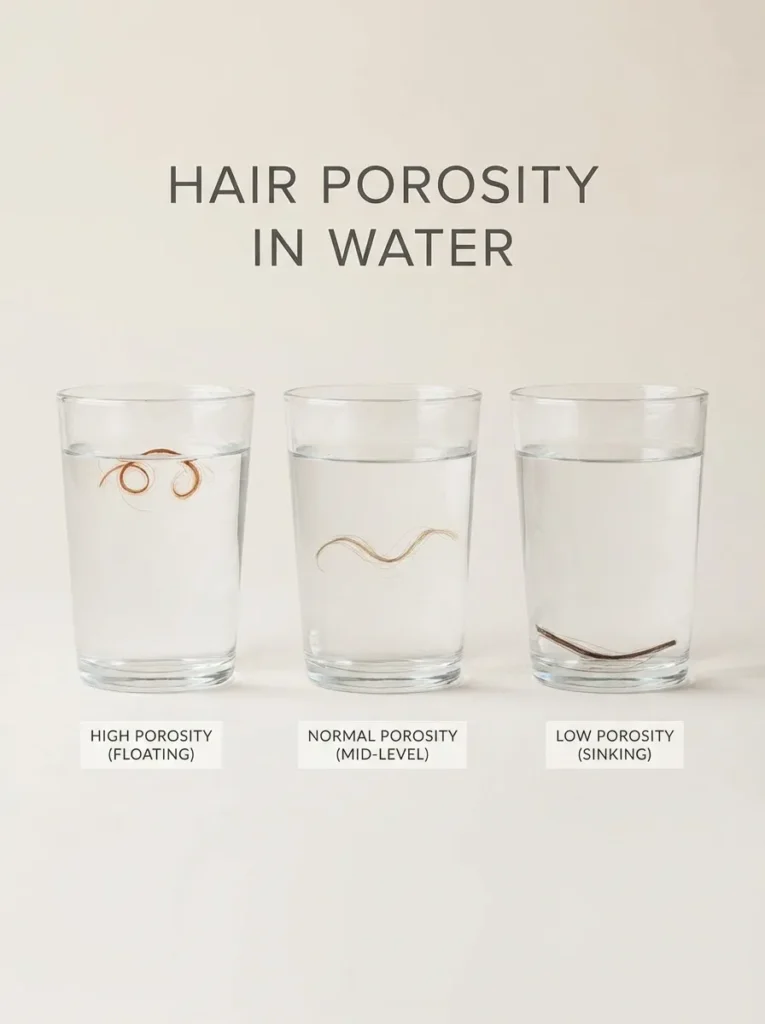
One of the biggest factors behind all of this comes down to how your hair handles moisture.
High Porosity Hair
- Absorbs moisture quickly
- Loses it quickly
- Gets frizzy in humidity
Low Porosity Hair
- Struggles to absorb moisture
- Products sit on top
- Gets frizzy from dryness
Both types frizz, just for different reasons.
The 30-Second Porosity Test
Drop a clean, dry strand of hair into a glass of water.
- Sinks immediately? High porosity (absorbs too much, loses it fast).
- Floats in the middle? Normal porosity.
- Stays on top? Low porosity (struggles to let moisture in).
This test gives a rough idea, but porosity is best understood through how your hair behaves over time.
Read More : Hair Porosity Quiz: Find Your Type & Routine
11 Reasons Your Hair Is So Frizzy
Now that you know what’s happening inside your hair, let’s look at the everyday habits that are actually causing the problem.
Some of these habits are so common that you might not even realize you’re doing them.
1. Hot Shower Water
You step into a hot shower after a long day… and it feels perfect.
But your hair reacts very differently every time you do this.
When water is too hot, it removes the natural oils that help your hair stay controlled and less reactive to humidity. These oils help your hair stay smooth and less reactive to changes in the air.
Once they’re gone, your hair becomes more exposed. That’s when it starts reacting faster to humidity, dryness, and even simple styling.
You might notice your hair feels dry right after washing. That usually means the cuticle has been left open.
What actually helps:
• Use lukewarm water instead of hot
• Finish with a cool rinse for 20–30 seconds
• Avoid letting hot water run through your lengths
2. Rough Towel Drying
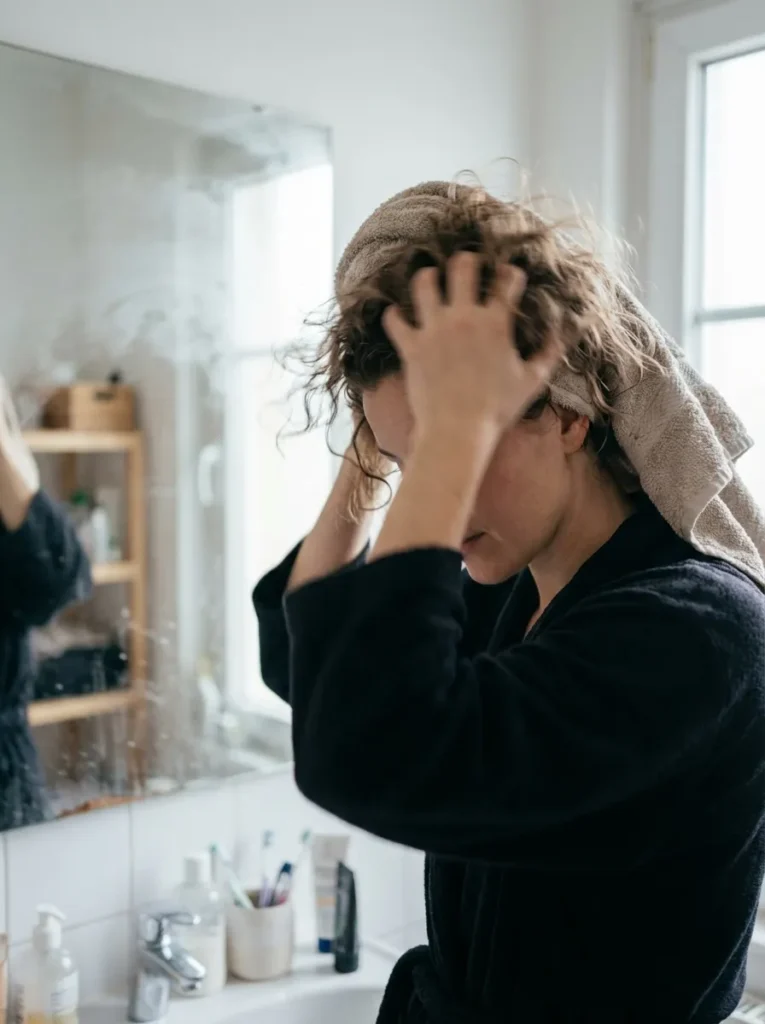
You’re in a hurry, so you grab a towel and start rubbing your hair quickly.
It feels faster, but this is often where frizz actually begins.
Wet hair stretches more easily, which is why rough handling changes its texture quickly. The internal structure is softer, and the outer layer is already slightly lifted. Rubbing it with a towel disturbs how your strands sit together, which creates that rough, uneven look.
Over time, this habit can also lead to more breakage, especially around the top layers of your hair.
Simple fix:
- Stop rubbing your hair completely
- Use a microfiber towel or soft cotton T-shirt
- Gently press or squeeze out water instead
- Let your hair air-dry slightly before styling
3. Wrong Brushing Time
Your hair looks a bit messy, so you run a brush through it…and suddenly it looks bigger, less defined, and harder to manage.
Brushing dry hair, especially if it’s wavy or slightly textured can completely change how it looks.
Instead of staying grouped together, the strands lose their natural grouping and spread outward, creating that puffy effect.
For straight hair, brushing too aggressively can also create static and small breakage, which adds to frizz over time.
Try this instead:
- Detangle your hair in the shower with conditioner
- Use a wide-tooth comb instead of a tight brush
- For dry hair, use your fingers with a small amount of oil
- If your hair is straight, a boar bristle brush can help distribute natural oils
4. Harsh Shampoo Use
Some shampoos clean your hair so well that they remove things you actually need.
If your shampoo contains strong detergents, it cleans your scalp but can leave your strands without the support they need to stay smooth.
That squeaky clean feeling might seem like a good sign but it usually means your hair has been stripped.
Also, not all sulfate-free shampoos are gentle. Some still use harsh cleansing agents.
Try this instead:
- Choose moisturizing or cream-based shampoos
- Focus shampoo on your scalp, not your ends
- Let the foam rinse through your lengths instead of scrubbing them
5. Skipping Conditioner Step
You skip conditioner because you don’t want your hair to feel heavy.
But then your hair dries and feels rough, tangled, and harder to manage.
Conditioner isn’t optional; it’s what helps your hair recover after washing.
When you shampoo, your cuticle opens. Conditioner helps smooth it back down and adds moisture.
Skipping this step leaves your hair exposed, which makes it more likely to frizz once it dries.
This is especially common for people with fine hair who worry about heaviness.
Simple Fix:
- Always use conditioner after shampooing
- Focus on mid-lengths and ends
- Leave it on for at least 2–3 minutes
- Use lightweight formulas if your hair is fine
Read More : 12 Hidden Causes of Dandruff (Most People Ignore)
6. Poor Moisture Retention
Sometimes it’s not about how much moisture you use, but how well your hair holds it.
This is where porosity matters.
If your hair dries quickly, feels rough, or gets frizzy soon after styling, it loses control over how it reacts to moisture, which is why it changes throughout the day.
What helps:
- Apply products on damp or very wet hair
- Use layering:
- leave-in conditioner
- cream
- oil to seal
- Deep condition once a week
7. Wrong Product Choice
You try a product that works amazing for someone else…
but on your hair, it just feels off.
What works for someone else might not work for you.
Using heavy products on fine hair can cause buildup, which makes hair look dull and frizzy instead of smooth.
On the other hand, using very light products on thick or curly hair might not provide enough control.
What helps:
- Fine hair → lightweight leave-ins and serums
- Thick or curly hair → richer creams and oils
- Adjust based on how your hair reacts, not trends
8. Drying Styling Products
Some products give instant results, but cause problems later.
Certain sprays and mousses contain drying alcohols that evaporate quickly. While they help with hold, they also remove moisture from your hair.
That’s why your hair might look fine at first, but frizzy a few hours later.
Simple Fix:
- Check labels for:
- alcohol denat
- isopropyl alcohol
- Use hydrating styling products instead
- Avoid overusing product
9. Wrong Washing Frequency
Both extremes can lead to frizz.
Washing too often strips away oils faster than your scalp can replace them.
Not washing enough can also cause buildup, which blocks moisture and leads to frizz.
What actually helps:
- Fine hair → wash every 2–3 days
- Curly hair → wash every 4–7 days
- Use dry shampoo to extend time between washes
10. Environmental Damage
Humidity is the most talked about cause but it’s not the only one.
Wind, dry air, and even sun exposure can affect your hair’s condition.
Dry air pulls moisture out, while humid air pushes moisture in, both disrupting your hair’s balance. Wind disrupts the hair structure. Sun can weaken the protein over time.
The Fix:
- Use anti-humidity products in humid weather
- Add oil or leave-in in dry conditions
- Protect hair with styles or coverings when needed
11. Ignoring Split Ends
Split ends don’t move upward, but create uneven edges that stick out and make your hair look less smooth overall. This creates uneven strands that stick out and make your hair look less smooth overall.
Most products can improve how your hair looks, but trimming is the most effective long-term solution.
The Fix:
- Trim your hair every 8–10 weeks
- Even small trims make a difference
- Healthy ends help your hair fall more smoothly
Product Selection Table
Once your routine is right, the next step is choosing products that actually match your hair type.
Hair Type | Best Frizz Fighter | Application Tip |
|---|---|---|
Fine Hair | Lightweight Serums | Avoid the roots |
Thick / Coarse | Shea Butter / Oils | Apply in sections to ensure even coverage. |
Curly / Wavy | Gels or Custards | Use enough to create a “cast” (crunch), then scrunch it out when dry. |
The Internal Hydration Factor
Topical products can only do so much if your body is running on empty. Hair isn’t a priority for your body, so it often shows signs of imbalance first, so if you’re dehydrated, your hair will be the first to show it through brittleness and frizz.
- Drink up: Aim for consistent water intake to keep the hair bulb healthy.
- Healthy Fats: Incorporate Omega-3s (found in salmon, walnuts, or flaxseeds) to help lubricate the hair shaft from the inside out.
- Vitamin Check: In some cases, nutritional imbalances can affect how your hair looks and feels over time
While this won’t fix frizz instantly, it affects how your hair behaves over time.
Your Tools Are “Ghosting” You
Sometimes the issue isn’t your hair, it’s the things you’re putting on it. Old product build-up on your hairbrush or a dusty hair dryer filter can actually create more friction and heat damage than necessary.
- Wash Your Brushes: At least once a month, soak your brushes in warm water and a bit of shampoo to remove old oils and styling residue.
- Check Your Dryer Filter: If the back of your hair dryer is clogged with lint, it will overheat. This “distorted heat” is much harsher on your hair cuticle than a clean, steady airflow.
- Replace Old Tools: If your flat iron plates are scratched or “peeling,” they are snagging your hair and creating micro-frizz every time you use them.
Master the “Frizz Forecast”
The air outside changes, so your strategy should too. Checking the Dew Point on your weather app is a secret weapon for frizz control.
- Low Dew Point (Dry Air): Your hair will likely be “staticky.” Use a tiny bit of leave-in cream to add weight and moisture.
- High Dew Point (Humid): This is “Explosion Territory.” This is the day for a sleek bun, a braid, or a heavy-duty sealant/anti-humectant spray to lock the moisture out.
- The Golden Rule: If the humidity is over 70%, stop fighting for a perfect blowout and lean into your hair’s natural texture with a bit of curl cream.
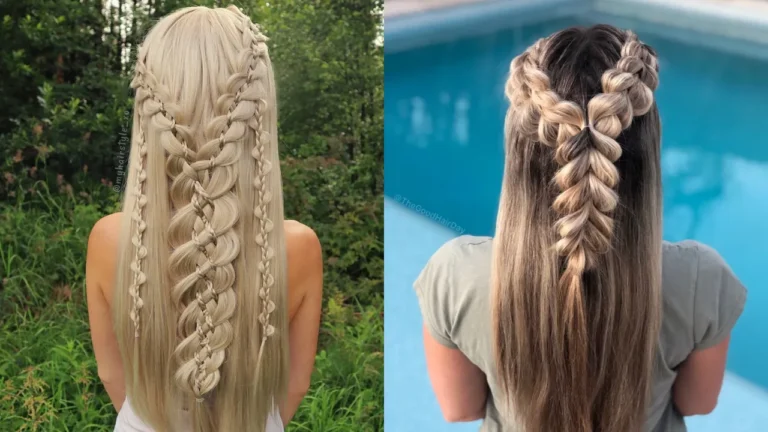
Hairstyles That Help Control Frizz
Once your routine is in place, the way you style your hair also plays a big role in how much frizz shows up during the day. Some hairstyles naturally reduce exposure to humidity and keep your strands more controlled.
• Braided styles help keep strands grouped together so they don’t expand in humid air.
• Low buns and tucked styles keep the ends protected and reduce contact with moisture.
• Sleek ponytails help smooth the surface and keep flyaways under control.
• Claw clip styles reduce tension and prevent unnecessary friction that can lead to frizz.
Choosing the right style can make your hair easier to manage, especially on days when the weather isn’t in your favor.
The Hands-Off Rule
You style your hair… and then keep touching it.
Every time you do, you disturb how your hair is setting.
When hair is drying, it forms a pattern. Touching it breaks that pattern and creates instant frizz.
What helps:
• Style your hair
• Then leave it alone until fully dry
The Humidity Trap
Some ingredients like glycerin pull moisture from the air.
In humid weather, this can cause your hair to absorb too much moisture and expand.
What helps:
• Use sealing products in humidity
• Avoid heavy humectants on very humid days
FAQs
1. Why is my hair frizzy even after washing and conditioning?
Frizz after washing usually happens because moisture isn’t properly sealed inside your hair. Even if you condition, the cuticle may stay slightly open, allowing humidity to enter and disrupt the hair’s shape as it dries.
2. How can I fix frizzy hair quickly at home?
You can reduce frizz quickly by applying a small amount of leave-in conditioner followed by a light oil or serum. This helps smooth the outer layer and prevents your hair from reacting to moisture in the air.
3. Is frizzy hair a sign of damage or just dryness?
Frizz can be caused by both. Sometimes it’s due to dryness or humidity, but repeated heat styling, rough handling, or chemical treatments can also damage the hair, making it more prone to frizz over time.
4. Why does humidity make my hair frizzy so fast?
Humidity causes frizz because your hair absorbs moisture from the air unevenly. This makes the strands swell, lose their shape, and appear rough instead of smooth.
Conclusion
Frizzy hair isn’t something random or out of your control.
Most of the time, it’s your responding to how it behaves with your routine and the conditions around you.
You don’t need a complicated routine to fix it.
Start simple:
- lower your water temperature
- dry your hair gently
- use the right products
- keep your ends healthy
Even small changes can make your hair noticeably smoother.
Once your hair gets what it needs, it starts working with you instead of against you.
Read More : 11 Simple Tips to Fix an Oily Scalp Naturally
Read More : Hair Glossary A to Z for Beginners