Hair Porosity Quiz: Find Your Type & Routine (2-Min Tool)
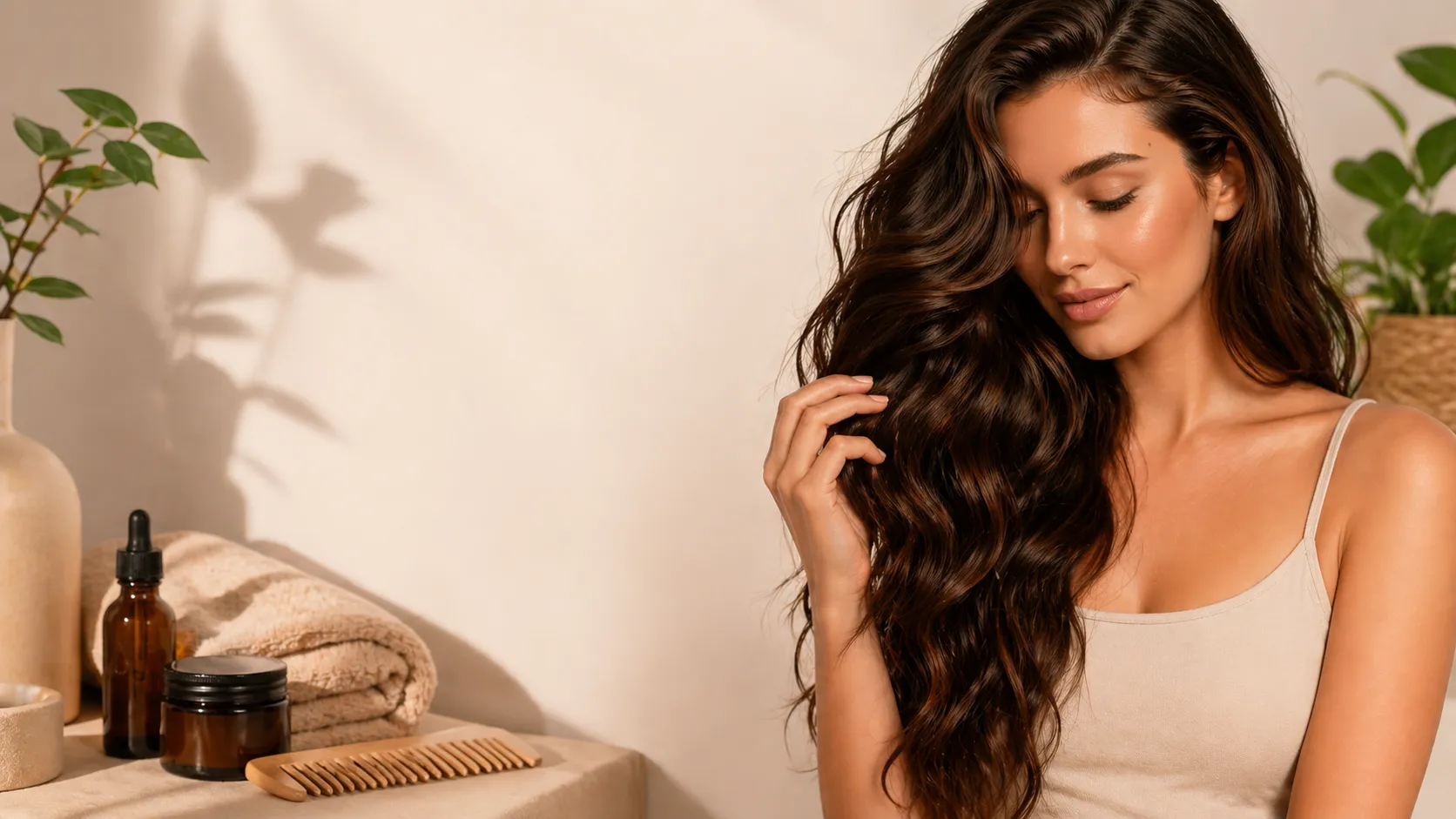
Your hair porosity determines how well your hair absorbs and retains moisture and it’s the reason some products work while others don’t.
If your hair feels dry, frizzy, or hard to manage, your porosity type could be the missing piece. Take this quick quiz to find your hair porosity and get a personalized routine that actually works for your hair.
Hair Guide by Blush Fizz
What Is Your Hair
Porosity Type?
Your hair porosity decides how well your hair absorbs moisture, why some products work and others do not, and what your hair truly needs. Answer 7 simple questions to find out yours.
Your Hair Porosity Type
Moisture Routine
Products to Use
Signs Your Routine Needs Fixing
What Is Hair Porosity?
Hair porosity refers to how easily your hair absorbs and holds onto moisture. It is determined by the condition and spacing of your cuticles, the tiny overlapping scales that run along the outside of every strand of hair, like shingles on a roof.
When those cuticles are tightly packed and flat, moisture struggles to get inside but stays in for a long time once it does. When they are raised or have gaps, moisture rushes in instantly but escapes just as fast.
When they sit somewhere in between, the hair behaves in a balanced way that is easiest to manage.
There are three porosity types: Low, Medium, and High. Each one comes with a different set of behaviours, needs, and product rules.
What Determines Your Hair Porosity?
Porosity can be genetic, meaning you were simply born with a certain cuticle structure. But it can also change over time depending on how you treat your hair.
Heat styling, chemical treatments like relaxers and colour, sun exposure, harsh shampoos, and even hard water can all raise and damage your cuticles over time, pushing your hair toward higher porosity.
Protective styles, gentle handling, and the right products help keep your cuticles smooth and your porosity in check.
Low Porosity Hair
Closed Cuticle Type · Resistant to MoistureLow porosity hair has cuticles that lie flat and very close together with almost no gaps. Think of it like trying to pour water onto a surface covered in tightly overlapping tiles the water rolls off instead of soaking in. Moisture has a hard time getting inside, but once it does, it stays in for a long time. This also means products tend to sit on top of the hair rather than absorbing, which leads to buildup over time.
Common Signs of Low Porosity Hair
Medium Porosity Hair
Balanced Cuticle Type · Most ManageableMedium porosity hair has cuticles that sit at just the right angle open enough to let moisture flow in at a healthy pace, but not so open that it escapes too quickly. This is the most balanced of the three types. Products absorb well, hair styles predictably, and the overall level of frizz is easier to control. Most hair care products are formulated with this porosity type in mind, which is why nearly everything works reasonably well for medium porosity hair.
Common Signs of Medium Porosity Hair
High Porosity Hair
Open Cuticle Type · Absorbs Quickly, Loses QuicklyHigh porosity hair has cuticles with significant gaps or damage, so moisture rushes in almost instantly but escapes just as fast. You may notice your hair feels wet one moment and completely dry the next. Frizz, dryness, tangles, and breakage are common struggles because the hair shaft is constantly losing whatever moisture it absorbs. High porosity can be genetic, but it is often the result of chemical treatments, years of heat damage, or rough handling that has permanently raised and chipped the cuticle surface.
Common Signs of High Porosity Hair
Quick Comparison: All Three Types at a Glance
| Feature | Low | Medium | High |
|---|---|---|---|
| Cuticle state | Tightly closed | Slightly open | Raised or damaged |
| Absorbs moisture | Slowly / resists | At a healthy pace | Instantly |
| Retains moisture | Well, once inside | Well for days | Poorly, escapes fast |
| Drying time | Very long | 2–3 hours | Very fast |
| Frizz in humidity | Gets softer | Minimal change | Swells immediately |
| Product behaviour | Sits on top | Absorbs well | Absorbs but dries out |
| Main challenge | Getting moisture in | Maintaining balance | Keeping moisture in |
- Take a clean strand of hair from your brush or comb
- Fill a clear glass with room temperature water
- Drop the hair strand gently onto the surface of the water
- Wait 2–4 minutes without touching or stirring
- Watch where the strand ends up
Free Hair Quiz by Blush Fizz
Not Sure Which Type You Are?
Answer 7 simple questions and find your exact hair porosity type, plus a personalized routine built for your hair’s specific needs.
Read More : Hair Glossary A to Z for Beginners
Read More :12 Hidden Causes of Dandruff (Most People Ignore)
Read More :14 Reasons Your Hair Feels Dry and Brittle (Fix It Fast)
Read More :11 Reasons Your Hair Is So Frizzy (And How to Fix It)