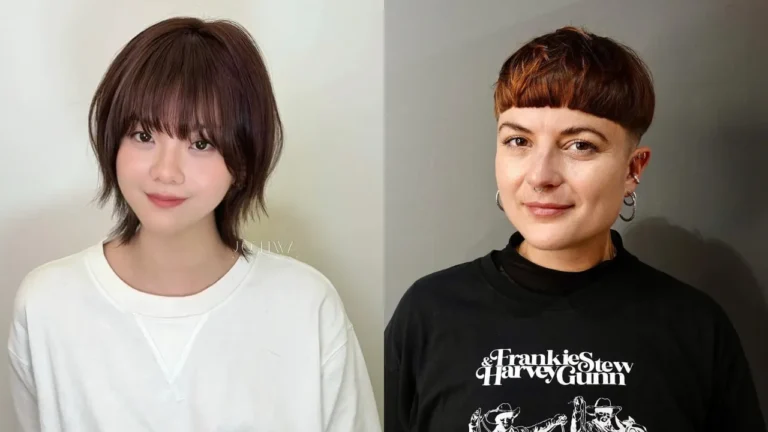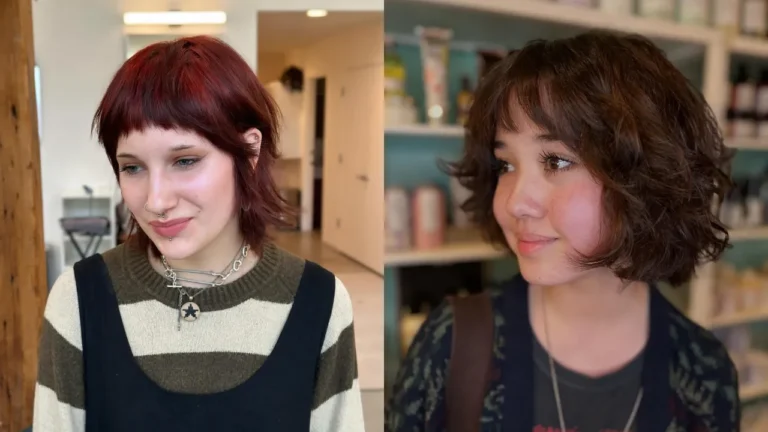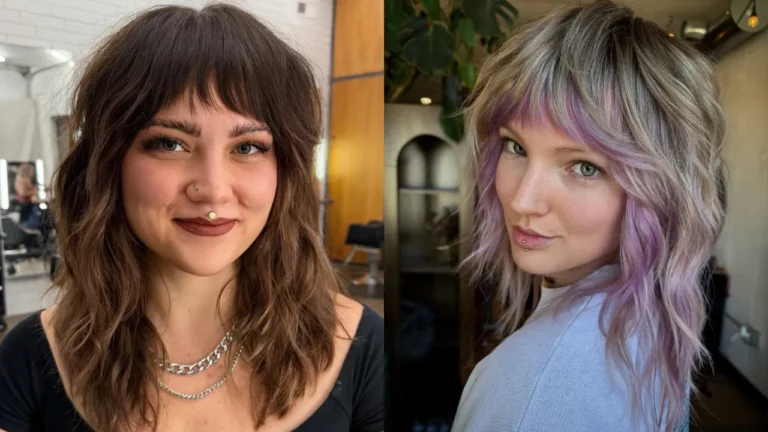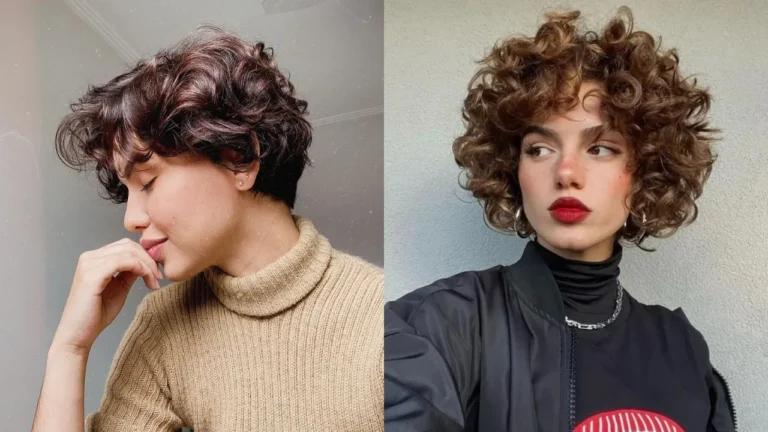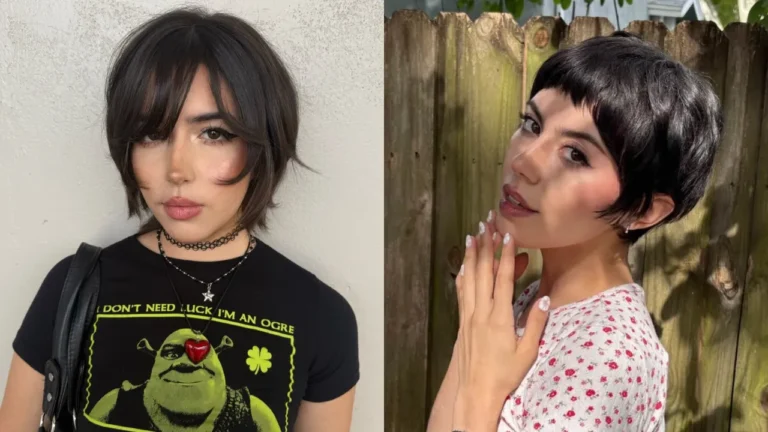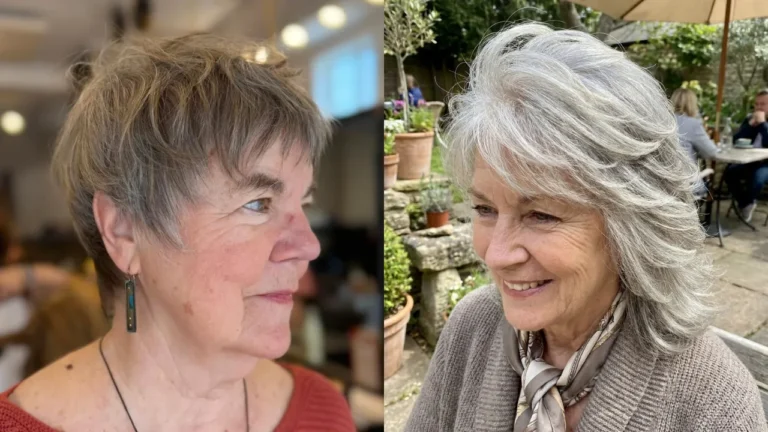
23 Short Wolf Cut Styles for a Cool, Edgy Look
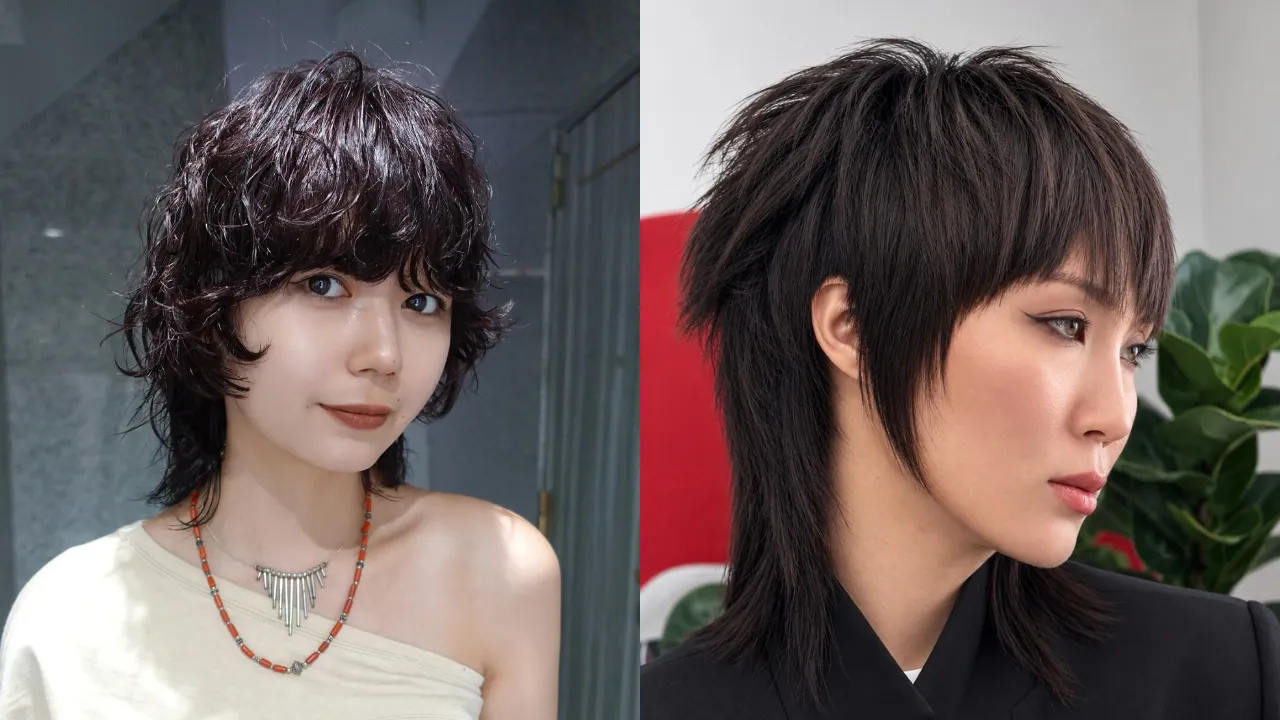
Ever feel like your short haircut needs something new, but you are not ready to lose more length? A few well placed layers can change everything.
These short wolf cut ideas bring together choppy ends, textured crowns, face framing pieces, and bold colors to help you find a haircut that matches your personality. Whether your current bob feels flat or your pixie needs a fresh shape, there is plenty of inspiration to explore.
You will find everything from tousled brunette cuts and feathered bobs to vivid blue shades and mullet inspired styles. Pay attention to the fringe, crown height, and length around the ears, because these details can make a difference in how the haircut works with your hair texture and daily routine. Save your favorite ideas for your next salon visit and discover a fresh direction for your short hair.
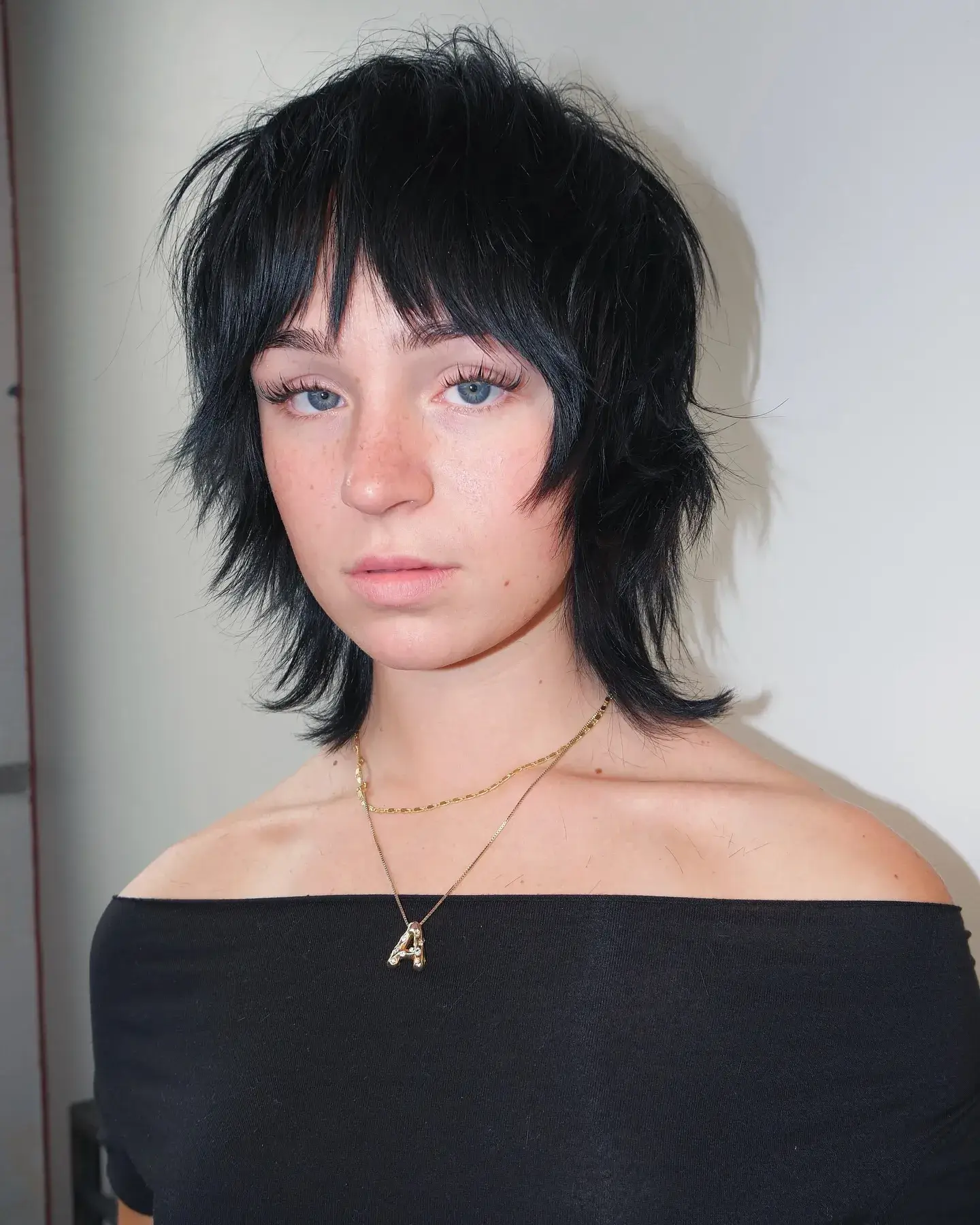
1. Jet Black Wolf Cut Shag
Source: andy_doesyourhair
When your haircut starts looking like one solid mass of hair, adding more styling products may only weigh it down. A jet black wolf cut shag breaks up that heavy outline with uneven crown layers, piecey bangs, and tapered ends that give short hair a more rebellious character.
The deep black color emphasizes the separation between the layers, particularly around the temples and nape. Instead of the rounded shape of a classic bob, the shag has a jagged outline that pairs well with alternative fashion, oversized jackets, and simple dark outfits.
For your salon appointment, ask for shorter layers through the crown while keeping enough length around the ears and back to connect the shape. A small amount of matte paste can define individual ends without leaving the roots greasy or flattening the texture.
Read More : 25 Wolf Cut Hairstyles That Bring Out Your Bold Side
2. Copper Pixie Wolf Cut
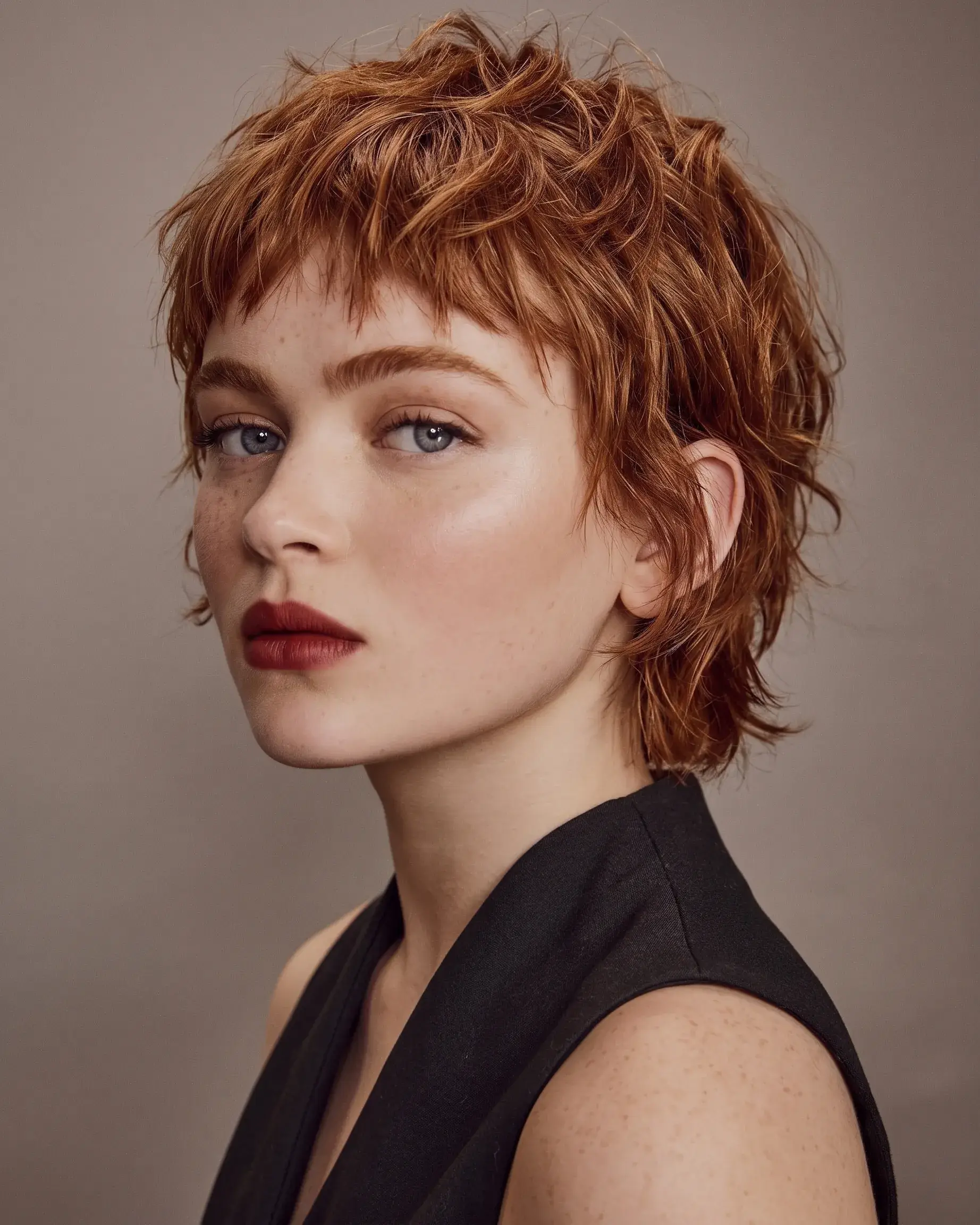
Source: shorthairbuzzfeed
You want a dramatic hair change, but the thought of losing all that length can make you hesitate. A copper pixie wolf cut offers a middle ground, combining a cropped silhouette with textured upper layers and a warm reddish shade that brings extra character to short hair.
Copper catches the light around the fringe and crown, making the uneven sections more noticeable. The pixie length keeps the haircut compact, while the longer pieces around the top prevent it from resembling a traditional, closely cropped cut. It suits anyone drawn to expressive color without committing to long hair.
One thing to consider before booking is how often you are willing to refresh the shade. Copper can fade with frequent washing, so ask your colorist about a color safe shampoo and a suitable maintenance routine. Keep the styling simple by shaping the upper layers with your fingertips.
Read More : 24 Octopus Haircut Looks for Bold Hair Lovers
3. Tousled Brunette Wolf Cut
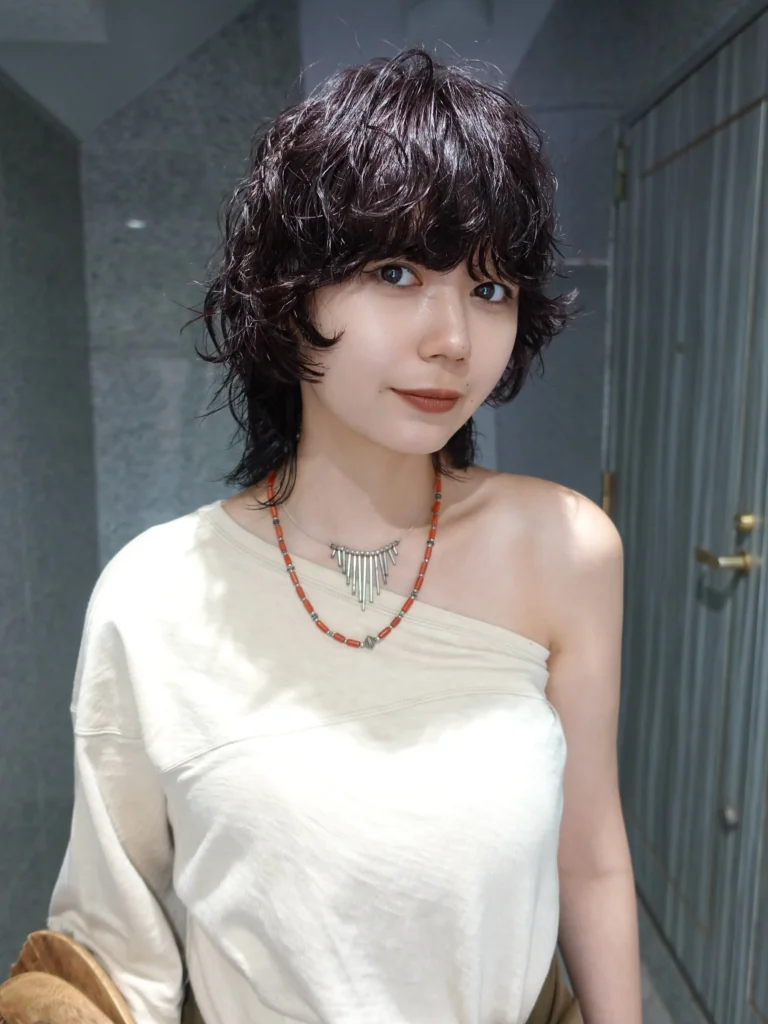
Source: pledica_hikaru
If you keep saving short hairstyles but worry about spending every morning with a curling iron, a tousled brunette wolf cut offers a more relaxed direction. Loose, uneven layers provide movement, while the slightly messy finish means individual strands do not need to sit in exactly the same place.
The brunette shade keeps the color understated, allowing the texture to take center stage. Shorter crown pieces bring height, while longer sections near the ears maintain enough length to frame the sides of the face. The result suits casual outfits and anyone who prefers a lived in hairstyle over a carefully arranged finish.
For styling, mist damp hair with a lightweight texturizing spray and scrunch a few sections as they dry. Fine hair can lose its lift under heavy creams, so start with a small amount of product and add more only where the ends need definition.
Read More : 23 Trendy Short Haircuts That Look So Modern
4. Sleek Asian Wolf Cut Mullet
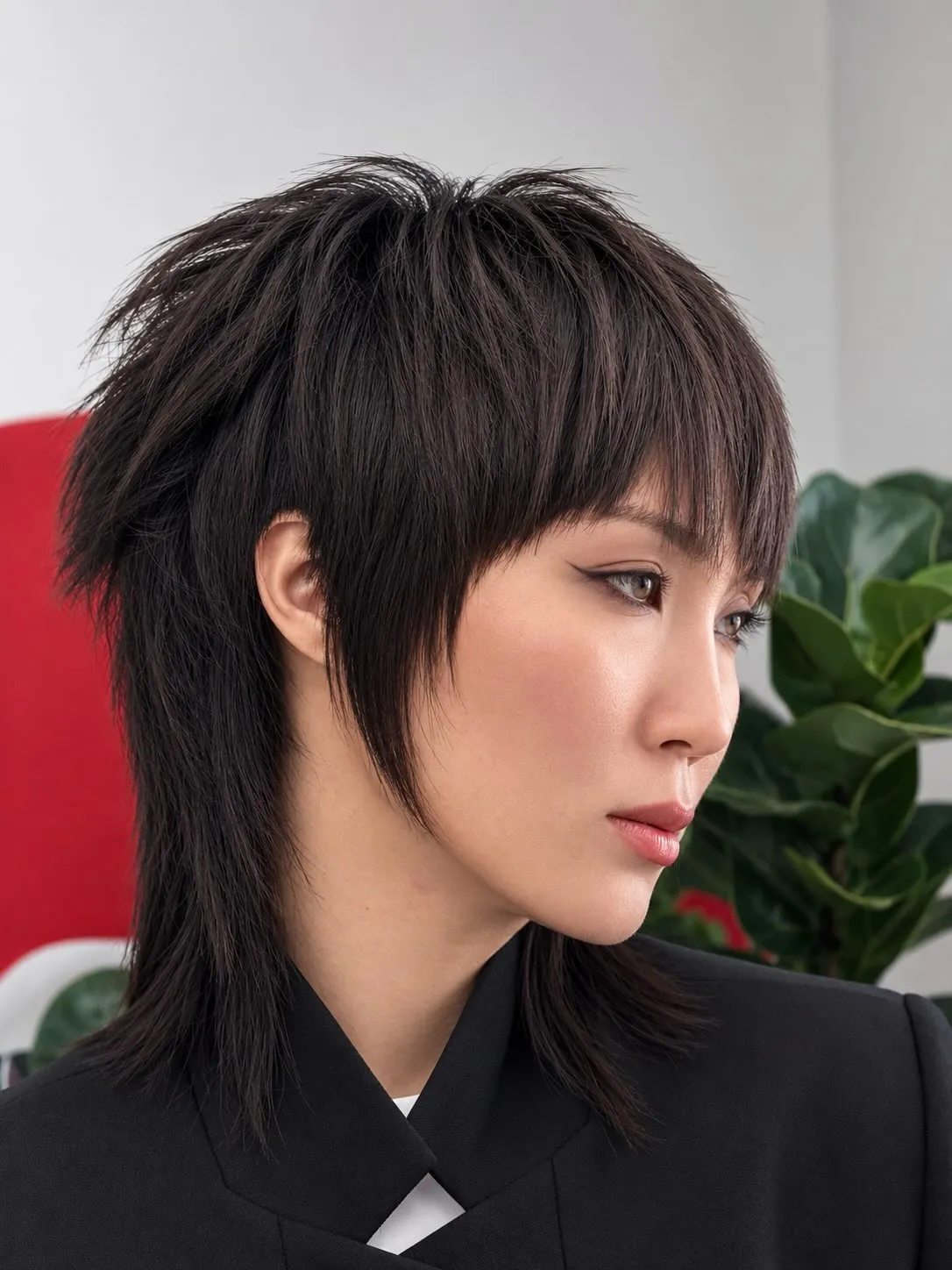
Source: iadur
Not everyone wants a short haircut that needs constant finger styling to maintain its shape. A sleek Asian wolf cut mullet takes a more controlled approach, pairing shorter crown layers with longer sections at the back for a defined silhouette that still has an edgy character.
The smooth finish highlights the contrast between the top and nape. Tapered sides keep the shape close to the head, while the extended back separates it from a regular short bob. This version suits anyone who prefers clean lines but wants something less conventional than a standard cropped haircut.
For a salon appointment, bring a reference photo showing the side and back, not just the front. Ask your stylist to check how the nape sits against your neck before deciding on the final length. A lightweight smoothing cream can control flyaways without making the ends stiff.
Read More : 23 Short Shaggy Haircuts for Your Cool-Girl Era
5. Blonde Streak Wolf Cut
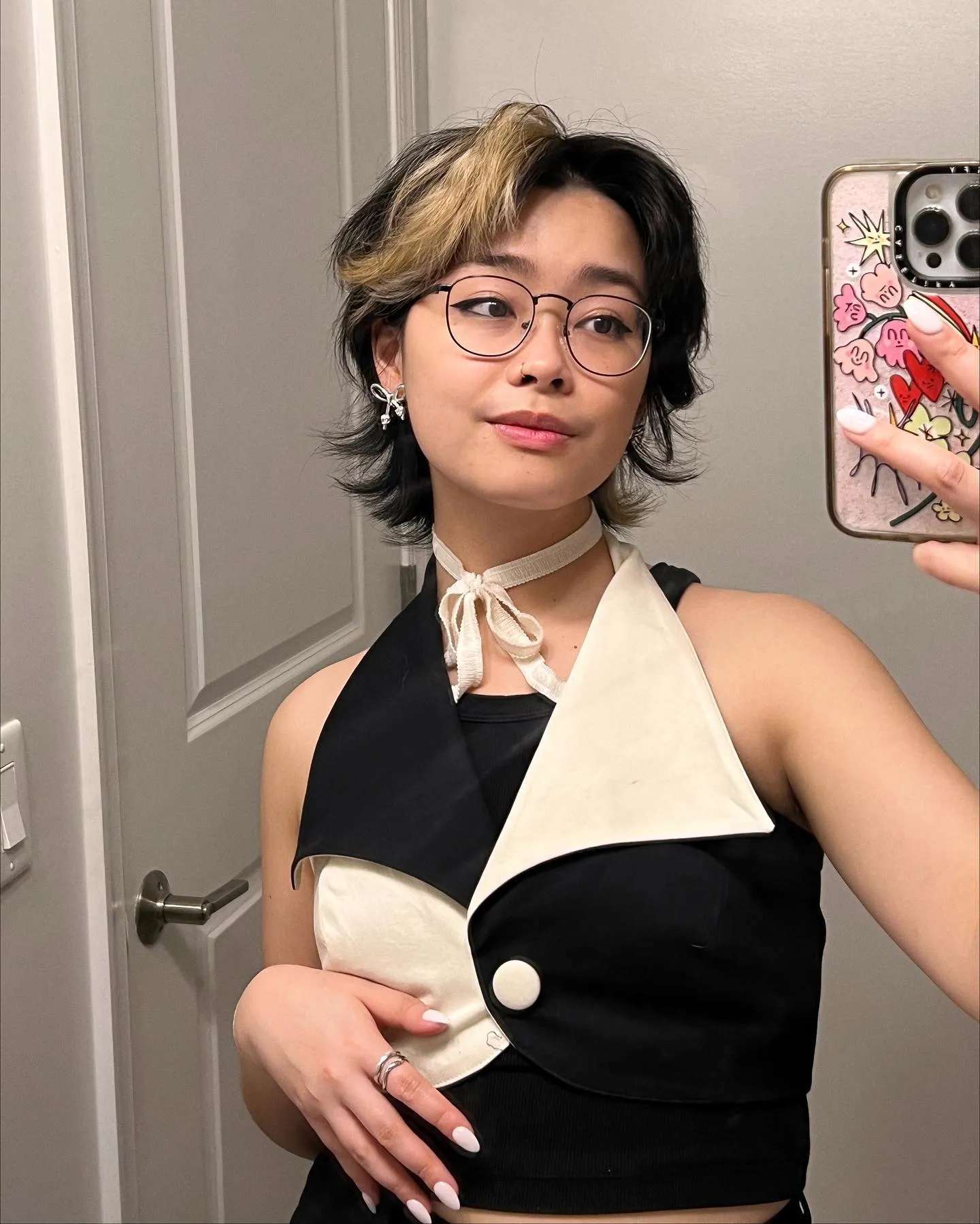
Source: marilanae
A full blonde transformation can be a big commitment, especially if you are unsure how lighter hair will suit you. Blonde streaks offer another route: they brighten selected sections of a short wolf cut while leaving the darker base visible for contrast.
Placement changes the effect. Lighter pieces around the fringe and temples draw attention toward the face, while streaks through the crown highlight the uneven layers. The result has a bold, alternative character without requiring every strand to be bleached.
If your hair has already been colored or feels fragile, discuss its condition with your colorist before lightening it. Smaller sections may be a better starting point than thick highlights. To keep the contrast visible, choose a color placement that follows the haircut rather than covering all the textured ends.
6. Electric Blue Wolf Cut
Source: z_a_n_suzu
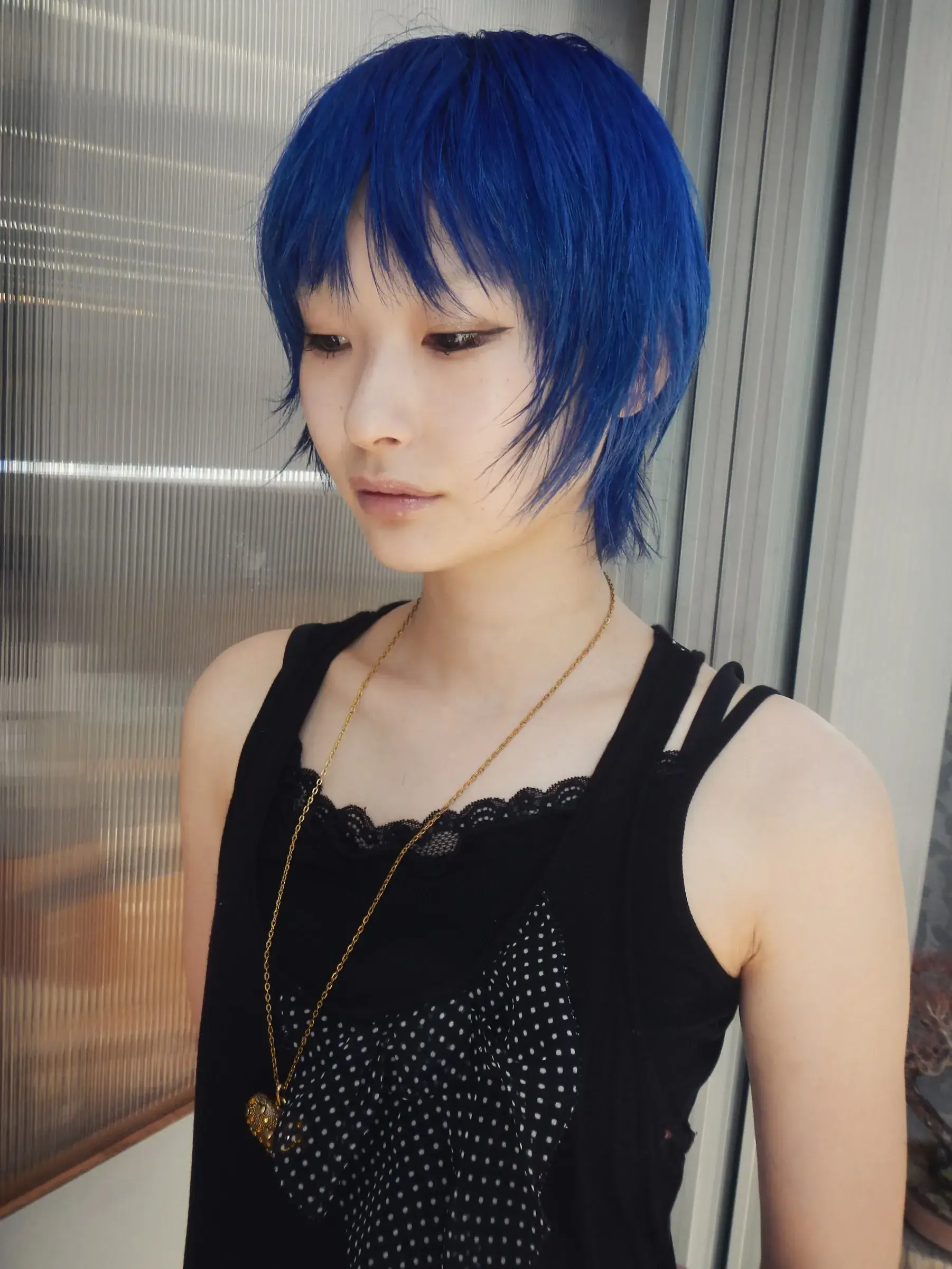
Electric blue is for anyone who wants their haircut to say something before they even choose an outfit. On a short wolf cut, the vivid shade brings attention to the choppy fringe, separated crown pieces, and uneven ends, giving the hairstyle a strong alternative edge.
Unlike a natural brunette shade, bright blue becomes a major part of the haircut’s identity. It pairs well with dark clothing, graphic prints, and bold accessories, while the shorter length prevents the color from forming one long, uninterrupted block.
The shade you achieve depends on your starting hair color and the dye formula. Ask your colorist whether lightening is needed and how to protect the condition of your strands. Washing less often with cool water and using color safe products can help slow fading between appointments.
7. Soft Brown Wolf Cut Bob
Source: firenze_hairstudio
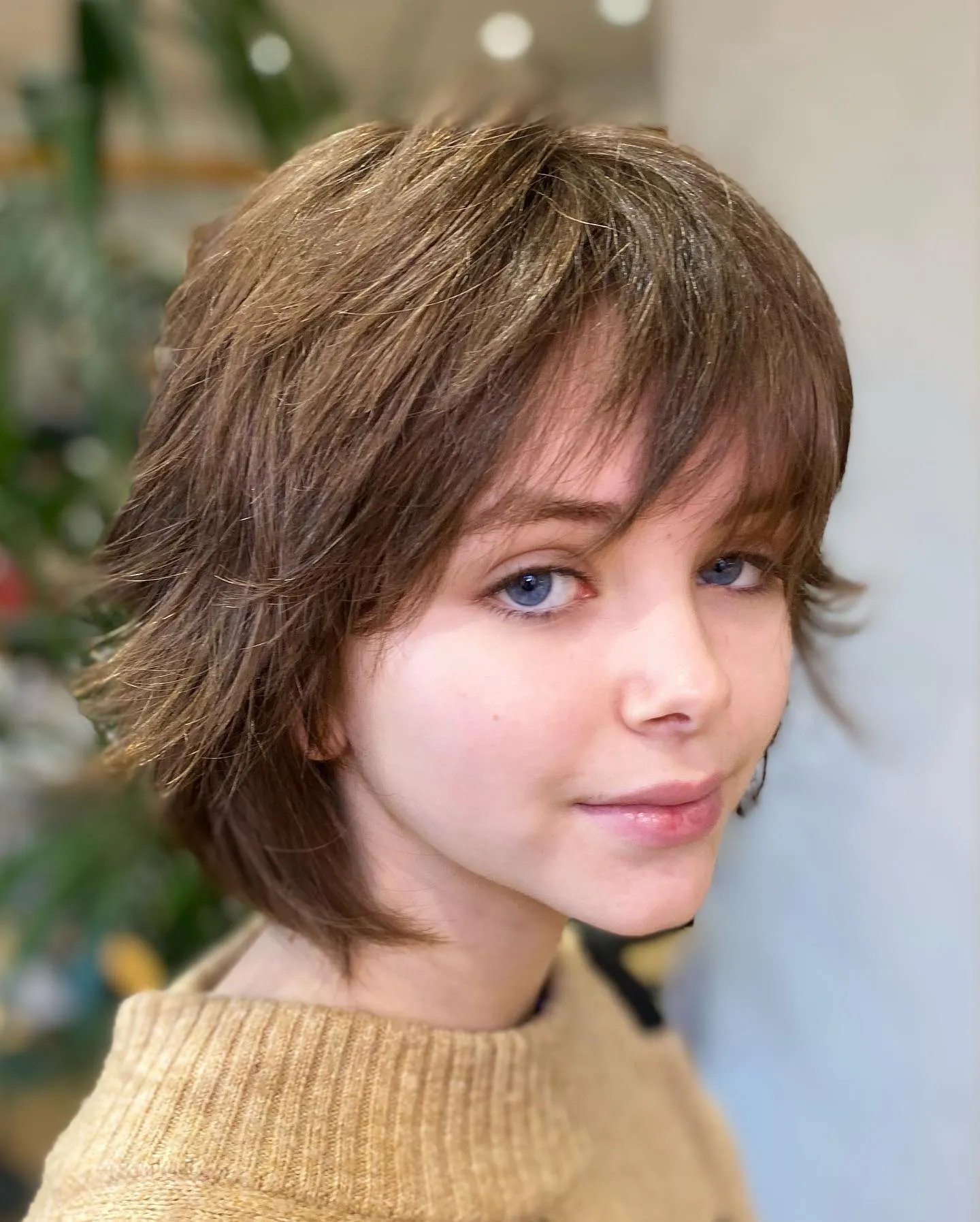
When a short bob starts flipping outward at the ends, it can become difficult to keep the shape you originally wanted. A soft brown wolf cut bob works with that shorter length, combining a bob shaped outline with feathered ends and shorter crown layers for a more textured finish.
The brown shade keeps the haircut understated, while pieces around the cheeks break up the rounded shape. Unlike a blunt bob, the ends have more separation, giving the hairstyle a relaxed character without relying on a dramatic color change.
If you want to keep the bob from appearing too thin, ask your stylist to preserve some weight along the bottom while adding movement above it. A small round brush can lift the roots during blow drying, leaving the ends loose instead of curling them into a uniform shape.
8. Choppy Black Wolf Cut
Source: cig.0m
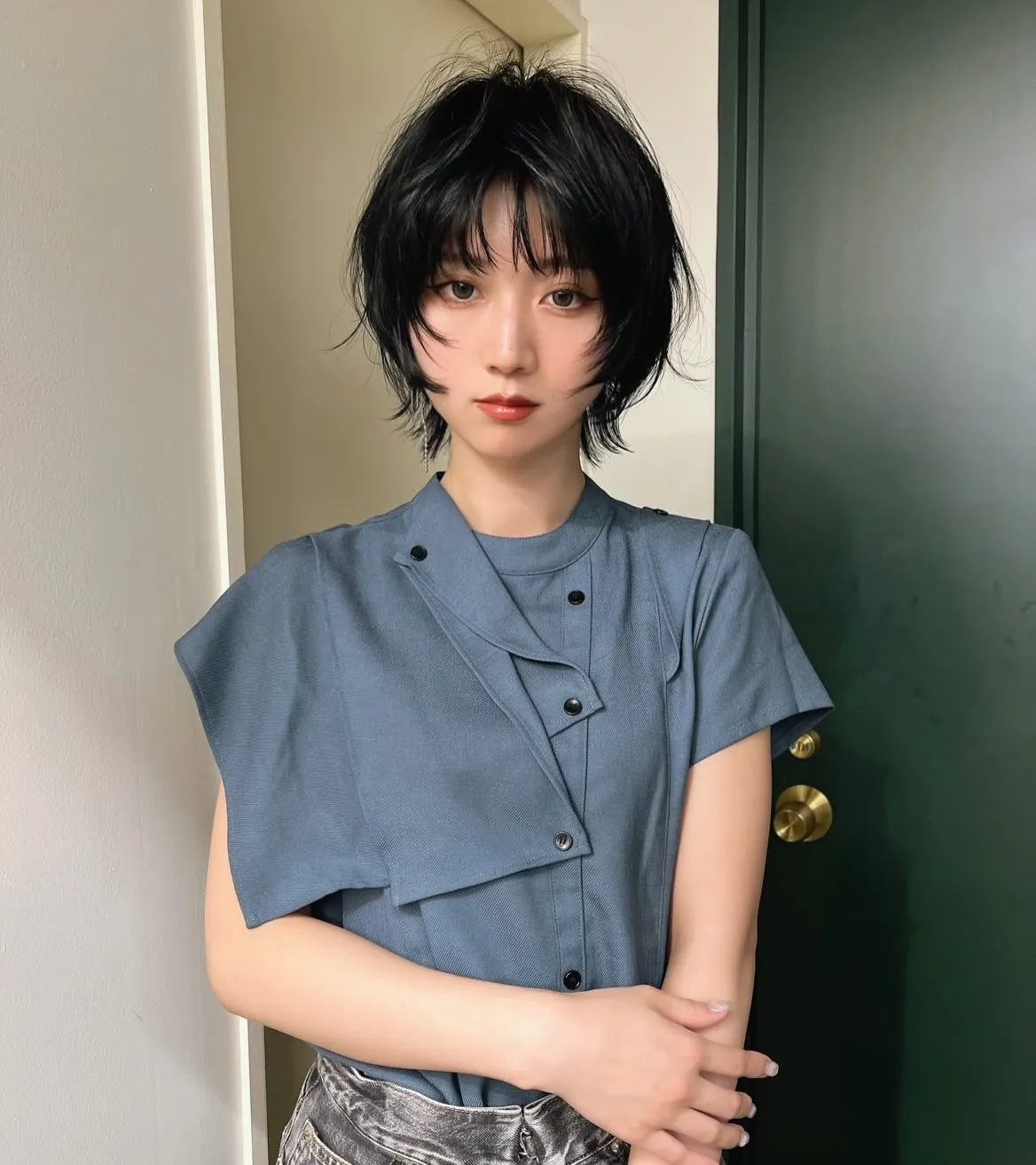
A traditional bob can feel too controlled when your personal style leans toward grunge, punk, or alternative fashion. A choppy black wolf cut takes the opposite route, using irregular ends, a broken fringe, and short layers that give the haircut a deliberately untamed outline.
The dark shade highlights the different lengths, especially around the temples and crown. Rather than following a smooth curve, the silhouette has sharper edges that work well with graphic tees, leather jackets, or simple everyday outfits that need a little extra character.
Thick hair may expand outward when too many short layers are cut into the sides. Ask your hairstylist to remove bulk selectively and check the shape from the front and side before finishing. That way, the cut can keep its choppy character without becoming wider than you intended.
9. Feathered Brunette Wolf Cut
Source: damagehairsalon
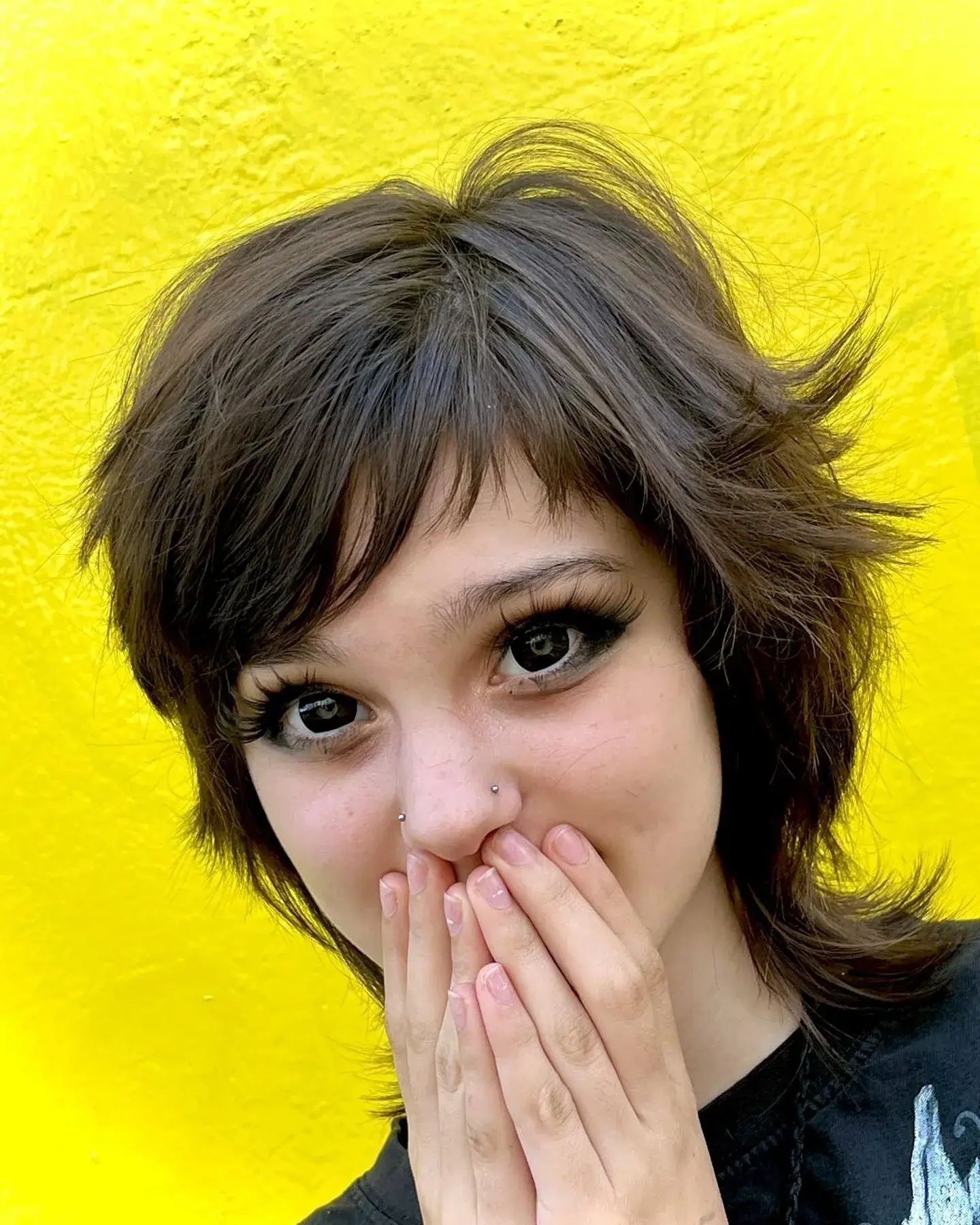
If blunt ends make your short hair feel heavy around the cheeks, feathered layers offer a different approach. A feathered brunette wolf cut uses tapered sections that sweep away from one another, giving the haircut movement without the sharply disconnected finish of a more dramatic shag.
The brunette shade keeps attention on the cutting technique. Shorter crown layers bring height, while the sides and ends blend into a lighter outline around the face and neckline. It suits anyone who wants the character of a wolf cut with a more blended shape.
Your natural hair density matters when choosing how much feathering to request. Fine hair may need fewer, longer layers to keep the ends from looking sparse, while thicker hair can often support more internal texture. Ask your stylist to tailor the cut rather than copy every detail of a reference photo.
10. Purple Shaggy Wolf Cut
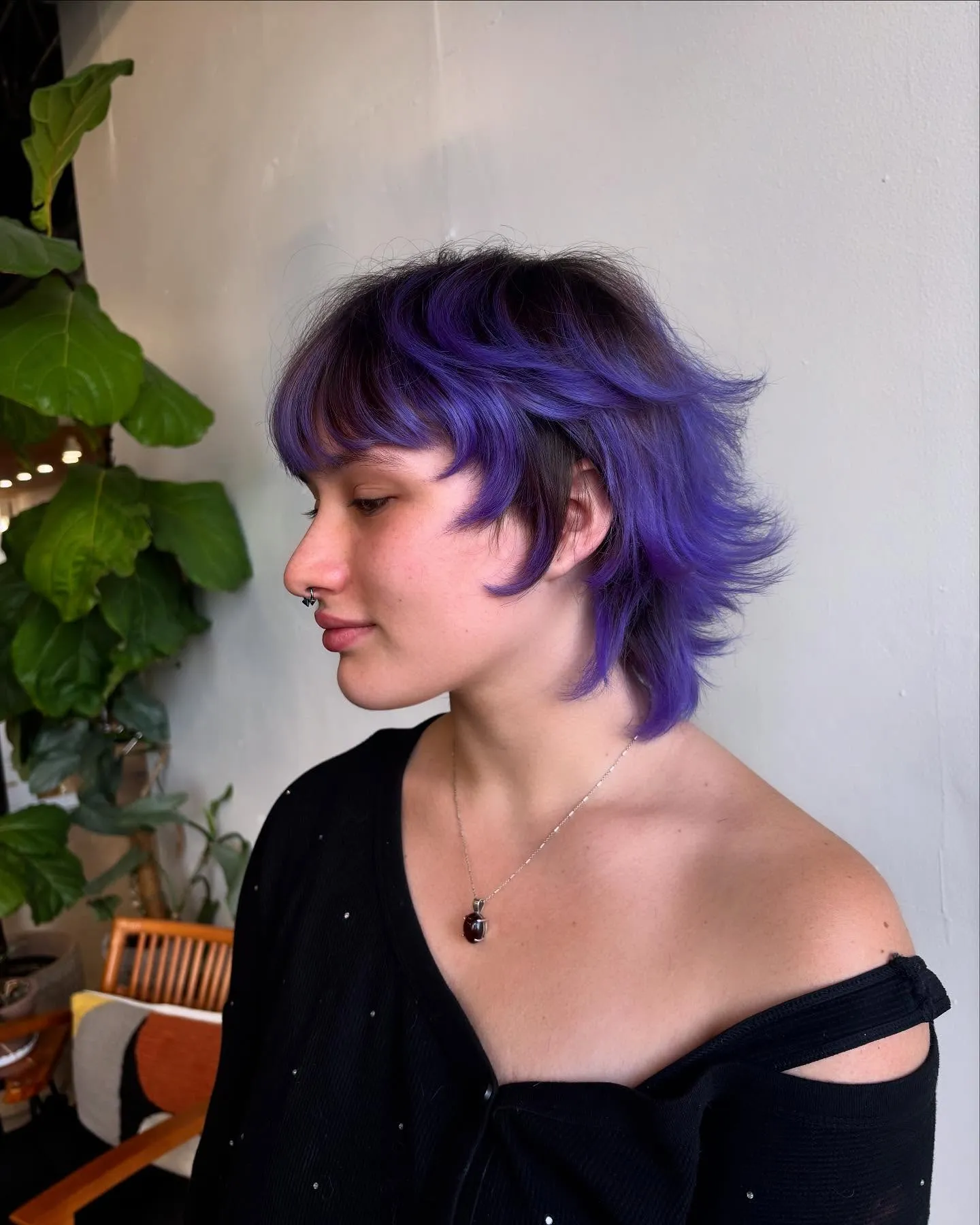
Source: pixie.witch.snips
A bold hair color can be exciting until you start wondering whether it will work with your everyday clothes. A purple shaggy wolf cut makes that decision easier to picture, pairing a vivid shade with a choppy fringe, shorter crown layers, and uneven ends that give the haircut an alternative edge.
The shaggy shape keeps the purple from reading as one flat block of color. Short sections around the cheeks and longer pieces near the nape create contrast, while the layered silhouette suits anyone who enjoys expressive hair and a little rebellion in their personal style.
Purple dye can fade differently depending on the formula and your starting hair color. Ask your colorist how to maintain the shade, then separate a few ends with your fingertips when styling so the layers remain visible instead of blending together.
11. Textured Pixie Wolf Cut

Source: vesna_unik
A pixie can become frustrating when you want more shape but do not want to wait months for your hair to grow. A textured pixie wolf cut works with short length, using lifted crown pieces, a broken fringe, and uneven ends to make a cropped haircut feel less uniform.
The shorter shape brings attention to the eyes and cheekbones, while slightly longer sections around the ears connect the pixie to the shaggy wolf cut silhouette. It suits anyone who prefers short hair with a clear point of view rather than a classic, rounded crop.
For styling, warm a small amount of lightweight wax between your fingers and pinch selected ends into place. You do not need to define every strand. Leaving a few sections loose helps preserve the separation between layers and keeps the haircut from becoming stiff.
12. Auburn Mullet Wolf Cut
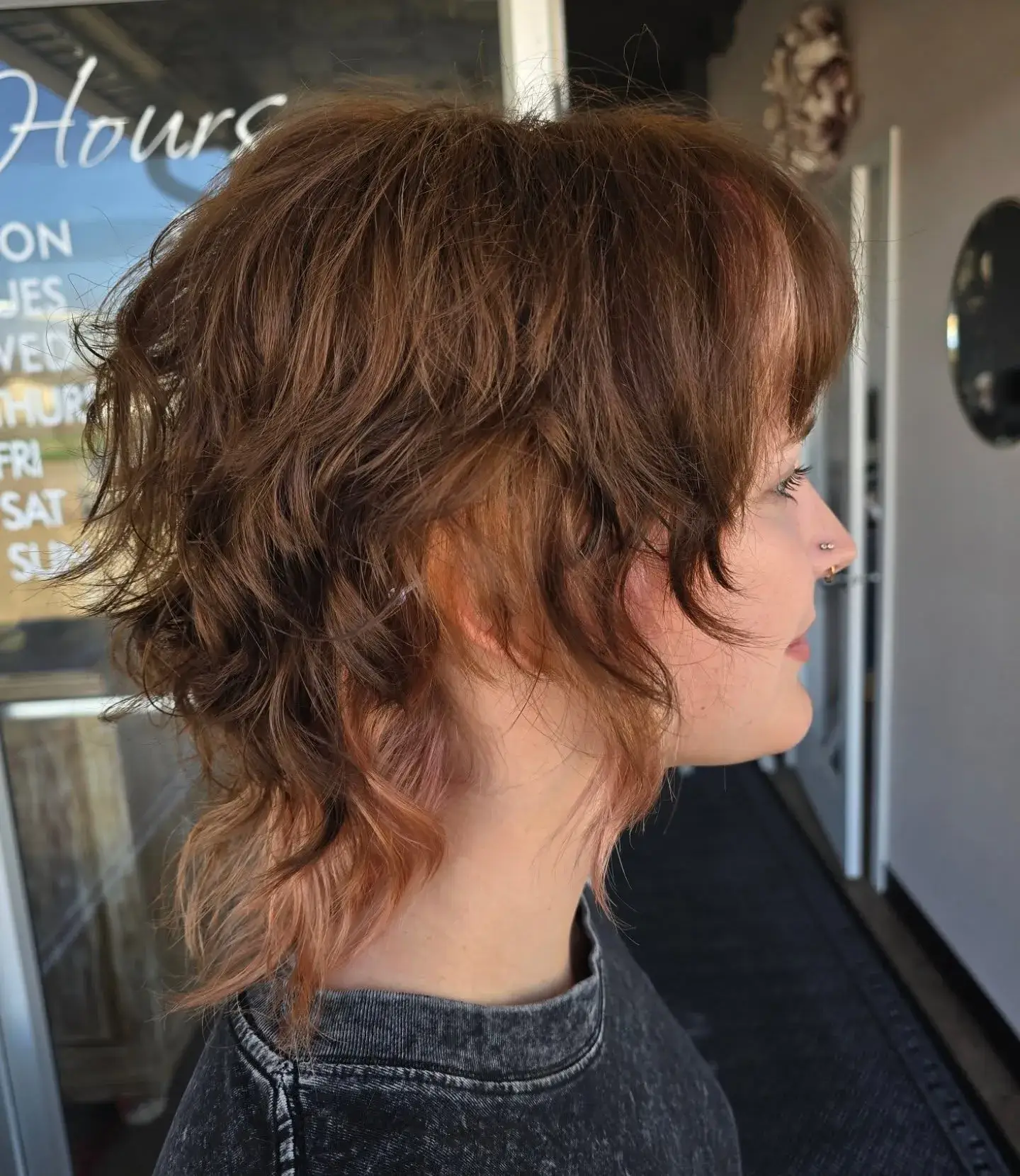
Source: beautyby.jocelynbosch
Not every short haircut needs to end neatly around the jaw. An auburn mullet wolf cut keeps more length at the nape while cropping the crown and front into shorter, textured sections. The reddish brown shade adds warmth without relying on a bright fantasy color.
That contrast between the top and back is what separates a mullet inspired wolf cut from a regular short shag. The auburn tone draws attention to the layered shape, while the longer nape creates a distinct profile from the side. It suits anyone who wants a noticeable change without choosing an extreme hair color.
Before asking for the cut, decide how visible you want the mullet shape to be. A small difference between the crown and nape gives a subtler result, while a longer back creates a stronger statement. Bring a side view reference to help your stylist understand the length you have in mind.
13. Platinum Blonde Wolf Cut Shag
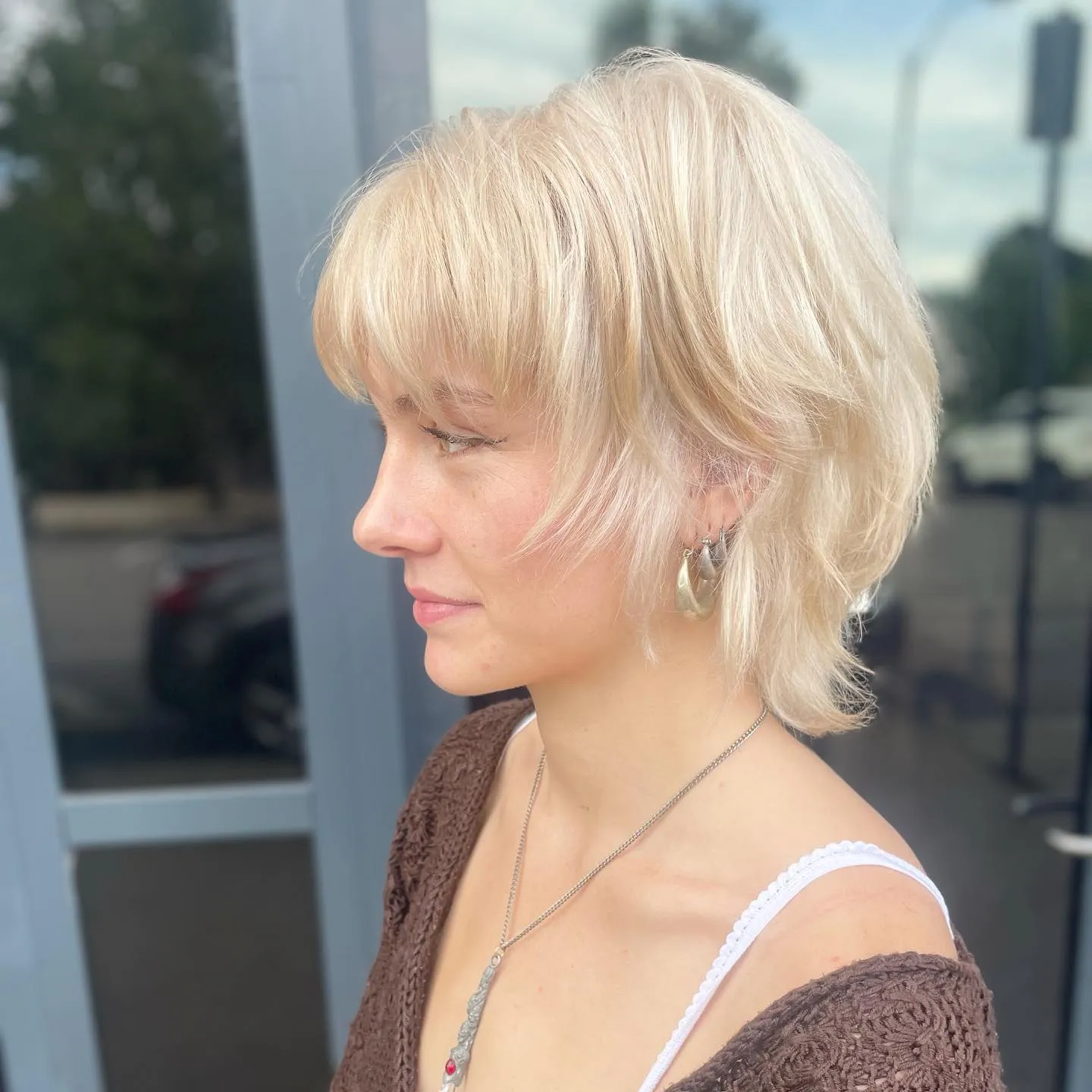
Source: hairbyvalentina444
Platinum hair can be striking, but choosing the wrong cut may leave the color looking flat instead of dimensional. A platinum blonde wolf cut shag pairs the pale shade with short crown layers, a broken fringe, and choppy ends that catch the light across different sections.
The shaggy outline keeps the haircut from becoming too rounded or uniform. Shorter pieces lift the crown, while the uneven sides and nape give the style a rebellious edge. It suits anyone who wants a noticeable hair transformation and enjoys a cut with visible texture.
Before committing to platinum, discuss your hair’s condition and coloring history with your stylist. Lightening can weaken the strands, especially if they have been bleached before. A gradual color plan may help preserve their condition while allowing you to work toward the shade you want.
14. Curtain Bangs Blonde Wolf Cut

Source: maiii_tsuchiya
Want bangs that frame your face without sitting like a solid strip across your forehead? A blonde wolf cut with curtain bangs parts near the center, allowing the front pieces to sweep toward the temples and blend into the shorter layers around the crown.
The fringe is the main feature here. Longer sections at the sides soften the transition from the forehead to the rest of the haircut, while the choppy ends keep the blonde shape from resembling a conventional layered bob. It works for anyone who wants a fringe with more flexibility.
For styling, direct each side of the fringe away from the center with a round brush while blow drying. Let the sections cool before moving them, since that helps them hold their direction. If you have a strong cowlick, ask your stylist to adjust the fringe length to suit your hairline.
15. Fluffy Brunette Wolf Cut
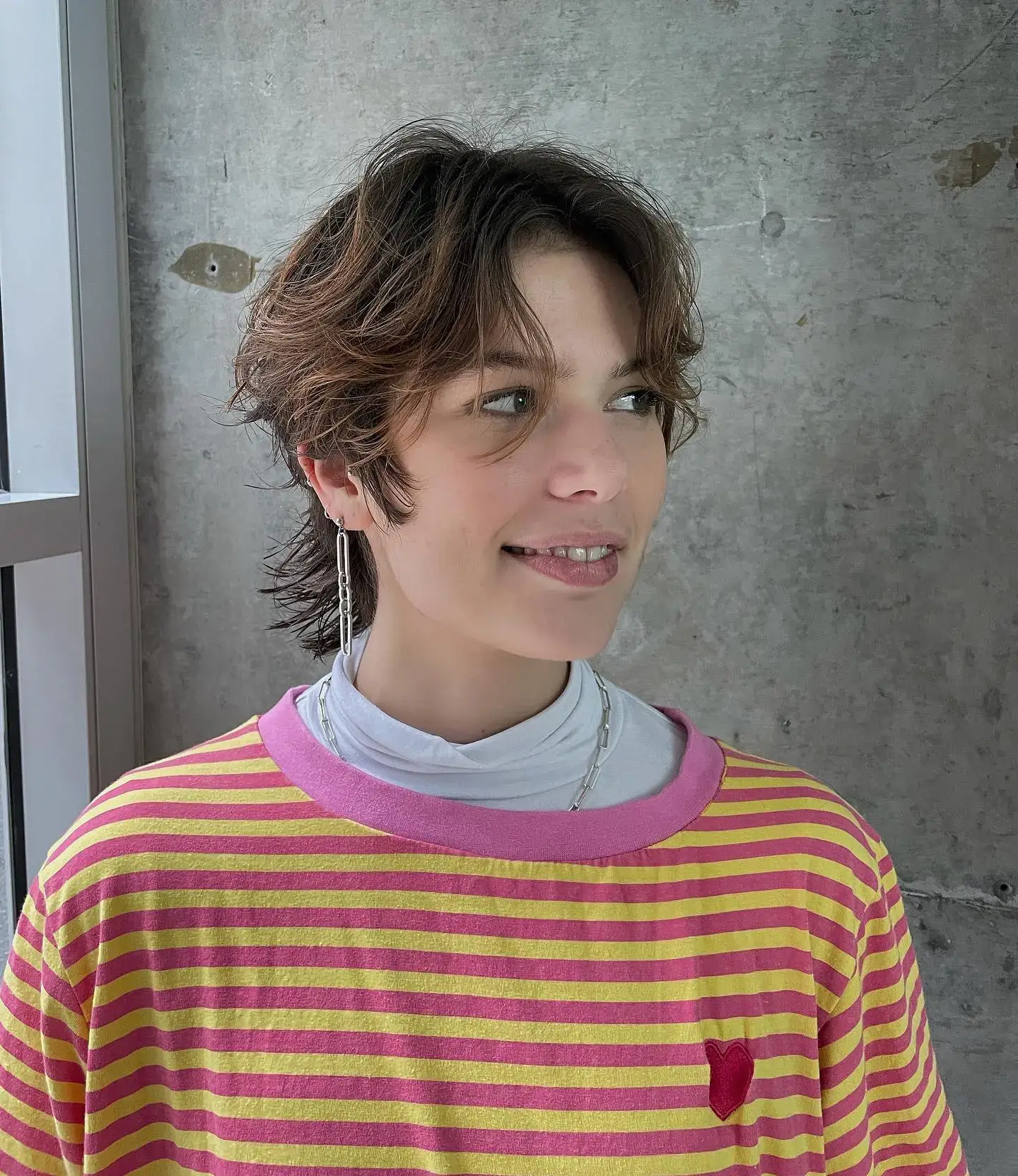
Source: danieljianing
When your roots fall flat soon after washing, adding more length may not solve the problem. A fluffy brunette wolf cut focuses on a lifted crown, rounded layers, and airy sides that give short hair a fuller outline without relying on sharply separated ends.
The brunette color keeps the hairstyle understated, while the volume through the top brings attention to the haircut’s shape. Feathered sections around the sides prevent the outline from feeling too heavy, making this a useful reference for anyone who wants more body than a traditional bob offers.
Try applying lightweight mousse near the roots before blow drying the crown in the opposite direction from your usual part. Once the hair cools, move it back with your fingers. This technique can help build lift without weighing down the layers with heavy styling creams.
16. Layered Chestnut Wolf Cut Bob
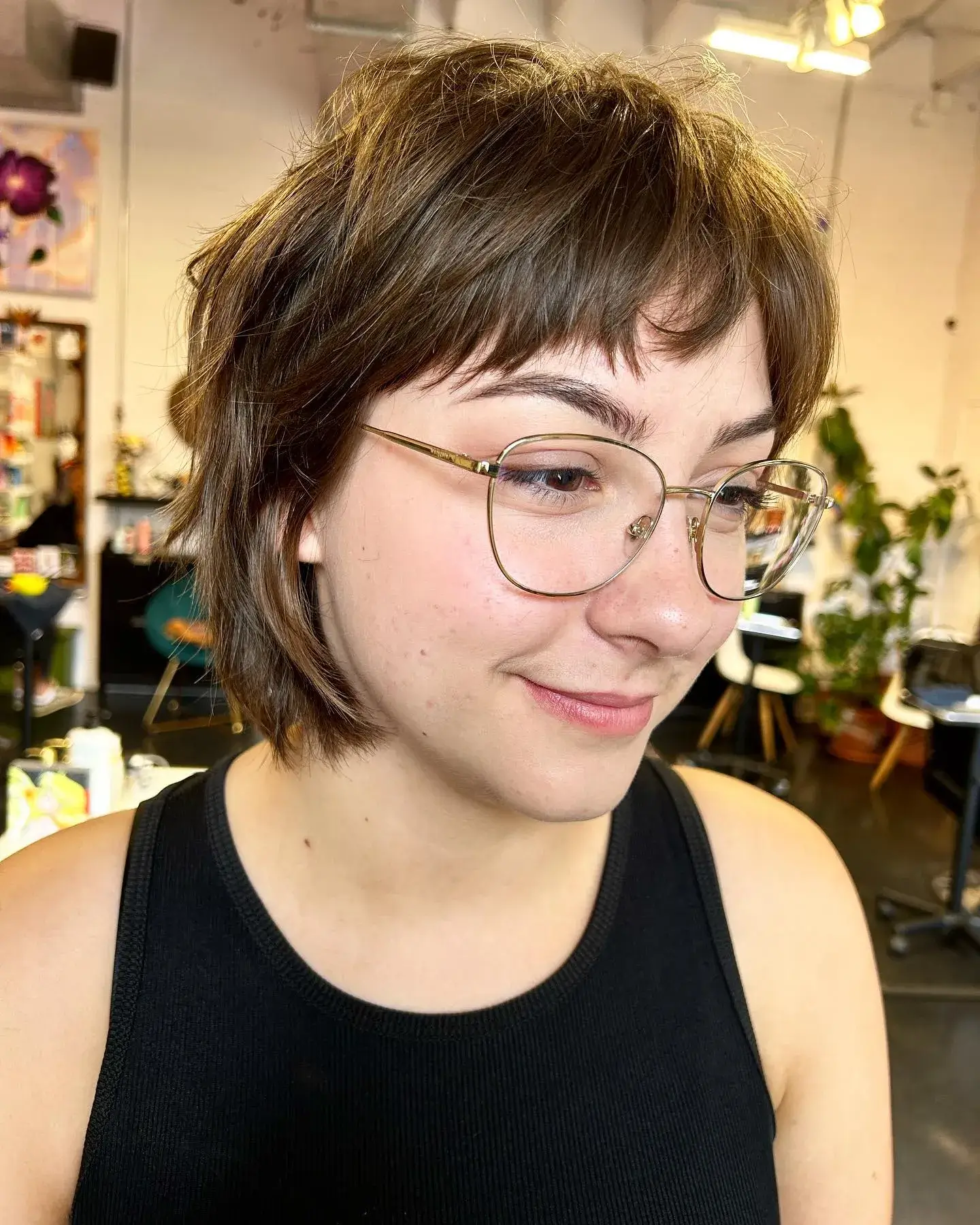
Source: smokedlacehair
A bob can lose its shape when the ends start sitting at the same level, especially if your hair naturally falls straight. A layered chestnut wolf cut bob breaks up that solid outline with shorter crown pieces, tapered ends, and a warm brown shade that brings depth to the haircut.
The chestnut color keeps the focus on the layers rather than a dramatic color contrast. Face framing sections soften the sides, while the shorter length makes the cut manageable for anyone who prefers hair above the shoulders but wants more texture than a classic bob provides.
For a balanced cut, ask your stylist to keep some weight along the bottom while adding shorter layers above. Removing too much hair from the perimeter can leave fine strands looking sparse, so the amount of layering should match your hair density.
17. Glossy Black Wolf Cut Mullet
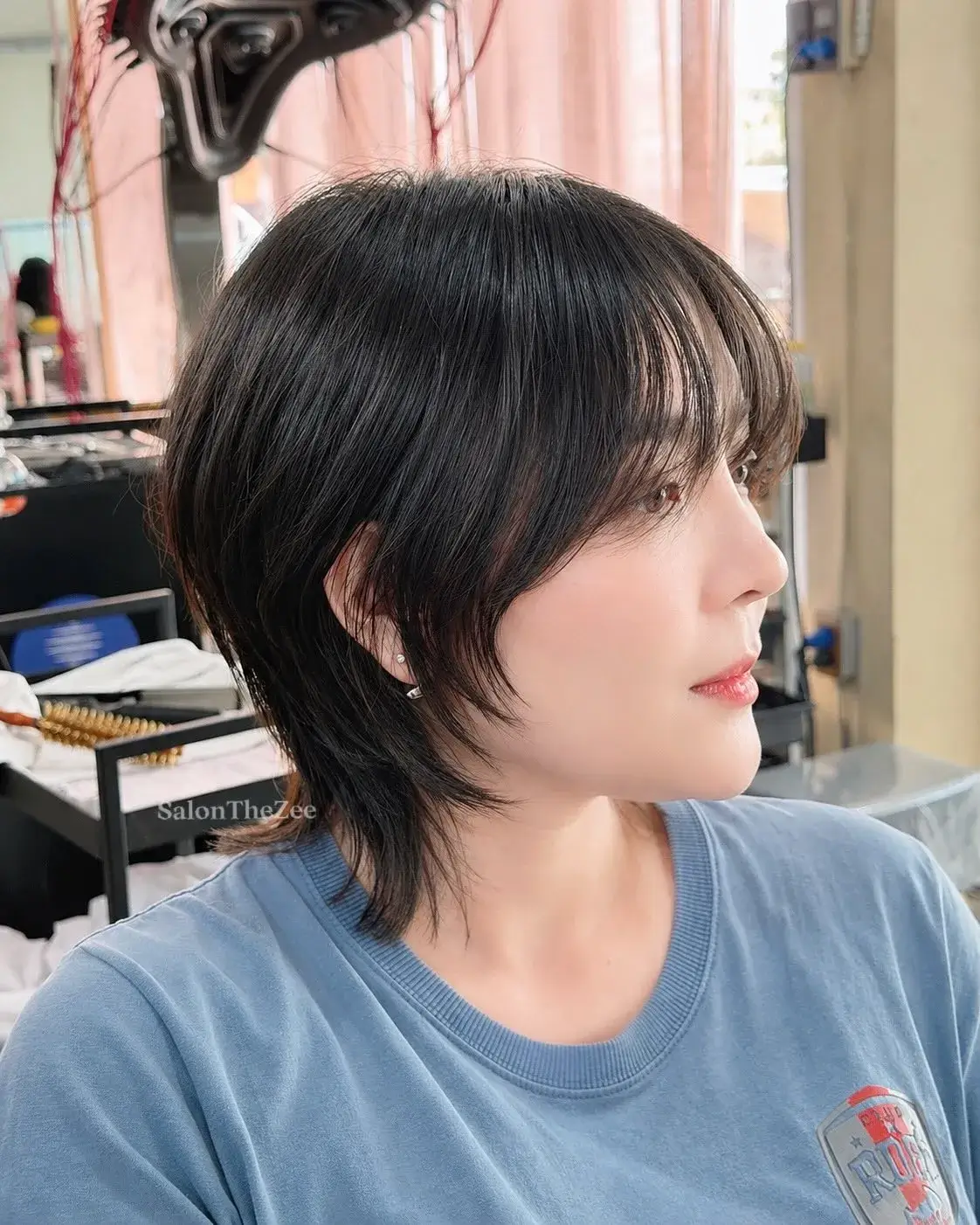
Source: salon_the_zee
Some haircuts are meant to blend into the background, but a glossy black wolf cut mullet takes a more defined route. Short crown layers and choppy sides contrast with a longer nape, creating a silhouette that stands out even without a bright hair color.
The glossy black finish brings attention to the shape and gives the textured cut a sharper character. It works well with alternative outfits, monochrome clothing, and simple accessories, especially if you prefer making a statement through your haircut rather than changing your hair color.
To maintain the shine without flattening the crown, smooth a tiny amount of serum over the mid lengths and ends. Keep heavier products away from the roots, where they can weigh down the shorter layers and reduce the separation that makes a mullet wolf cut distinctive.
18. Tousled Pixie Wolf Cut
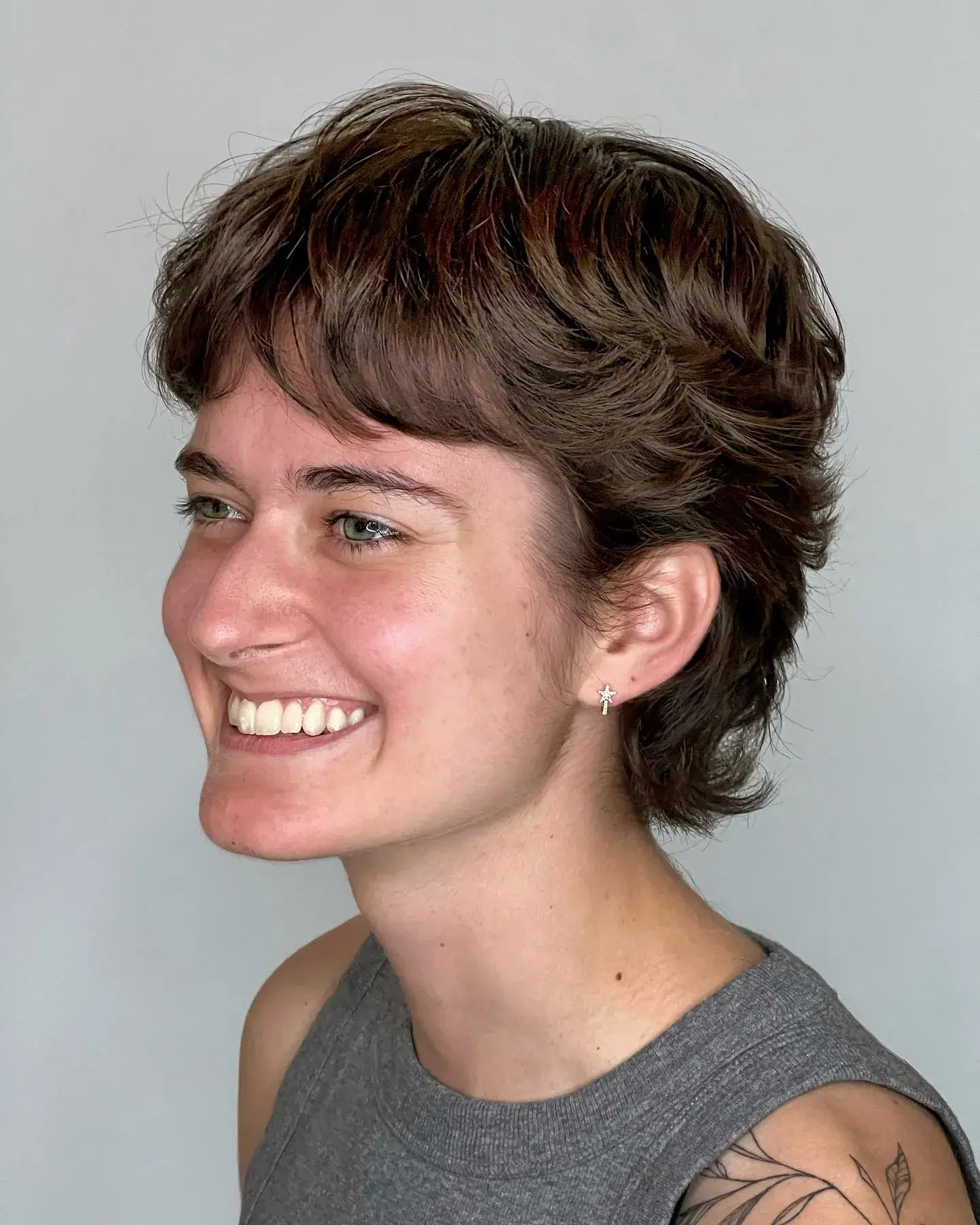
Source: russdoeshair
That awkward stage between a grown out pixie and a longer haircut can leave you unsure whether to trim it or keep waiting. A tousled pixie wolf cut makes use of that shorter length, shaping the crown into uneven layers and leaving textured ends that give the crop a more deliberate silhouette.
The fringe and upper layers bring attention to the eyes, while the sides can stay close to the head or retain extra length around the ears. Unlike a strongly extended mullet, this version keeps the back relatively compact, making it a useful reference for anyone who wants an edgy pixie without a long nape.
Skip the urge to smooth every strand into place. Rough dry the hair, then use your fingertips to direct a few sections upward or sideways. If your hair grows in a particular direction, ask your stylist to work with that pattern instead of cutting layers that require constant correction.
19. Face Framing Wolf Cut Bob
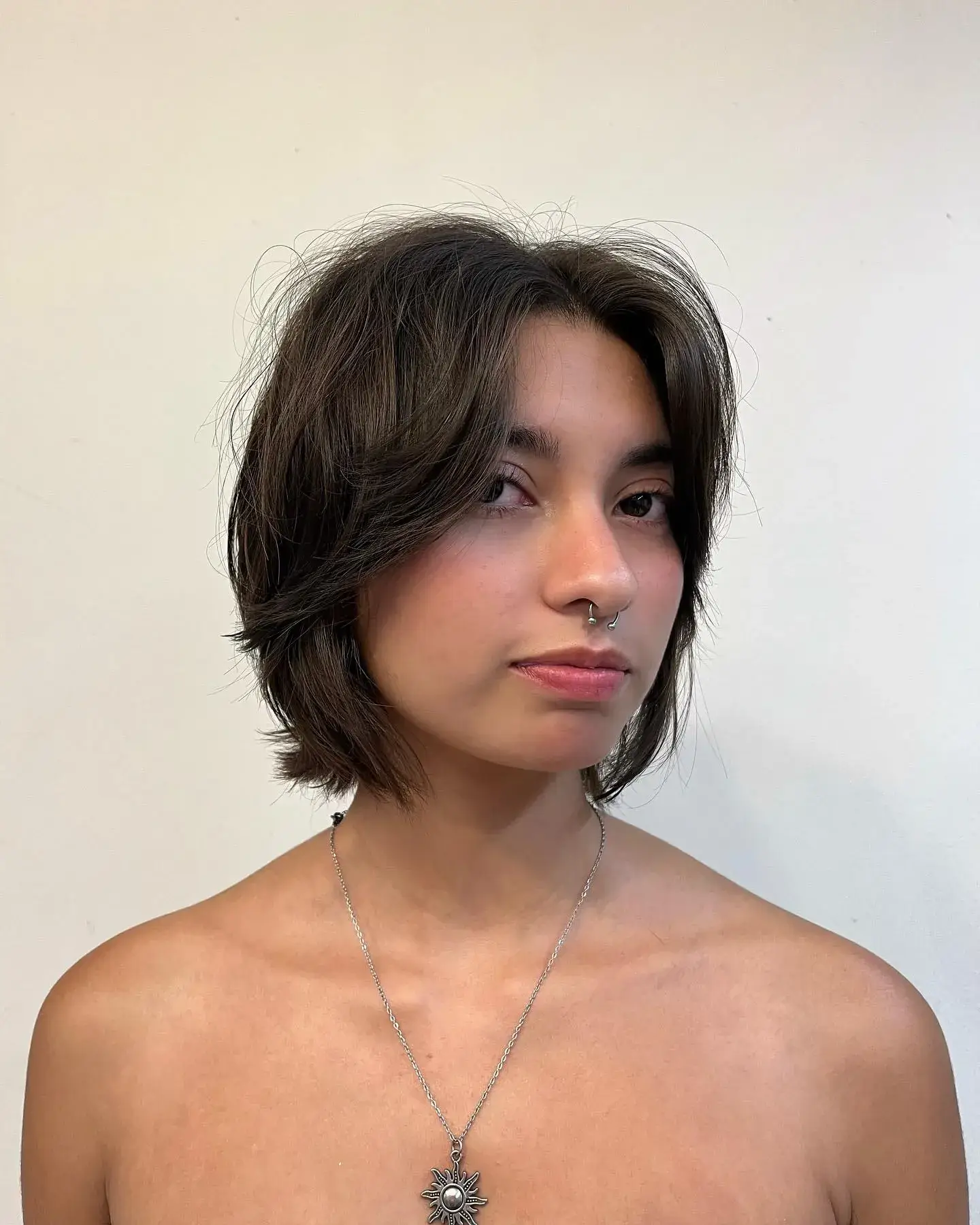
Source: verosainzpeluqueria
Choosing short hair can be difficult when you want to highlight your cheekbones but worry about the sides making your face look wider. A face framing wolf cut bob uses shorter front sections, choppy crown layers, and a cropped length to draw attention toward the eyes and cheeks.
The defining detail is how the front pieces connect with the rest of the haircut. Rather than forming a blunt line around the jaw, the layers create an uneven outline that works well for anyone who wants a bob with more personality and less of a traditional rounded shape.
Ask your stylist to place the shortest front layers according to your face shape and natural parting. Pieces that begin too high may stick out when you tuck your hair behind your ears, so discuss how you usually wear your hair before choosing the length.
20. Feathered Chestnut Wolf Cut
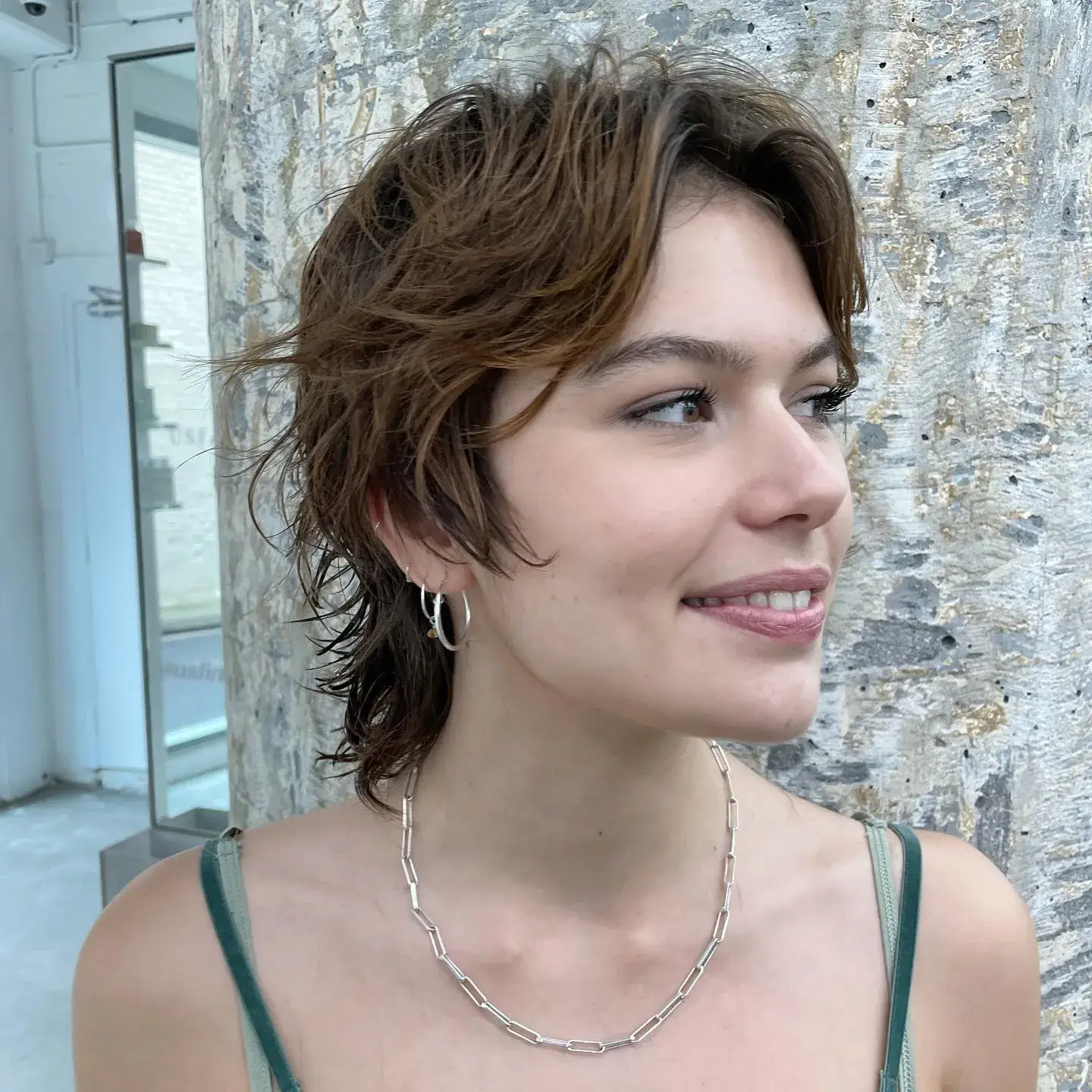
Source: danieljianing
Thick hair can become difficult to manage when too much weight sits around the sides and neckline. A feathered chestnut wolf cut uses tapered layers to break up that bulk, allowing the ends to sweep away from one another rather than forming a dense, heavy outline.
The chestnut shade brings warmth to the haircut without competing with its shape. Feathered pieces around the cheeks and crown give the short shag a blended finish, making it a useful reference if you want visible layers without the sharply disconnected edges of a choppy mullet.
The placement of the feathering matters more than removing as much hair as possible. If your strands are fine, preserving weight at the ends can help prevent a sparse appearance. For thicker hair, your stylist can remove bulk selectively while keeping enough length for the layers to move.
21. Platinum Shag Wolf Cut
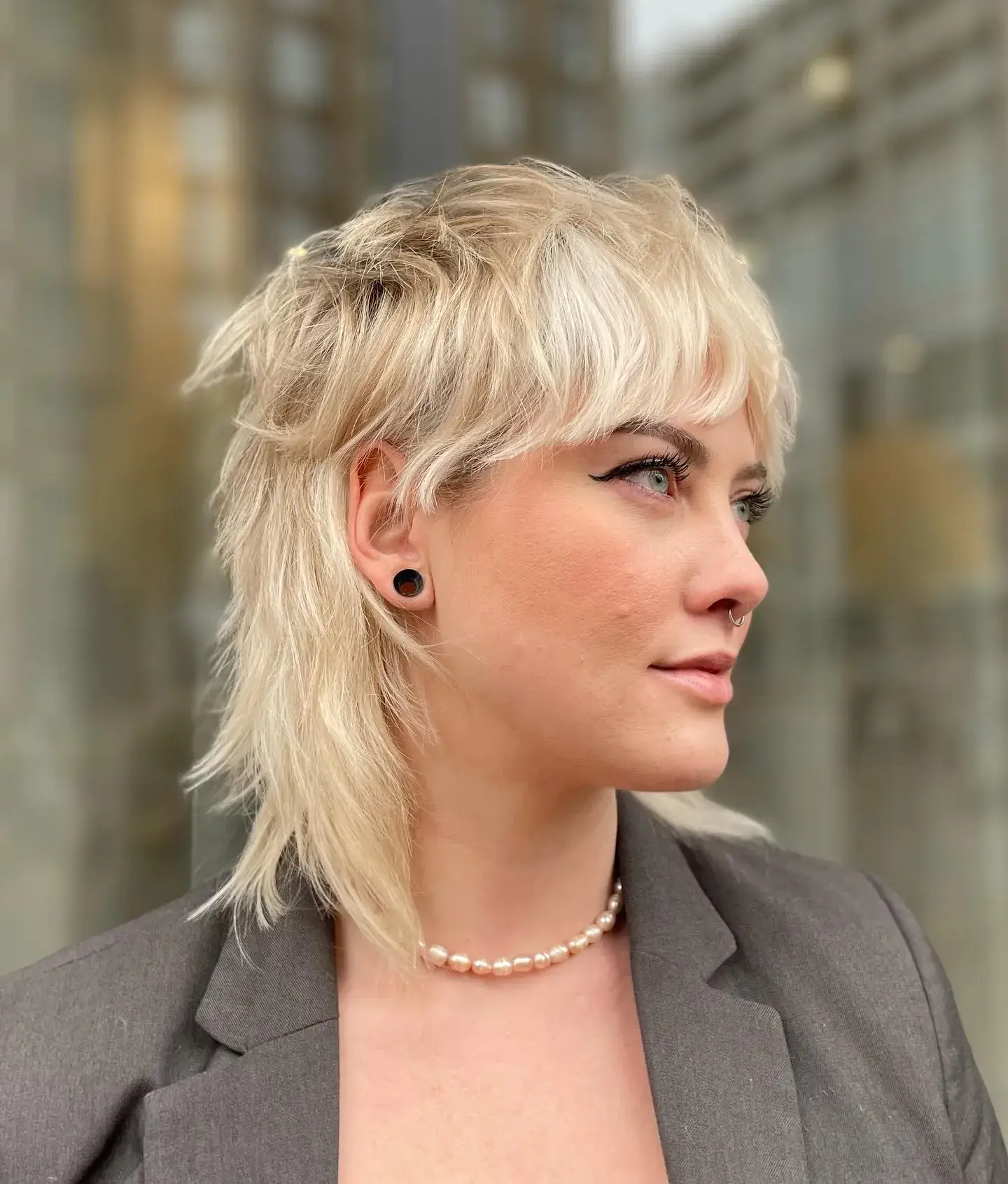
Source: arenakappers
A platinum transformation can change your entire hair routine, especially if you are moving from a dark natural shade to a much lighter color. A platinum shag wolf cut combines that pale tone with a broken fringe, short crown layers, and uneven ends that highlight the cut from different angles.
The shaggy silhouette keeps the hairstyle from resembling a uniform blonde crop. Shorter sections create separation through the crown, while the sides and nape retain enough length to show the difference between the layers. The result suits anyone who enjoys bold hair color and a more alternative shape.
Before booking a platinum service, talk through your coloring history with your stylist. Repeated lightening can weaken hair, and maintaining the shade may require regular salon visits. A realistic maintenance plan helps you decide whether the color and haircut fit your routine before making the change.
22. Wispy Bangs Wolf Cut Bob
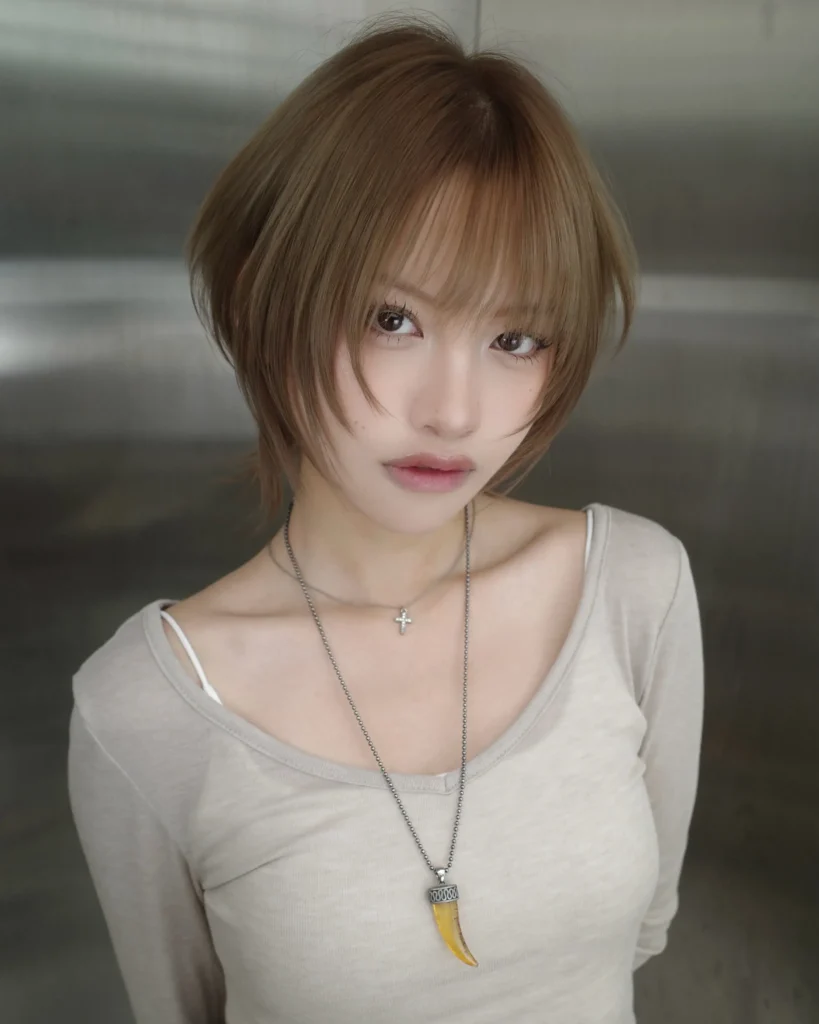
Source: shin_redeal_0815
Bangs can be tempting until you remember how frustrating it is when they separate unevenly or fall into your eyes. A wispy bangs wolf cut bob offers a lighter fringe, with fine pieces across the forehead and choppy layers around the crown that keep the shorter haircut from feeling too uniform.
The see through fringe leaves space between the strands, while the bob length keeps the shape more compact than a full mullet. It suits anyone who wants a playful haircut with bangs but prefers something less heavy than a thick, straight fringe.
For styling, use a small round brush to guide the fringe into place, then let it cool before adjusting the part. If your hairline has a strong cowlick, ask your stylist to adapt the fringe to your natural growth pattern instead of cutting every piece to an identical length.
23. Dark Layered Wolf Cut Shag

Source: hihellodayla
If sleek bobs and carefully arranged pixies do not match your personal style, a dark layered wolf cut shag offers a more rebellious alternative. Uneven crown pieces, a choppy fringe, and longer sections around the sides and nape give the haircut an irregular silhouette with plenty of character.
The dark shade emphasizes the difference between the layers without relying on bright color. Its shaggy outline pairs well with alternative fashion, oversized clothing, and everyday outfits that benefit from a stronger haircut. The length can remain short while the back retains enough texture to separate it from a standard crop.
For your salon visit, bring reference photos showing the front, sides, and back. Wolf cuts can vary significantly in nape length and crown height, so discussing those details helps your stylist understand how bold you want the finished shape to be.
What Face Shape Suits a Short Wolf Cut?
A short wolf cut can be adapted to different face shapes by changing the fringe, crown height, and length around the cheeks. Rather than choosing a haircut based on face shape alone, consider your hair texture and the features you want to highlight.
- Round face: Try longer front pieces and some height at the crown to create a more elongated outline.
- Oval face: Experiment with choppy bangs, curtain fringe, or a shorter pixie wolf cut.
- Square face: Consider feathered layers around the temples and jaw to break up a strong outline.
- Heart shaped face: Wispy bangs and slightly fuller sides can balance a narrower chin.
- Long face: A fuller fringe and less height at the crown can help balance the proportions.
These are starting points, not strict rules. Your natural hairline, density, and preferred styling routine matter just as much.
How to Style a Short Wolf Cut at Home
You do not need a complicated routine to style a short wolf cut. The main goal is to bring out the crown layers and separate the ends without flattening the hair with too much product.
For a tousled finish, apply a lightweight texturizing spray to damp hair and scrunch the ends while drying. If you prefer a fluffy shape, use a small round brush to lift the roots. Curtain bangs may need a quick blow dry, while a textured pixie can often be shaped with a little styling wax.
Keep products light around the crown, especially if your hair is fine. Heavy creams and oils can weigh down shorter layers and reduce the volume that makes a wolf cut distinctive.
Is a Short Wolf Cut Good for Thin or Thick Hair?
Yes, a short wolf cut can be adapted for different hair densities, but the layering technique makes a difference. Fine hair often benefits from fewer, carefully placed layers, while thick hair may need selective bulk removal to keep the sides from expanding outward.
Hair type | What to ask your stylist for |
Fine hair | Preserve weight at the ends and use light crown layers |
Thick hair | Remove bulk selectively without thinning the perimeter too much |
Straight hair | Add texture through the crown and ends |
Wavy hair | Work with the natural wave pattern and allow room for shrinkage |
Curly hair | Plan the layers around the curl pattern and dry length |
Bring a reference photo with a similar hair texture to yours. A haircut can behave differently on fine, straight strands than on dense, wavy hair, even when the pictures show a similar shape.
How to Maintain a Short Wolf Cut
Short wolf cuts can grow out differently depending on how cropped the crown is and how much length remains at the nape. Keeping the fringe and sides in shape may require trims sooner than you would need for a longer, more uniform haircut.
A simple maintenance routine can help:
- Book trims as needed: Pay attention to the fringe, crown, and nape rather than following a rigid schedule.
- Use lightweight products: Texturizing spray, mousse, or a small amount of wax can define the layers without weighing them down.
- Protect colored hair: If you choose copper, purple, blue, or platinum, ask your colorist about suitable products and touch up intervals.
- Limit unnecessary heat: Use a heat protectant when blow drying or using hot tools.
- Bring photos to appointments: Save front, side, and back views so your stylist can recreate the silhouette you want.
The best short wolf cut is one that suits your hair, fits your routine, and still makes you excited to style it.
FAQs
u003cstrongu003e1. Is a wolf cut possible with short hair?u003c/strongu003e
Yes, a wolf cut works well on short hair, from pixie cuts to short bobs. Choppy layers and textured ends give the haircut its signature shape.
u003cstrongu003e2. Which is better, butterfly cut or wolf cut?u003c/strongu003e
A butterfly cut suits those who want flowing layers and the appearance of longer hair. A wolf cut is better for a choppy, shaggy shape with an edgier finish.
u003cstrongu003e3. Who shouldn’t get a wolf cut?u003c/strongu003e
People who prefer a sleek, uniform haircut with minimal styling may not enjoy a wolf cut. However, a hairstylist can adjust the layers to suit different hair types.
u003cstrongu003e4. Does a short wolf cut work for thin hair?u003c/strongu003e
Yes, carefully placed layers can give fine hair more lift and movement. Keeping enough weight at the ends helps prevent the hair from looking sparse.
u003cstrongu003e5. How often should you trim a short wolf cut?u003c/strongu003e
A trim every 6 to 10 weeks can help maintain the shape. Short bangs and cropped layers may need more frequent touch ups.
Conclusion
A short haircut can still offer plenty of ways to express your personality. From choppy black layers to colorful pixies and feathered bobs, these short wolf cut ideas show how different cuts, textures, and shades can change your everyday hairstyle.
Save this article on Pinterest so you can revisit your favorite styles when you are ready for a salon appointment. Try a new parting, experiment with texture, or bring a reference photo to your hairstylist to discuss what suits your hair best. Share this guide with a friend who is considering shorter hair, too. Your next favorite haircut might be waiting in this collection.