23 Golf Hairstyles You’ll Want Every Round
Your hair shouldn’t distract you mid swing. One loose strand can break your focus when it matters most. That’s where the right Golf Hairstyles make all the difference.
From structured braids to low maintenance knots, these 23 Golf Hairstyles help you play with confidence while looking put together. You’ll discover styles that match your hair type, fit comfortably under a cap, and support your movement on the course.
Small styling choices can make a big difference in how your hair holds up during a full round. With the right approach, you can stay comfortable and focused without constant adjustments.
How to Choose the Right Golf Hairstyle
• Think about movement first, your hairstyle should stay stable during swings and walking.
• Wind and humidity can loosen styles quickly, so go for secure options over loose ones.
• Caps and visors affect placement, low styles usually feel more comfortable.
• Match your hairstyle to your hair type, thick hair needs structure, fine hair needs grip.
• Focus on styles that don’t need constant fixing so you can stay focused on your game.
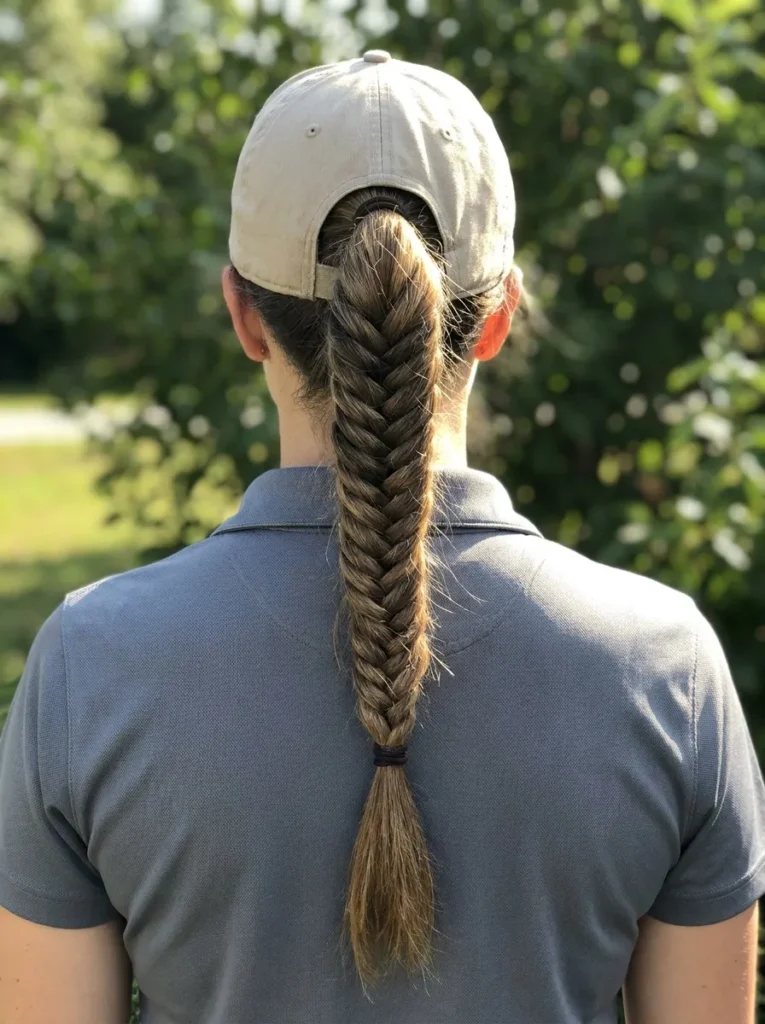
1. Twisted Spine Pony with Cap
Face balance: Long, narrow, defined
Hair texture: Medium length, slightly textured
Style feel: Linear and detailed
A central twist running down the ponytail creates a strong visual line. It keeps the structure organized from top to bottom. Forming the twist by merging small sections adds subtle depth without making the style heavy. The pattern stays consistent along the length.
The ponytail remains controlled while still allowing natural movement. It doesn’t spread out or lose shape easily. Keeping the twist centered ensures the design looks balanced from every angle. It stays aligned throughout activity.
Course advantage: Central twist keeps strands grouped and aligned
Skip if: Hair is too fine to hold a defined twist
Finish tip: Twist sections tightly before merging for better definition
2. Low Braided Bun Duo
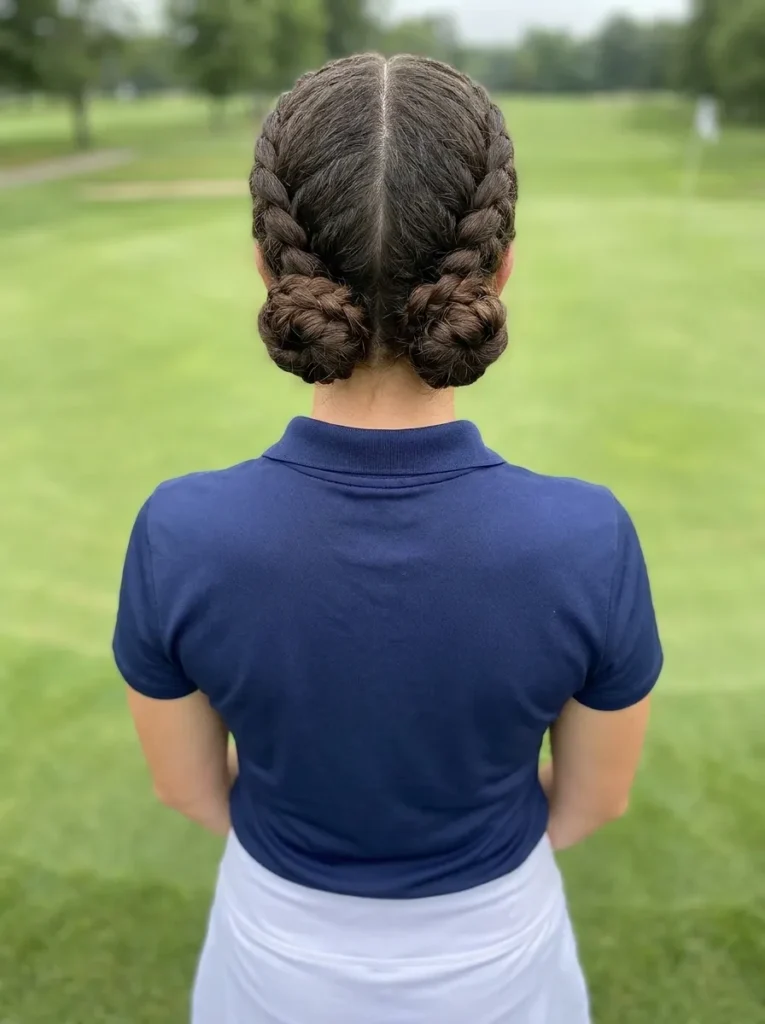
Face match: Symmetrical, square, softly rounded
Strand behavior: Medium to thick, wavy or layered
Overall feel: Stable and compact
Splitting the hair into two equal parts spreads the weight across both sides. This prevents tension from building in one area, making it more comfortable over long rounds. The balance feels natural throughout movement.
Starting with braids gives the structure extra grip before shaping the buns. The woven base holds tighter than a simple twist, helping everything stay in place even in motion.
Keeping both buns low allows them to sit neatly under a cap. There’s no pressure against the headwear, and the shape remains compact at the nape. Once secured, this style requires very little attention. It stays consistent without loosening as the game progresses.
Performance edge: Even distribution prevents pulling and shifting
Skip this if: Hair lacks density to support two sections
Pro move: Use slightly textured hair for better grip before braiding
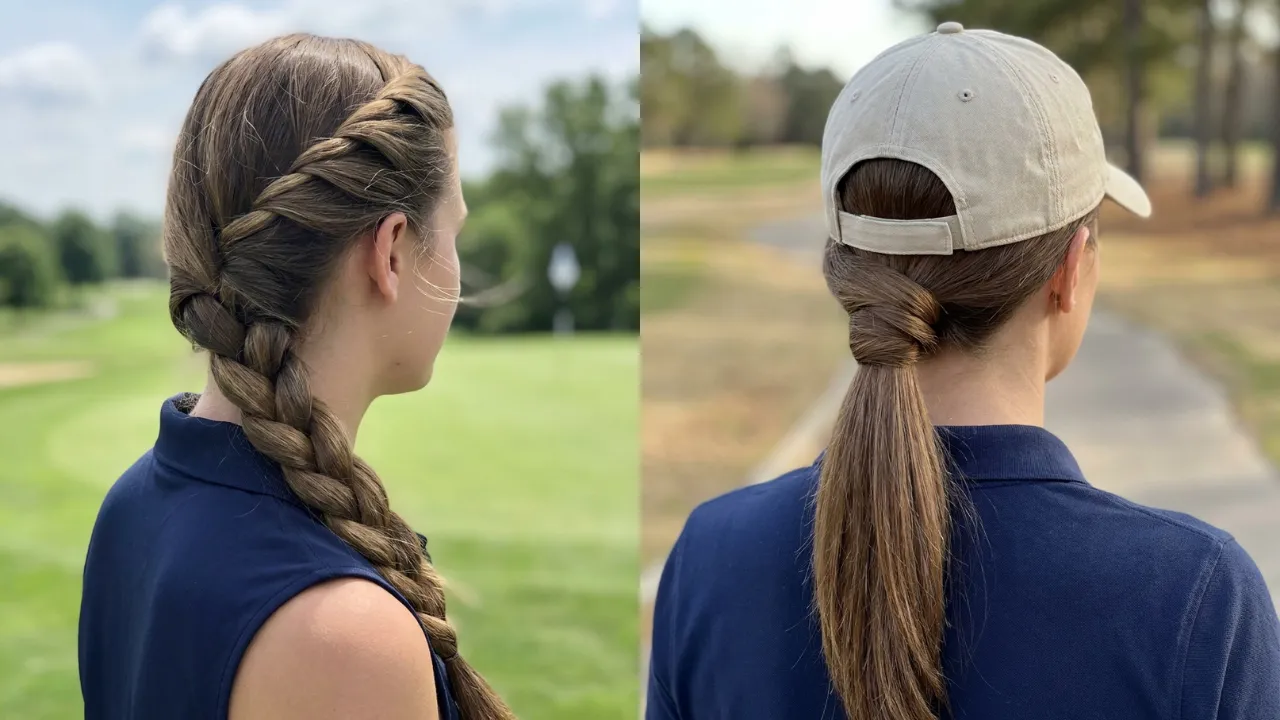
3. Sleek Twisted Side Braid
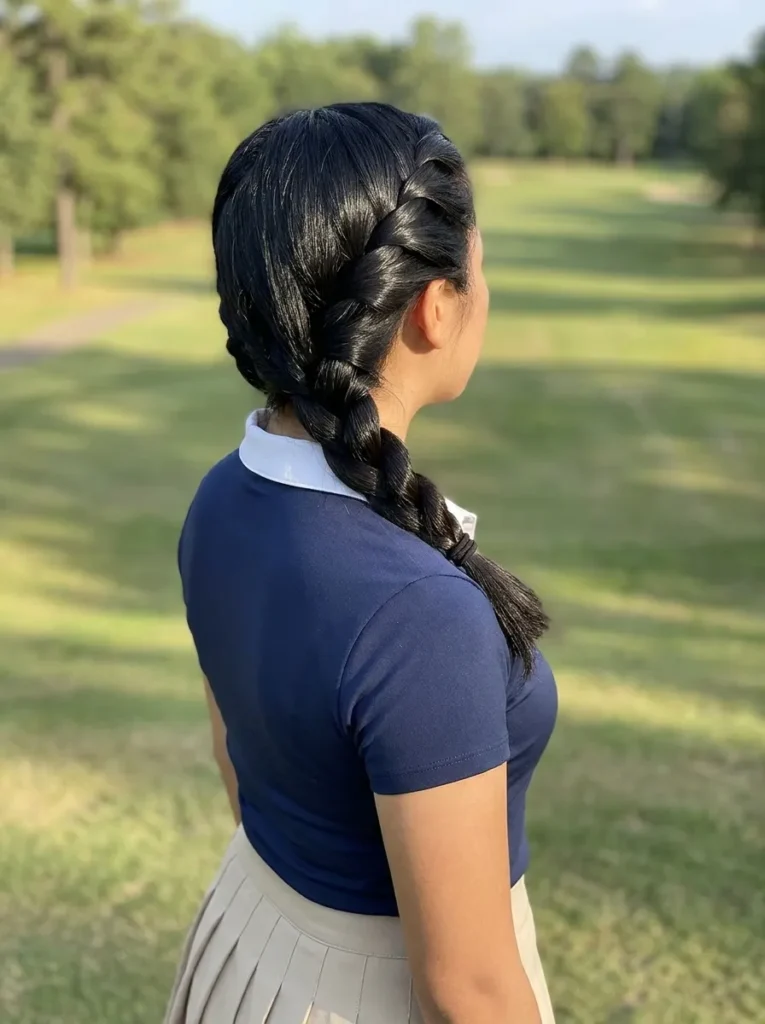
Face match: Heart, oval, slightly angular
Strand behavior: Straight, fine to medium
Overall feel: Clean and controlled
Placing the braid to one side keeps the front completely clear. This helps maintain focus without strands falling into your line of sight during important shots.
Twisting two sections together creates a firmer hold than a traditional braid. The strands lock in more tightly, helping the style stay intact through movement and breeze.
The diagonal direction keeps the length away from your back. This reduces friction from clothing or golf bag straps while walking across the course. It’s a practical choice when you need something quick that still looks intentional. The structure remains neat without constant adjustment.
Performance edge: Twist pattern holds tighter under motion
Skip this if: Your hair tends to unravel from twists quickly
Pro move: Secure the end firmly before loosening any sections
4. Visor Friendly High Plait
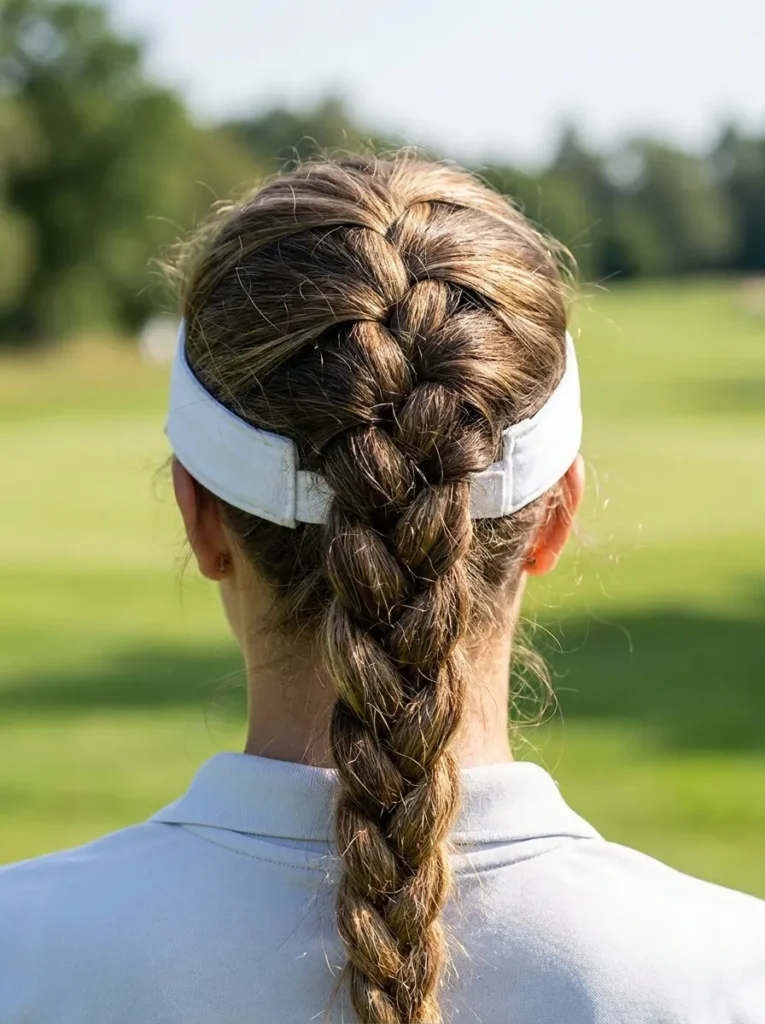
Works well with: Visors, open-top caps
Strand structure: Long, dense, straight to slightly textured
Style mood: Elevated and active
Raising the braid to the crown changes how the hair moves with your body. Instead of swinging against your back, it follows your motion naturally. This makes your stance feel more controlled during play.
Starting the braid high keeps the neckline clear. Sweat doesn’t build up around the neck area, which helps during warmer rounds. The placement also keeps everything away from your shoulders.
Maintaining even tension while braiding keeps the structure neat from top to bottom. The full length stays aligned without looking uneven or loose. This approach is especially useful when wearing a visor. Nothing interferes with the top placement, and the braid remains fully visible.
On-course benefit: Elevated placement prevents contact with shoulders
Not recommended for: Short lengths that can’t reach crown height
Quick upgrade: Weave a thin ribbon through the braid for added detail
Read More : 19 Easy Track Hairstyles for Busy Athletes
5. Offset Side Knot
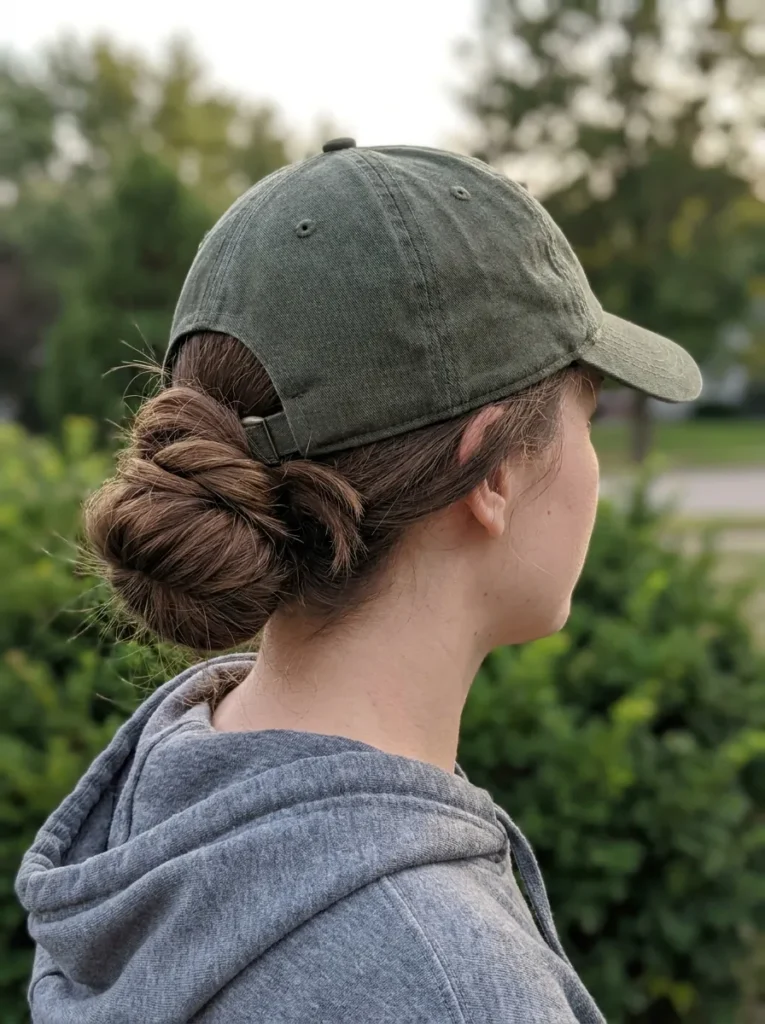
Face balance: Soft features, oval, asymmetrical preference
Hair texture: Medium length, straight to lightly wavy
Style feel: Modern and offset
Shifting the knot slightly to one side removes pressure from the center of the head. This makes it more comfortable under a cap, especially during long rounds. Nothing presses awkwardly against the back.
Gathering the hair behind one ear creates a natural offset that stays stable while moving across the course. The placement helps avoid constant adjustments, even in breezy conditions.
Forming a compact coil keeps the knot low and close to the head. It fits neatly under headwear without creating bulk or uneven shape. This placement also allows better airflow around the neck, which helps on warmer days. It offers a subtle variation from standard centered buns.
Course advantage: Off-center placement reduces pressure under cap
Skip if: Hair is too short to gather to one side
Finish tip: Use matte pins for better grip and a cleaner look
6. Side Swept Rope Twist
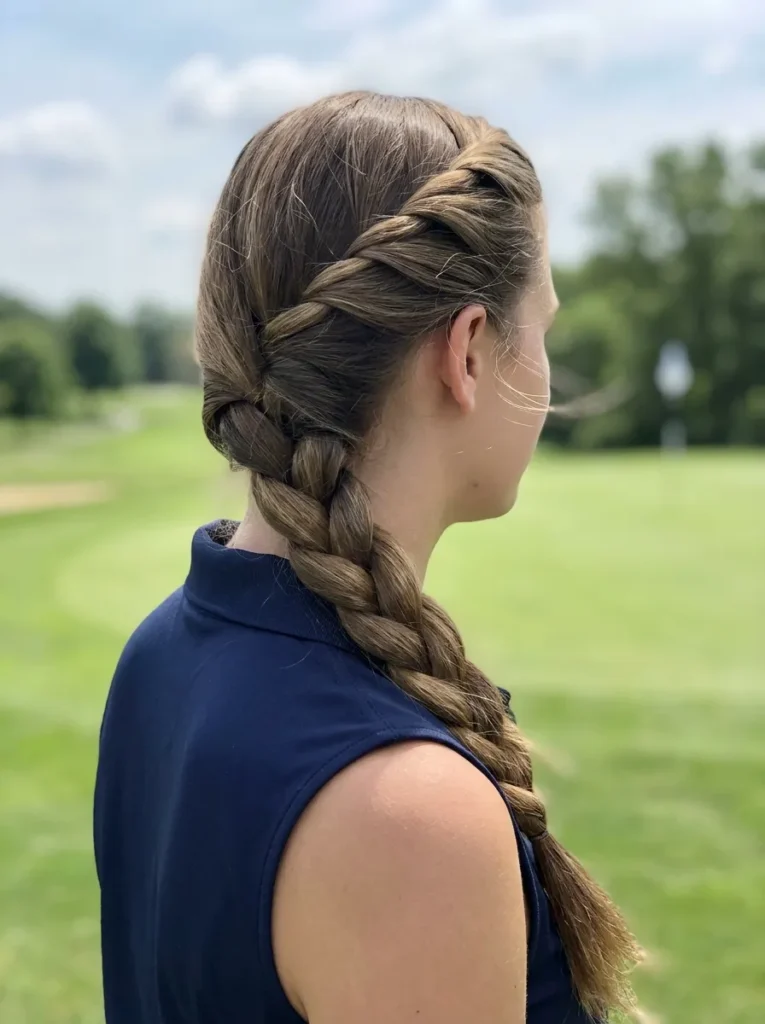
Face alignment: Heart, angular, defined features
Hair nature: Straight to lightly wavy, medium density
Style impression: Clean and modern
Twisting two sections in opposite directions creates a rope effect that holds firmly. The strands lock together, reducing the chance of loosening during activity.
Sweeping the length over one shoulder keeps it away from the back. This reduces friction from clothing or golf bag straps while walking.
The structure is clearly defined from top to end, creating a neat and intentional finish without complexity. It also takes less time compared to detailed braiding.
Minimal tools are needed, which makes it practical for quick preparation before a round. Once secured, it stays consistent.
On-course strength: Rope twist maintains hold with minimal effort
Consider skipping if: Hair tends to unravel from twists easily
Finishing touch: Twist each section tightly before combining for better grip
Read More : 21 Graduation Hairstyles with Cap for Perfect Pics
7. Dutch Braided Crown Loop
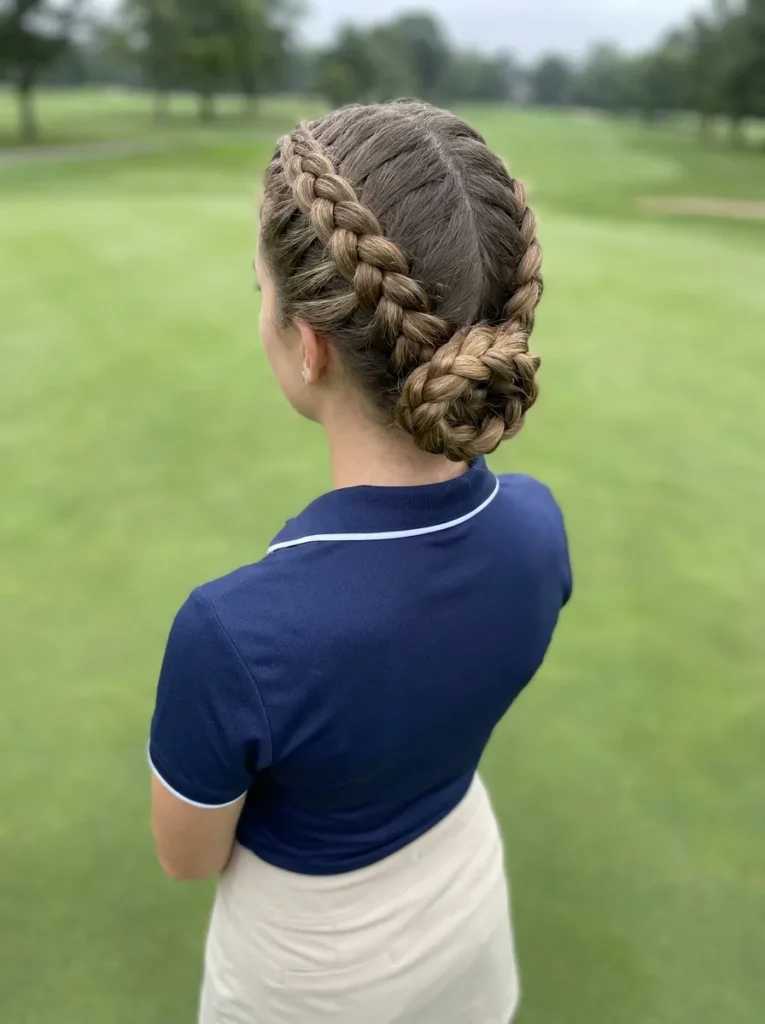
Face harmony: Oval, heart, balanced features
Texture profile: Thick, wavy to slightly coarse
Look direction: Secure and wrapped
Braiding along the scalp keeps every strand close and controlled. Nothing lifts or shifts, even when you’re constantly moving between shots.
Looping the braid back at the nape completes the structure in a continuous shape. This removes any loose ends and keeps the finish compact.
The wrap-around design spreads the weight evenly across the head. That reduces pressure in one spot and keeps the style comfortable over time. It’s a dependable option when you want zero distractions. Once set, it stays exactly where it should.
Play advantage: Scalp-level hold prevents lifting in windy conditions
Skip when: Hair is too short to complete the loop
Styling note: Keep braid tension consistent for a cleaner result
8. Multi Tiered Segmented Tail
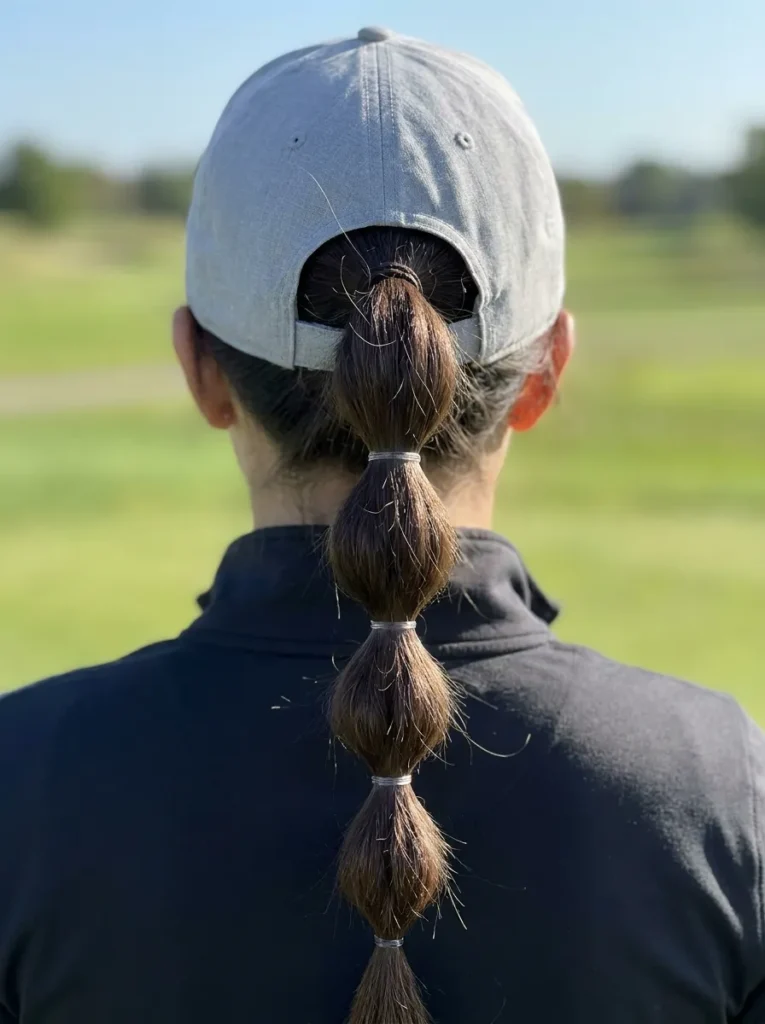
Face harmony: Round, soft features
Texture profile: Medium to thick, straight
Look direction: Structured and layered
Dividing the length into multiple sections helps distribute weight gradually. This prevents the pull that usually comes from a single heavy ponytail.
Each section acts like its own anchor point. The hair stays closer to the head instead of swinging freely, which helps during active movement.
Keeping the spacing even ensures the pattern looks clean from top to bottom. The full structure remains visible without appearing uneven. This setup works well in breezy conditions. The segmented design keeps everything controlled without feeling tight.
Play advantage: Multiple anchor points reduce swinging motion
Skip when: Hair is very fine and lacks hold
Styling note: Slightly expand each section for a more defined shape
9. Loose Wave Hat Tuck
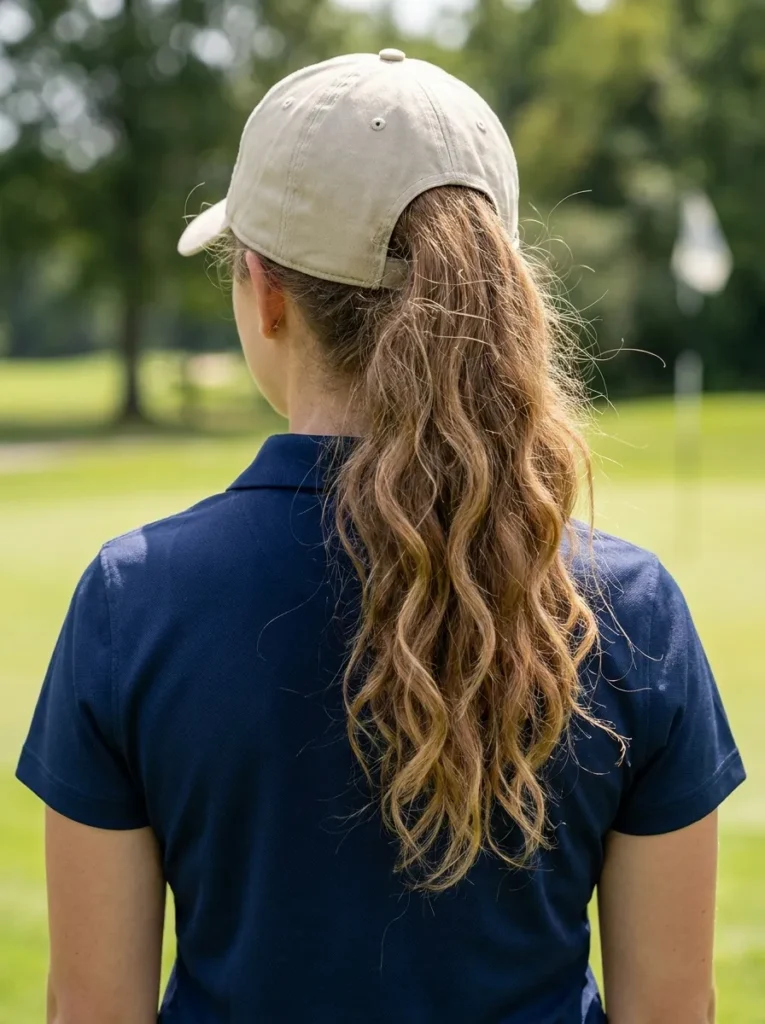
Face harmony: Soft jawlines, oval shapes
Texture profile: Naturally wavy or lightly curled
Look direction: Relaxed and effortless
Letting the length fall freely creates a more natural appearance. At the same time, keeping the top secured under a cap prevents front pieces from interfering.
Tucking the front sections behind the ears keeps your vision clear. You won’t need to push hair away while focusing on your shot.
The natural wave pattern helps the hair sit better once the cap is removed. It avoids that flattened look that often happens after wearing headwear. This style suits slower-paced rounds or casual play. It balances comfort with a simple, styled finish.
Play advantage: Keeps front strands controlled without full styling
Skip when: Wind conditions are strong or unpredictable
Styling note: Use a light product to maintain wave definition
Read More : 21 Softball Hairstyles for Long-Lasting Looks
10. French Braid Into Bun
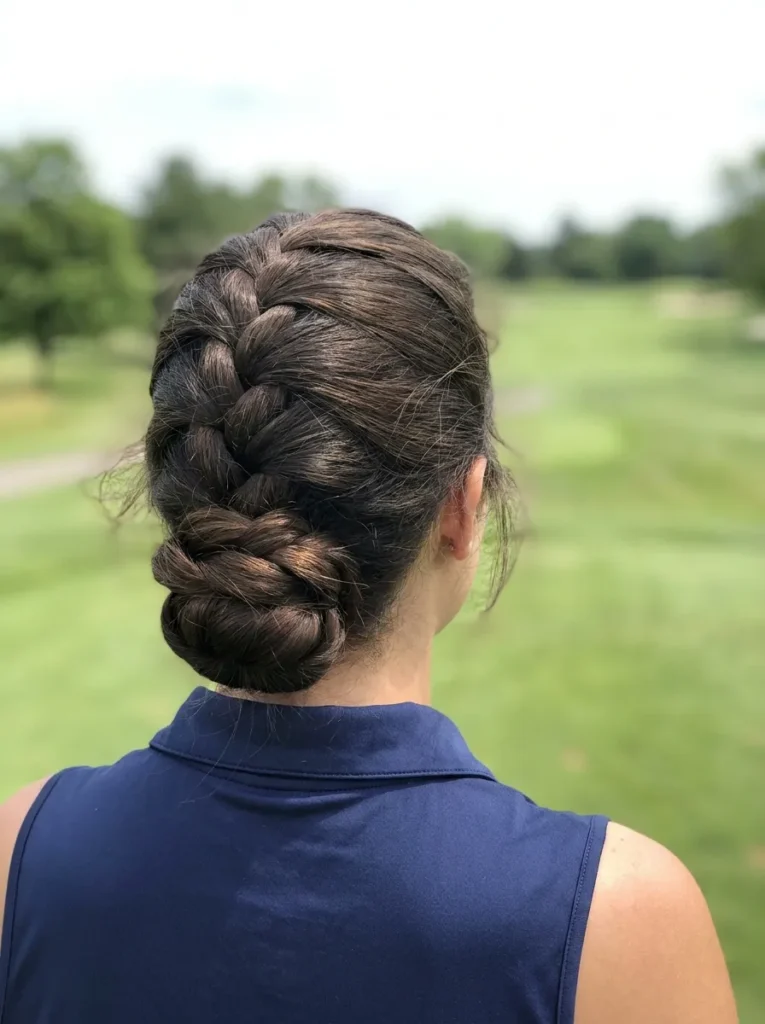
Face suitability: Angular, oval, defined jawlines
Hair behavior: Thick, slightly textured
Visual tone: Controlled and refined
Starting the braid from the crown keeps everything close to the scalp. Strands stay locked in early, which prevents loosening later in the round.
As the braid reaches the nape, wrapping the remaining length into a bun removes any loose ends. That combination keeps both the top and length fully contained.
Movement on the course won’t disturb the structure easily. The braided base strengthens the bun, giving it more grip than a regular twist.
From a stylist’s perspective, damp hair gives better control during braiding. It helps maintain tighter sections that hold their pattern longer under heat and wind.
Game advantage: Combined structure secures both crown and ends
Not suitable for: Very fine strands that slip out of braids
Refinement tip: Insert pins at an angle into the braid for stronger hold
11. Sporty Fishtail Side Sweep
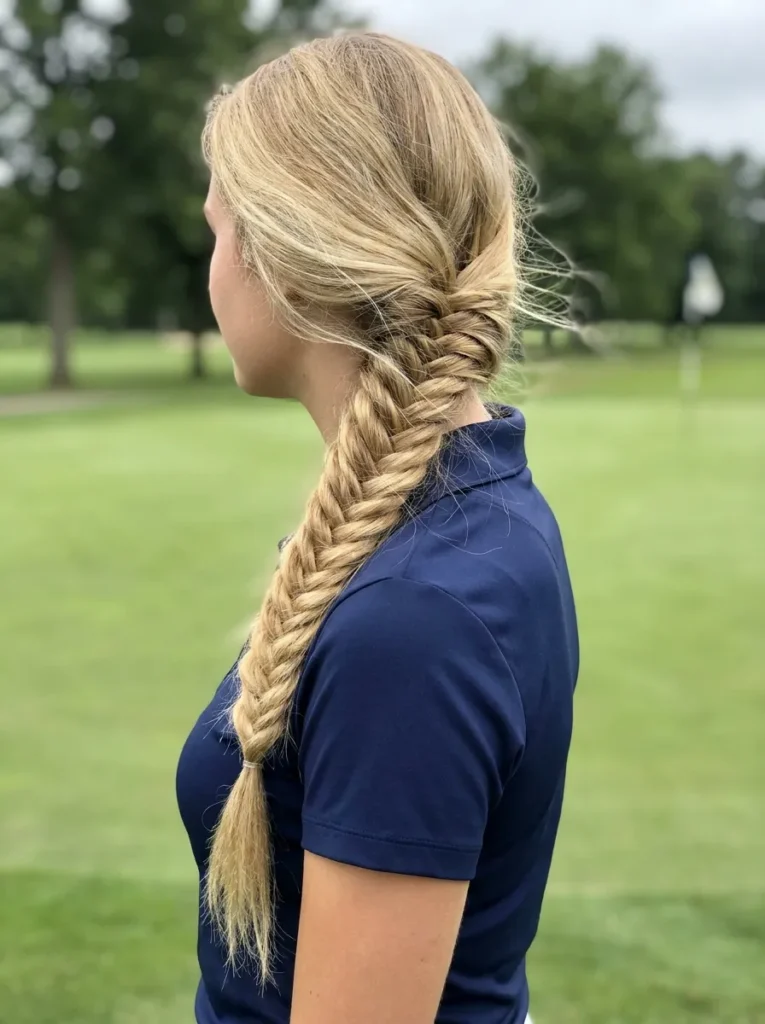
Face suitability: Long, oval, narrow features
Hair behavior: Thick, multi-tonal, slightly coarse
Visual tone: Detailed and athletic
Smaller sections create a dense weave that stays compact. The fishtail pattern reduces looseness compared to wider braids, helping maintain control.
Pulling the braid to one side keeps the back clear. Nothing interferes with posture or equipment while moving across the course.
The structure remains visible from top to end, especially when tension stays consistent. Uneven pulling can break the pattern, so steady hands matter here.
In professional styling, tighter weaving enhances durability. It also prevents the braid from expanding too much throughout the day.
Game advantage: Dense weave resists wind disruption
Not suitable for: Very short layers that interrupt the pattern
Refinement tip: Keep section sizes equal for a cleaner finish
12. Wrapped Base High Pony
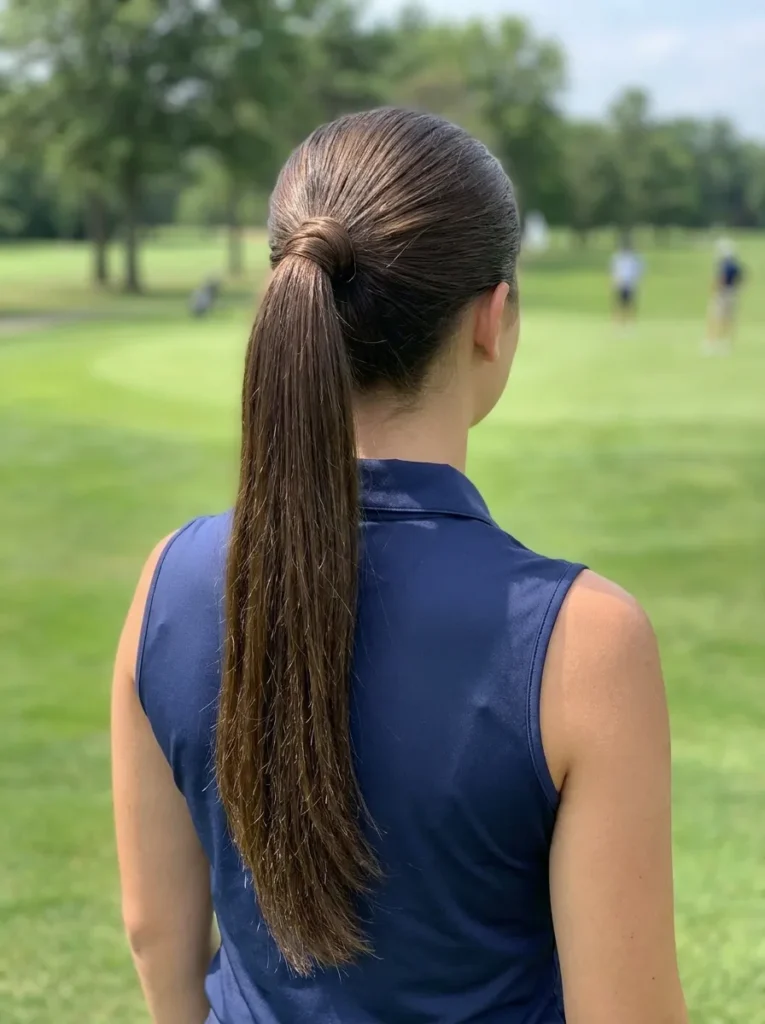
Face suitability: Round, soft features
Hair behavior: Straight, medium to thick
Visual tone: Sharp and elevated
Placing the ponytail high shifts the length away from the shoulders. That reduces friction during swings and keeps movement unobstructed.
Wrapping a strand around the base removes the visible elastic. The finish looks cleaner while also adding extra hold around the tie point.
The length falls freely but stays aligned due to the high placement. It moves with your body rather than against it. Smoothing the base before wrapping creates a more controlled finish.
Game advantage: Elevated position keeps hair clear during motion
Not suitable for: Hair that struggles to hold height at the crown
Refinement tip: Secure the wrapped section underneath with a hidden pin
13. Low Folded Wrap Pony
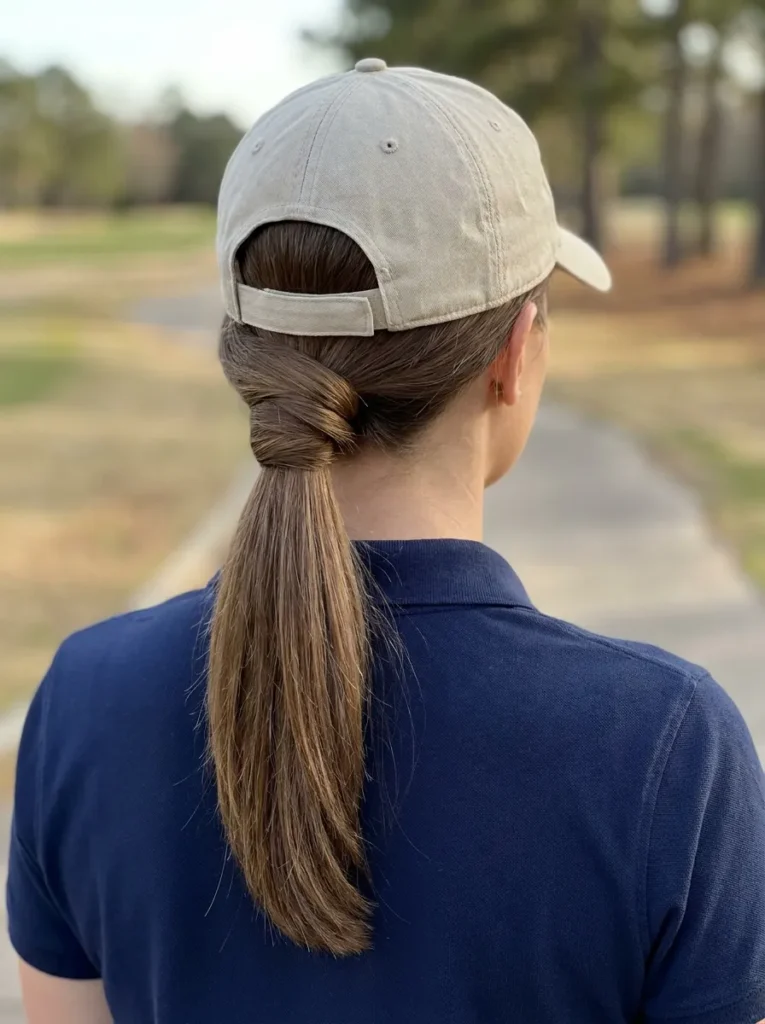
Face balance: Balanced, oval, neutral
Hair texture: Medium to thick, smooth
Style feel: Structured and subtle
Wrapping a section around the base creates a layered band that adds detail without complexity. It gives the ponytail a more finished appearance.
Folding the hair once before letting it fall keeps the upper section controlled. The rest of the length remains free but aligned.
The full shape stays visible from the nape to the ends, with a clear transition between wrap and tail. Nothing looks bulky or uneven. Placement at the nape ensures compatibility with caps. It sits naturally without causing pressure.
Course advantage: Wrapped base improves hold without extra tools
Skip if: Hair is too short for a visible fold
Finish tip: Keep the wrap tight to maintain structure
14. Minimalist Slick Low Tail
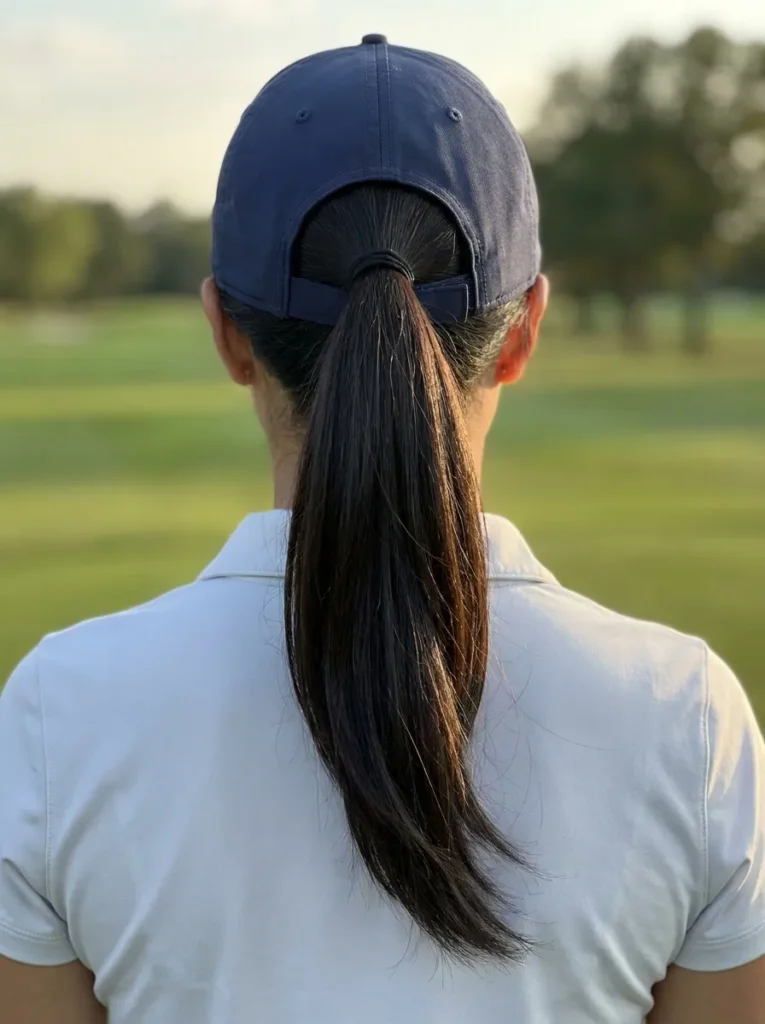
Face balance: Defined, sharp, structured
Hair texture: Straight, fine to medium
Style feel: Clean and intentional
A precise part line adds structure right from the start. Keeping it visible just below the cap creates a sharp, polished detail without extra effort.
Smoothing the surface reduces stray strands that can distract during play. A small amount of product keeps everything aligned without stiffness.
Positioning the ponytail at the base of the neck keeps movement natural. The length follows your body instead of swinging against it. The overall finish remains simple yet refined. It suits both casual rounds and more competitive settings.
Course advantage: Sleek finish minimizes distraction during focus
Skip if: Hair struggles to stay flat without texture
Finish tip: Use a light wax only at the surface, not the length
15. Tucked Under Chignon Wrap
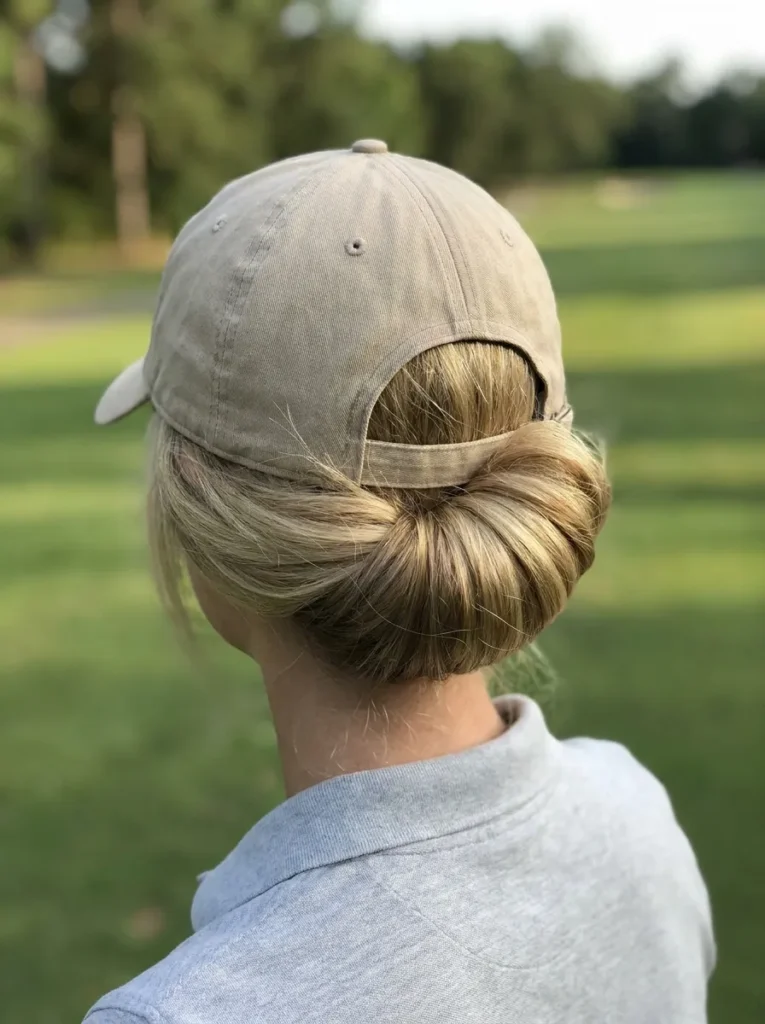
Best match for: Classic features, balanced proportions
Strand structure: Smooth, long, medium density
Style mood: Neat and composed
Rolling the hair inward creates a contained shape that keeps ends hidden. This prevents tangling, especially when moving between holes or dealing with wind.
The tucked design follows the natural curve of the head. It sits flat and doesn’t create unnecessary bulk, making it comfortable for extended wear.
Because the ends are secured inside, the style stays controlled even during longer sessions. There’s no loose length to shift or get caught. It brings a clean, put-together look while still being practical. Once in place, it requires very little attention.
On-course benefit: Fully tucked ends prevent tangling and distraction
Not recommended for: Short hair that can’t be folded inward
Quick upgrade: Lightly smooth the surface for a cleaner finish
16. Voluminous Top Knot Pin
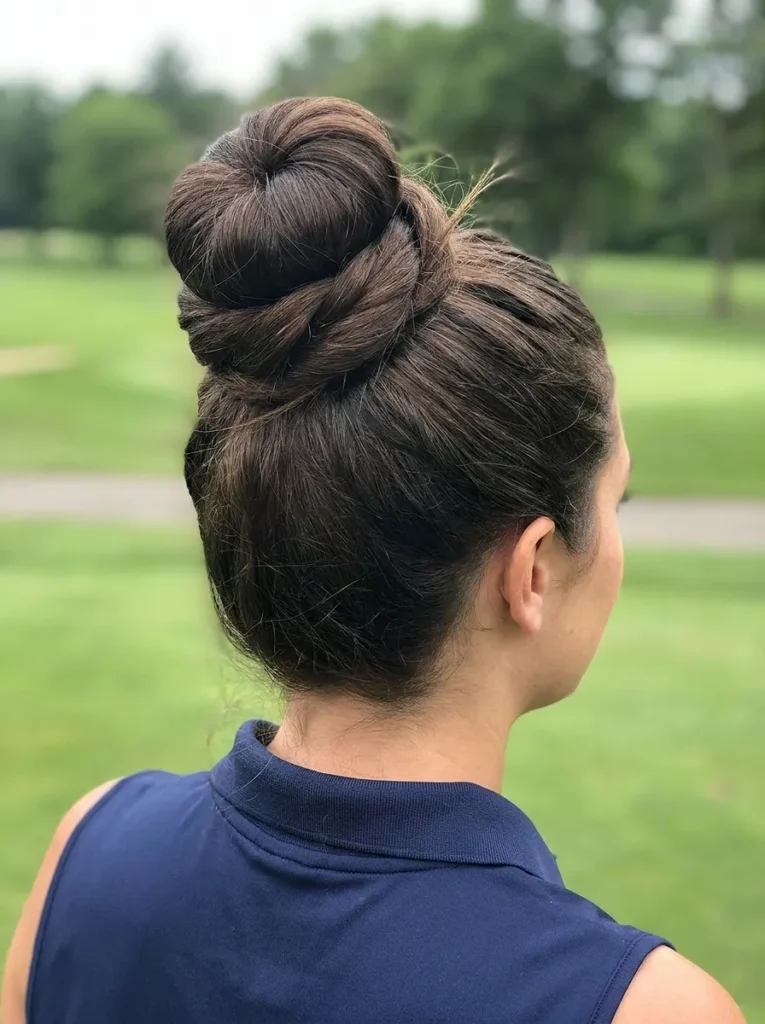
Face compatibility: Oval, longer face shapes
Strand quality: Thick, heavy, long
Style energy: Elevated and steady
Lifting everything to the crown keeps the length completely off the neck and shoulders. That helps maintain balance, especially during controlled movements like chipping or putting.
Securing the base firmly prevents the knot from dropping over time. Heavier hair benefits from anchoring at a central point rather than low placement.
The layered wrapping inside the knot creates depth while keeping the shape compact. Nothing hangs loose or shifts out of place.
Wind exposure becomes less of a concern when everything is gathered tightly at the top. The structure stays centered throughout the round.
On-course strength: High placement keeps weight centered and stable
Consider skipping if: Hair is too short to form a full knot
Finishing touch: Use two ties at the base for extra support
17. Puffed Low Bubble Tail
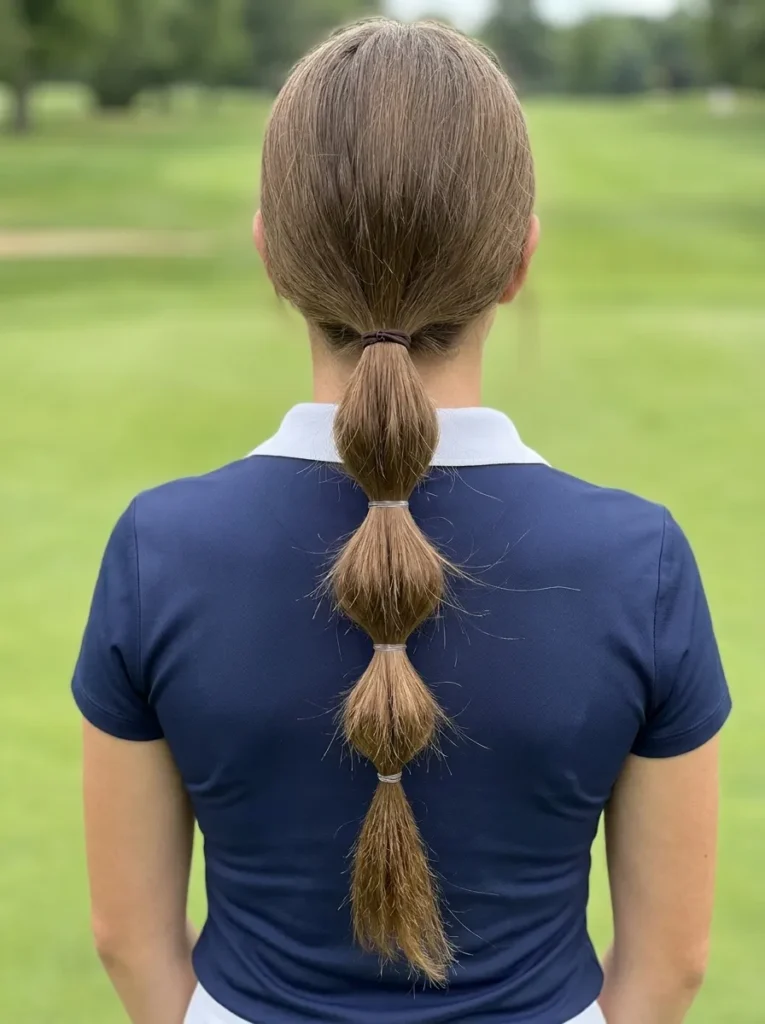
Face compatibility: Soft, round, balanced features
Strand quality: Medium to thick, straight
Style energy: Relaxed with structure
Keeping the base low allows the style to sit comfortably under a cap. There’s no pressure at the crown, which makes it easier to wear for extended periods.
Segmenting the length into soft rounded sections prevents the tail from swinging freely. Movement stays controlled without making the style feel tight.
Each section adds shape along the length, creating a fuller appearance without needing extra volume at the roots. The entire pattern remains visible from top to end. The setup holds well even in light wind, as each section limits how much the hair can shift. It holds its shape throughout play.
On-course strength: Segments reduce unwanted movement in the tail
Consider skipping if: Hair lacks density to form defined sections
Finishing touch: Slightly pull each segment outward for better shape
18. Crossed Over Low Plait
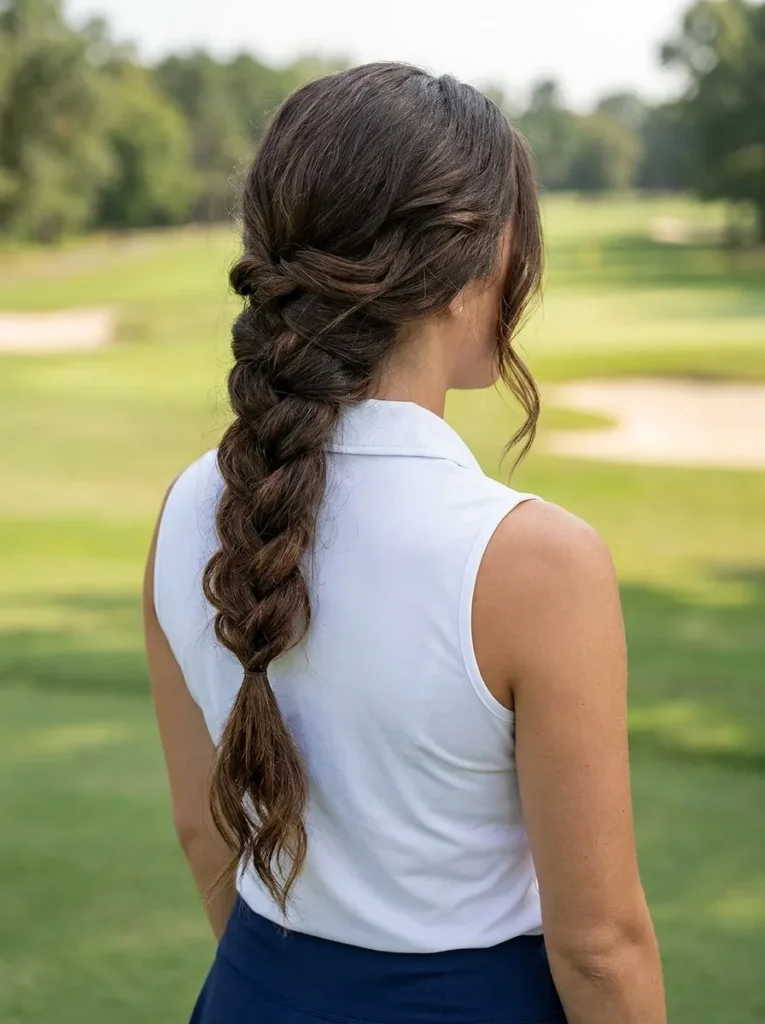
Face compatibility: Angular, defined jawlines
Strand quality: Medium length, slightly textured
Style energy: Structured and refined
Crossing two sections over the base before braiding creates a secure anchor. This keeps the front strands from slipping forward during movement. Once the crossover is set, the braid holds more firmly at the top. The structure feels tighter compared to starting with a standard plait.
The length remains controlled from the nape downward, reducing the chance of tangling while walking across the course. The added crossover detail also improves how the style sits against the head. It stays aligned without shifting position.
On-course strength: Crossover anchor prevents front strands from loosening
Consider skipping if: Hair is very short around the front sections
Finishing touch: Keep the crossover snug before starting the braid
19. Knotted Low Nape Knot
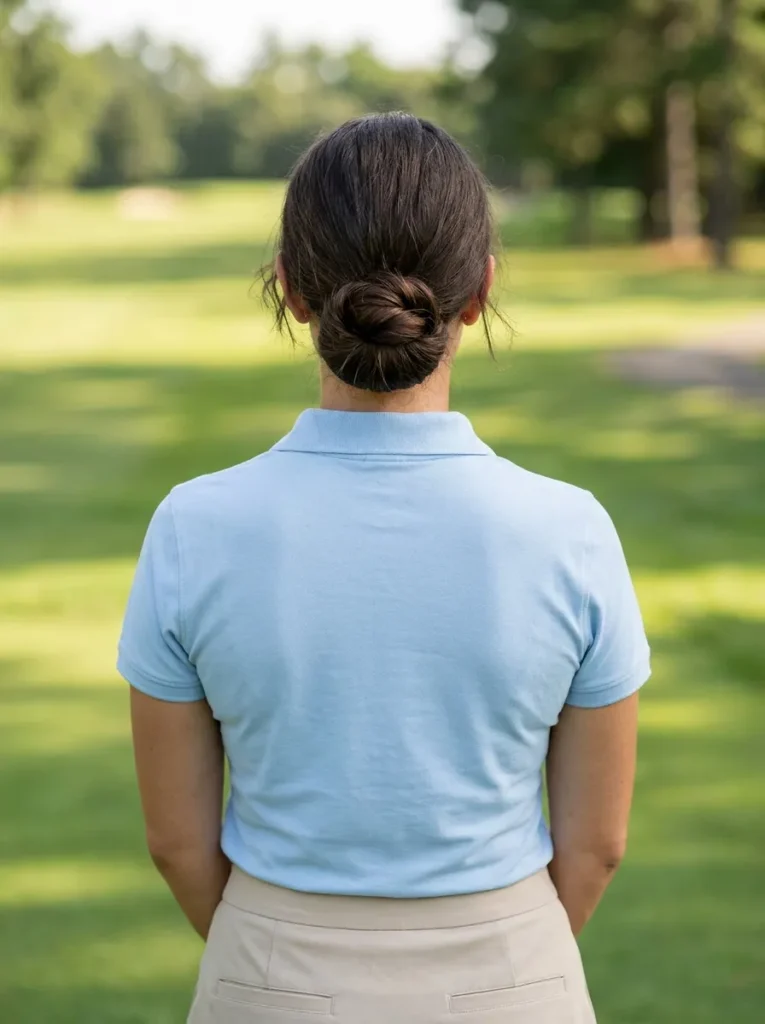
Face pairing: Longer necklines, narrow jawlines
Strand structure: Straight, fine to medium
Style mood: Minimal and refined
Keeping everything gathered at the nape creates a grounded feel. The hair stays close to the head, reducing unnecessary movement while you walk or swing.
Looping the length through itself forms a compact knot that doesn’t stick out. This makes it comfortable under most types of headwear without creating pressure.
The folded shape remains intact even as the day progresses. It doesn’t loosen easily, especially when secured properly at the base. This option works well when time is limited. It comes together quickly and stays reliable throughout the round.
On-course benefit: Low placement avoids interference with caps
Not recommended for: Very thick hair that creates bulk at the nape
Quick upgrade: Add a small pin underneath for extra hold
20. Braided Bangs Side Tuck
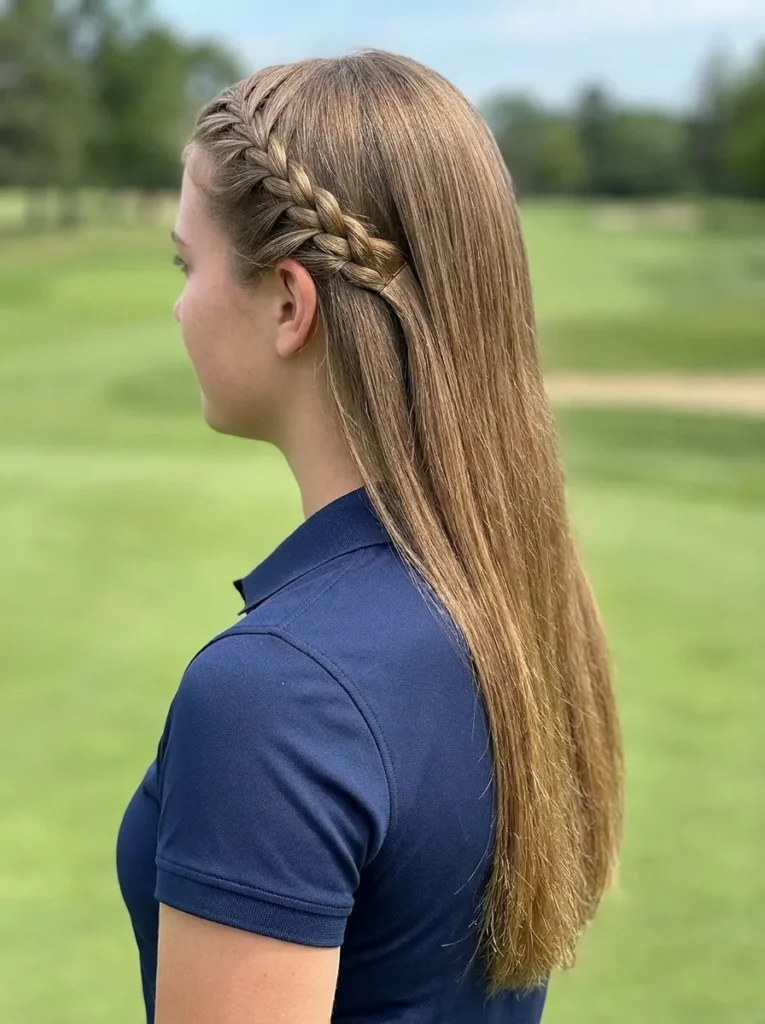
Face structure match: Round, soft features
Hair characteristics: Medium length with front layers
Overall aesthetic: Light and controlled
Braiding only the front section keeps shorter strands away from the eyes. This helps maintain a clear line of sight during focus moments. Tucking the braid behind the ear keeps it secure without needing constant adjustment. It blends naturally into the rest of the hair.
Leaving the remaining length free allows for flexibility. You can keep it loose or tie it back depending on conditions. The front remains neat throughout the round, even if the rest of the hair shifts slightly.
On-course strength: Front control improves visibility without full styling
Consider skipping if: Hairline is too short for braiding
Finishing touch: Smooth the hairline lightly to keep edges clean
21. Triple Banded Bubble Pony
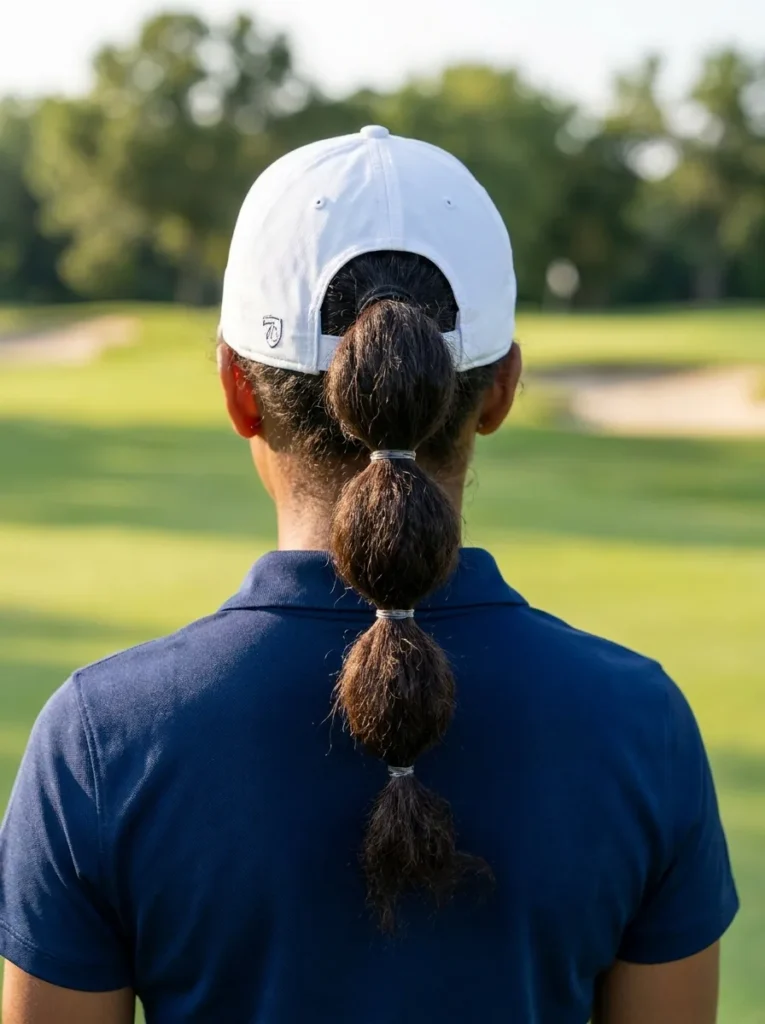
Face match: Longer face shapes, oval structure
Strand behavior: Thick, straight, slightly coarse
Overall feel: Athletic and defined
Strong wind becomes less of an issue when the length is divided into controlled sections. Each elastic acts like a stopper, keeping strands from shifting while you move through your swing. The structure stays consistent from start to finish.
Raising the base higher keeps the hair away from your upper back. This supports a natural range of motion without distraction. You won’t feel strands brushing against your shoulders mid-play.
Spacing each section evenly gives a clean visual flow down the length. Slight outward pulling creates dimension without loosening the hold. The full pattern remains clearly visible.
From practical use, this setup holds its shape for hours without needing fixes. Even humidity doesn’t break the structure easily.
Performance edge: Sectioned control reduces overall movement
Skip this if: Your layers are too short to stay contained
Pro move: Lightly smooth each section before expanding for cleaner shape
22. Inverted Tucked Low Pony
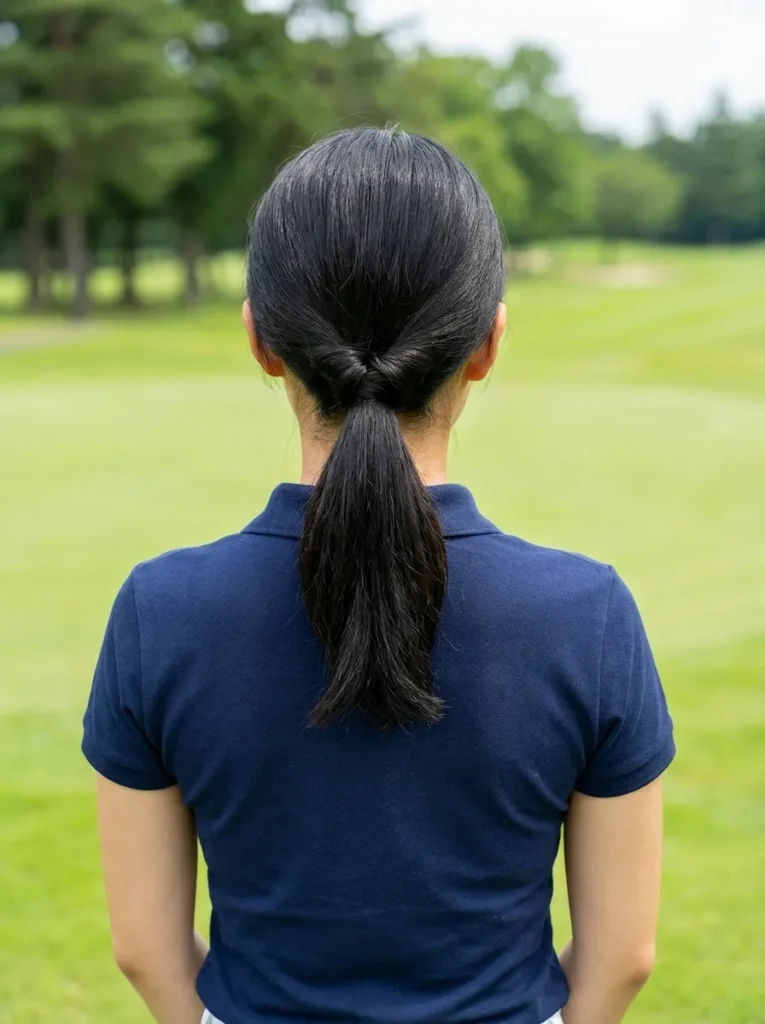
Face structure: Narrow, elongated features
Hair characteristics: Straight, smooth, medium density
Overall aesthetic: Minimal and refined
Flipping the ponytail through itself creates a subtle twist at the base. This keeps the hair closer to the neck without extra bulk.
The tucked detail adds structure while keeping the length controlled. It stays aligned and doesn’t shift much during movement.
Low placement makes it comfortable under any cap style. There’s no pressure or lifting at the crown. The design holds its shape without needing multiple tools. It’s simple yet visually clean.
Strength: Twisted base keeps hair compact and controlled
Skip if: Hair is too short to flip through itself
Finishing touch: Tighten the base after flipping for a cleaner look
23. Micro Braid Accent Tail
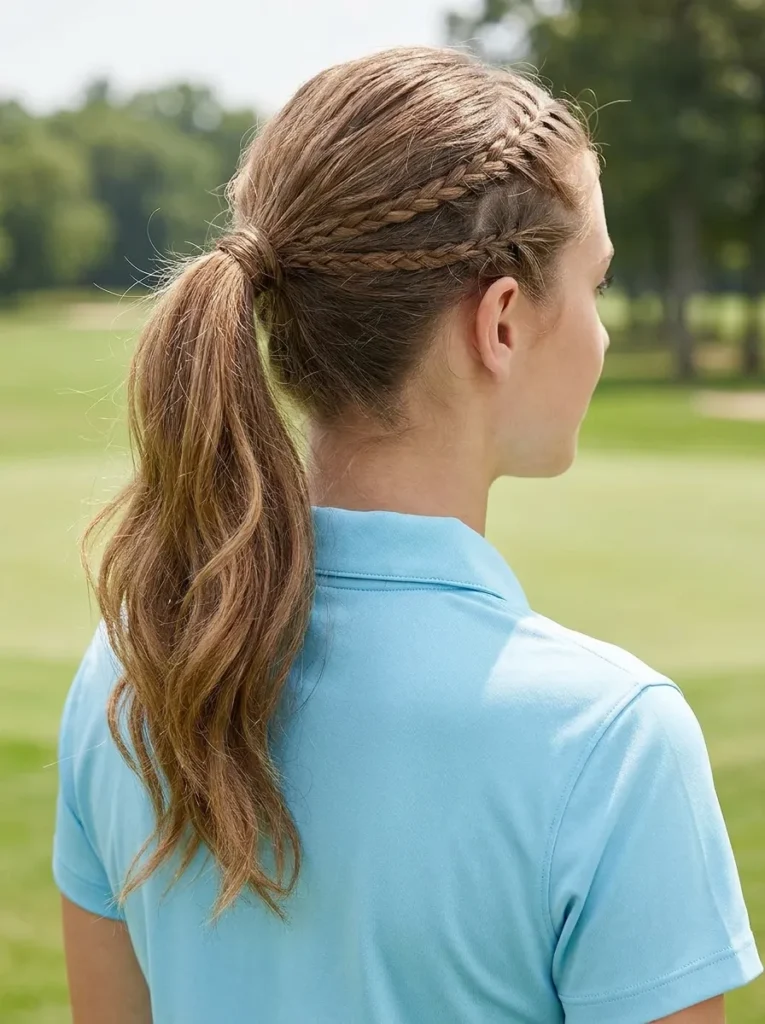
Face structure: Heart-shaped, soft jawlines
Hair characteristics: Medium to long, slightly layered
Overall aesthetic: Detailed and modern
Adding small braids along the front helps control shorter strands. These sections stay in place even when the rest of the hair moves.
Blending the micro braids into a ponytail keeps the overall look cohesive. Nothing feels disconnected or loose.
The added detail improves hold without making the style heavy. It stays light while still feeling structured.
The length remains manageable, and the front stays neat throughout the round.
Strength: Small braids keep front layers secured
Skip if: You prefer a quick, no-detail style
Finishing touch: Keep braid sections thin for a cleaner finish
Sun Defense Essentials
Spending hours outdoors means your hair faces more than just styling challenges. A few smart protection steps can make a noticeable difference in how your hair looks and feels after every round.
- UV Sprays: Use a dedicated hair sunscreen to prevent color fading and dryness from hours on the fairway.
- Scalp Care: Part your hair in different places or use a bun to shield the sensitive skin on your head.
- Hat Choice: Wide-brimmed hats offer the best protection but require lower hairstyles like braids or low knots.
The Golfer’s Accessory Kit
The right tools can completely change how well your hairstyle holds up on the course. Keeping a few essentials on hand makes styling easier and more reliable.
Item | Purpose |
|---|---|
No-Slip Bands | Keeps ponytails high and secure during the fastest swings. |
Matte Hairpins | Provides grip without reflecting the sun into your eyes. |
Dry Shampoo | Absorbs sweat and adds the necessary volume for braids to stay. |
Silk Scrunchie | Prevents breakage during long rounds in the heat. |
Post-Round Recovery Tips
Rinsing your hair with cool water after eighteen holes helps remove sweat and salt buildup. Applying a deep conditioner once a week repairs any damage caused by constant sun exposure and wind. Avoid tight styles for a few hours after your game to let your scalp relax and recover.
Style vs. Hat Compatibility
Not every hairstyle works well with every type of headwear. Matching your style with the right hat choice ensures better comfort and overall balance.
Hairstyle | Best Hat Pairing |
|---|---|
High Bubble Pony | Visor or No Hat |
Low Braided Bun | Baseball Cap or Sun Hat |
Side Rope Twist | Any Hat Style |
Top Knot | Visor |
FAQs
1: Which golf hairstyle stays secure the longest during play?
Styles with multiple anchor points like bubble ponytails or braided buns tend to last the longest. They limit movement and reduce the need for mid-round adjustments, even in windy conditions.
2: What hairstyle works best under a golf cap?
Low styles such as braided buns, low ponytails, or tucked chignons fit most comfortably under caps. They avoid pressure at the crown and sit naturally at the nape.
3: How can I keep my hair from distracting my swing?
Choose styles that keep hair away from your face and shoulders. Side braids, low knots, or secured ponytails help maintain a clear line of sight and smooth movement.
4: What should I use to control sweat and frizz on the course?
Lightweight products like dry shampoo or anti-frizz serum help manage sweat and humidity. These keep your hairstyle looking neat without making the hair feel heavy.
Conclusion
Great hair on the course isn’t about effort, it’s about choosing smarter styles. The right Golf Hairstyles hold your hair in place so you can focus fully on your game without distractions.
These ideas give you options that balance control, comfort, and style, whether you prefer something structured or more relaxed. Try a few, see what works best for your routine, and build your go to look for every round.
Save your favorites on Pinterest so you always have inspiration ready. Share them with friends who struggle with the same styling issues. I’ve seen how the right hairstyle can boost confidence and performance, and once you find yours, you’ll notice the difference instantly.