
11 Simple Tips to Fix an Oily Scalp Naturally
If your hair looks greasy just hours after washing, you’re not alone and you’re probably making at least one mistake that’s making it worse.
The good news? Fixing an oily scalp isn’t about washing more. It’s about understanding what’s triggering the oil in the first place.
Why Does Your Scalp Produce So Much Oil?

Before fixing anything, you need to understand what’s happening beneath your hair.
Your scalp contains sebaceous glands attached to each hair follicle. These glands produce sebum, a natural oil that protects your scalp and prevents hair from breaking. The problem begins when they go into overdrive.
Your scalp behaves much like your facial skin, responding to triggers such as hormones, diet, stress, and product buildup. When you strip it too aggressively or clog it with heavy products, it compensates by producing even more oil. This is known as reactive oil overproduction and is a common reason oily hair problems persist.
The goal isn’t to remove all oil, but to reduce the triggers that cause excess production.
This information is for general guidance and does not replace professional advice. Individual results may vary.
11 Simple Tips to Fix an Oily Scalp Naturally
1. Train Your Scalp With Strategic Wash Spacing
Most people with oily hair wash daily. This is usually the core problem.
Every time you shampoo, you remove all the sebum from your scalp. Your sebaceous glands read this as an emergency and ramp up production to restore the protective layer as fast as possible. The result? You’re oily again by the next morning.
How to reset it:
• Start by switching from daily washing to every other day
• Gradually move to every 2–3 days over time
• Expect temporary extra oil during the adjustment phase
• Use dry shampoo only once between washes if needed
2. Switch to a Scalp-Specific Clarifying Shampoo
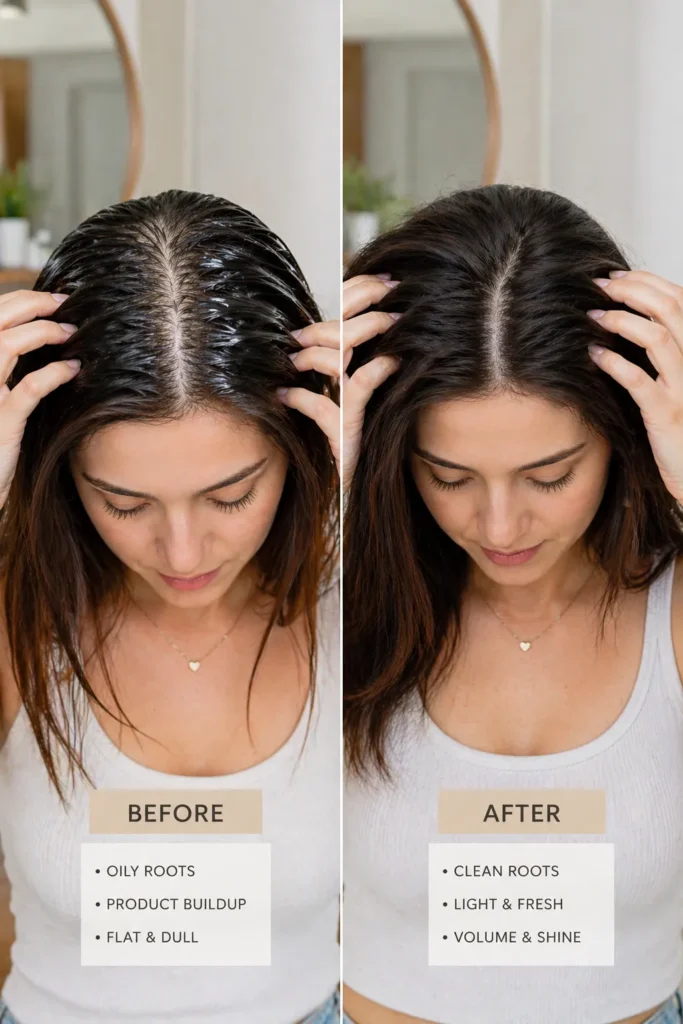
Regular shampoos are designed for your hair strands. Your scalp needs something different.
Clarifying shampoos remove mineral deposits, product buildup, silicones, and excess sebum that regular formulas leave behind. However, using them too frequently causes the same rebound oil problem mentioned above.
Use it correctly:
• Use a clarifying shampoo once every 1–2 weeks
• Do not use it as your daily shampoo
• Choose regular shampoos labeled balancing or oil control
• Look for ingredients like salicylic acid or zinc
• Avoid harsh sulfates like Sodium Lauryl Sulfate (SLS)
3. Rethink Where and How You Apply Conditioner
Conditioner is designed for the hair shaft, not the scalp. The scalp already produces its own conditioning agent, sebum.
When conditioner reaches the scalp, it mixes with natural oil and product residue to create a sticky film over your follicles. This clogs them, contributes to buildup, and paradoxically makes your roots look greasier faster.
Better method:
• Apply conditioner from ears downward only
• Use a small amount on mid-lengths and ends
• Leave it on for 2–3 minutes before rinsing
• Rinse with cool or lukewarm water
• Avoid letting conditioner run over the scalp
4. Do a Monthly Scalp Detox With a Clay Mask

Your scalp accumulates layers of invisible buildup that no shampoo can fully remove, dead skin cells, dried sebum, sunscreen, pollution particles, and silicone residue from styling products.
This buildup congests your follicles and causes your sebaceous glands to work harder.
A clay mask addresses this directly.
Kaolin clay and bentonite clay both have strong absorption properties. When applied to the scalp, they draw out this embedded debris from inside follicles. This is fundamentally different from what clarifying shampoo does, shampoo cleans the surface, clay draws from within.
How to use:
• Mix kaolin or bentonite clay with water or aloe
• Apply directly to the scalp in sections
• Leave for 15–20 minutes
• Rinse thoroughly before shampooing
• Use once a month only
5. Use Diluted Apple Cider Vinegar as a Post-Wash Rinse
Your scalp has a natural pH of around 4.5 to 5.5, slightly acidic. Most shampoos, especially those with sulfates, are alkaline. This disrupts the scalp’s acid mantle, which is the protective barrier that controls bacteria, oil production, and moisture retention.
Apple cider vinegar, with its pH of around 3, helps restore this balance.
Safe method:
• Mix 1 tablespoon ACV with 1 cup water
• Apply after conditioning as a final rinse
• Leave for about 30 seconds
• Rinse with cool water
• Use once a week only
Read More : 12 Hidden Causes of Dandruff (Most People Ignore)
Read More : 14 Reasons Your Hair Feels Dry and Brittle (Fix It Fast)
6. Stop Using Silicone-Based Styling Products
Silicones are in almost every hair serum, cream, and heat protectant. They work by coating the hair shaft to create smoothness and shine. The problem is that some silicones are not water soluble.
These non-soluble silicones such as dimethicone, cyclomethicone, amodimethicone accumulate on the scalp over time. They form a coating that traps dead skin cells and sebum underneath. Your follicles become congested, and oil production increases in response.
Switch to:
• Avoid applying styling products directly to roots
• Look for water-soluble formulas
• Choose lightweight oils like argan or squalane
• Avoid ingredients like dimethicone, cyclomethicone
• Keep styling products on lengths only
7. Manage Stress Levels Seriously
Your adrenal glands produce a hormone called cortisol during stress. Cortisol directly stimulates your sebaceous glands to increase sebum production. this is a known response observed in how the body reacts to stress
Additionally, stress can influence hormones that affect oil production, which are the primary hormonal drivers of sebaceous gland activity. This is why puberty, which involves a surge in androgens, is associated with both acne and oily hair.
What helps:
• Aim for 7–8 hours of sleep regularly
• Reduce excessive caffeine intake
• Include light physical activity
• Maintain a consistent daily routine
8. Change Your Pillowcase
Your pillowcase absorbs several things while you sleep, sebum from your scalp, dead skin cells, face cream, sweat, and saliva. When you sleep on the same pillowcase night after night, all of this transfers back to your hair and scalp.
The sebum that soaks into a cotton pillowcase overnight then saturates your freshly washed hair all over again. This is one of the most overlooked causes of hair getting oily faster than expected.
The upgrade:
• Change pillowcase every 2–3 days
• Use breathable fabrics like cotton or silk
• Keep hair loosely tied at night
• Avoid sleeping on product-heavy hair
9. Adjust Your Diet With Two Specific Changes
Diet influences oil production through two primary mechanisms: hormonal signaling and inflammation.
High glycemic foods, white bread, sugary drinks, processed snacks, spike insulin rapidly. Insulin spikes trigger androgen production, which directly stimulates sebaceous glands. Some research has linked high-sugar diets with increased oil production.
Dairy, particularly skim milk, contains IGF-1 (insulin-like growth factor), has been linked in research studies to stimulate oil gland activity. Full-fat dairy has a weaker effect, interestingly, because the fat moderates the insulin response.
Try this:
• Reduce high-sugar and processed foods
• Limit dairy for a few weeks and observe changes
• Add zinc-rich foods like pumpkin seeds and legumes
• Stay properly hydrated
10. Stop Brushing Wet Hair From Roots to Ends
Brushing is one of the main ways oil spreads from scalp to the rest of your hair.
When you brush, especially wet hair, you physically move sebum from the root area downward along the hair shaft. The more you brush, the faster your whole head looks greasy. Many people brush repeatedly throughout the day out of habit, constantly redistributing root oil.
Better approach:
• Brush once daily, preferably in the evening
• Avoid brushing repeatedly during the day
• Use a wide-tooth comb on wet hair
• Avoid direct scalp brushing when hair is wet
• Clean your brush weekly
11. Apply Green Tea Rinse to the Scalp
Green tea contains EGCG (epigallocatechin gallate), a polyphenol that has has been studied for its potential to help regulate oil production, the same enzyme that converts testosterone to DHT and stimulates oil glands.
A 2007 study in the Journal of Investigative Dermatology found that EGCG reduced sebum production in sebocytes (the cells that make up sebaceous glands). This is a well-studied mechanism and makes it more reliable than many general home remedies.
How to use:
• Brew 2 green tea bags in 2 cups water
• Let it cool completely
• Apply to scalp after shampooing
• Massage gently for 1 minute
• Leave for 5 minutes, then rinse
• Use once or twice weekly
A Simple Weekly Routine That Actually Works

Wash days (every 2–3 days): Use a gentle sulfate-free balancing shampoo. Condition only from ears downward. Finish with a cool water rinse.
Once a week: Apple cider vinegar rinse after washing. Green tea scalp rinse on the same or alternate day. Clean your hairbrush.
Once a month: Clay mask scalp detox.
Nightly habits: Loose hair tie or braid. Fresh pillowcase every two to three days.
Essential Ingredients Guide
Along with daily habits, the ingredients you use play a big role in how your scalp behaves over time.
Element | Function | Frequency |
|---|---|---|
Salicylic Acid | Dissolves trapped sebum | Twice a week |
Peppermint Oil | Calms active glands | Every wash |
Kaolin Clay | Absorbs surface debris | Monthly |
Zinc Pyrithione | Balances skin flora | Weekly |
One thing most people overlook is how often they clean their tools.
Smart Tool Maintenance
Dirty brushes act as vehicles for yesterday’s grease and dust. Soak your combs in warm, soapy water every Sunday to ensure you aren’t redepositing oils onto clean hair. This simple habit keeps your style fresh and prevents premature flat roots.
Strategic Heat Usage
Blasting your roots with high heat triggers the sebaceous glands to produce more oil for protection. Always use the cool shot button on your dryer to set your style and close the pores. Keeping the temperature moderate prevents the “sweaty” root effect that ruins a fresh wash.
Common Habit Pitfalls
Sometimes, it’s the small habits you don’t notice that make the biggest difference.
- Scratching your scalp with fingernails
- Using heavy serums near the hairline
- Wearing tight hats for extended periods
- Skipping the final cool water rinse
FAQs
1. Why does my scalp get oily so fast after washing?
Overwashing can strip natural oils, causing your scalp to produce even more sebum to compensate.
2. How often should I wash an oily scalp?
Ideally every 2–3 days, allowing your scalp to rebalance oil production over time.
3. Can natural remedies really reduce scalp oil?
Yes, ingredients like clay, apple cider vinegar, and green tea can help regulate oil and remove buildup when used correctly.
4. Does diet affect an oily scalp?
High sugar and dairy intake may increase oil production by influencing hormones linked to sebaceous gland activity.
Conclusion
An oily scalp is almost never just bad luck. It’s usually a combination of a disrupted washing routine, product buildup, hormonal signals, and daily habits that keep triggering the same cycle.
The tips in this guide aren’t about fighting your scalp. They’re about understanding why it’s producing excess oil and systematically removing those triggers.
Start with the two highest-impact changes: adjusting your washing frequency and eliminating silicone-based products from your roots. Give it three full weeks before evaluating whether something is working. Scalp behavior changes slowly , but it does change.
Small, consistent adjustments made over weeks create more lasting results than any product switch ever will.
Read More : How to Know If Your Hair Is Thick or Fine