12 Hidden Causes of Dandruff (Most People Ignore)

Disclaimer: This article is for informational purposes only and does not constitute medical advice. Always consult a qualified dermatologist for persistent or severe scalp conditions.
White flakes on your favorite black outfit? If you’ve tried every shampoo and nothing works, the problem might not be what you think.
Dandruff isn’t just dry scalp it can be triggered by diet, stress, product buildup, or even how you wash your hair. In this guide, we will discuss the 12 hidden causes of dandruff mostly people ignore.
The key is simple:
Find the real cause → apply the right fix → stay consistent
Let’s break it down.
What causes dandruff?
Dandruff isn’t caused by just one thing, it’s a combination of factors that disrupt your scalp’s balance.
The most common trigger is a naturally occurring yeast called Malassezia yeast. It feeds on the oils your scalp produces and can irritate the skin, leading to flaking and itching.
But that’s only part of the story.
Several everyday habits and conditions can make dandruff worse:
- Excess oil production → feeds yeast and increases buildup
- Infrequent washing → allows oil, sweat, and dead skin to accumulate
- Harsh hair products → strip your scalp and trigger irritation
- Stress and inflammation → weaken your scalp’s natural defense
- Weather changes → dry air or cold seasons can disrupt scalp balance
Dandruff happens when your scalp ecosystem is out of balance which is why one single shampoo doesn’t work for everyone.
How to get rid of dandruff fast
If you want visible improvement quickly, focus on targeting the cause + building consistent habits:
- Use a medicated shampoo (such as ketoconazole or zinc), which are commonly used to help control dandruff
- Wash your hair every 2–3 days to prevent oil buildup
- Avoid hot water, which can trigger excess oil production
- Use a clarifying shampoo once a week to remove residue
- Keep your scalp clean, dry, and well-balanced
Pro tip: Let your shampoo sit on your scalp for at least 2–3 minutes before rinsing, this significantly improves results.
Let’s walk through the 12 most common triggers and what the science actually says about fixing each one.
Results can vary depending on your scalp type and underlying cause.
12 Common Dandruff Causes (And How to Fix Each One)
1. Overactive Malassezia Yeast
What’s going on:
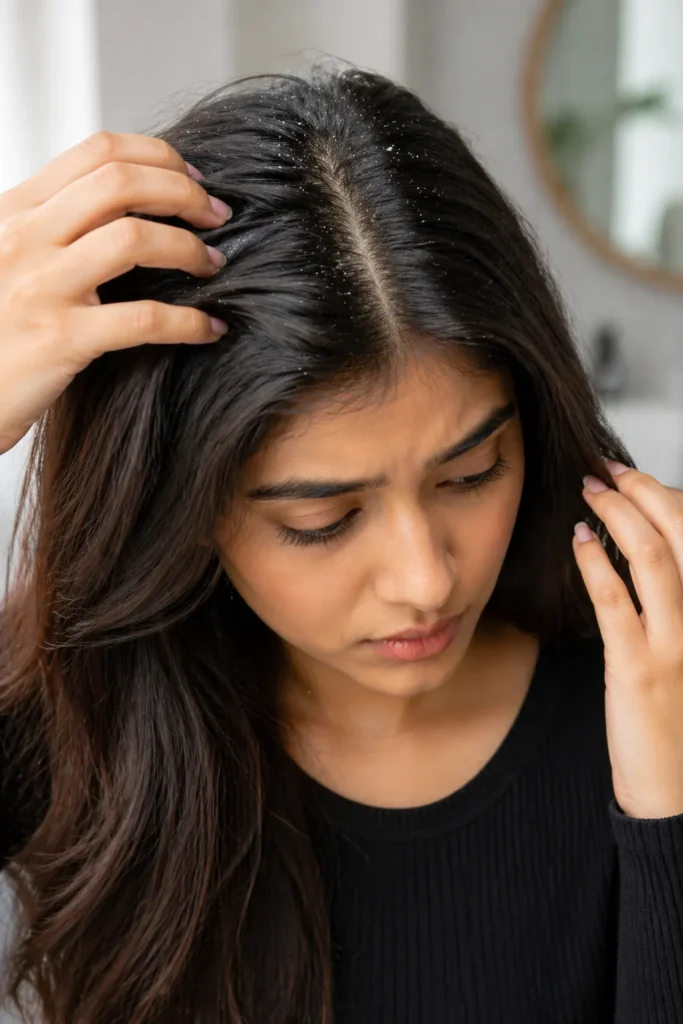
Your scalp naturally hosts this yeast, but when it overgrows, it feeds on sebum (your scalp’s natural oil). As it breaks this oil down, it produces fatty acids, especially oleic acid, which can irritate the skin and trigger rapid skin cell turnover. That’s what creates visible flakes.
Not everyone reacts the same way. Dandruff depends on three factors: oil production, yeast levels, and your scalp’s sensitivity.
How to control it:
- Use shampoos with ketoconazole or zinc pyrithione
- Let the shampoo sit for 2–3 minutes before rinsing
- Alternate with a gentle shampoo to avoid over-drying
- Stay consistent as results usually take 2–4 weeks
2. Product Buildup Overload
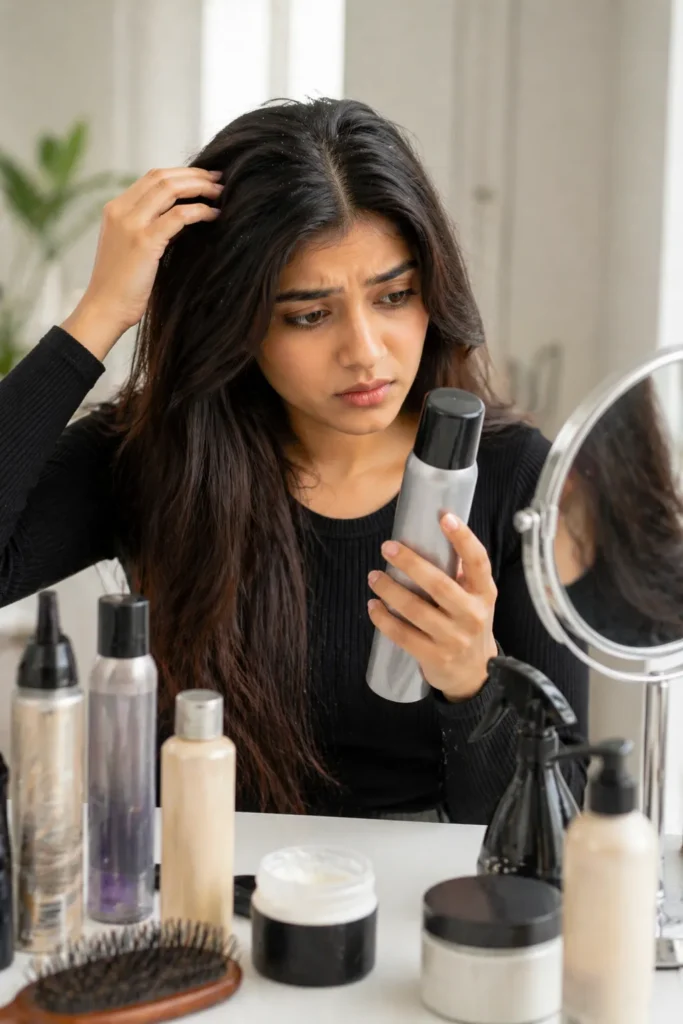
The issue:
Dry shampoo, hairspray, mousse, and thick creams don’t just disappear they accumulate on your scalp. This buildup traps dead skin cells and blocks pores, creating a layer where yeast can thrive.
Over time, this can make flakes look worse and even cause itching or irritation.
What helps:
- Use a clarifying shampoo once a week to reset your scalp
- Apply shampoo directly to the roots and scalp, not just hair
- Avoid heavy oils or styling products on your scalp
- Rinse thoroughly because leftover residue feeds the problem
3. Skipping Regular Brushing
Why it matters:
This one surprises most people. A daily brush-through isn’t just about detangling it physically lifts and removes dead skin cells before they have a chance to clump and stick.
It also distributes your scalp’s natural oils down the hair shaft, where they act as a conditioner instead of sitting and feeding yeast on your skin.
Simple fix:
- Brush gently before washing your hair
- Use a soft or boar bristle brush for best results
- Avoid aggressive brushing that can irritate the scalp
- Make it a daily habit
4. Washing Your Hair with Hot Water
The problem:
A steaming hot shower might feel like the best part of your day but it could be wrecking your scalp. Very hot water strips away the protective lipid barrier your scalp depends on to stay balanced.
Once that barrier is disrupted, your skin overcompensates by producing excess oil, which feeds the Malassezia yeast cycle all over again.
The scalp skin is genuinely more delicate than the skin on your arms or legs, and it deserves the same gentle treatment you’d give your face.
Better approach:
- Use lukewarm water when washing
- Finish with a cool rinse to soothe the scalp
- Avoid long, steaming showers
- Pat dry with a towel instead of rubbing
5. High-Sugar, Processed Diet
What’s behind it:
Diets high in refined sugar and processed carbs can increase insulin levels, which may stimulate your sebaceous glands to produce more oil. More oil means more food for yeast.
There’s also a link between high sugar intake and systemic inflammation, which can worsen scalp conditions like seborrheic dermatitis.
Research in this area is still evolving, but diet may play a supportive role in scalp health rather than being the sole cause.
What to change:
- Reduce processed sugar and refined carbs
- Add foods rich in zinc and omega-3 fatty acids
- Focus on balanced, whole meals
- Remember: diet helps but isn’t a standalone cure
Read More : 11 Reasons Your Hair Is So Frizzy (And How to Fix It)
6. Chronic Stress

What’s happening internally:
When stress keeps your cortisol levels high, your immune system becomes less effective at controlling yeast on the scalp. This is why dandruff often flares up during exams, deadlines, or emotional stress.
What improves it:
- Maintain a consistent sleep routine
- Try gentle scalp massage using fingertips (not nails)
- Take short breaks throughout the day
- Reduce long-term stress triggers where possible
7. Cold Weather + Indoor Heating
What’s affecting your scalp:
Winter is dandruff season for many people, and it’s easy to understand why once you know the science. Cold outdoor air pulls moisture from your skin, while heated indoor air is extremely dry.
This constant cycle of moisture loss causes your scalp to become parched, tighten, and shed skin cells at a higher rate.
People with dandruff often notice it worsens significantly between November and February.
How to manage it:
- Use a humidifier indoors
- Switch to hydrating or cream-based shampoos
- Avoid overwashing your hair
- Add moisture-focused care during colder seasons
8. Not Washing Your Hair Often Enough
The buildup issue:
Going too long between washes allows oil, sweat, and dead skin to accumulate. This creates a thick layer that encourages yeast growth and leads to larger, oilier flakes.
What to do:
- Wash your hair every 2–3 days
- Focus on cleaning the scalp, not just the hair
- Massage shampoo gently into roots
- Rinse thoroughly to remove all residue
9. Using Harsh Sulfate Shampoos
Why it backfires:
Many shampoos use strong sulfates like sodium lauryl sulfate (SLS) to create lather, but these can strip away your scalp’s natural oils. This weakens the protective barrier and leaves your scalp dry, tight, and irritated.
When that barrier is disrupted, your scalp may overcompensate by producing more oil feeding the dandruff cycle or become overly dry and flaky.
Better alternative:
- Switch to sulfate-free or gentle shampoos
- Look for soothing ingredients like aloe or panthenol
- Avoid over-cleansing
- Balance cleansing with hydration
10. Keeping Hair Damp Too Long
The hidden trigger:
Warm, moist environments are ideal for yeast growth. Keeping your hair damp for long periods like, tying it up wet or sleeping with wet roots, creates the perfect conditions for dandruff to worsen.
This is especially common when moisture gets trapped against the scalp for hours.
How to avoid it:
- Dry your roots properly before styling
- Avoid tying or covering wet hair
- Use low heat if needed
- Don’t leave your scalp damp for long periods
11. Dry Scalp (Not Dandruff)
What’s actually happening:
Dry scalp is often mistaken for dandruff, but the causes are completely different. Dandruff is linked to oil and yeast, while dry scalp comes from lack of moisture and lipids.
Using anti-dandruff shampoos on a dry scalp can make the condition worse.
How to tell:
- Flakes are small, dry, and white
- Scalp feels tight after washing
- Often worse in winter, better in warmer months
What works:
- Use hydrating shampoos or treatments
- Add moisture back with light oils if needed
- Avoid mixing too many treatments
- Choose the right approach based on your scalp type
12. Product Sensitivity (Contact Dermatitis)
The real cause:
If your scalp is red, itchy, and flaky but not improving, it could be a reaction to ingredients like fragrances, dyes, or preservatives, not dandruff itself.
This is called contact dermatitis, and it often looks very similar to dandruff, which is why it’s commonly misdiagnosed.
How to fix it:
- Switch to fragrance-free products
- Keep your routine simple
- Patch test new products before full use
- Avoid anything that triggers irritation
Read More : 11 Simple Tips to Fix an Oily Scalp Naturally
Quick Comparison: Dandruff Triggers at a Glance
Not all dandruff is the same each trigger needs a slightly different fix. Here’s a quick breakdown:
Trigger | What to Use |
|---|---|
Fungal overgrowth | Ketoconazole or zinc shampoo |
Product buildup | Clarifying shampoo (weekly) |
Dehydrated scalp | Hydrating serum or light oil |
Stress | Better diet + stress control |
Product sensitivity | Fragrance-free products |
3 Simple Pantry Fixes to Try Tonight
You don’t always need expensive products, these quick remedies can help support your scalp:
- Apple Cider Vinegar Rinse
Mix 1 part ACV + 3 parts water, apply after shampooing, leave for 2 minutes, then rinse.
→ Helps rebalance scalp pH and reduce itch for some people - Jojoba or Almond Oil Pre-Wash
Massage a small amount into your scalp 15–20 minutes before washing.
→ Softens flakes and relieves dryness - Tea Tree Oil Boost
Add 2–3 drops to your shampoo before use.
→ Helps keep the scalp environment cleaner
Always dilute, never apply directly
When to consider professional care
Most cases improve with basic care but not all.
Consider professional help if:
- Your scalp feels very irritated, sensitive, or inflamed
- You see unusual thick or patchy scaling
- Flaking starts appearing outside the scalp area
A dermatologist can help confirm whether you’re dealing with dandruff or conditions like scalp psoriasis or seborrheic dermatitis.
Tool Hygiene: The Overlooked Step
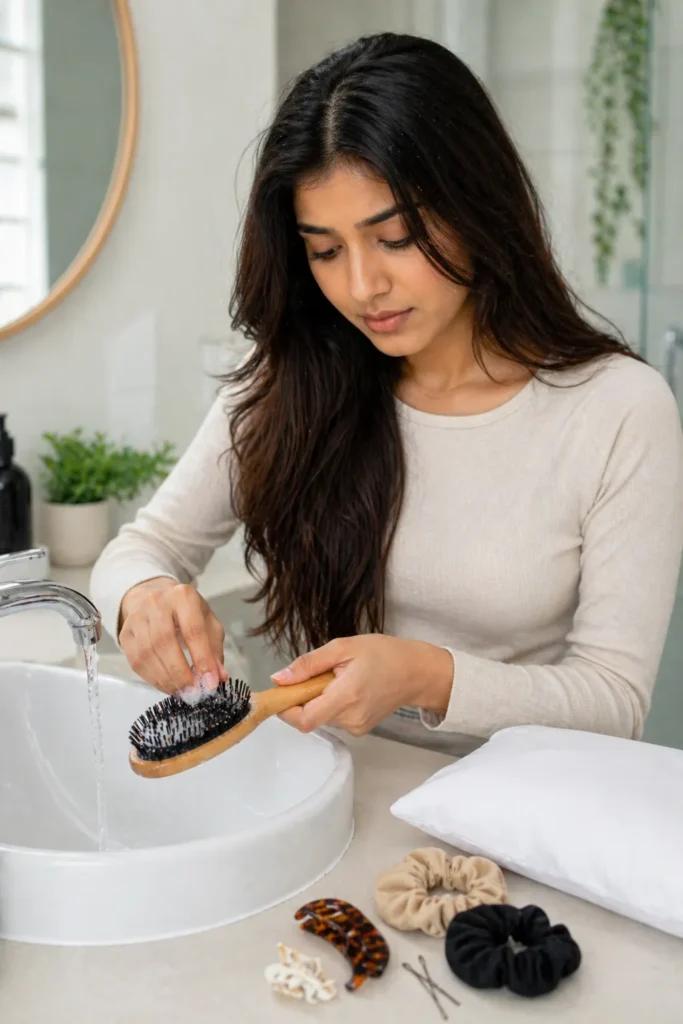
Even the best routine won’t work if your tools keep reintroducing the problem.
Build these habits:
- Wash your hairbrush weekly
- Change pillowcases every 2–3 days
- Clean clips, scrunchies, and headbands regularly
- Replace old brushes that trap buildup
FAQs
1. What is the main cause of dandruff?
The most common cause is an overgrowth of Malassezia yeast, along with factors like excess oil, stress, and product buildup.
2. How often should I wash my hair if I have dandruff?
Washing every 2–3 days is generally recommended to control oil and prevent buildup on the scalp.
3. Can dandruff go away on its own?
Mild dandruff may improve with better hair care habits, but persistent cases usually need targeted treatment.
4. Is dandruff the same as a dry scalp?
No, dandruff is linked to oil and yeast, while dry scalp is caused by lack of moisture and needs a different approach.
Conclusion
Dandruff is one of the most treatable scalp conditions out there but only when you understand what’s actually causing it. Fungal overgrowth, product buildup, a poor diet, chronic stress, dehydration, and even your shower temperature can all keep your scalp stuck in a cycle of irritation and flaking.
Start by identifying your most likely trigger from the list above, make one or two targeted changes, and give your scalp at least four weeks to respond before switching approaches. Consistency matters far more than intensity when it comes to scalp health.
Wear your dark clothes without a second thought. That clear, comfortable scalp is closer than you think.
Read More : 14 Reasons Your Hair Feels Dry and Brittle (Fix It Fast)
Read More : How to Know If Your Hair Is Thick or Fine