14 Reasons Your Hair Feels Dry and Brittle (Fix It Fast)

You wake up, run your fingers through your hair… and it feels rough, dry, almost like straw.
You try oils, masks, conditioners, but nothing seems to fully fix it.
Dryness usually isn’t caused by one big mistake. It’s usually small habits repeated daily that slowly affect how your hair holds moisture. And most of these habits are easy to miss.
Once you understand what’s actually happening, fixing it becomes much easier.
What Dry Hair Actually Means
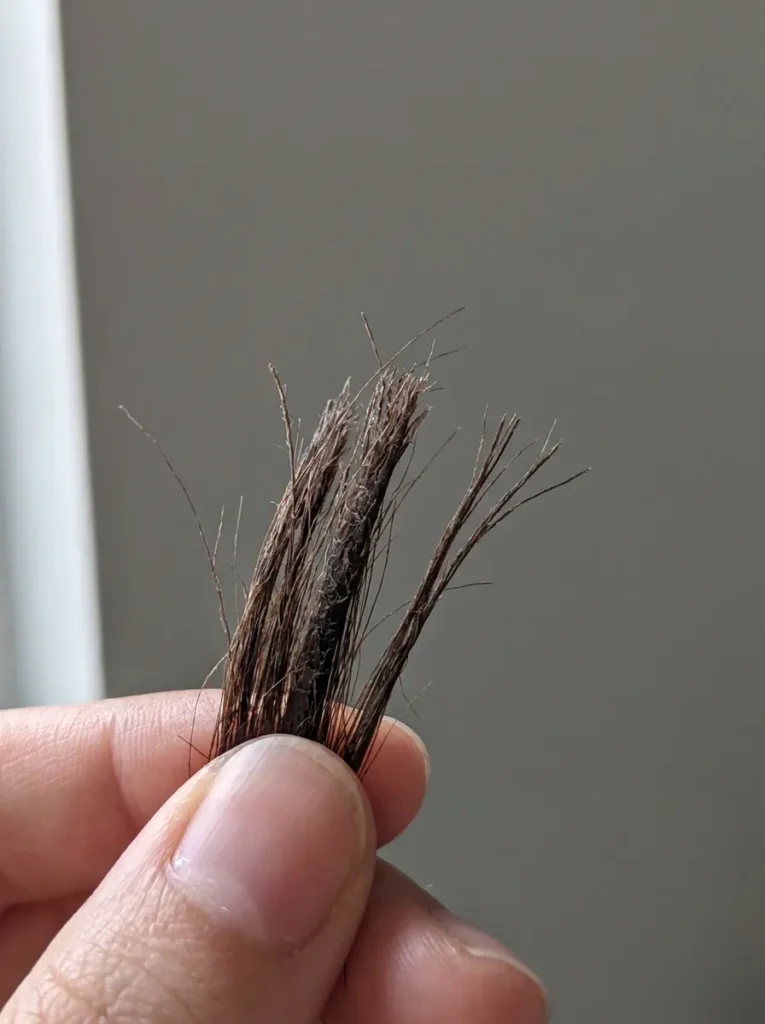
Healthy hair can hold and retain moisture.
When your hair feels dry or brittle, it usually means:
- moisture is escaping too quickly
- the outer layer (cuticle) is lifted or damaged
- your hair isn’t absorbing products properly
In many cases, this is linked to high porosity, where the hair absorbs moisture quickly but loses it just as fast.
That’s why even expensive products don’t always work.
They’re not the problem.
Your hair simply isn’t holding onto what you’re giving it.
This is closely related to how the hair cuticle functions, which is a basic concept in hair care science.
Read More : Hair Porosity Quiz: Find Your Type & Routine (2-Min Tool)
Quick Answer
If your hair feels dry and brittle, it’s usually because it’s losing moisture faster than it can retain it.
The fastest way to improve it is to:
- reduce daily damage
- increase hydration
- and seal moisture properly
14 Reasons Your Hair Feels Dry and Brittle
1. Hot Shower Water Damage
You step into a hot shower and instantly feel relaxed.
But your hair is reacting in the opposite way.
Hot water strips away sebum, the natural oil your scalp produces to protect your hair. Without it, your hair becomes more exposed and loses moisture more easily.
It also keeps the cuticle open longer, which allows moisture to escape instead of staying inside the strand.
That’s why your hair can feel dry immediately after washing, even when you’ve used conditioner.
The Fix:
- Switch to lukewarm water
- Finish with a cool rinse to smooth the cuticle
- Avoid long exposure to hot water
2. Hard Water Buildup
You might be doing everything right, but your water could still be working against you.
Hard water contains high levels of minerals like calcium and magnesium. Over time, these minerals build up on each hair strand and create a thin, invisible coating that blocks moisture from entering.
Conditioners and masks struggle to penetrate through this buildup, which is why your hair may still feel rough or heavy even after washing and conditioning.
Hard water also reduces shine and makes detangling more difficult.
The Fix:
- Use a chelating or clarifying shampoo every 2–3 weeks
- Install a shower filter if possible
- Always follow with deep conditioning
3. Rough Towel Drying
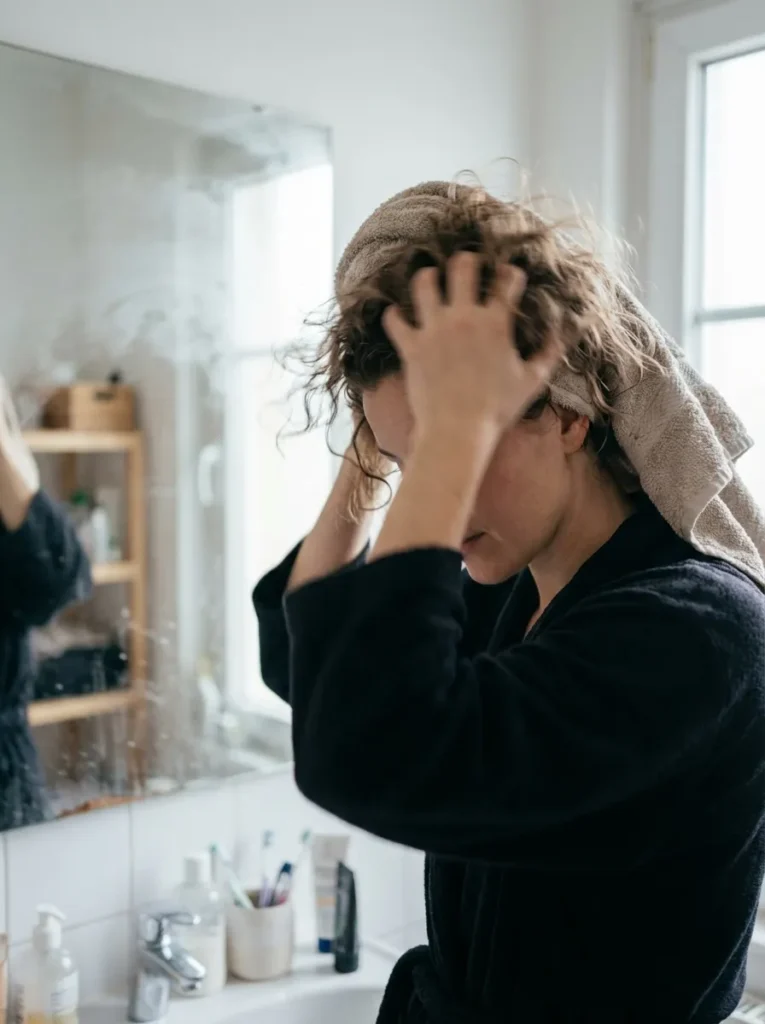
Drying your hair quickly with a regular towel might seem harmless, but it’s one of the most common causes of damage.
When your hair is wet, it is in its weakest state. The structure softens, and the cuticle slightly opens.
Rubbing vigorously with a rough cotton towel creates friction that lifts the cuticle further and causes small surface tears along each strand. This leads to rough texture, increased frizz, and breakage over time.
Even if you use excellent products, aggressive towel drying can undo much of their benefit.
The Fix:
- Use a microfiber towel or cotton T-shirt
- Gently squeeze instead of rubbing
- Let hair air-dry partially
Read More : 11 Reasons Your Hair Is So Frizzy (And How to Fix It)
4. Protein Overload Imbalance
Protein treatments are commonly recommended for damaged hair, and for good reason. But more is not always better.
Hair needs a careful balance between protein and moisture. Too much protein makes hair stiff and inflexible. Instead of bending naturally, it becomes rigid and prone to snapping when stretched. This creates a dry, straw-like texture that does not improve simply by adding oils.
Many people mistake this for regular dryness and keep adding products, which doesn’t solve the real issue.
The Fix:
- Alternate protein with moisturizing treatments
- If hair feels hard, pause protein use
- Focus on hydration-based ingredients
Many people focus only on adding strength, but maintaining the right balance between protein and moisture is what actually keeps hair flexible and healthy.
5. Drying Alcohols in Products
Some styling products give quick, smooth results but cause long-term dryness with repeated use.
Certain alcohols, especially short-chain alcohols like ethanol…, isopropyl alcohol, and SD alcohol, evaporate very quickly.
While this helps products dry fast, they pull moisture out of your hair strands in the process. After the initial smooth appearance fades, your hair is left drier than before.
The Fix:
- Avoid drying alcohols in ingredient lists
- Choose products with fatty alcohols (like cetyl or cetearyl)
- Focus on hydrating formulas
6. Skipping Heat Protection
Using heat tools without protection slowly and cumulatively damages your hair’s internal structure.
High temperatures break down keratin, the protein that gives your hair strength, elasticity, and structure.
Without a heat protectant, moisture escapes more easily, and strands become weaker and more brittle over time. Even occasional heat styling without protection can cause damage that adds up over weeks and months.
The Fix:
- Always use heat protectant
- Keep tools below 180°C (350°F)
- Avoid repeated passes
7. Sun Exposure Damage

Spending time outdoors in the sun can dry out your hair more than most people realize.
UV rays break down the proteins in your hair and gradually weaken the cuticle layer. This leads to moisture loss, color fading, and rough, dull texture, especially noticeable at the ends of your hair, which are the oldest and most vulnerable part.
If your hair consistently feels drier after time spent outside, UV exposure is likely a contributing factor.
The Fix:
- Wear a hat in strong sun
- Use UV-protecting products
- Apply light oil before exposure
8. Brushing Wet Hair Incorrectly
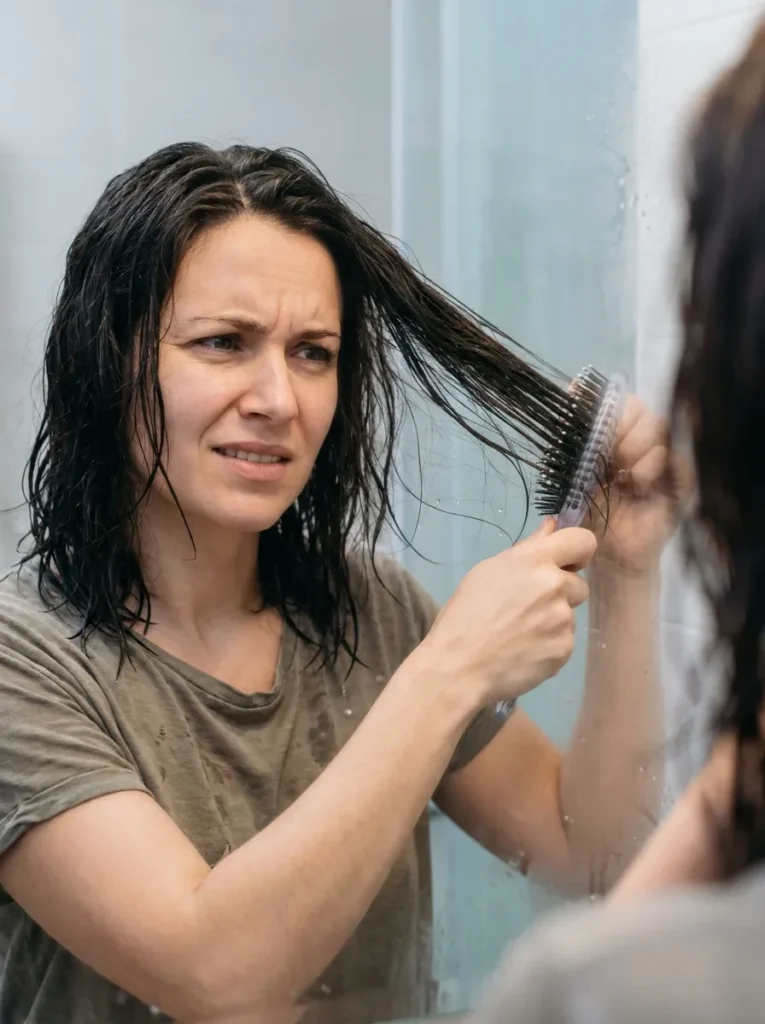
Wet hair stretches significantly more than dry hair, which makes it far more vulnerable to breakage.
Using a regular paddle brush or fine-tooth comb on wet hair creates tension that can snap strands before they have a chance to detangle.
This breakage creates uneven texture that looks and feels rough and frizzy. The damage often becomes more visible as hair dries.
The Fix:
- Use a wide-tooth comb or detangling brush
- Start from the ends
- Be gentle and patient
9. Chemical Overprocessing
Bleach and other chemical treatments, such as relaxers, perms, and repeated coloring treatments, permanently alter your hair’s structure at a fundamental level.
These processes raise and damage the cuticle and make the hair more porous. Highly porous hair absorbs moisture quickly but loses it just as fast, which is why chemically treated hair often feels dry regardless of how many products you apply.
The hair simply cannot hold onto moisture the way it could before treatment.
The Fix:
- Limit chemical treatments
- Use repair-focused routines
- Deep condition regularly
10. Cotton Pillowcase Friction
Your hair spends six to eight hours in contact with your pillow every night. Over time, that nightly friction adds up significantly.
Cotton is a naturally absorbent fabric, which means it draws moisture away from your hair while you sleep.
It also creates surface friction as you move during the night, which roughens the hair cuticle, causes tangles, and leads to increased frizz and dryness by morning. This is one of the easiest causes to fix, yet one of the most overlooked.
The Fix:
- Switch to silk or satin pillowcases
- Tie hair loosely before bed
11. Washing Too Often
Washing your hair too frequently strips away the natural oils your scalp works to produce each day.
These oils, called sebum, travel down the hair shaft and serve as your hair’s natural conditioning system. They keep strands soft, protected, and moisturized.
When you wash too often, sebum is removed before it has a chance to do its job, leaving hair dry, fragile, and more prone to breakage. This is especially true for people with naturally dry or curly hair types, which tend to produce less sebum to begin with.
The Fix:
- Wash 2–3 times per week
- Use dry shampoo if needed
- Let natural oils balance
12. Tight Hairstyles
Wearing your hair in tight ponytails, buns, or braids on a regular basis places constant and repeated tension on your strands.
This tension creates stress points along the hair shaft, particularly near elastics and at the roots.
Over time, those stress points weaken the hair, leading to breakage, rough texture, and in some cases, traction alopecia , a form of hair loss caused by repeated pulling. The areas around your hairline and temples are especially vulnerable.
The Fix:
- Use loose styles
- Switch to soft scrunchies
- Avoid constant tension
13. Poor Scalp Health
Your scalp is the foundation from which all of your hair grows. Its condition directly affects the health, strength, and moisture levels of your strands.
A dry, flaky, clogged, or irritated scalp disrupts the natural oil production and nutrient delivery that hair follicles depend on. Product buildup can block follicles and prevent healthy sebum from reaching the hair shaft.
An imbalanced scalp environment can also affect how quickly your hair grows and how strong new growth is.
The Fix:
- Clean your scalp regularly
- Massage to improve circulation
- Remove buildup when needed
14. Lack of Healthy Fats and Hydration
Hair health is not only about what you put on your hair , it also reflects what you put into your body.
Healthy fats are essential for maintaining the natural moisture and flexibility of your hair. If your diet is consistently low in these nutrients, your hair may appear dull, feel dry and brittle, and lack its natural shine.
Omega-3 fatty acids in particular play an important role in supporting scalp health and the overall condition of your hair.
The Fix:
- Eat foods like salmon, walnuts, and flaxseeds
- Stay hydrated
- Maintain balanced nutrition
Read More : 12 Hidden Causes of Dandruff (Most People Ignore)
Hairstyles That Help Dry Hair
Once your hair starts improving, the way you style it can either protect that moisture or slowly take it away again.
The goal is to choose styles that reduce friction, limit exposure, and avoid tension.
Best Styles for Dry Hair
These styles help your hair stay soft and prevent moisture loss throughout the day:
• Loose braids that don’t pull at the roots
• Low buns that keep ends tucked and protected
• Soft claw clip styles that avoid tension
• Relaxed ponytails with fabric scrunchies
For ideas, you can explore:
• Braided updo natural hair styles that pop
• Claw clip hairstyles for effortless vibes
• Bun hairstyles you want to try right now
Styles That Help Retain Moisture
If your hair dries out quickly, protective styles can make a big difference:
• Braided styles that reduce daily handling
• Styles that keep ends tucked away
• Looks that don’t require constant restyling
You can check:
• Boho braids hairstyles that never go out of style
• Fulani braids hairstyles
Styles to Limit
Some styles look good but can slowly make dryness worse if used too often:
• Tight ponytails that create tension
• Sleek styles that require heavy products
• Frequent heat-styled looks
Simple Routine That Works
After washing:
- Apply leave-in conditioner
- Add oil to seal moisture
- Let hair dry naturally
Daily:
- Avoid over-touching
- Use light products
Night:
- Sleep on silk or satin
- Tie hair loosely
One of the simplest ways to improve your hair quickly is by layering moisture correctly.
The Layered Hydration Strategy
Once you understand what’s causing dryness or frizz, the next step is knowing how to actually keep moisture inside your hair.
- Liquid Base: Start with a light misting of water or an aloe-infused spray to dampen the strands.
- Lubrication: Apply a botanical oil like argan to coat the hair and reduce moisture loss and provide internal flexibility.
- Sealing: Use a rich cream to lock in the liquid and oil while smoothing down the outer cuticle.
- Protection: This method prevents evaporation and keeps your hair hydrated much longer than a single product.
Protein vs. Moisture Balance
But hydration alone isn’t enough. Your hair also needs the right balance between strength and softness.
- The Stretch Test: Gently pull a wet strand; if it snaps instantly, you need more moisture.
- The Gummy Test: If the hair stretches and doesn’t return to its shape, you need protein for structure.
- The Schedule: Rotate your treatments bi-weekly to ensure neither side becomes dominant.
- The Goal: Aim for hair that feels strong enough to hold a curl but pliable enough to move.
Seasonal Maintenance Tips
Even with a good routine, your hair can behave differently depending on the weather around you.
- Winter Shield: Switch to heavy sealing oils like Jojoba to create a barrier against dry indoor heating.
- Summer Shield: Prioritize UV filters and lightweight mists to block solar damage and humidity frizz.
- Scalp Care: Use a soothing serum during seasonal shifts to prevent flakiness and irritation.
- Hydration: Increase your internal water intake during extreme weather to support the follicle.
Safe Styling Habits
Small daily habits also play a big role in how your hair looks and feels over time.
- Gentle Ties: Replace rubber bands with silk scrunchies to eliminate tension breakage.
- Air Dry: Let your hair reach 80% dryness before using a blow dryer to minimize heat contact.
- Detangling: Always work from the ends upward to avoid creating tight knots in the middle.
- Rest Days: Leave your hair down or in a loose braid at least twice a week to relax the scalp.
FAQs
1. Why is my hair dry even after conditioner?
Because moisture isn’t being sealed properly or your hair isn’t retaining it.
2. Can dry hair be repaired?
It can be improved significantly with consistent care.
3. Is dryness always damage?
Not always, it can also be caused by habits or environment.
4. How long does it take to fix dry hair?
You can see improvement in a few weeks with consistent changes.
Conclusion
Dry, brittle hair isn’t permanent.
It’s usually your hair reacting to daily habits, environment, and moisture imbalance. Once you understand what your hair needs and stop working against it, everything changes.
Your hair isn’t damaged beyond repair, it’s just responding to what you do daily. Fix the habits, stay consistent, and you’ll start seeing softer, healthier hair sooner than you think.
Read More : 11 Simple Tips to Fix an Oily Scalp Naturally