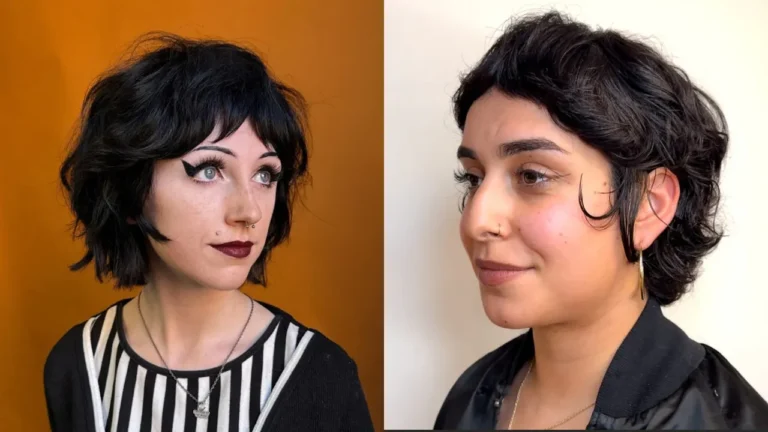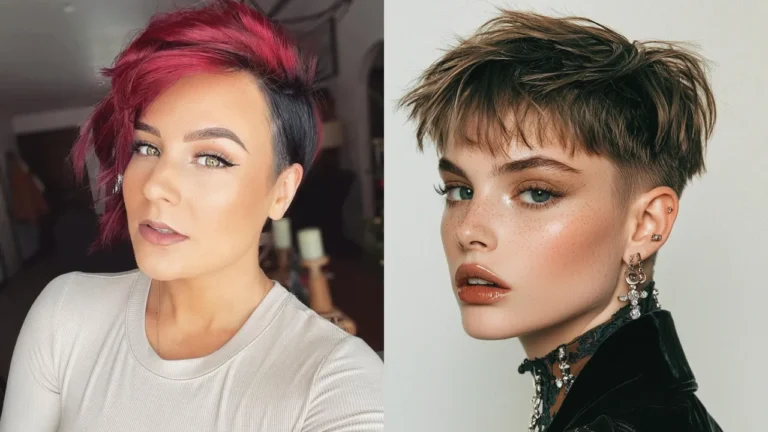
23 Short Hairstyles for Thin Fine Hair That Look Fuller
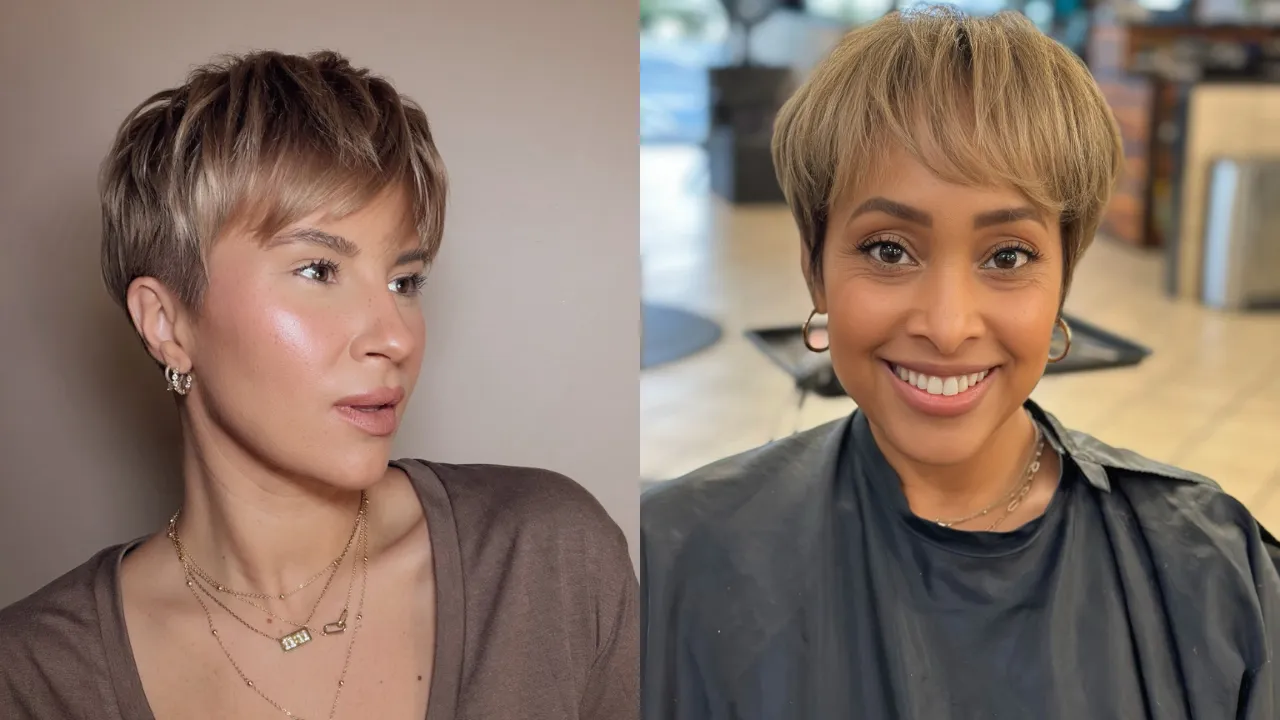
Does your fine hair fall flat no matter how you style it? The right short haircut can make a difference without adding extra work to your morning routine.
These 23 short hairstyles for thin fine hair include textured pixies, chic bobs, wispy bangs, and modern crops that help your hair look fuller. Whether your roots lack lift or your ends seem too thin, you can find inspiration for a cut that suits your texture and personal style.
Small details matter when choosing a short haircut. A little crown texture can bring movement, while keeping enough weight around the ends can help prevent a wispy finish. Explore these ideas, save your favorites on Pinterest, and take them to your next salon appointment for a style that works with your hair.
1. Textured Blonde Pixie Crop
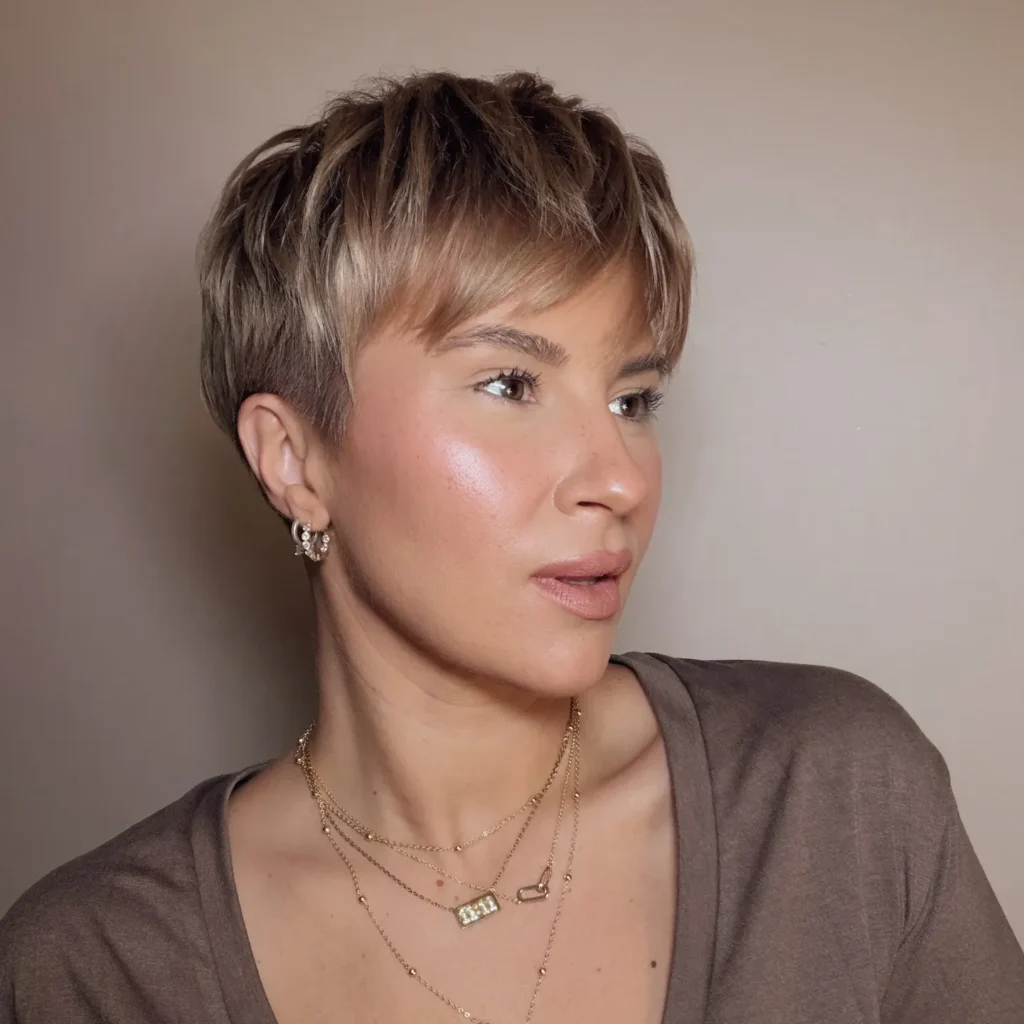
When your hair goes flat minutes after blow drying, adding more product often makes the problem worse. A textured blonde pixie crop offers another approach, with short, separated pieces across the crown and a choppy fringe that brings attention to the haircut. The blonde shade highlights the movement between strands.
The sides stay close to the head, while the top keeps enough length for a tousled finish. You can push the fringe forward for a casual effect or sweep it sideways when you want a change. Its cropped shape also means less hair to manage during a busy morning.
Ask your stylist to preserve some weight at the ends instead of thinning every section. Fine strands can become wispy when too much hair is removed. A small dab of lightweight paste, worked through dry hair with your fingertips, can separate the layers without flattening the roots.
Read More : 23 Short Hairstyles for Thin Hair
2. Swept Blonde Undercut Pixie
thaliasitou
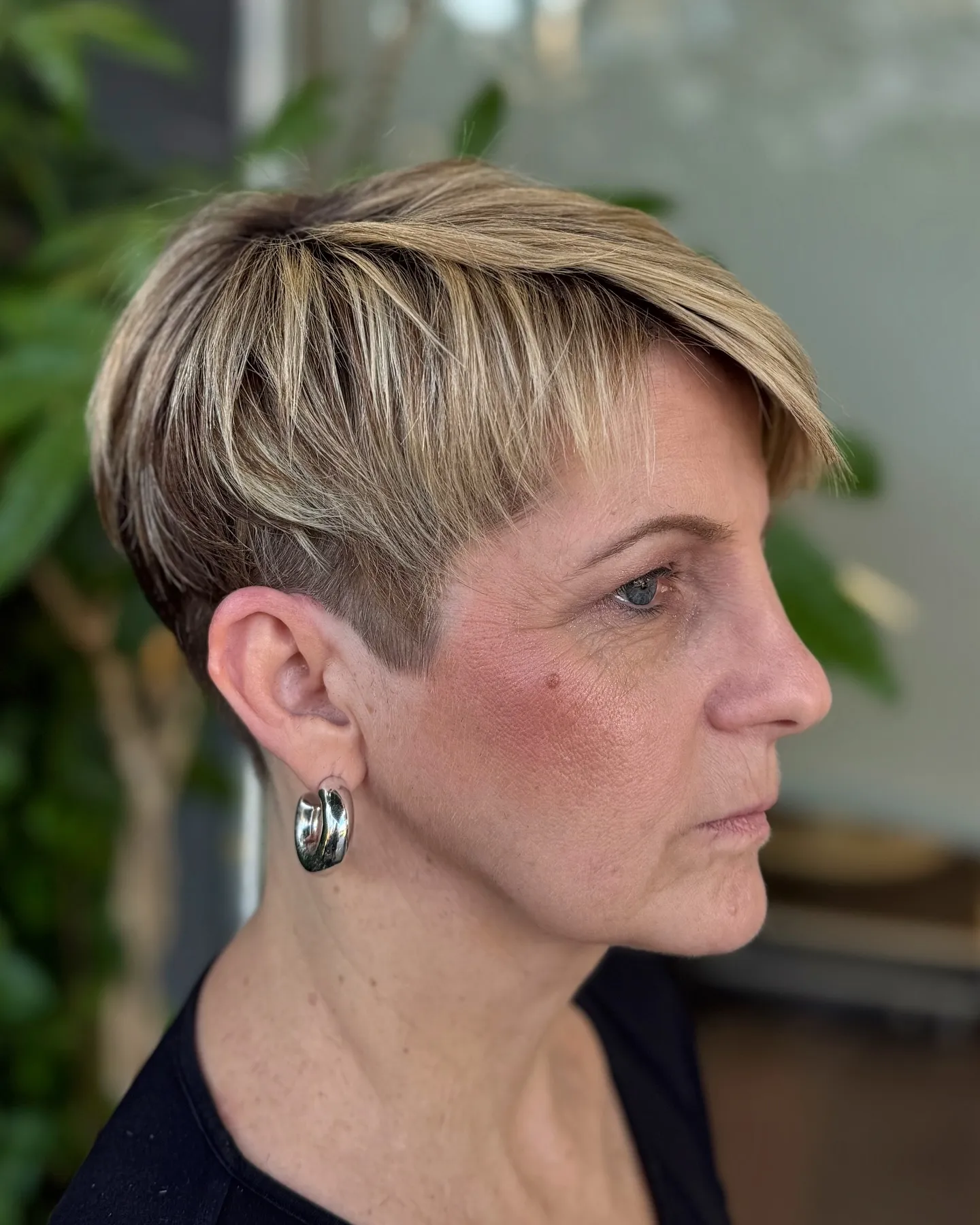
Hair that sticks out around the ears while lying flat on top can make styling feel like a daily battle. A swept blonde undercut pixie solves that contrast with closely trimmed sides and a longer top directed diagonally across the forehead. The difference in length gives this cut its bold character.
The sweeping fringe brings movement toward the front, while the shorter sides keep the silhouette compact. Blonde color makes the direction of the strands easier to see, especially where the top crosses the darker roots. You can wear the fringe loosely or shape it into a more defined sweep.
The placement of the longer section matters with fine hair. Ask your stylist to leave enough length at the front so the fringe does not separate into sparse pieces. Use a light root lifting spray before blow drying, directing the hair across the forehead with a small brush rather than coating the finished cut with heavy cream.
Read More : 23 Short Colored Hair Ideas for a Bold New Look
3. Tousled Dark Micro Pixie
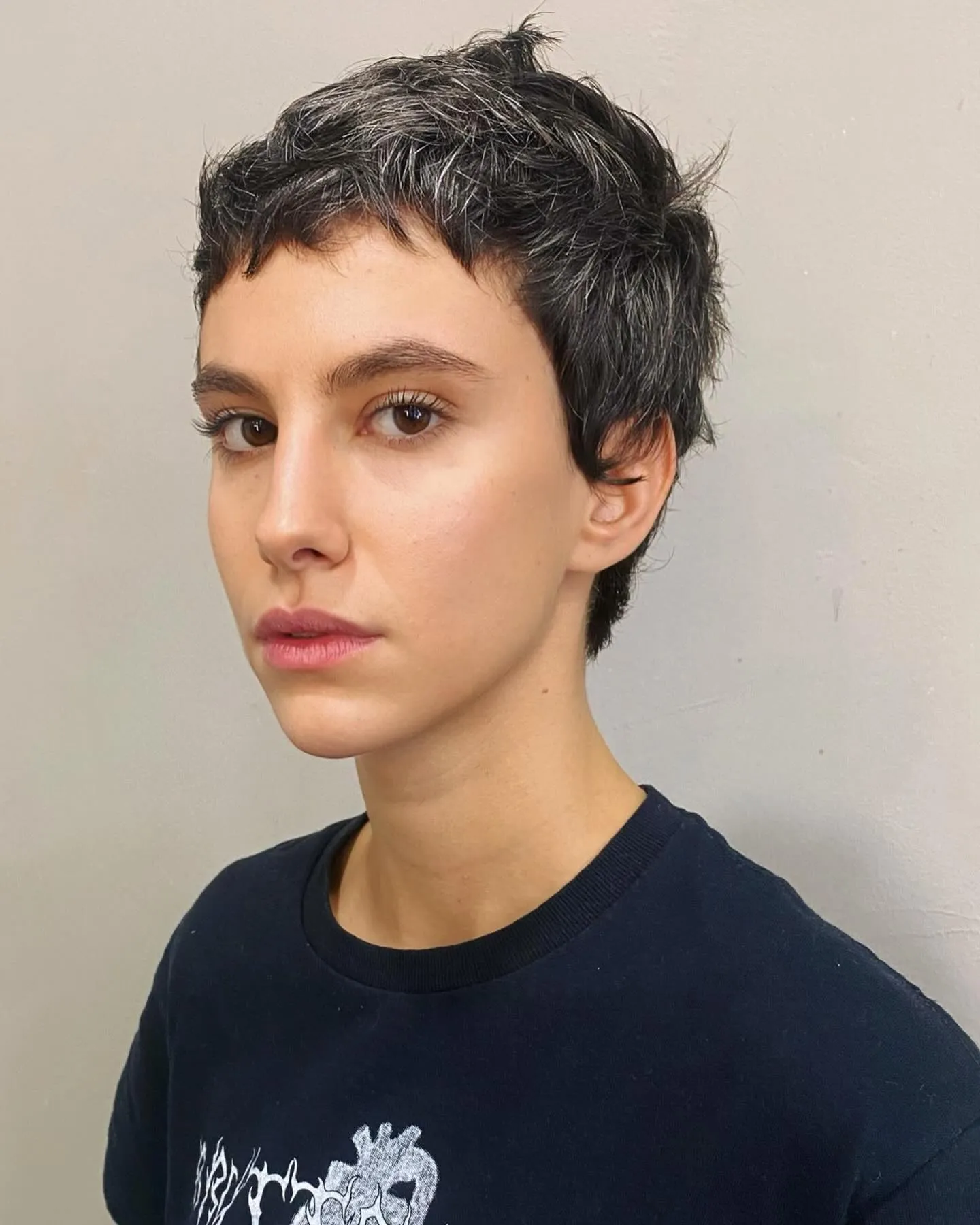
If your part becomes wider whenever your hair separates, a shorter cut with carefully placed texture may be worth considering. A tousled dark micro pixie uses uneven pieces across the crown to break up a flat surface. The deep brunette color keeps the attention on the shape, while the short length gives it a confident, understated character.
Unlike a longer pixie, this cut keeps the sides and back close to the head. A little extra length on top allows you to push sections forward, sweep them sideways, or leave them slightly separated. The finish does not need to be symmetrical, which makes the haircut appealing if you prefer a relaxed style.
Keep the texture controlled rather than heavily thinned. Your stylist can use small, careful cuts through the top while leaving enough density at the ends. For everyday styling, warm a tiny amount of matte paste between your fingers and pinch a few strands into place. The goal is visible separation without exposing too much scalp.
Read More : 22 Short Haircuts for Oval Faces With Modern Style
4. Highlighted Side Swept Pixie
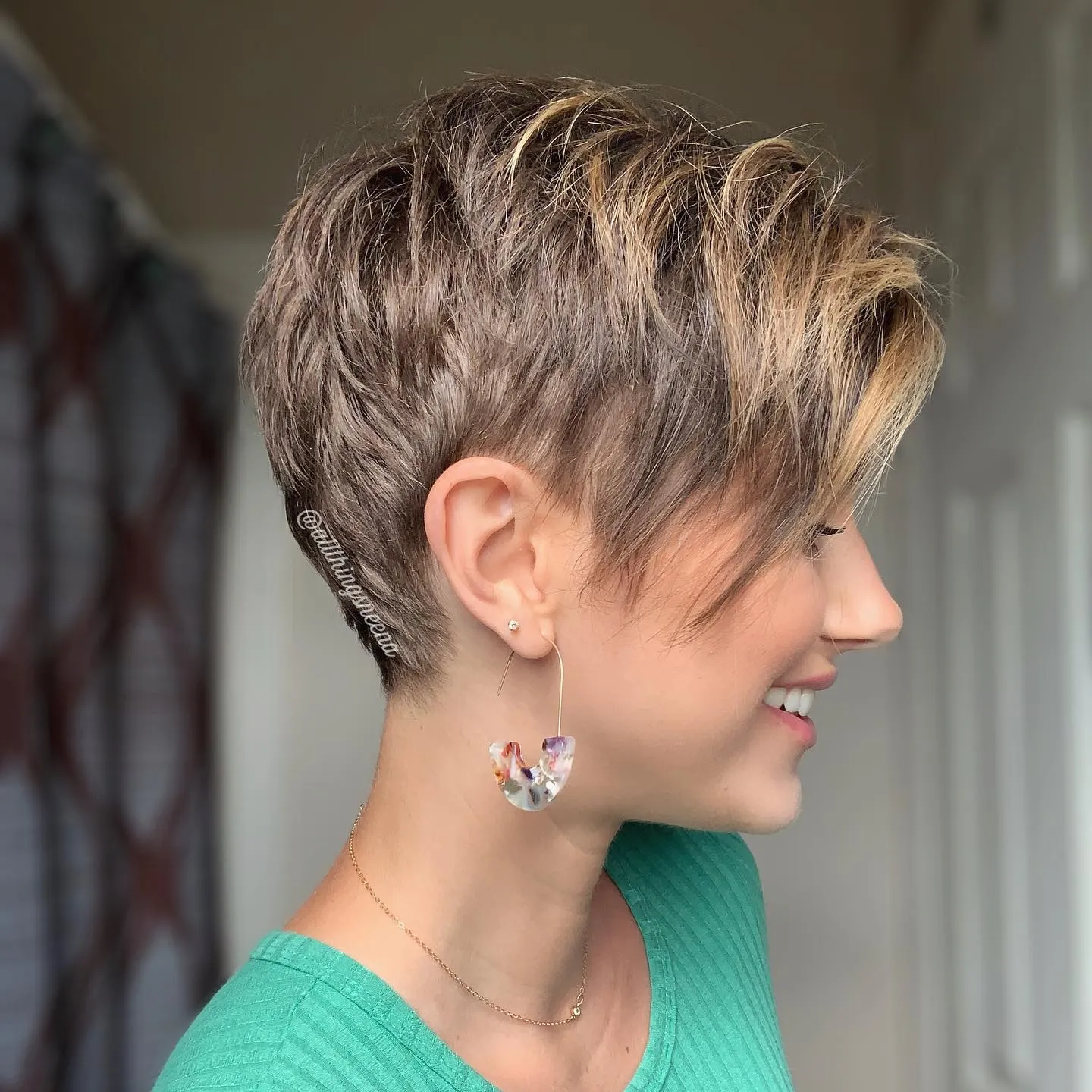
When your fringe keeps falling straight down and your roots refuse to hold any lift, changing the direction of your hair can make styling less frustrating. A highlighted side swept pixie uses a deep side part and longer front pieces to guide attention across the forehead. Lighter streaks bring out the shape without requiring a dramatic color change.
The shorter back keeps the cut close to the neck, while the top has enough length to sweep across one side. That diagonal movement breaks away from a flat, straight down finish. You can tuck one side behind your ear or let the longer fringe frame your face for a more relaxed appearance.
For fine strands, ask your stylist to place the part where your hair naturally separates rather than forcing a difficult direction. Blow dry the roots against their usual growth briefly, then guide them into the side sweep. This technique can encourage lift without teasing, which may leave delicate strands tangled or rough.
Read More : 21 Short Haircuts for Chubby Faces for Women
5. Warm Brunette Feathered Pixie
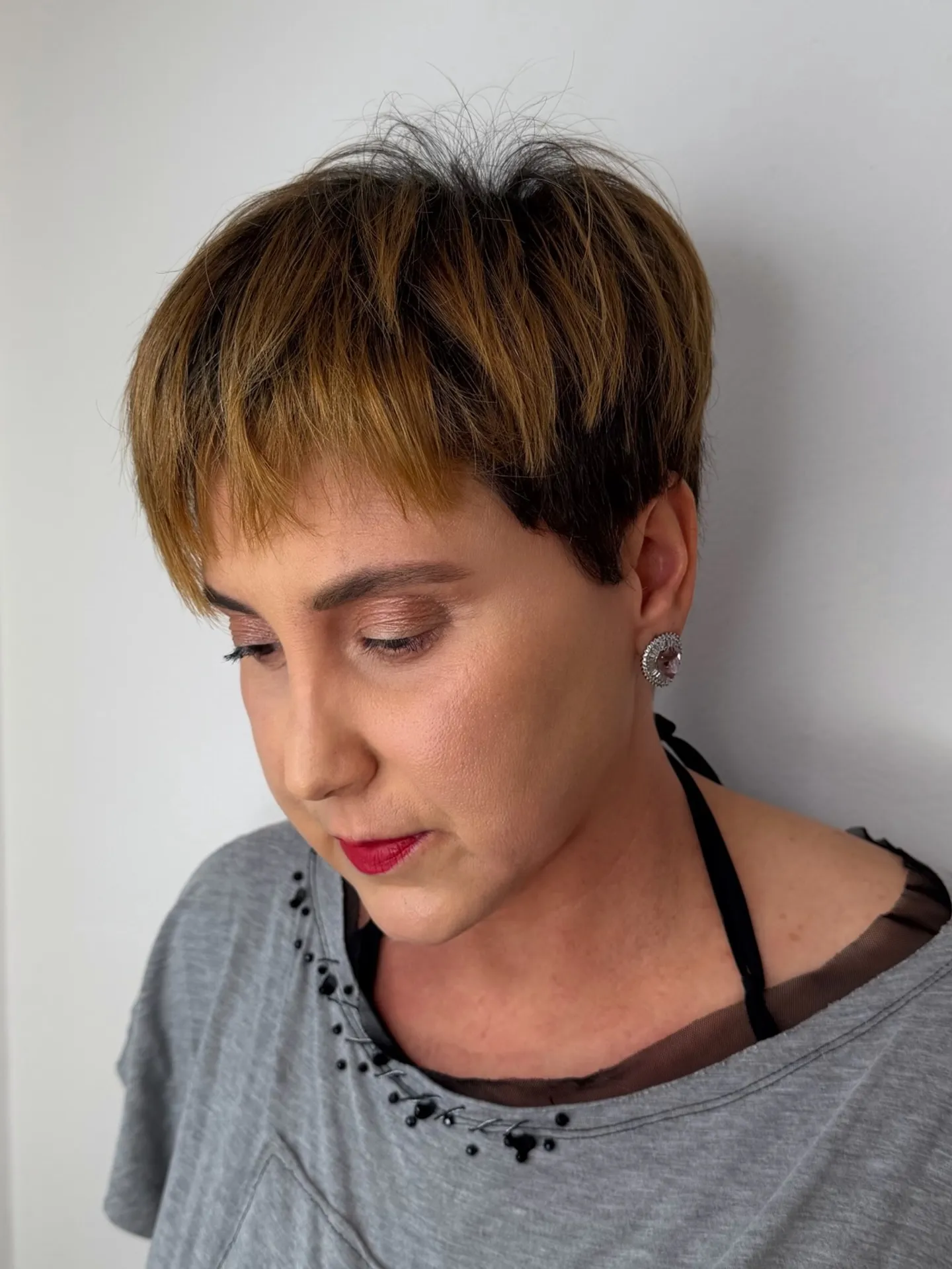
Some mornings, fine hair seems to cling to the head even after you have brushed it into shape. A warm brunette feathered pixie offers a lighter outline, with short layers around the crown and tapered pieces that follow the head. The rich brown shade adds depth, while the feathered edges keep the cut from feeling too severe.
Longer sections across the top can be brushed forward or angled gently to the side. Around the temples and ears, the shorter pieces create a neat outline that does not require much daily adjustment. This cut suits anyone who wants a short hairstyle with movement but prefers a warmer, understated color over bright blonde.
Feathering works best when it is placed carefully. Ask for light shaping around the fringe and crown, but avoid removing too much density from the ends. A round brush can lift the front during blow drying, while a small amount of lightweight mousse helps support the roots without leaving a stiff finish.
6. Platinum Blonde Choppy Pixie
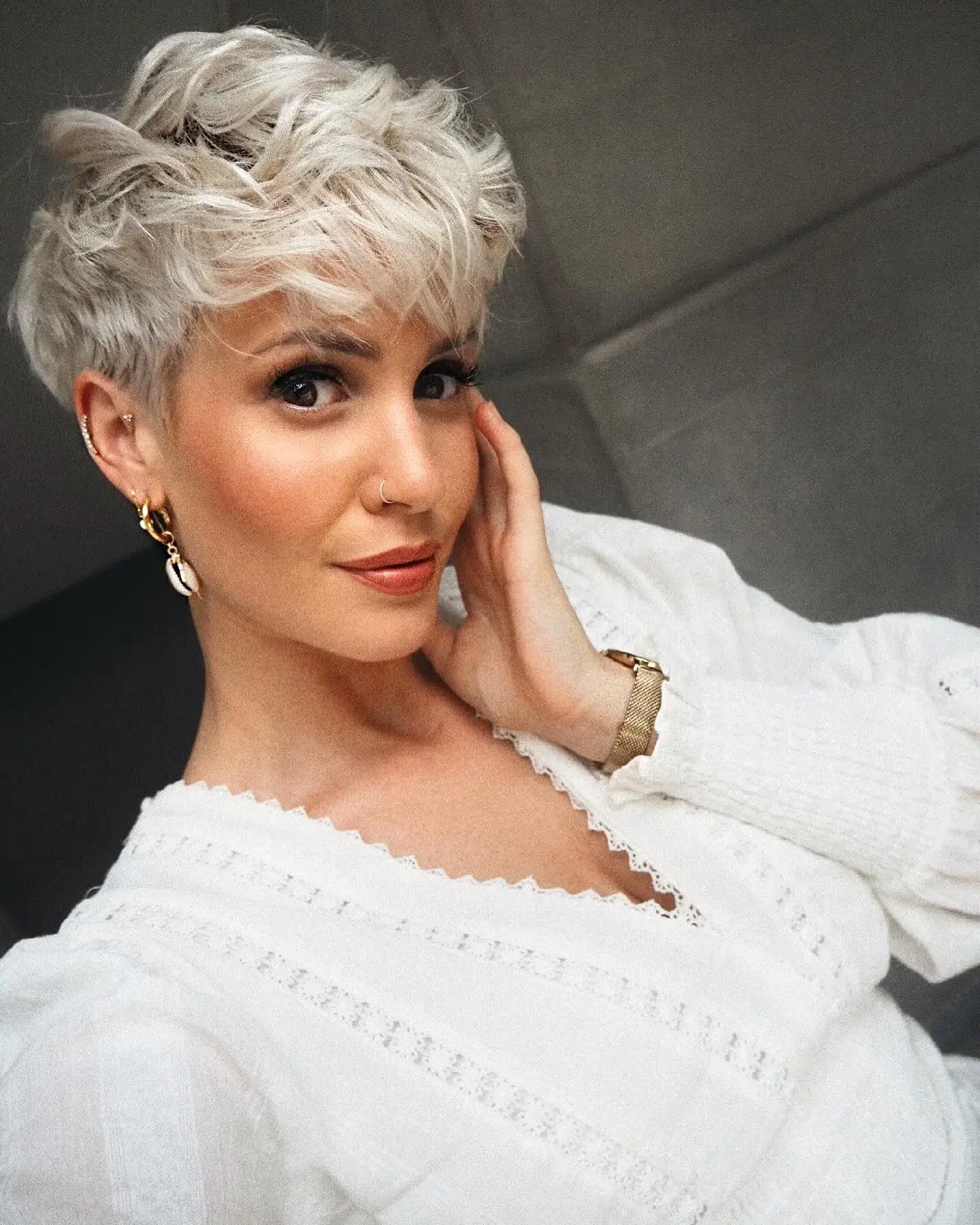
Flat roots and thin ends can make longer hair seem difficult to shape, especially when you want a noticeable change without spending extra time styling. A platinum blonde choppy pixie takes a bolder route, combining a close cropped outline with irregular pieces across the top.
The fringe sits in uneven sections across the forehead, giving the haircut a playful edge rather than a smooth, rounded finish. Short sides keep the shape compact, while the textured crown offers room to lift or redirect the hair. The contrast makes this option stand out from more traditional pixie cuts.
Platinum color requires more upkeep than a darker shade, so consider your hair’s condition before making the change. Bleaching can weaken fine strands, particularly when the hair has already been colored. Ask your colorist about the safest route to your desired shade, and use a gentle, color safe routine to help maintain the condition of your hair.
7. Sleek Sculpted Brunette Pixie
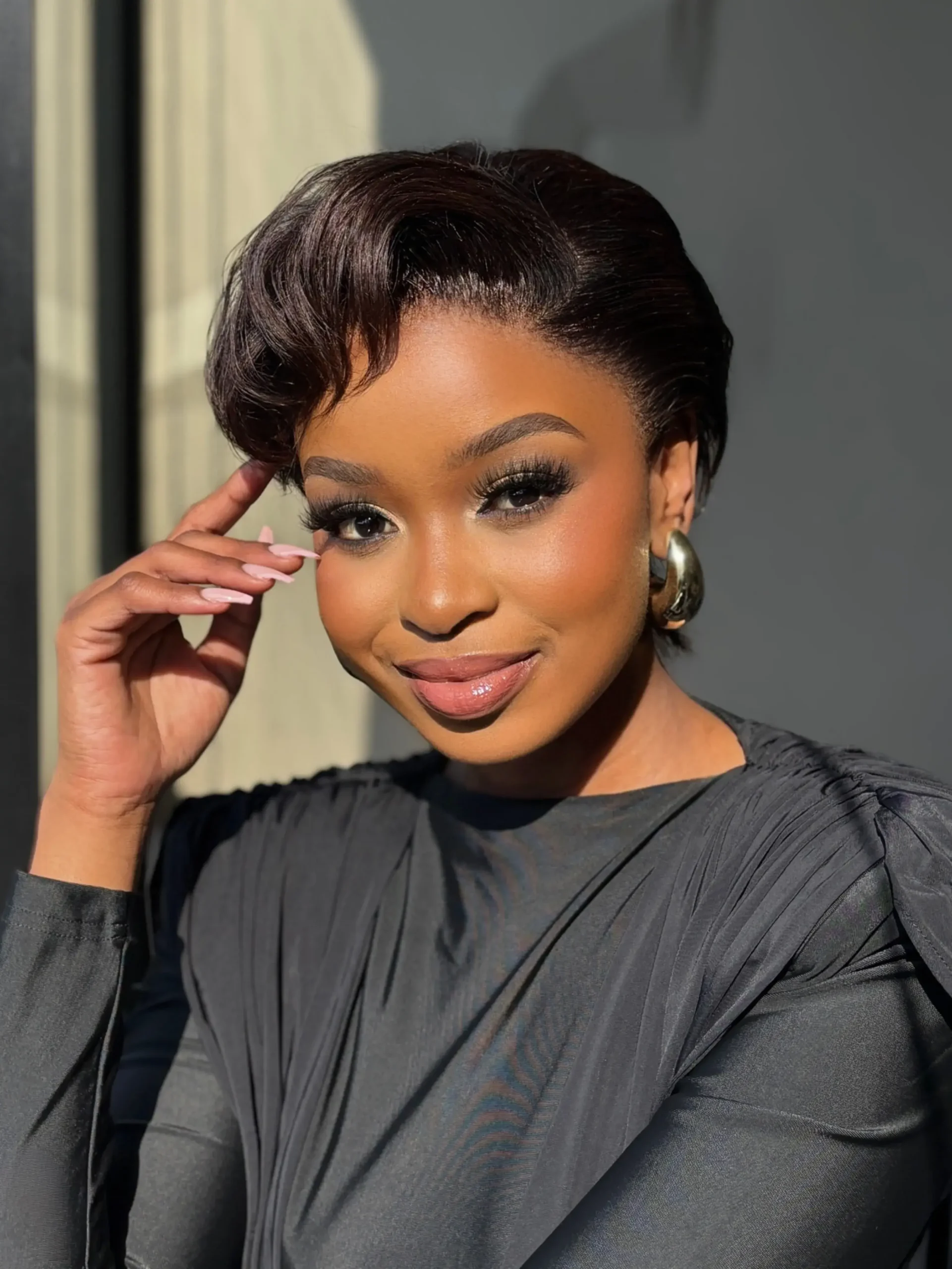
When flyaway strands refuse to sit neatly around your forehead, a sleek brunette pixie can offer a welcome change from tousled cuts. Its smooth, curved shape follows the head, with a defined fringe and closely shaped sides. The rich brunette shade keeps the focus on the haircut’s clean outline rather than contrasting highlights.
The top lies close to the head, while the front sweeps gently across the forehead. That controlled direction makes the cut distinctive without relying on lots of layers or extra length. It suits someone who prefers a neat finish and does not mind spending a few minutes shaping the fringe before heading out.
Fine hair can lose its body when too much styling cream is applied, so use a small amount of lightweight smoothing product instead. A narrow brush helps guide the fringe into place during blow drying. Keep the ends softly curved rather than pressed completely flat, especially if your hair naturally lacks volume at the crown.
8. Rounded Chocolate Bob Bangs
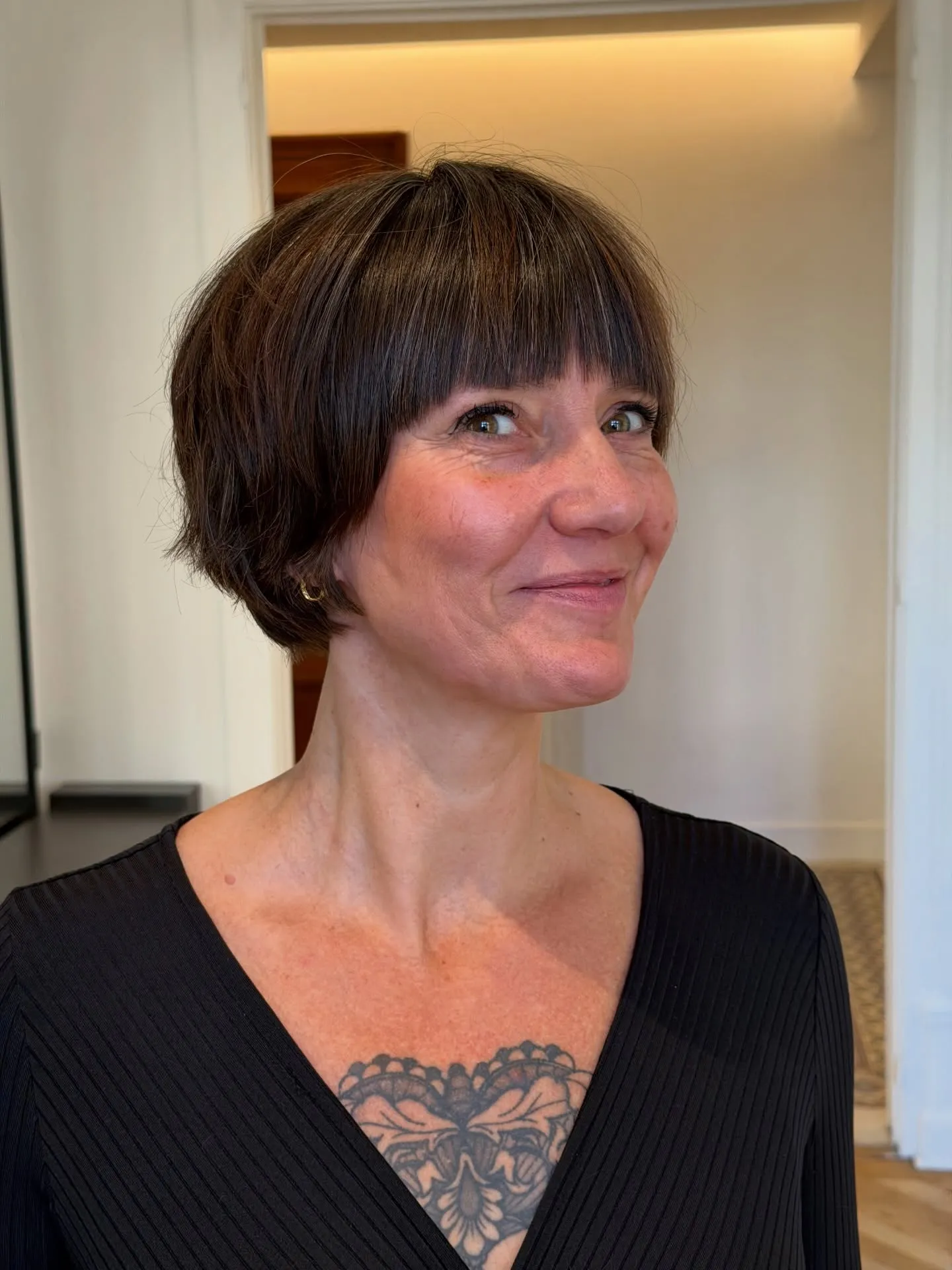
Thin ends can become more noticeable when your haircut has too many layers or an uneven outline. A rounded chocolate bob with bangs takes the opposite approach, keeping the perimeter fuller while the curved shape follows the jaw. The deep brown shade adds richness, and the fringe brings attention toward the eyes.
The bob sits around the chin, with the ends turned slightly inward to form a rounded silhouette. Full bangs give it a distinctive finish, while the compact length helps the sides maintain their shape. It is a useful option if you enjoy a classic haircut but want something with more character than a straight, one length bob.
Ask your stylist to keep the bottom edge fairly solid instead of heavily texturizing it. Fine strands often benefit from retaining weight at the perimeter, which can help the ends appear denser. During styling, use a round brush to curve the ends inward, then let the hair cool before touching it again so the shape has a chance to settle.
9. Wispy Layered Shaggy Bob
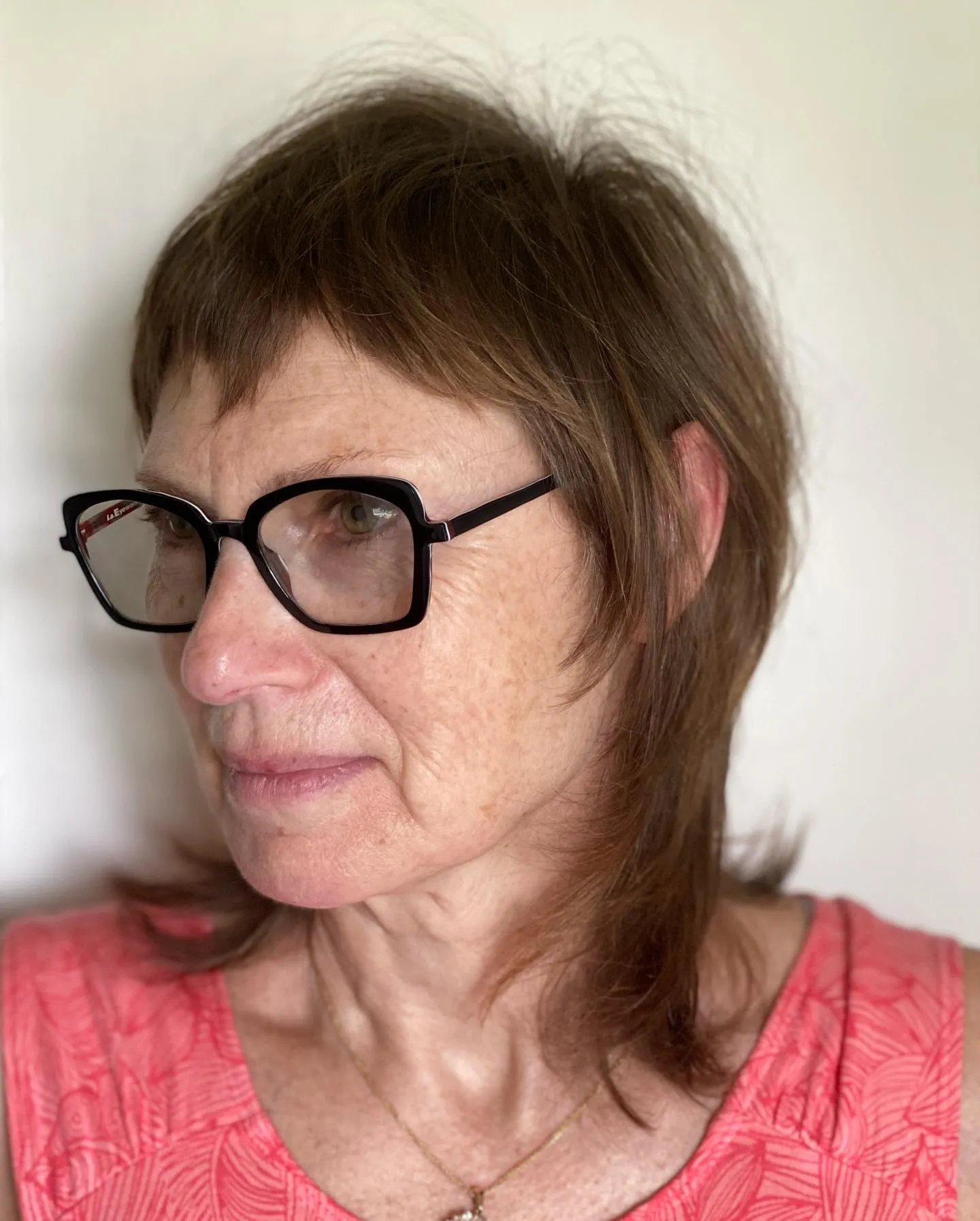
If your hair hangs close to your cheeks and never seems to move, a shaggy bob can bring a welcome change in direction. Wispy layers around the crown and face give this cut a relaxed, slightly undone character. The shorter shape keeps it manageable, while the uneven ends prevent the outline from looking too rigid.
Unlike a rounded bob, this haircut relies on visible separation between the layers. The fringe blends into the sides, drawing attention toward the eyes and cheekbones. It works well for someone who prefers a casual finish rather than spending each morning trying to make every strand sit in exactly the same place.
There is one detail to discuss before choosing a shag: fine hair can lose fullness when too many layers are cut throughout the head. Ask your stylist to concentrate the shorter pieces near the crown and face while preserving enough length at the bottom. A light mist of texturizing spray can encourage movement without coating the roots or leaving the ends limp.
10. Platinum Bowl Cut Undercut
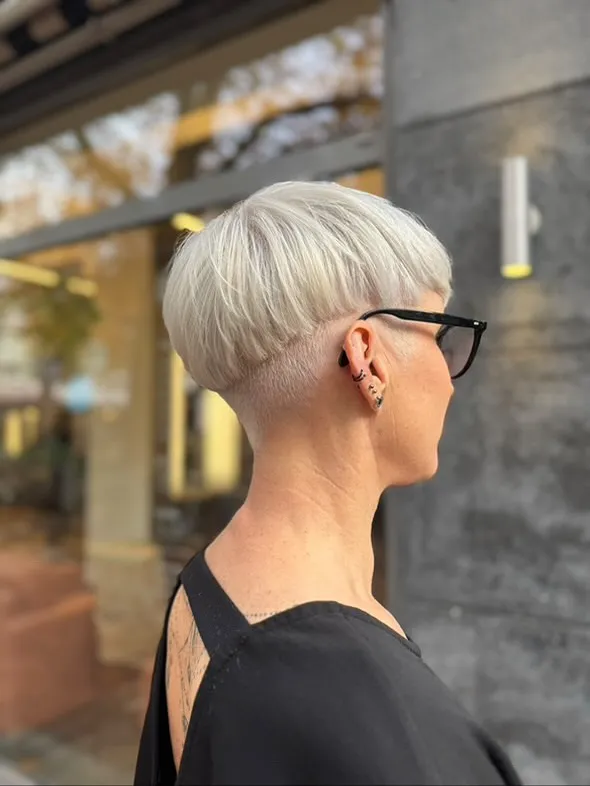
When your hair refuses to hold volume at the crown, adding layers everywhere may not solve the problem. A platinum bowl cut undercut takes a more deliberate approach, with a rounded top section and closely shaved sides. The pale blonde shade highlights the curved outline, making the haircut stand out without relying on long, thick strands.
The fringe follows a rounded line across the forehead, while the undercut removes bulk around the sides and back. This contrast gives the haircut its distinctive shape and keeps the silhouette compact. It suits someone who enjoys a bold, fashion forward cut rather than a conventional short bob.
Before choosing this cut, discuss how the rounded top will sit with your natural growth pattern. Fine hair can follow the scalp closely, so the stylist may need to adjust the length to maintain the curved outline. A small round brush and low heat can help direct the front into place without flattening the crown.
11. Feathered Silver Blonde Pixie
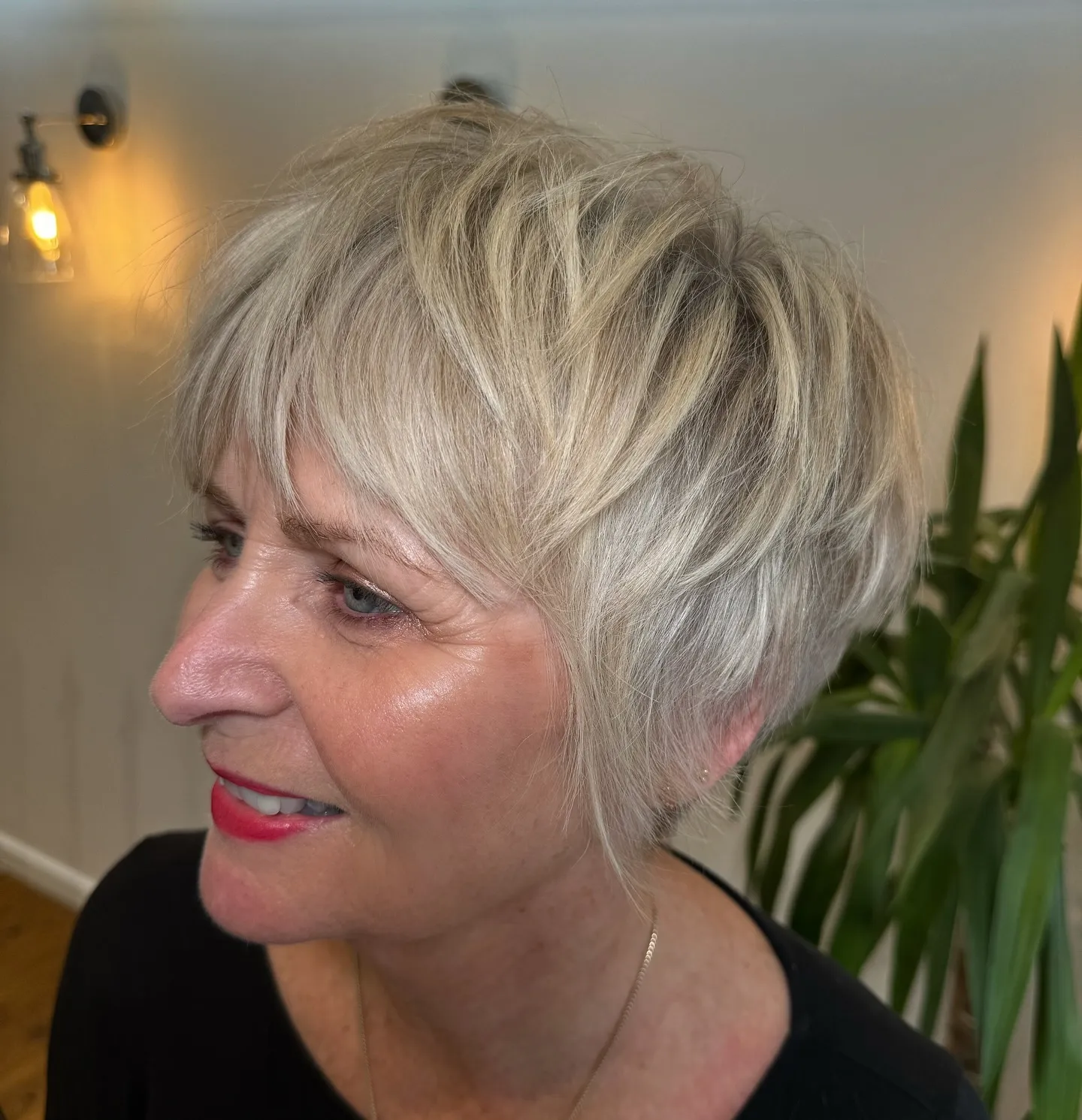
Grey or silver tones can be tempting when you want a change, but you may worry that a lighter color will make fine hair seem even thinner. A feathered silver blonde pixie balances the color with short, swept layers that bring movement across the top. The pale shade draws attention to the feathered edges and the shape around the face.
The sides taper neatly, while the longer top pieces move away from the crown and across the forehead. This gives the haircut a light, airy finish without requiring a long fringe. It is a strong choice for someone who likes cool toned hair and wants a short cut that can be styled in more than one direction.
Silver blonde usually requires careful color maintenance, especially if your starting shade is dark. Ask your colorist about the lightening process and whether your hair can handle it without becoming fragile. For daily styling, lift the roots with a lightweight mousse and direct the top with your fingers. Keeping the ends healthy matters more than adding extra layers.
12. Tapered Golden Blonde Crop
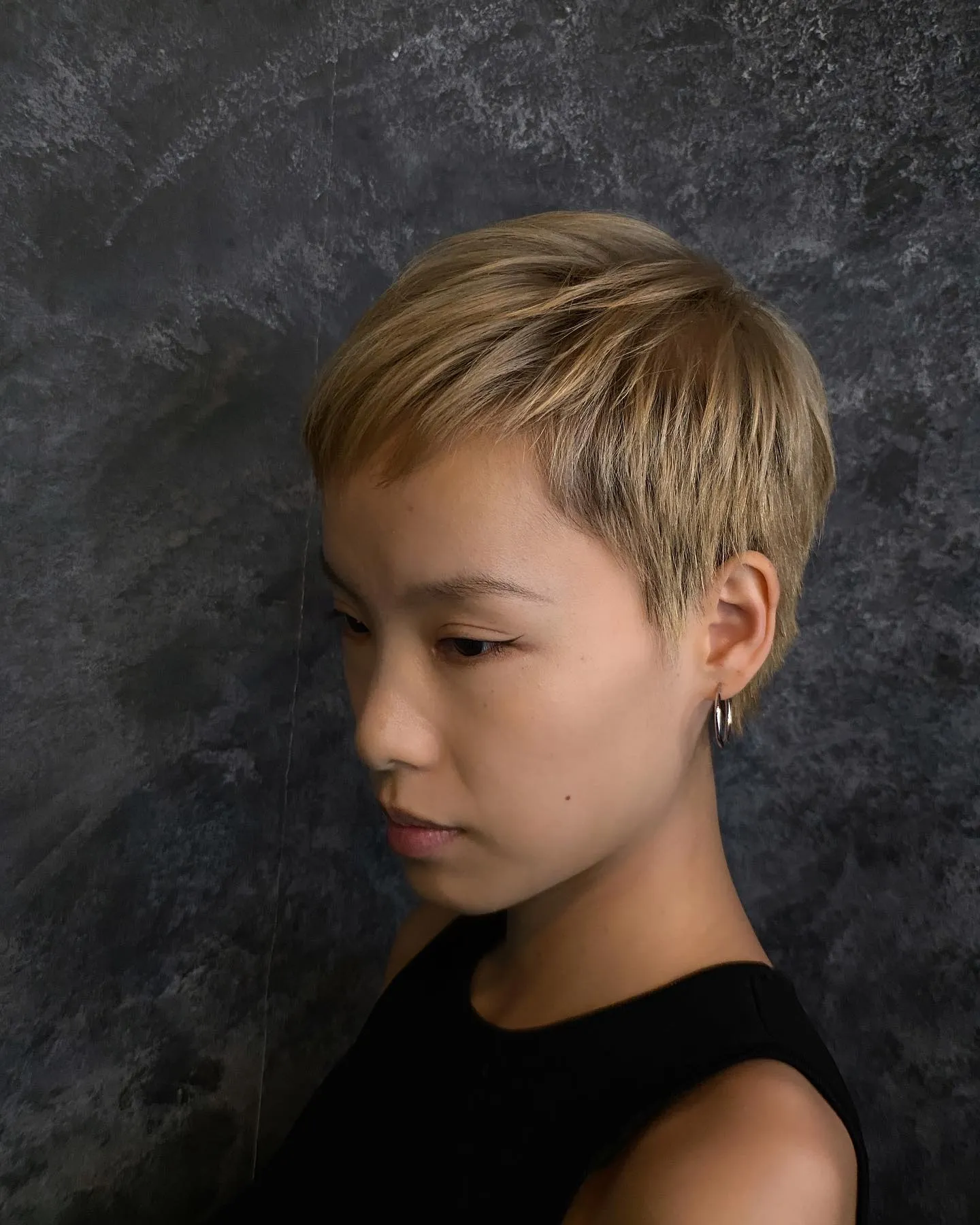
A haircut that needs constant fixing around the ears can become tiring when your mornings are already busy. A tapered golden blonde crop keeps the back and sides short while leaving a little extra length through the top. The warm blonde shade brings brightness to the face, and the compact outline makes the cut easy to maintain between washes.
The crown has enough length to move forward or slightly upward, while the tapered sides follow the head without creating a bulky shape. This balance works well if you prefer a practical haircut that still has some personality. You can wear the top loosely separated or brush it into a more defined direction for work or an evening out.
For fine hair, the key is keeping the top long enough to overlap naturally rather than cutting it so short that every strand lies flat. Ask your stylist to blend the taper gradually and preserve some density near the front. A quick blow dry using your fingers can lift the roots, and a little lightweight styling lotion can help control flyaways without making the hair greasy.
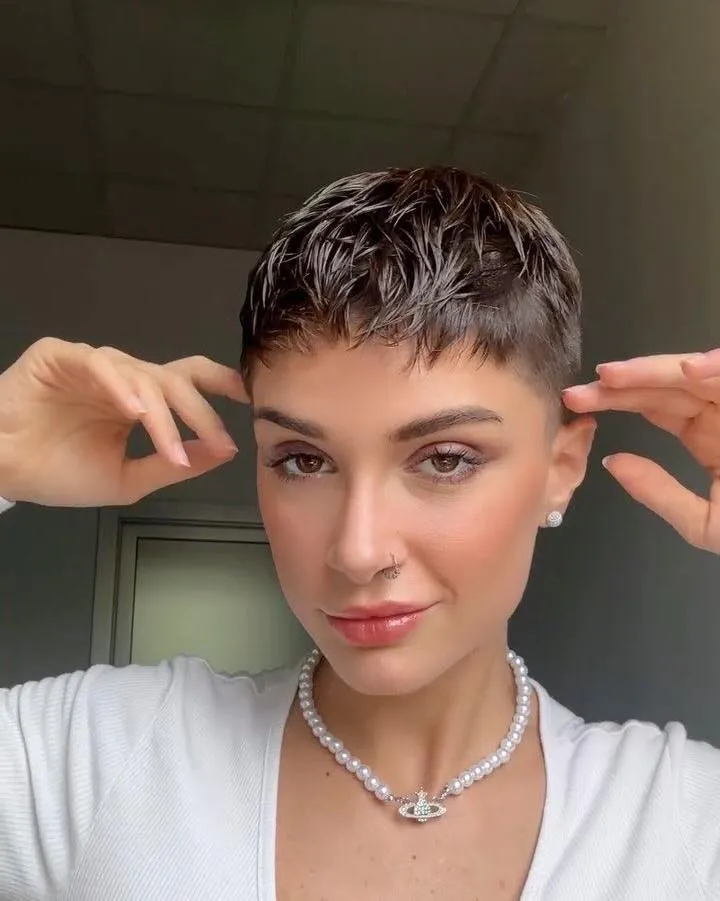
13. Textured Brunette Micro Crop
kurzehaare.damen
When your hair separates into thin strands around the part, longer lengths can make the scalp more noticeable than you would like. A textured brunette micro crop keeps the cut close while using short, uneven pieces across the crown to break up that separation. The dark brown shade highlights the choppy finish without depending on dramatic color contrast.
The top has a slightly irregular shape, with short pieces directed forward and toward the temples. Meanwhile, the closely cut sides keep the outline neat and draw attention to the eyes and cheekbones. This is a bold choice if you prefer short hair that does not need a carefully arranged fringe every morning.
Fine strands can lose their fullness when the crown is over layered, so ask for texture in selected areas rather than throughout the entire cut. A stylist can keep the ends compact while shaping a few pieces to move independently. For everyday wear, rub a little lightweight matte product between your fingertips and lift only the sections that need definition.
14. Glossy Black Rounded Bob
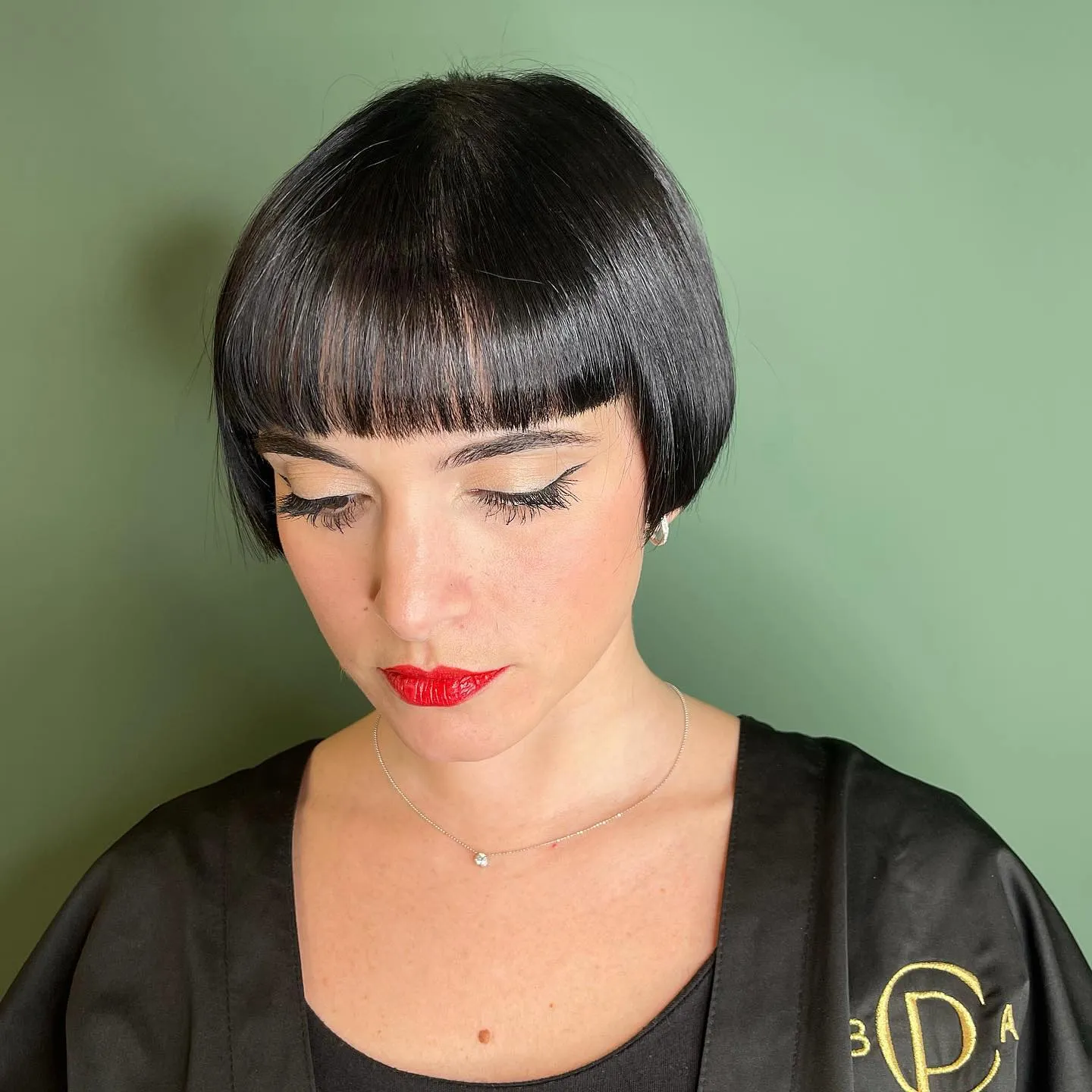
Finding that your ends look see through whenever you tie your hair back can make a shorter cut tempting. A glossy black rounded bob focuses on a strong outline, with the ends curved toward the jaw and a smooth shape around the head. The dark shade reflects light along the surface, drawing attention to the bob’s clean edge.
Its compact length keeps the shape close to the face, while the rounded finish adds a gentle curve instead of a blunt, boxy silhouette. This haircut suits someone who prefers a more controlled appearance over choppy layers. A side or slightly off center part can also change the way the front frames your features.
Ask your stylist to cut the perimeter carefully and avoid removing too much weight from the bottom. Fine hair often benefits from a solid edge because the ends can appear fuller when they are not excessively thinned. During styling, use a paddle brush to smooth the lengths and turn the ends inward with a round brush. Keep shine products away from the roots so they do not become oily too quickly.
15. Golden Blonde Feathered Pixie
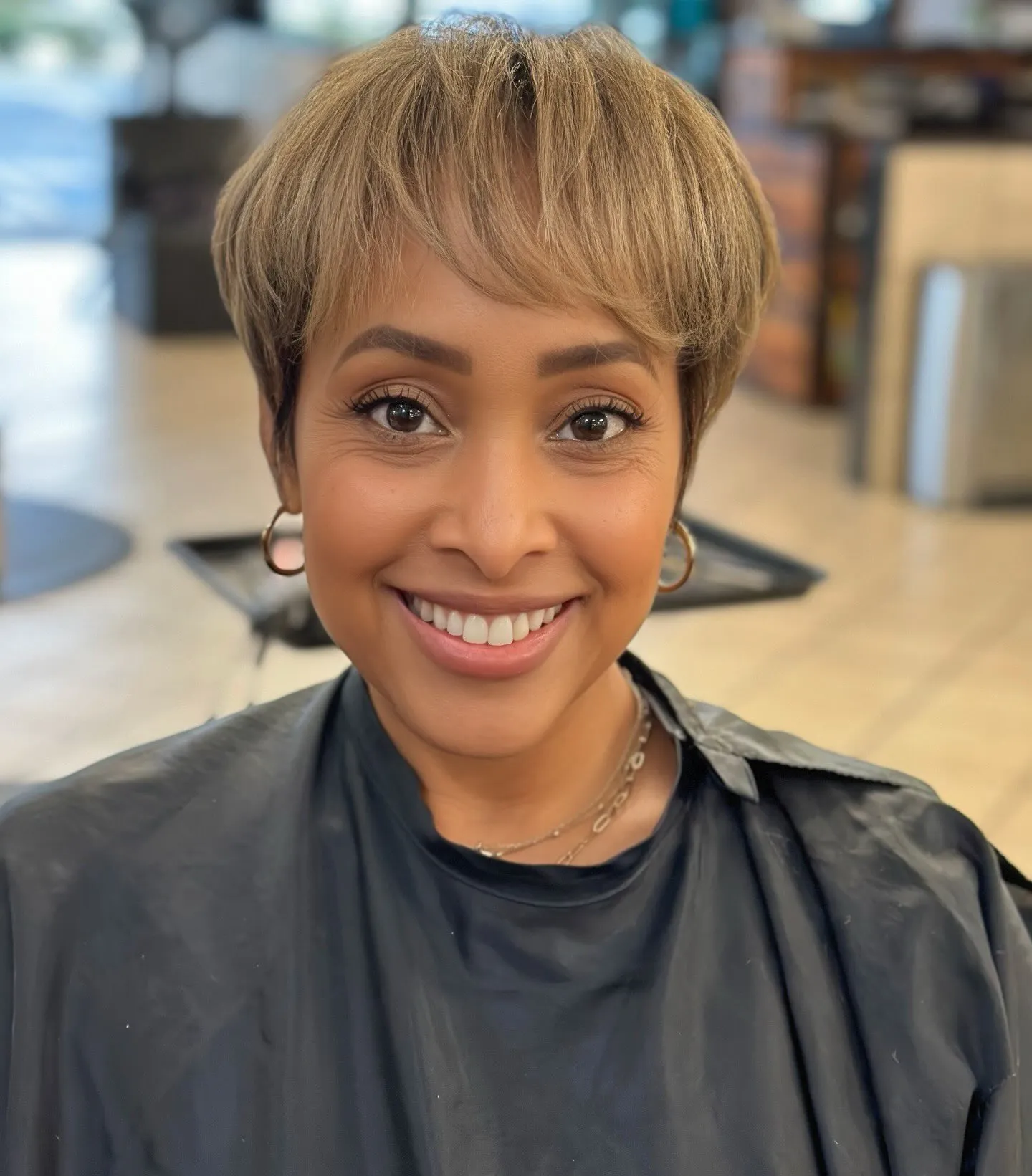
Some short haircuts can feel too severe when every section is cut to the same length, especially if you prefer movement around your forehead. A golden blonde feathered pixie uses longer pieces through the front and crown, with tapered sections around the ears. The warm color brings brightness, while the feathered finish keeps the shape from feeling rigid.
The fringe can sweep diagonally across the forehead, creating a gentle line that works with the shorter sides. Lightly separated layers give you room to change the direction of the top without needing to restyle the whole head. It is a useful option if you want a cropped haircut that still offers a little flexibility.
For a fuller crown, ask your stylist to preserve length near the roots and keep the shortest layers from becoming too sparse. Blow dry the front upward first, then guide it to one side once the roots have lifted. A lightweight mousse can help support the shape, while a regular trim keeps the feathered edges from losing their definition.
16. Silver Brown Swept Crop
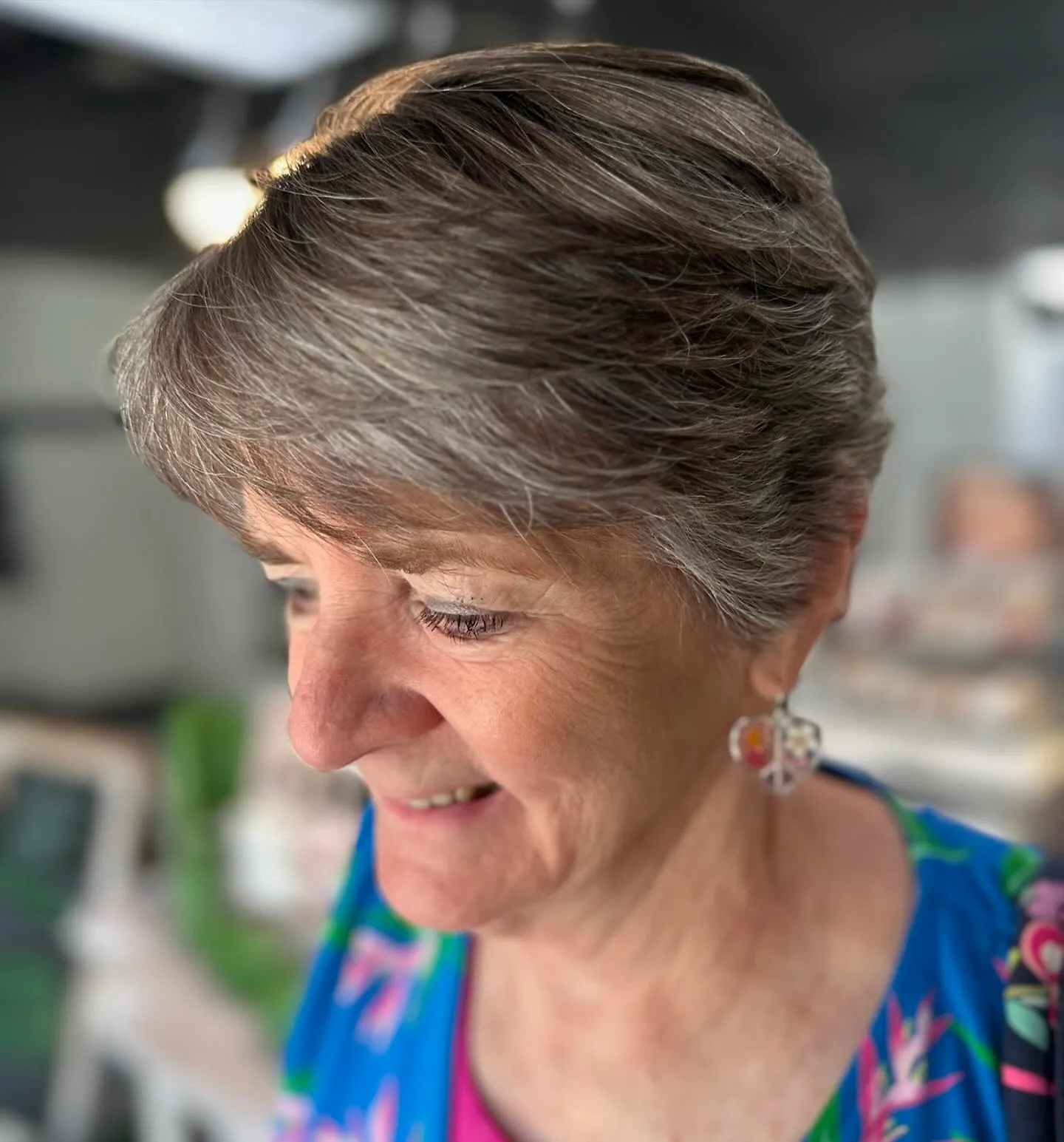
When your hair falls in the same direction every morning, trying to build height with a brush can become frustrating. A silver brown swept crop changes the direction of the top, with longer strands angled across the forehead and shorter sides that keep the shape compact. The mix of cool and warm tones highlights the movement without needing dramatic layers.
The front section carries most of the character here. It sweeps across the head in a loose curve, while the crown stays short enough to manage without a lengthy styling routine. This cut suits someone who wants a modern pixie with a little contrast rather than a sharp, heavily sculpted finish.
Fine hair often responds better to gentle root lifting than aggressive teasing. Ask your stylist to leave enough length at the front for the sweep and keep the sides closely blended. When drying, lift the roots with your fingers before directing the top sideways. A small amount of lightweight styling cream can control flyaways, but keep it away from the scalp.
17. Icy Blue Tapered Pixie
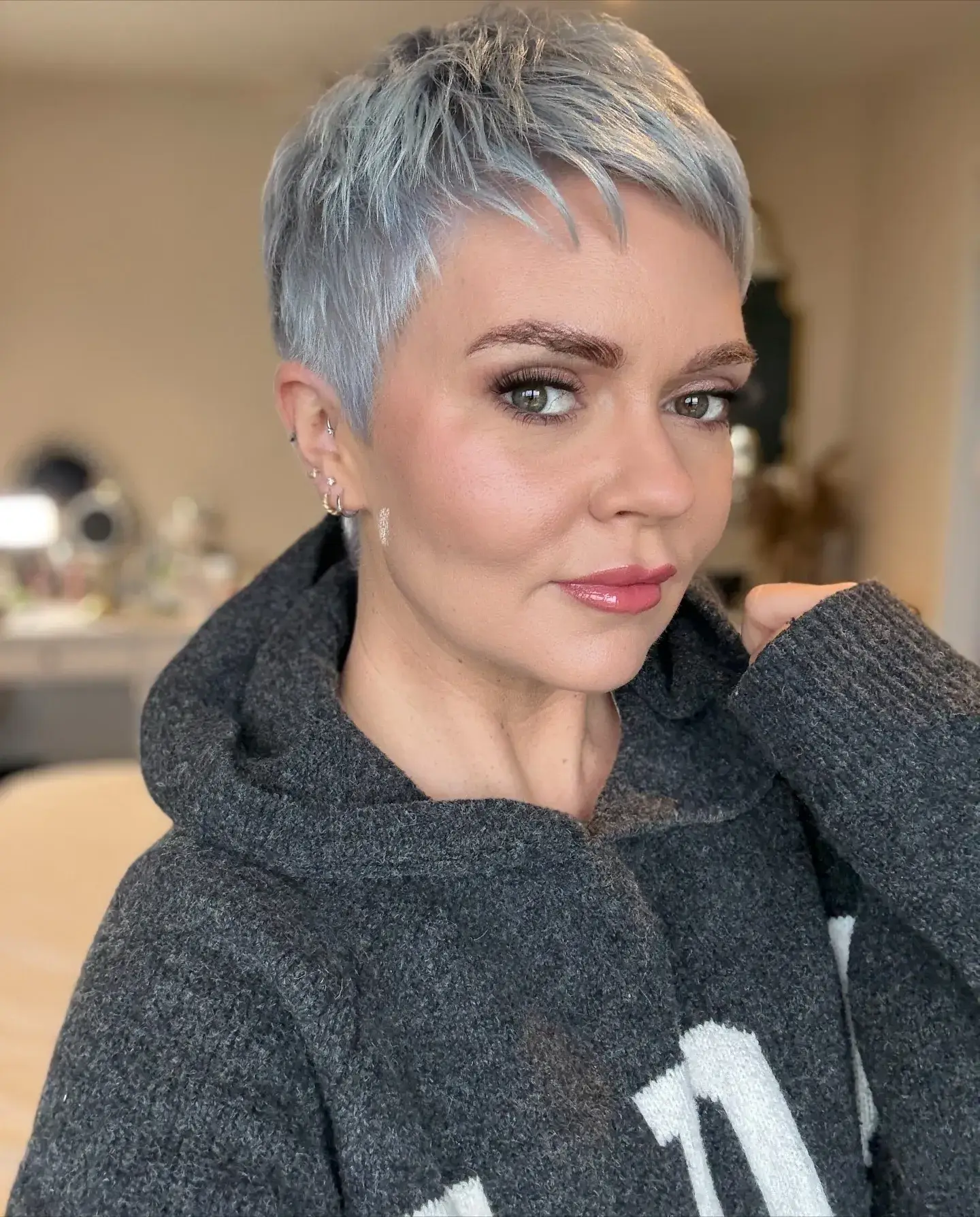
Changing your hair color can be exciting, but a bold shade may feel risky when your strands are already delicate. An icy blue tapered pixie makes the color the main feature while keeping the cut short and controlled. The cool blue tone catches the light across the top, and the tapered sides give the haircut a clear outline.
The crown has enough length for short, separated pieces, while the back and sides sit close to the head. This contrast keeps the vivid shade from overwhelming the shape. It suits someone who wants a creative change and is comfortable with a haircut that draws attention rather than blending into a classic short style.
Before going icy blue, speak with a colorist about the condition of your hair and the amount of lightening required. Fine strands can be more vulnerable to breakage after repeated bleaching. A shorter cut does not remove that risk, so prioritize hair health and follow a color safe care routine. For styling, use a lightweight product that defines the top without leaving a heavy coating.
18. Blonde Curtain Bob Hairstyle
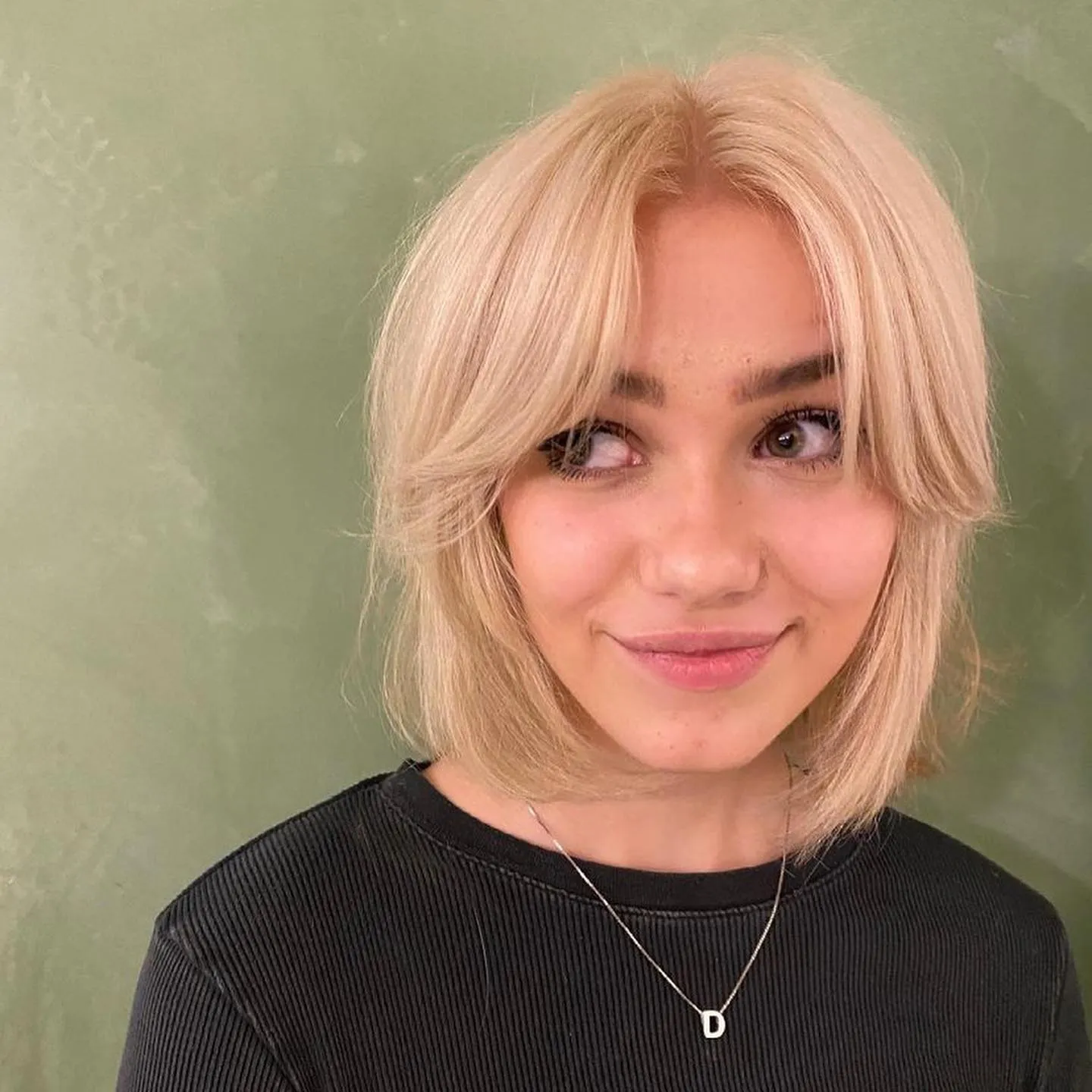
If your fringe keeps splitting into awkward gaps or falling directly into your eyes, a curtain fringe can be easier to manage than a thick, straight bang. A blonde curtain bob combines a short bob with front pieces that part near the center and curve away from the face. The lighter color highlights the shape around the cheekbones.
The bob sits around the jaw, with the sides following the face rather than forming a rigid line. Longer front sections blend into the rest of the cut, giving you room to tuck them behind your ears or wear them forward. It is a good option for anyone who wants a change from a pixie but does not want to grow their hair very long.
For fine hair, the fringe should not be cut too thick because removing too much hair from the rest of the head can leave the sides looking sparse. Ask your stylist to shape the curtain pieces using your natural parting. A round brush can bend each side away from the face during drying, while a light mist of root spray helps the top maintain some lift.
19. Mushroom Taupe Pixie Cut
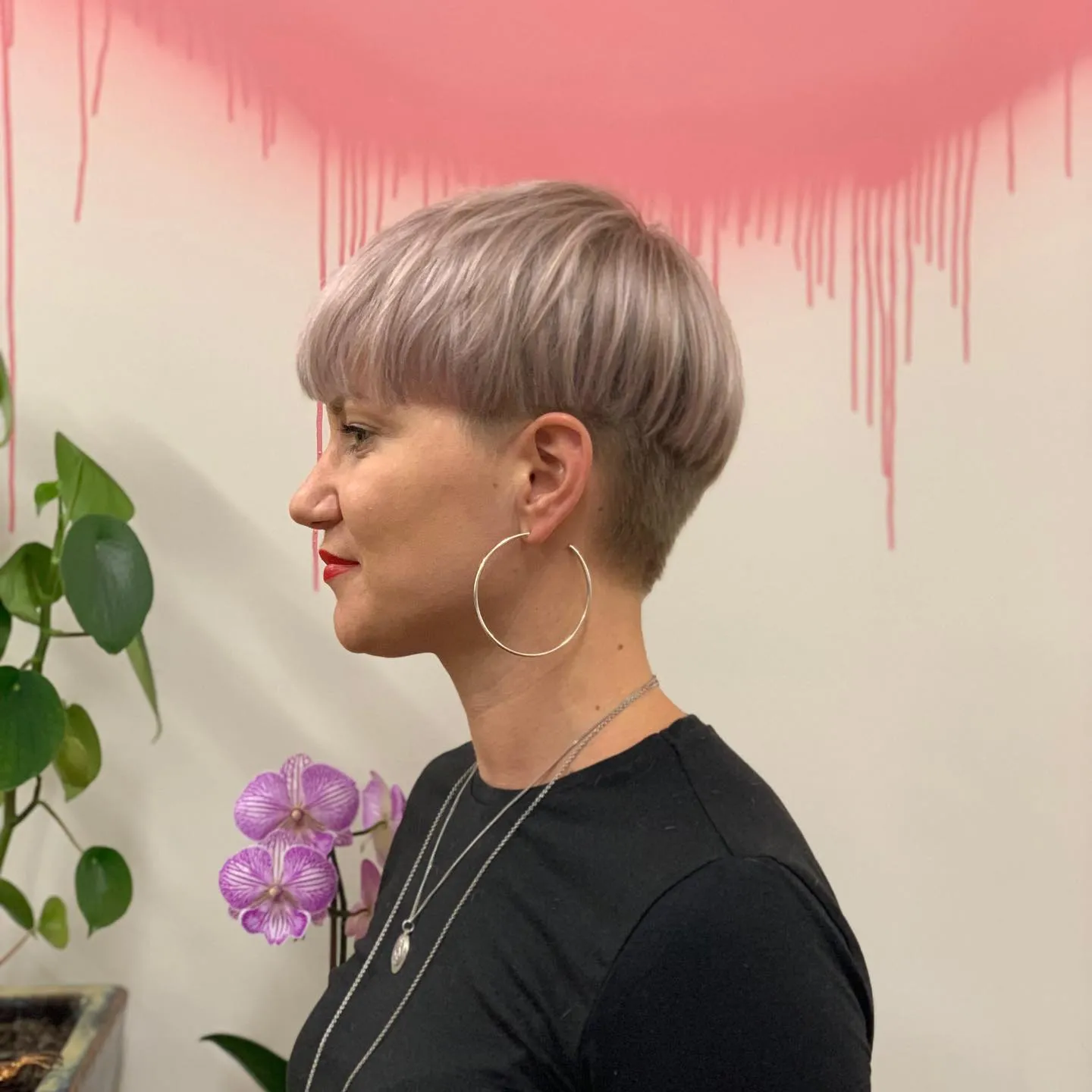
modelinehair
When your roots look flat but adding curls only makes the ends seem thinner, changing the haircut’s shape may help more than changing your styling routine. A mushroom taupe pixie combines a rounded top with closely tapered sides, giving the crown a defined outline. The muted brown shade with cool undertones brings subtle dimension to the short layers.
The fuller top contrasts with the neat sides, while the fringe curves gently across the forehead. That rounded shape gives this pixie a distinctive character without relying on long, wispy pieces. It suits someone who wants a short haircut with a little coverage around the temples and a modern finish.
Ask your stylist to preserve enough length through the crown so the hair can bend into its rounded shape. Fine strands may sit too close to the scalp if the top is cut excessively short. For styling, direct the roots upward with a small brush while blow drying, then smooth the surface with your fingers. A lightweight mousse can provide support without weighing the hair down.
20. Copper Tousled Micro Pixie
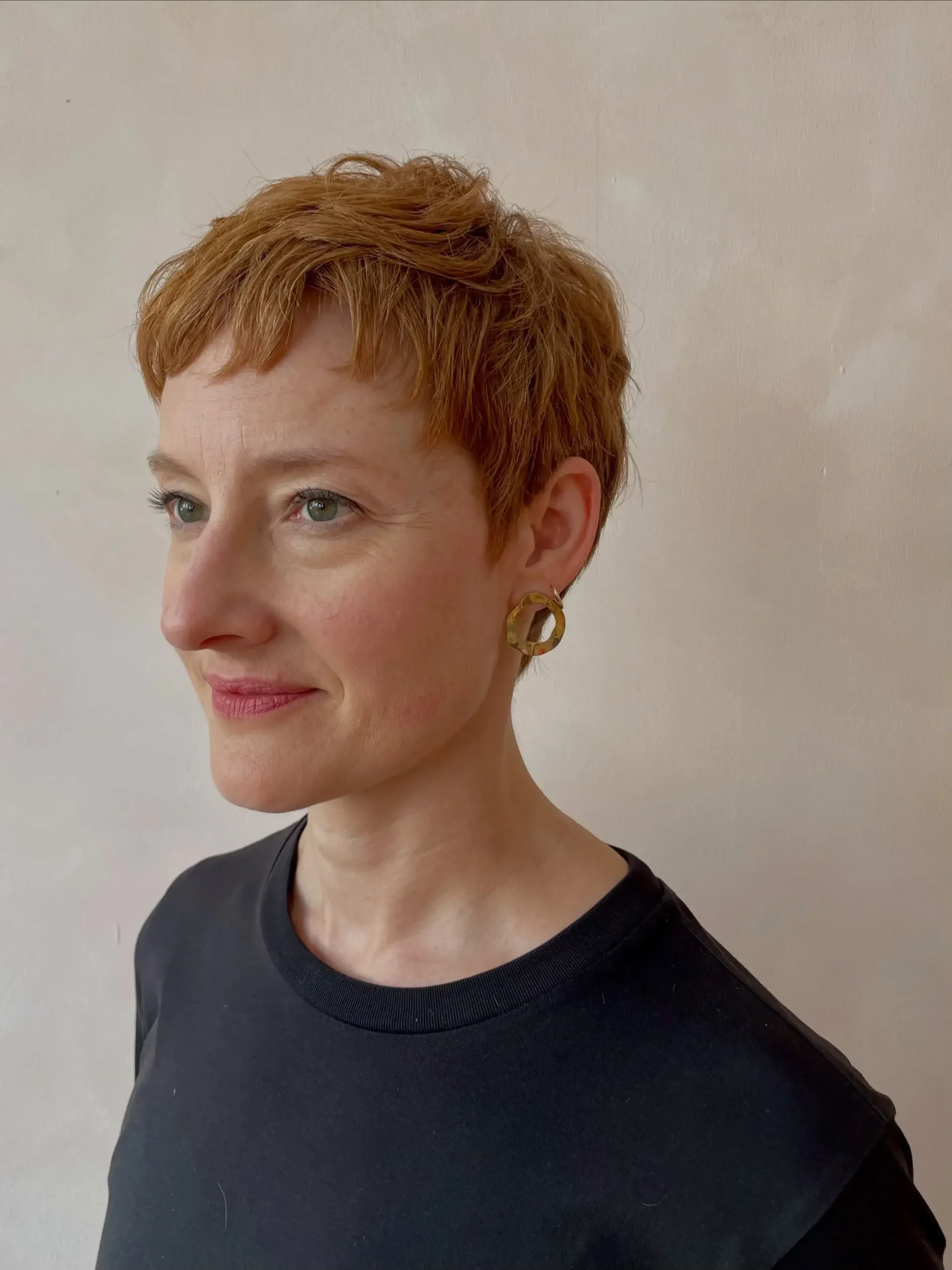
A haircut can lose its charm when you spend every morning trying to make each strand sit neatly in place. A copper tousled micro pixie takes the opposite route, with short, irregular pieces that can be arranged loosely instead of pressed into a uniform shape. The warm copper shade brings extra character to the cropped silhouette.
The sides and back remain close, while the top carries slightly longer sections that move in different directions. This uneven finish keeps the cut from feeling too formal and makes the copper color stand out. It suits someone who enjoys a short, expressive hairstyle and prefers finger styling to a long blow drying session.
With fine hair, the trick is to keep the texture concentrated near the surface rather than removing too much bulk from the ends. Ask your stylist to shape the crown carefully so the short pieces remain visible without exposing too much scalp. After washing, lift the roots while drying and use a tiny amount of matte paste to separate a few sections. The copper shade may also need color safe products to maintain its warmth.
21. Dark Mullet Pixie Shag
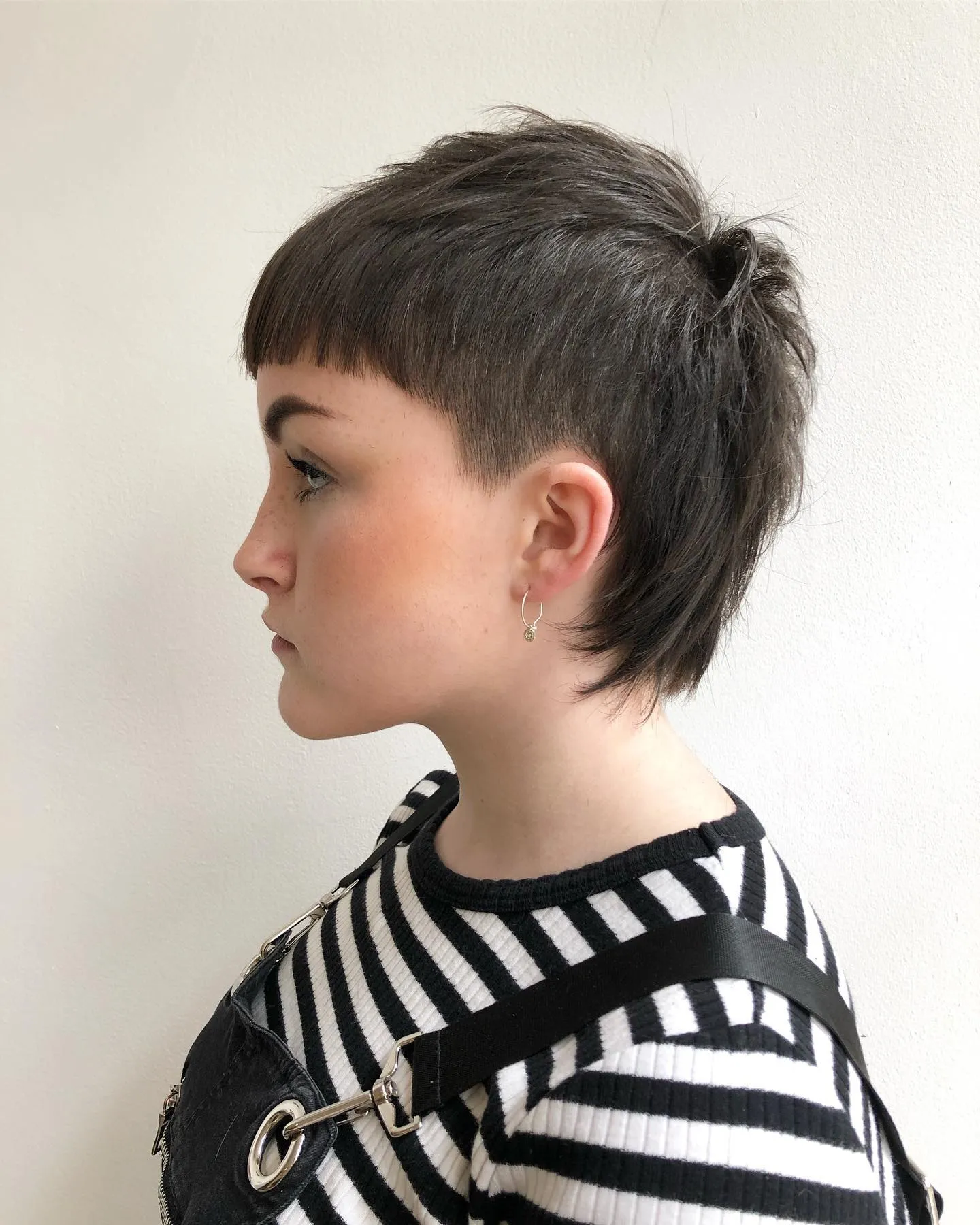
Growing out a pixie can be awkward when the back starts to flick outward while the sides seem stuck at the same length. A dark mullet pixie shag turns that uneven stage into part of the haircut, keeping the crown short and textured while leaving extra length at the nape. The dark shade emphasizes the contrast between the cropped top and longer back.
Short layers around the crown provide movement, while the extended nape gives the cut its mullet inspired character. The sides can sit close to the head or carry a few longer pieces near the ears. This option suits someone who wants a little rebellion in their hairstyle without committing to a long mullet.
Fine hair needs a careful balance between crown texture and length at the back. Too many short layers can leave the top looking sparse, so ask your stylist to retain enough density around the crown and keep the nape lightly shaped. A small amount of texturizing spray can help separate the ends, while regular trims maintain the contrast between the short top and longer back.
22. Blonde Wispy Shaggy Bob
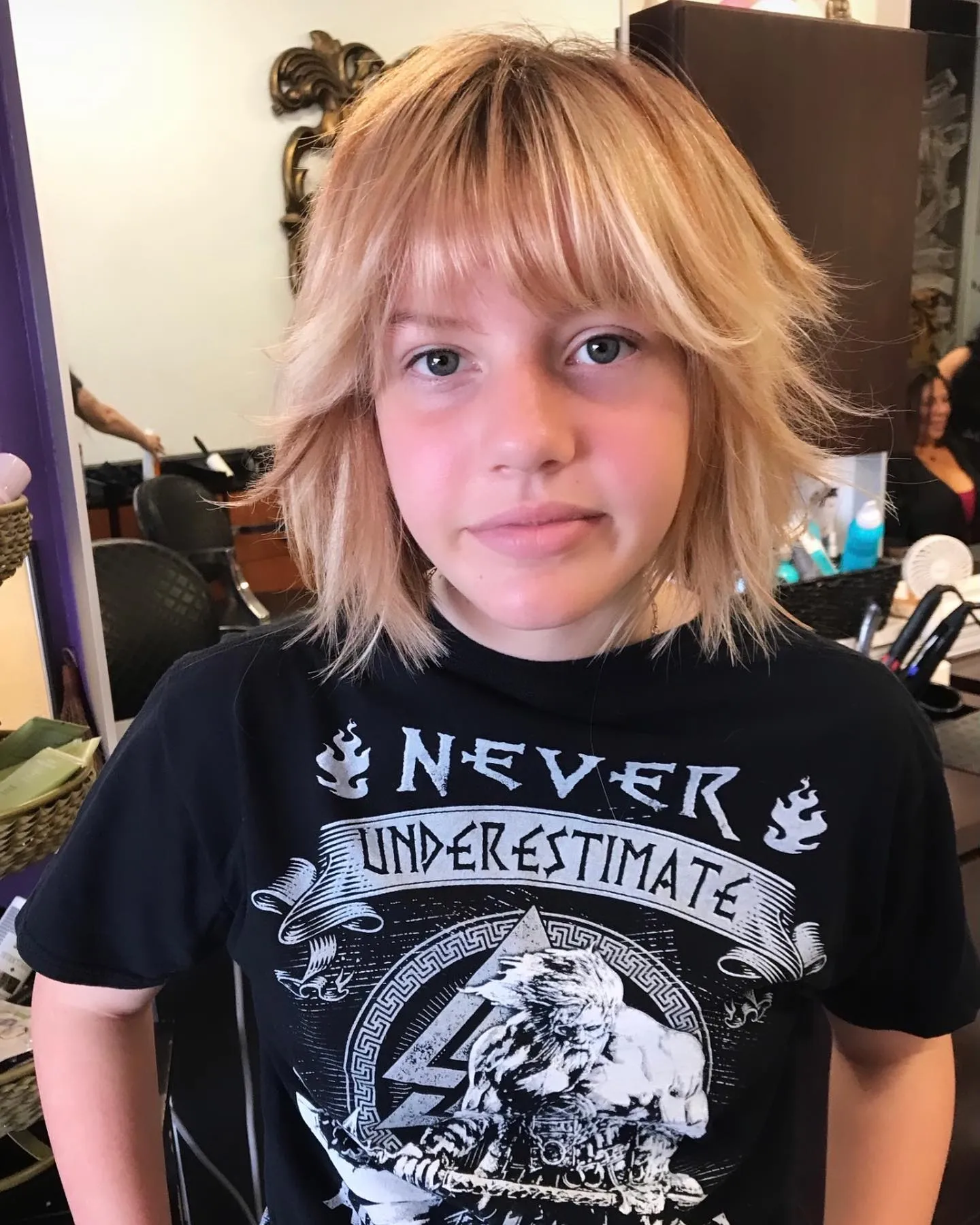
When your hair hangs limp around your cheeks, adding more layers can sound tempting, but too many may leave the ends looking thin. A blonde wispy shaggy bob takes a lighter approach, with face framing pieces, a loose fringe, and uneven ends that bring movement around the face. The blonde color helps highlight the separate layers.
The cut sits around the jaw, with shorter sections near the forehead blending into longer pieces at the sides. Instead of a rounded, uniform outline, it has a slightly undone shape that suits someone who prefers relaxed hair over a carefully arranged finish. You can let the fringe fall naturally or sweep it to one side.
Fine hair needs enough weight at the bottom to keep the bob from looking sparse. Ask your stylist to focus the shorter layers around the crown and face while leaving the perimeter fuller. For styling, use a light mousse at the roots and scrunch the ends gently while drying. Avoid heavy texturizing creams, which can make delicate strands separate and lose their lift.
23. Bow Tied Blonde Half Updo
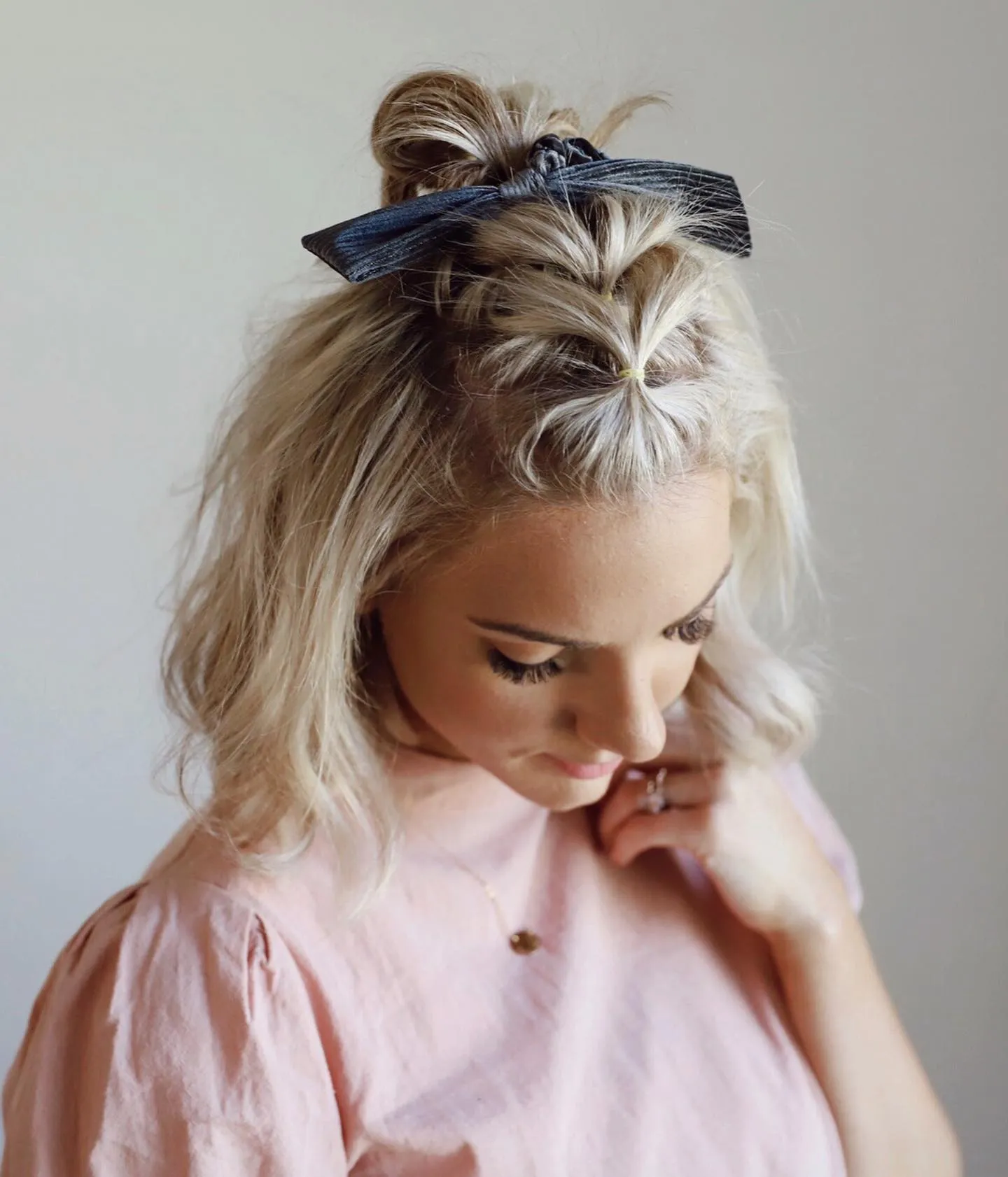
Some days, even a good haircut refuses to cooperate, especially when the front pieces keep falling into your face while you work or get ready. A blonde half updo with a bow offers a simple way to gather those strands while leaving the rest of the hair down. The bow becomes the focal point, turning a practical hairstyle into a deliberate finishing touch.
The upper sections are pulled back from the temples and secured at the back of the head, while the remaining lengths frame the face. A small bow adds detail without needing curls, braids, or elaborate styling. This idea works best when the hair has enough length to gather securely at the crown or back of the head.
For fine hair, avoid pulling the gathered section too tightly, as tension can make the roots look flatter. Gently lift the hair at the crown before securing it, then use a small clip or covered elastic that will not slide easily. If the bow feels heavy, choose a lightweight ribbon or a small fabric accessory. A few loose strands near the face keep the arrangement relaxed rather than rigid.
Which Short Haircuts Make Thin Fine Hair Look Fuller?
Short haircuts can help fine hair look fuller by removing excess length that pulls the roots down. Textured pixie cuts, blunt bobs, and softly layered crops can bring movement while keeping the ends from looking too sparse.
The best choice depends on your hair density and texture. If your ends look thin, ask your stylist to preserve weight around the perimeter. If your roots fall flat, a little crown layering may help create more lift.
Best Short Hairstyles for Thin Fine Hair by Face Shape
Your face shape can help you choose a short haircut that suits your features and hair texture. Here are some options to discuss with your stylist.
- Round face: Try a side swept pixie or an angled bob to create a longer visual line.
- Oval face: Consider a textured pixie, a short bob, or wispy bangs.
- Square face: Feathered layers and side swept fringes can soften the appearance of strong angles.
- Long face: A rounded bob or a pixie with fringe can help balance facial proportions.
- Heart shaped face: Side swept bangs and a softly textured bob can bring attention toward the eyes and cheekbones.
Your face shape is only a starting point. Hair density, growth patterns, and the amount of time you want to spend styling your hair matter just as much.
How to Make Thin Fine Hair Look Thicker
You do not need a complicated routine to help fine hair look fuller. A few small changes to your haircut and styling habits can make a noticeable difference.
- Choose a haircut that keeps enough weight around the ends.
- Use lightweight mousse or root lifting spray to support flat roots.
- Blow dry the roots in the opposite direction of your usual part for extra lift.
- Try a side part if your regular part makes the scalp more visible.
- Use texturizing paste sparingly to separate short layers.
- Avoid heavy oils and creams near the roots because they can weigh fine strands down.
- Ask your stylist before adding lots of layers or using thinning shears.
- Use heat protectant before blow drying or using hot tools.
The goal is to support your hair’s existing texture rather than force it into a shape that requires constant styling.
Are Short Haircuts Better for Thin Fine Hair?
Short haircuts can help thin fine hair look fuller because shorter strands have less length weighing them down. Pixie cuts, short crops, and chin length bobs can also make it easier to lift the roots and shape the hair.
However, short hair is not automatically better for everyone. A blunt bob may suit someone with fine, straight hair, while a textured pixie may work better for someone who prefers a shorter cut. Choose a style that suits your hair density, face shape, and daily routine.
What to Ask Your Hairstylist for Fuller Looking Hair
Before your appointment, explain what bothers you most about your hair. Tell your stylist whether your roots fall flat, your ends look thin, or your hair struggles to hold a style.
Use this checklist to guide the conversation:
- Ask which short haircut suits your hair density.
- Request enough weight around the ends to avoid a wispy finish.
- Discuss whether short layers would help your crown look fuller.
- Ask if bangs would work with your hairline and natural part.
- Mention if your hair becomes flat shortly after blow drying.
- Ask for a simple styling routine you can manage at home.
- Discuss how often you would need trims to maintain the shape.
Bring a few reference photos of short hairstyles you like. Your stylist can then adapt the cut to your hair texture instead of copying a photo that may rely on naturally thicker hair.
Best Styling Products for Short Fine Hair
The right styling products can help fine hair hold its shape without becoming heavy or greasy. You usually need only one or two products suited to your haircut.
- Lightweight mousse: Helps support volume and movement during blow drying.
- Root lifting spray: Targets flat roots and can help lift the crown.
- Texturizing paste: Separates short layers and adds definition when used sparingly.
- Heat protectant: Helps reduce damage from blow dryers and hot styling tools.
- Lightweight hairspray: Helps hold a hairstyle in place without requiring a heavy coating.
Start with a small amount of product and increase it only if needed. Too much styling product can make fine strands stick together, leaving the hair looking flatter rather than fuller.
FAQs
1. Does short hair make thin hair look thicker?
Short hair can look fuller because it has less length weighing it down. A suitable cut can also keep the ends looking denser and make styling easier. The result depends on your hair density, texture, and chosen haircut.
2. Is a pixie cut good for thin fine hair?
Yes, a pixie cut can work well for thin fine hair. Textured layers can bring movement around the crown, while a carefully shaped perimeter helps preserve fullness. Choose the amount of texture according to your hair density.
3. Should thin fine hair have layers or a blunt cut?
Both can work, depending on your hair and preferred style. A blunt cut can help the ends look fuller, while carefully placed layers can add movement and lift. Excessive layering may make already sparse ends look thinner.
4. Are bangs suitable for thin fine hair?
Yes, bangs can suit thin fine hair when their thickness and shape match your hair density. Wispy bangs and side swept fringes are useful options, but taking too much hair from the crown may leave the remaining hair looking sparse.
5. How often should thin fine hair be trimmed?
Many short haircuts benefit from a trim every four to eight weeks to maintain their shape. Pixie cuts may need more frequent maintenance than longer bobs. Your ideal schedule depends on how quickly your hair grows and how defined you want the cut to remain.
Conclusion
Thin fine hair can be easier to style when you find a cut that works with its texture. These short hairstyles for thin fine hair offer plenty of inspiration, from choppy pixies with playful movement to rounded bobs that keep the ends looking fuller.
Save this article on Pinterest so you can revisit your favorite ideas before your next haircut. Try a new part, experiment with lightweight styling products, or bring a reference photo to your hairstylist. You do not need a complicated routine to enjoy a fresh change. Choose a style that makes you feel confident, and share this article with someone looking for new hair inspiration too.