23 Cornrows Hairstyles for Black Women for Every Occasion
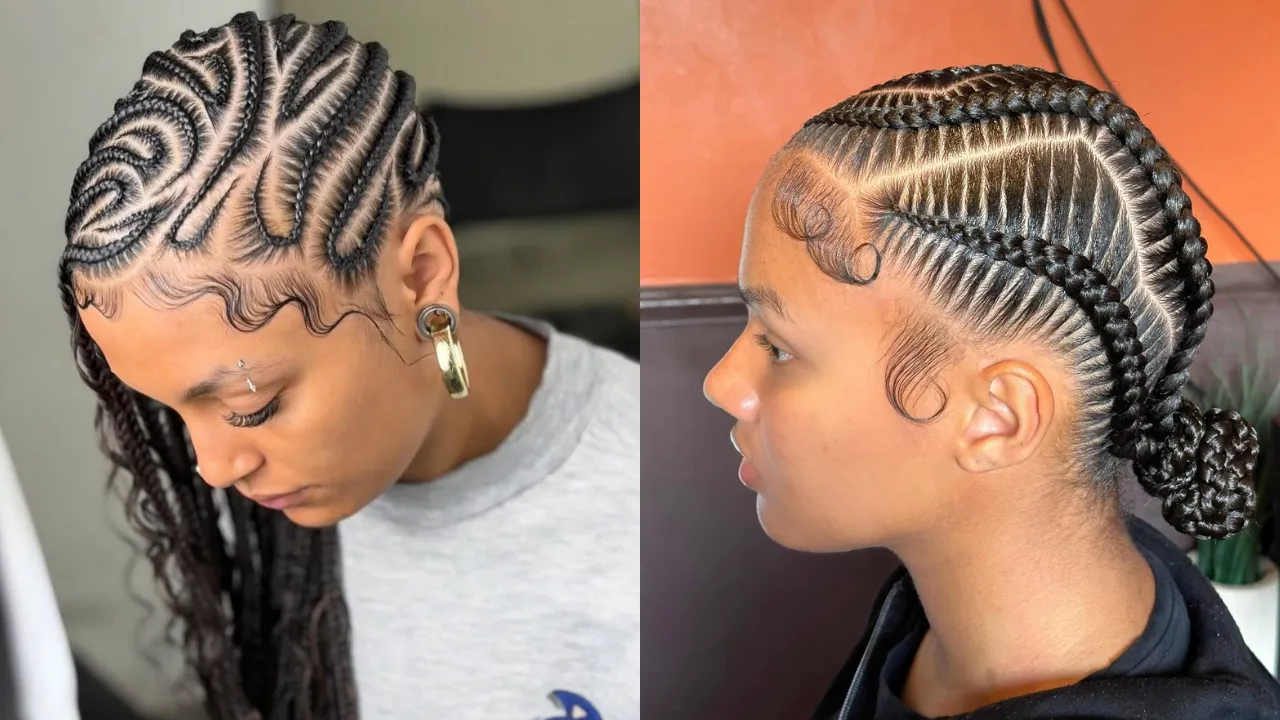
Scrolling through styles but still unsure what will actually suit you? Whether you need a protective style for work, vacations, weddings, birthdays, or everyday plans, these Cornrows Hairstyles for Black Women can adapt beautifully to different occasions. Some styles feel sleek and polished for formal events, while others bring a more relaxed and playful look perfect for weekends, travel days, or summer outings.
This article brings together 23 carefully chosen styles that solve real styling concerns. Whether you are dealing with breakage, limited time, or just want something that holds longer without constant fixing, there is a direction here that fits your lifestyle. I have noticed that choosing the right pattern often matters more than choosing the most detailed one.
How to Choose the Right Cornrow Style
• Think about the occasion
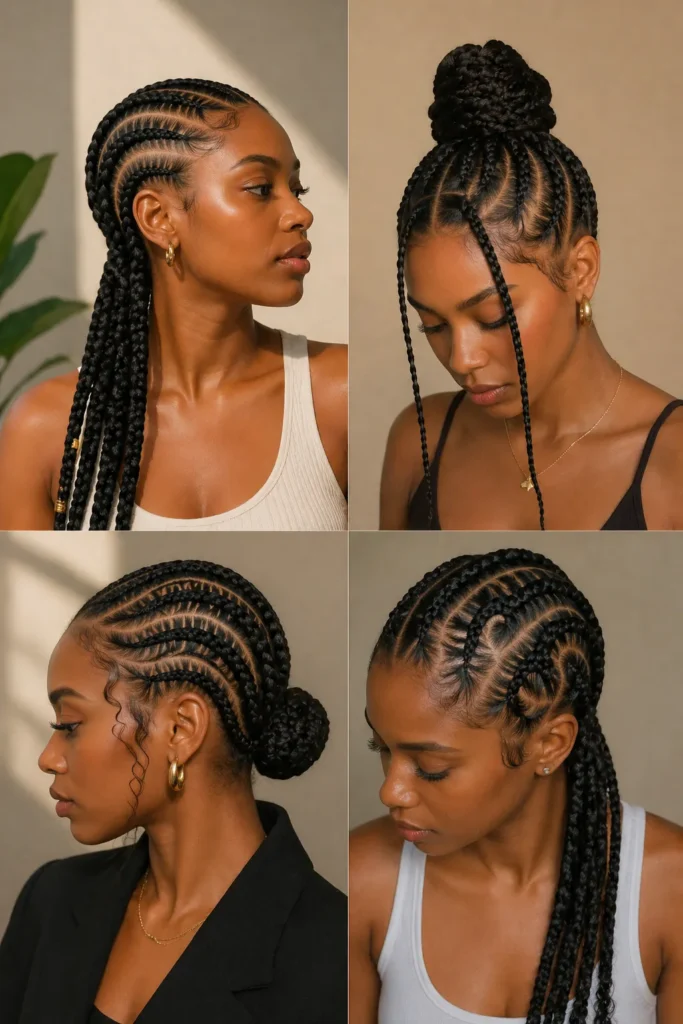
Sleek buns and swirl styles feel polished for formal events, while ponytails and relaxed braids work well for everyday wear and vacations.
• Match your lifestyle
Simple rows, buns, and ponytails usually last longer and require less daily upkeep.
• Choose a style for your face shape
Curved patterns can soften round faces, while straighter styles help balance longer face shapes.
• Consider your hair texture
Thicker hair often holds braid patterns longer, while finer hair benefits from lighter tension.
• Plan your wear time
Detailed designs look striking, but simpler styles are often easier to maintain over time.
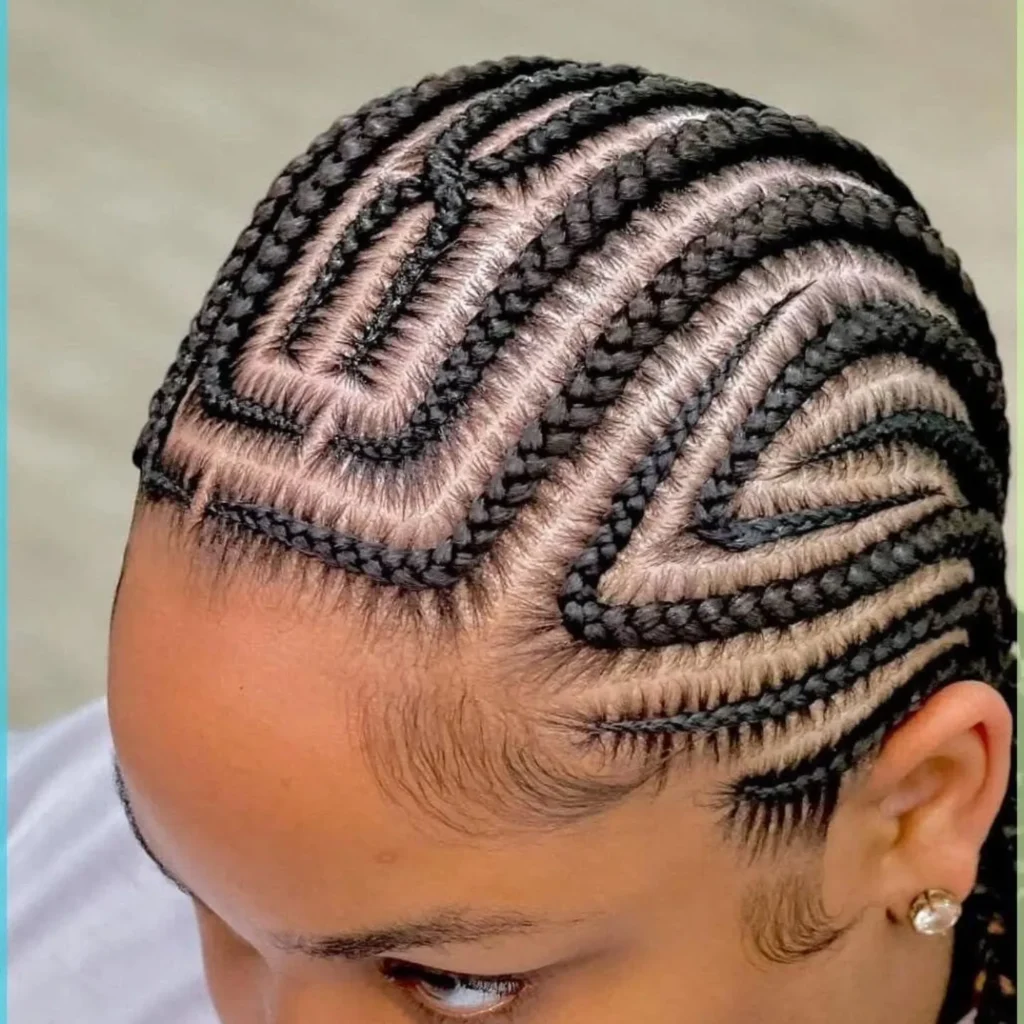
1. Geometric Maze Cornrow Design
Source: luxefashion1234
Ever noticed how certain braid patterns pull attention instantly? Sharp angles and calculated turns form a maze-like layout that feels almost architectural across the scalp. Each section connects with intention, giving the design a sense of direction rather than randomness.
Light interacts differently with every angle, making the pattern more visible as you move. That shifting effect keeps the design engaging without needing any accessories or color enhancements.
This option requires patience during installation since precision matters at every turn. Once completed, the pattern speaks loudly without needing extra elements to stand out.
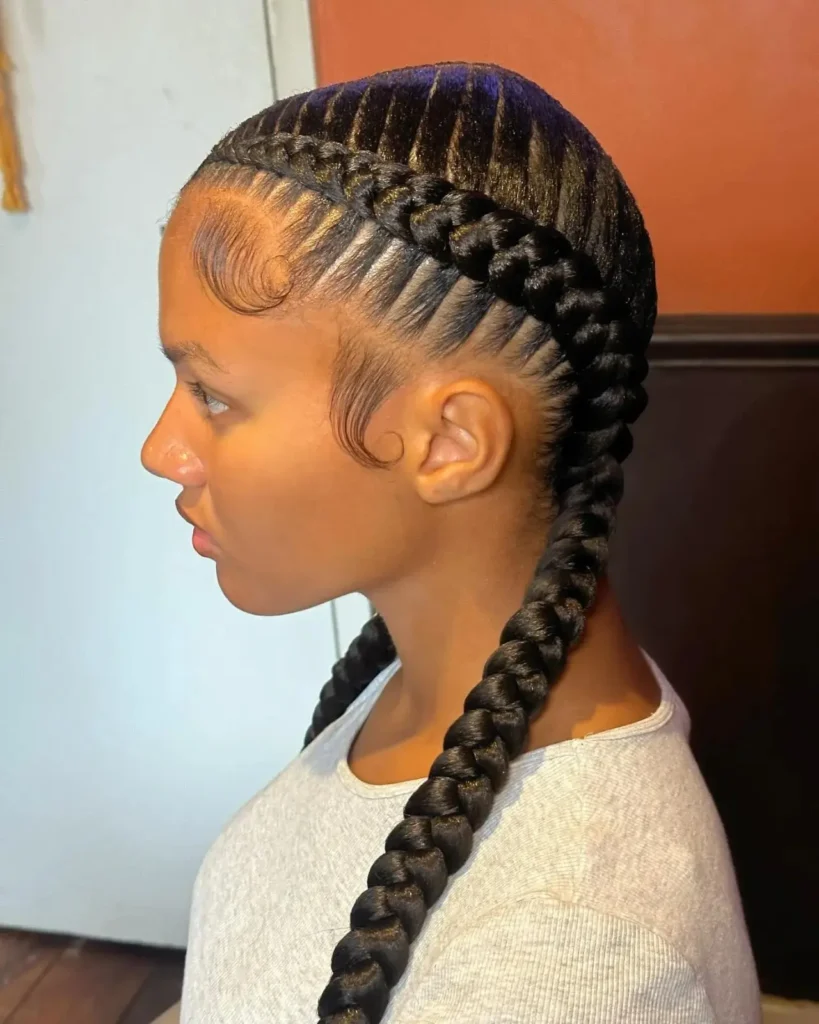
2. Double Goddess Feed-in Cornrows
Source: marnistouch
Two bold braids can change your entire presence without needing anything extra. Wider rows running straight back bring a grounded and confident presence that doesn’t rely on intricate detailing. The simplicity allows the size to take center focus.
Spacing between the braids gives the scalp room to stay comfortable, especially during longer wear. Styles with fewer braids generally place less stress on the scalp and tend to last longer with minimal maintenance.
Daily upkeep becomes easier since fewer braids mean less handling. A quick wrap at night keeps everything in place without additional effort in the morning.
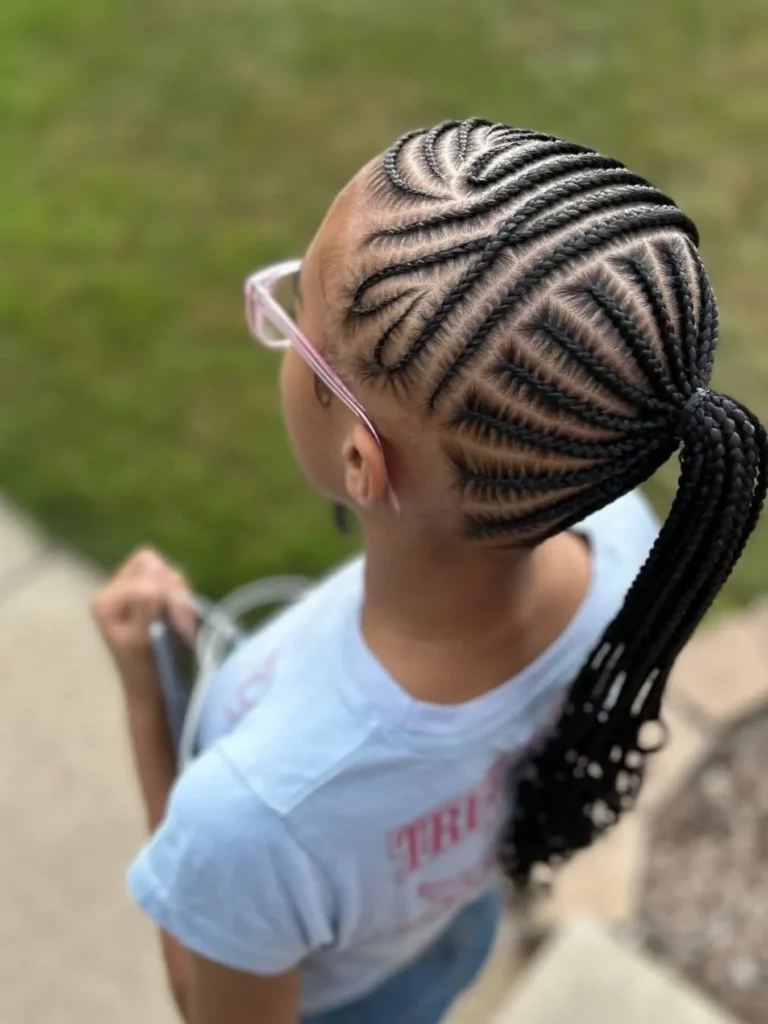
3. Petal Stitch Cornrow Ponytail
Source: ravenbraideditttt
The moment you see this pattern, the detail stands out before the length even does. Curved sections spread outward like petals, guiding the eye toward a lifted ponytail that sits high on the crown. The base alone carries strong visual interest.
Stitch detailing along each braid introduces clean definition, making every section appear precise and controlled. That detail becomes more noticeable under natural light.
Movement from the ponytail brings energy into the style, especially when walking or turning. Wrapping a single braid around the base refines the finish and keeps everything looking cohesive.
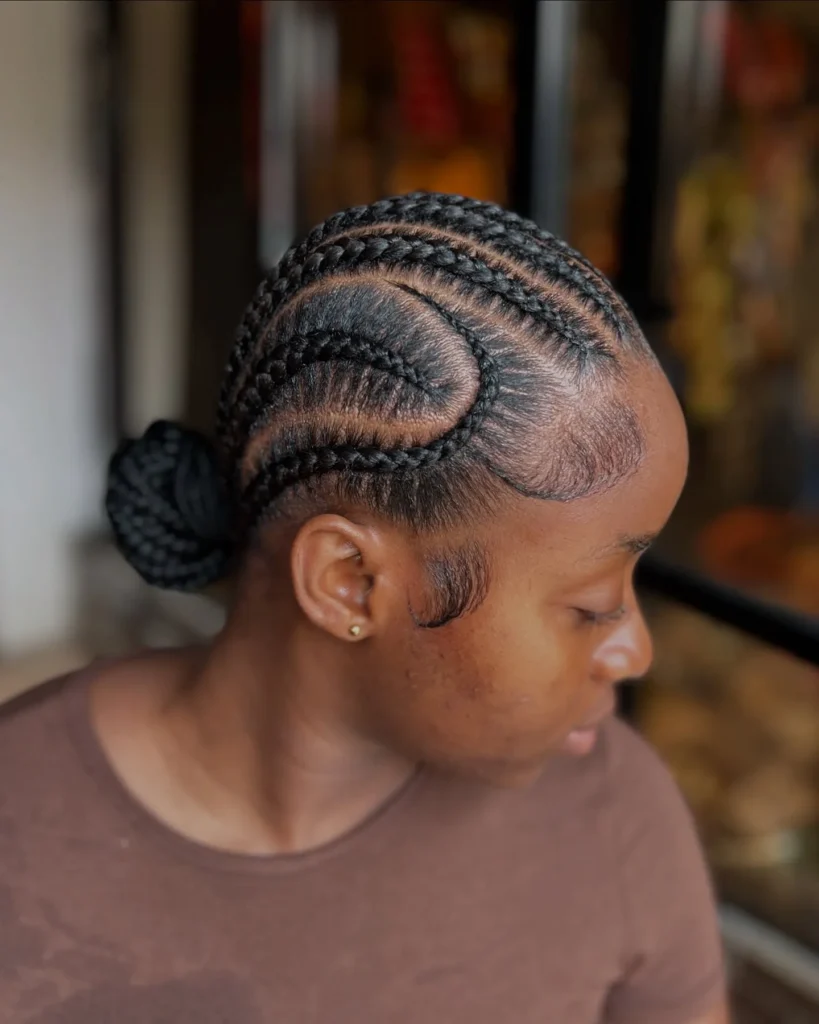
4. Fluid Wave Cornrow Bun
Source: glad_hairsalon
Wave-like sections move across the scalp in a continuous direction. The flow replaces sharp angles with a smoother path. Each braid connects without harsh breaks.
The curved layout guides the hair gradually toward the back. This creates a softer transition compared to straight rows. The pattern remains consistent across the scalp.
A low bun gathers the braids neatly at the nape. The placement keeps the style grounded and balanced. The shape stays compact rather than wide.
Even tension during braiding keeps the waves visible over time. Proper sectioning helps maintain clarity as the style settles. The layout holds its form with minimal disruption. This bun placement works especially well for formal occasions and professional settings.
Read More : 21 Braided Hairstyles for Black Women to Try Now
5. Ornate Graphic Cornrow Art
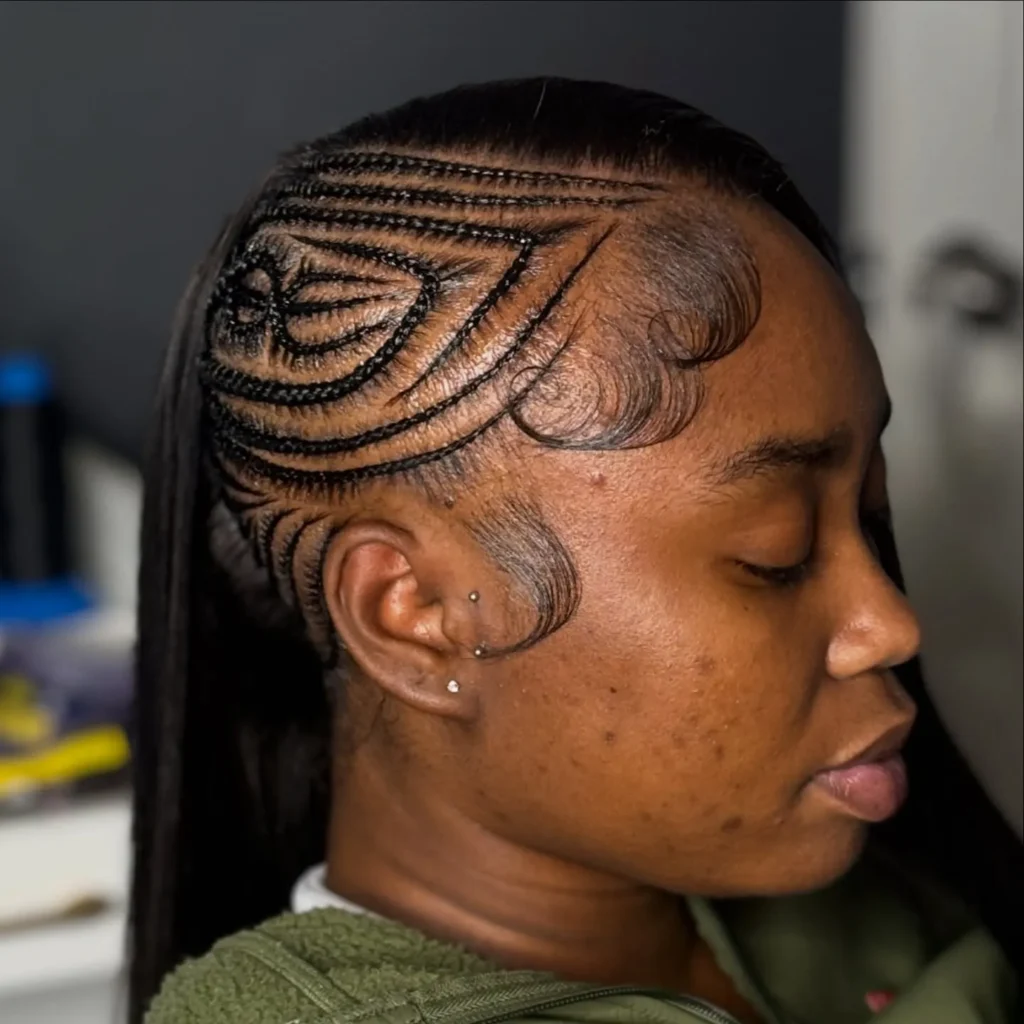
Source: stylesby.ricci
Some designs shift attention without adding anything extra. Instead of straight or angled parts, the rounded paths guide the eye toward the sides, shifting focus toward the profile. This placement changes how the face is framed from different angles.
The pattern forms a centered design that feels intentional without needing extra detail. Each curved section overlaps slightly, forming a layered graphic pattern across the scalp. The arrangement stands out through placement rather than size.
Earrings and side features become more noticeable with this layout. The circular sections naturally frame them, making small details part of the overall style.
6. Concentric Ripple Cornrow Bun
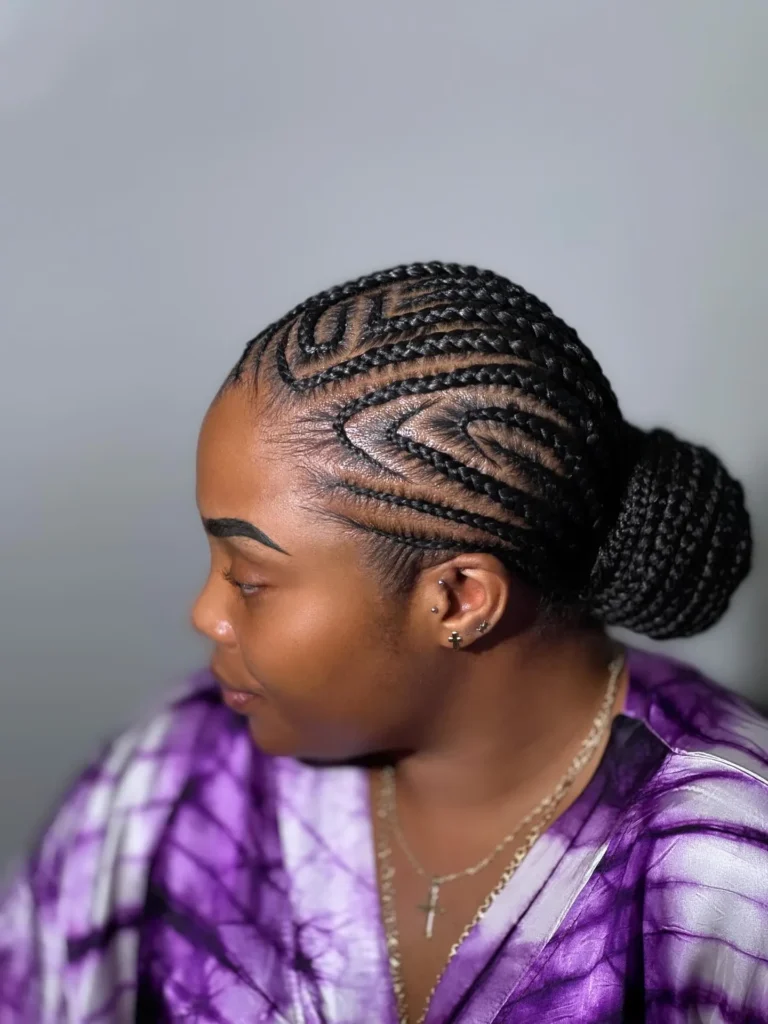
Source: manuelsbeautty_gh
Everything begins from one point and spreads outward with intention. The outward flow spreads evenly across the scalp, forming a ripple-like arrangement that feels organized. Each section follows a clear direction, keeping the design visually stable.
As the braids move toward the back, they gather into a compact bun at the nape. This placement keeps the weight lower, which helps reduce tension during extended wear. The structure holds its form without shifting easily.
The symmetry gives the design a steady and balanced presence. Light products help maintain definition without disturbing the pattern over time. The overall arrangement remains clean even after days of wear.
7. Intricate S-Wave Cornrow Art
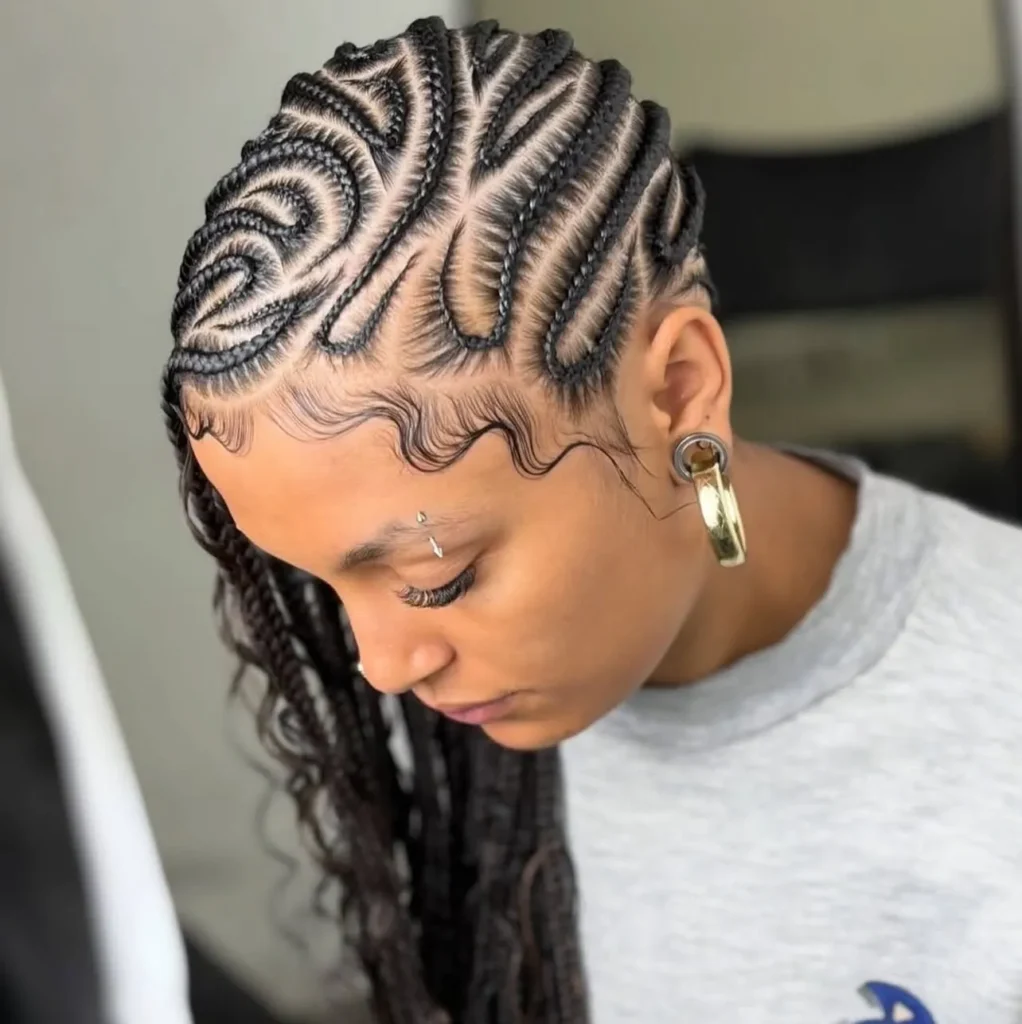
Source: narahairbraiding
Curved rows move across the scalp in an S-shaped direction. Instead of pulling everything straight back, the pattern shifts gradually, guiding attention sideways. This change introduces flow without disrupting the neat appearance.
The movement across the scalp helps soften stronger facial angles. Each curve blends into the next, creating a continuous path without sharp breaks. The result feels controlled yet less rigid than traditional layouts.
Small loose strands near the temples can adjust the tone slightly. Lighter styling products keep the parts visible and prevent buildup between sections. The pattern stays defined for a longer period.
8. Heart Design Cornrow Accents
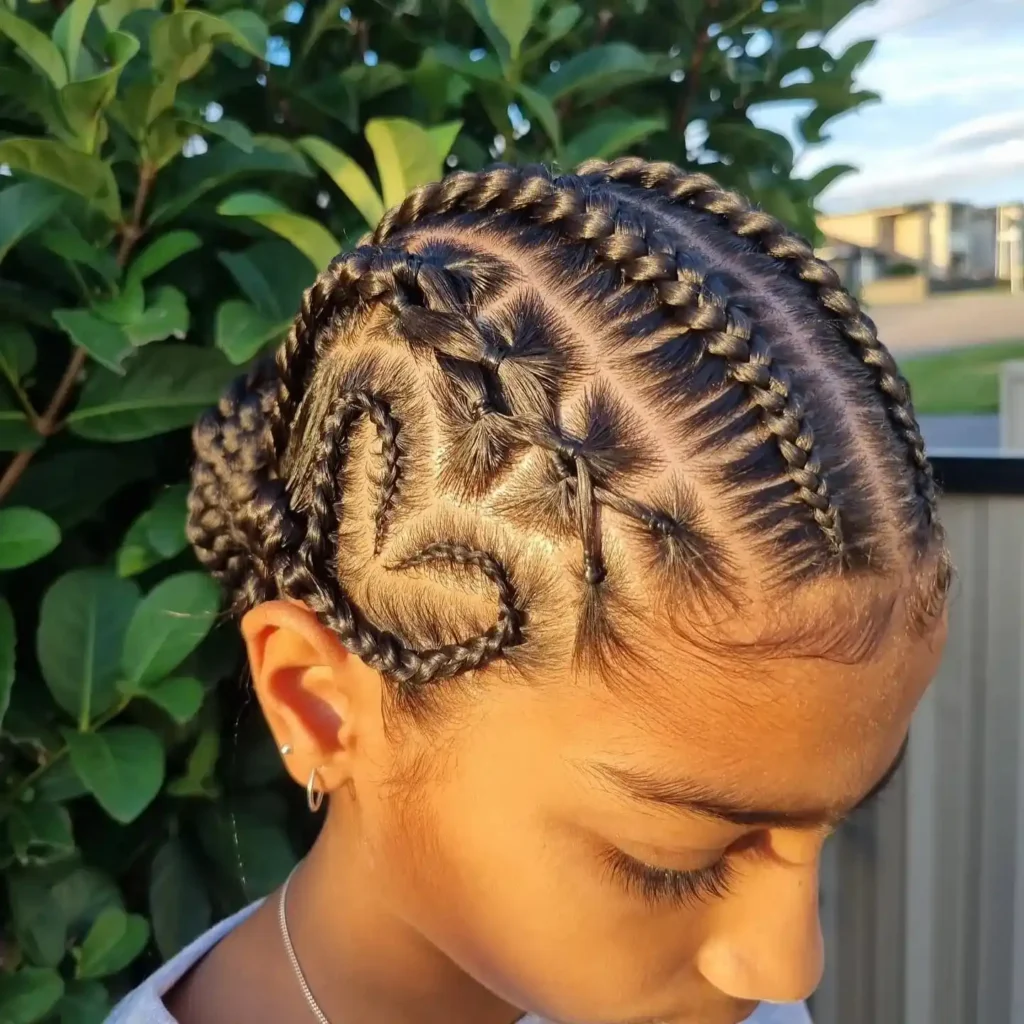
Source: braidsby_maryam
A shaped section near the temple introduces a personal detail into the design. The heart pattern stands out without taking over the entire arrangement. Its placement draws attention in a subtle and controlled way.
The surrounding braids remain simple to support the accent. This contrast allows the shape to stay visible without competing with other elements. The layout stays balanced and intentional.
Proportion plays a key role in how the detail appears. When sized correctly, the shape becomes noticeable without overpowering the full style. The design keeps its clarity over time.
9. Overlapping Abstract Swirl Cornrows
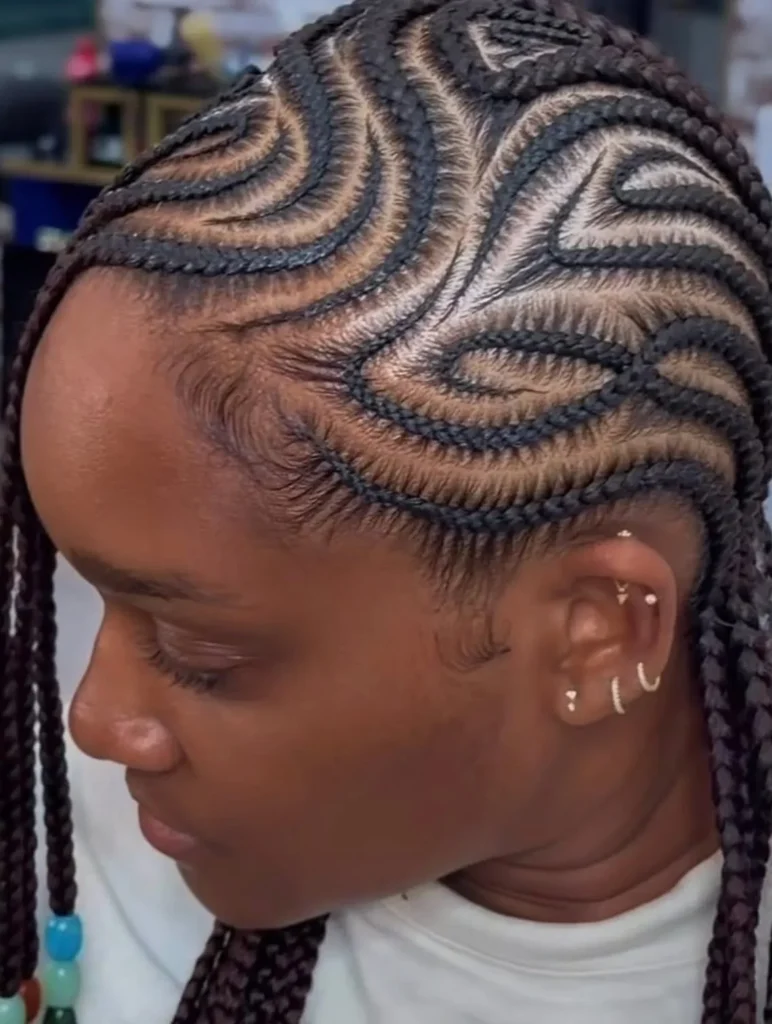
Source: ibk_salon_dxb
Rows move in overlapping directions, forming a swirl-based layout across the scalp. The pattern shifts as you view it from different angles, giving a layered effect without adding extra elements. Each section blends into the next without clear straight lines.
The changing direction helps distribute tension across multiple areas. This reduces strain on one section, making it more comfortable during longer wear. The arrangement supports both design and practicality.
Depth becomes the main feature in this style. The swirl pattern keeps the eye moving across the scalp without feeling crowded. The design remains engaging even without accessories.
10. Classic Feed-in Cornrow Bun
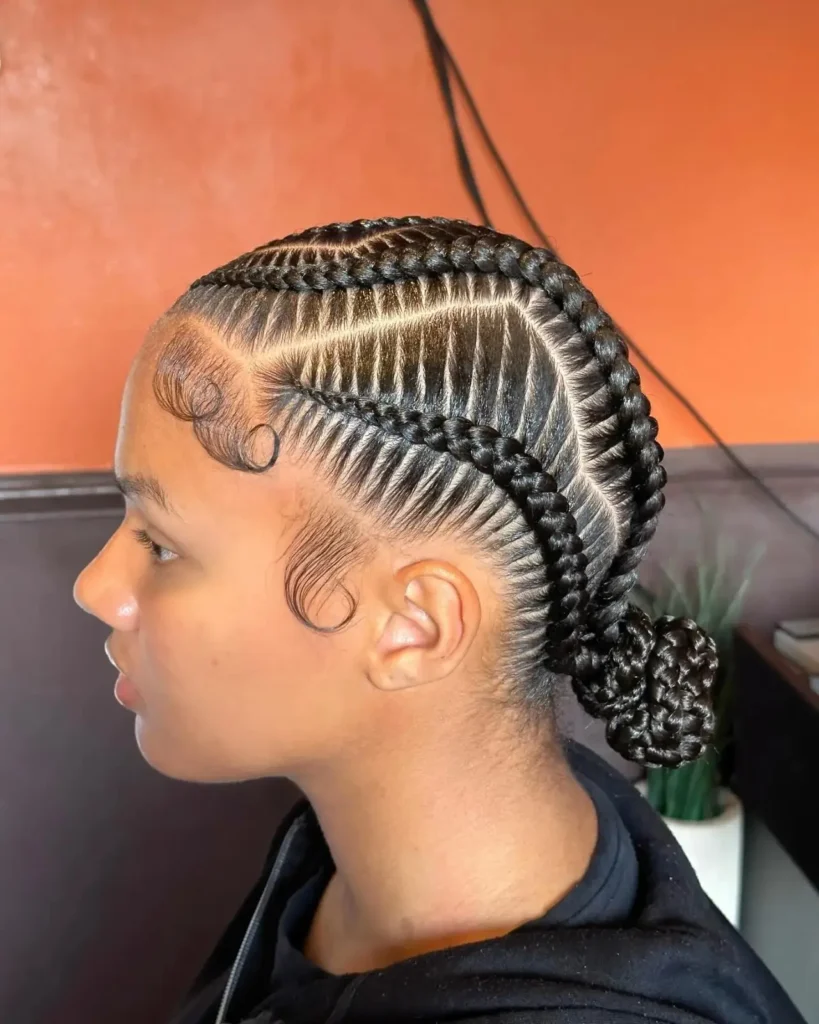
Source: marnistouch
Thin braids begin at the hairline and gradually increase in size toward the back. This transition keeps the front light while building fullness toward the bun. The shift in thickness happens smoothly across each section.
As the braids reach the back, they gather into a bun that can sit at different heights. Placement changes the overall appearance without altering the braid pattern. The structure remains controlled throughout the style.
The gradual buildup helps reduce tension near the edges. This makes the style more comfortable while maintaining a neat finish. The design holds its shape over time.
Read More : 25 Gorgeous Fulani Braids Hairstyles to Copy
11. Side Swept Cornrow Bob
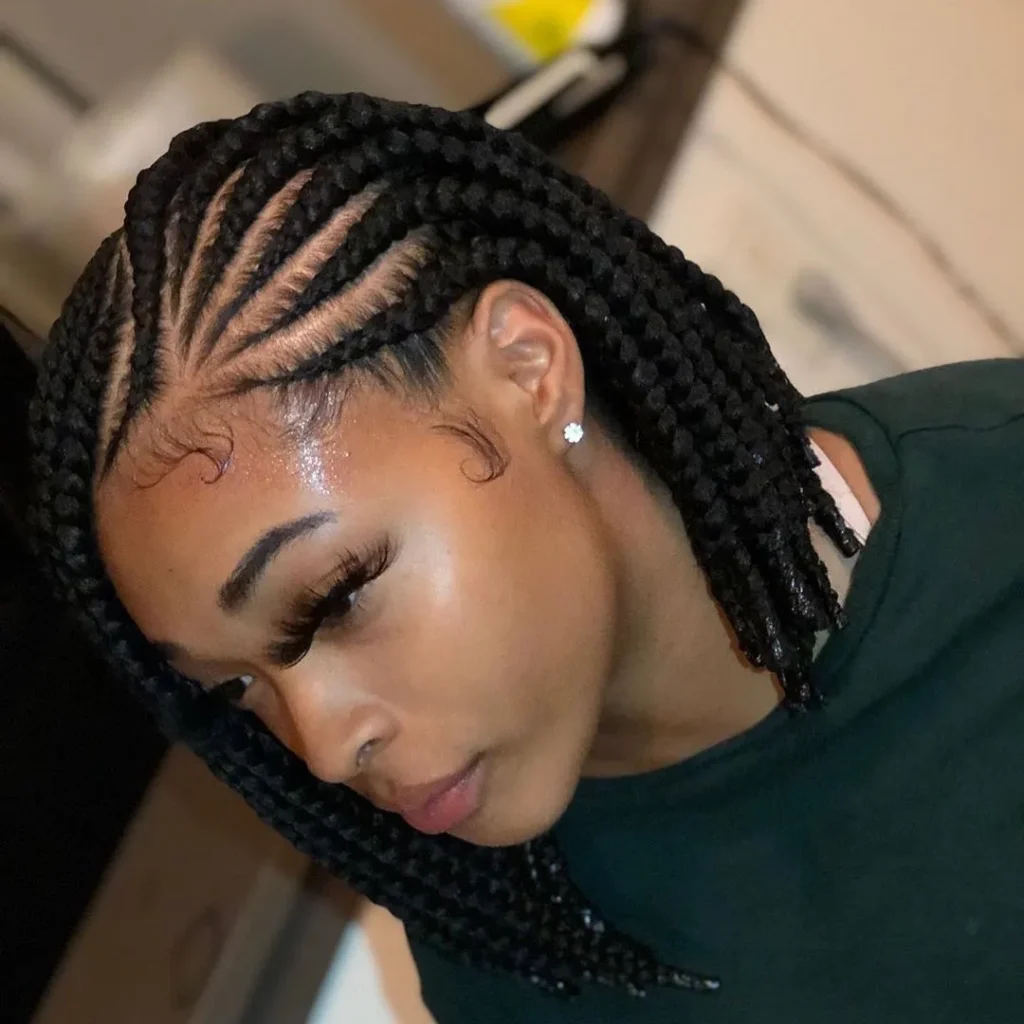
Source: flawlessbraidss
A shorter length changes how the braids sit around the face. The direction shifts toward one side, creating an asymmetrical layout that feels more dynamic. This adjustment brings attention across rather than downward.
Reduced length means less weight pulling on the scalp. This improves comfort during daily wear and makes the style easier to manage. The structure remains neat without extra effort.
Maintaining the ends helps preserve the shape. Proper sealing keeps the bob defined and prevents the braids from loosening unevenly. The shorter shape makes it a great option for casual everyday occasions and weekend outings.
12. Fulani Style Curly Cornrows
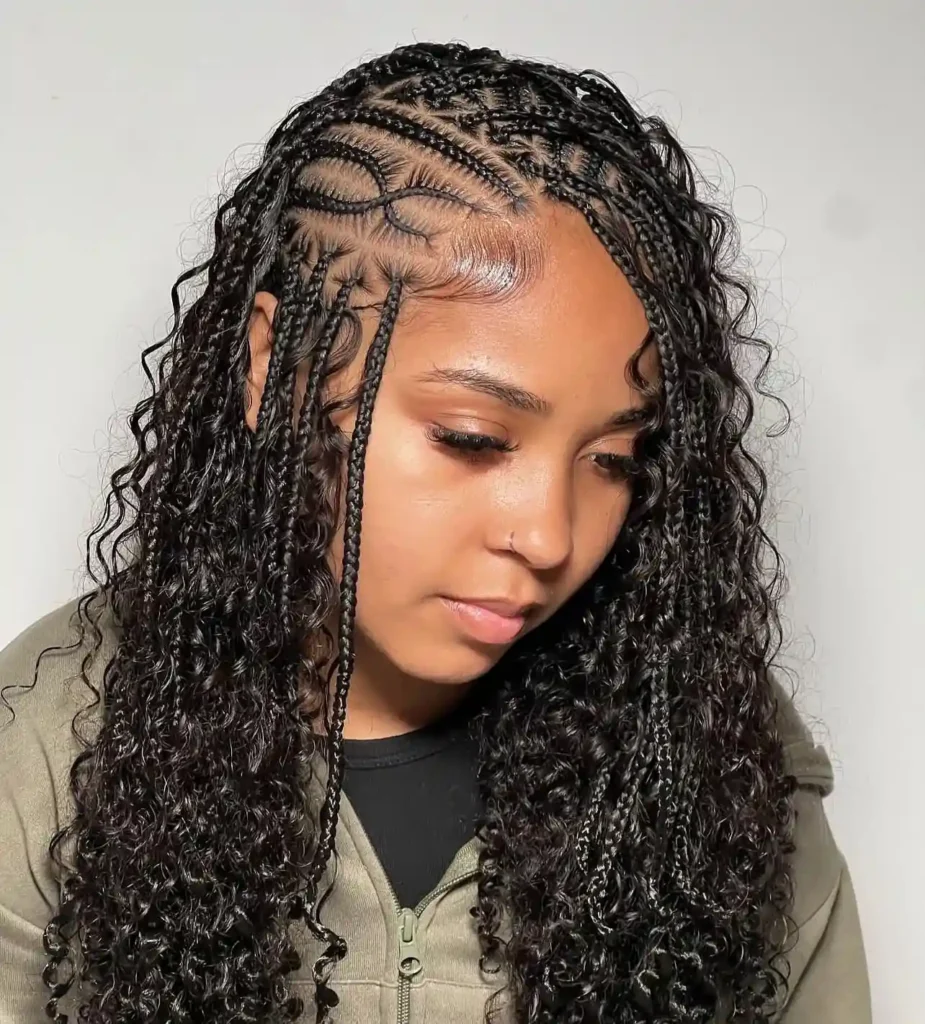
Source: narahairbraiding
Cornrows at the roots keep the base controlled and neatly sectioned. A center part divides the layout evenly. The structure stays clear across the scalp.
Loose curls appear at the ends and front sections. This introduces a change in texture without disrupting the base. The contrast keeps the style interesting.
Front braids fall toward the face, drawing attention forward. This framing highlights facial features naturally. The placement feels intentional.
Proper setting helps maintain curl definition. The texture stays consistent without tangling into the braids. The style holds together over time.
13. Butterfly Wing Cornrow Pigtails
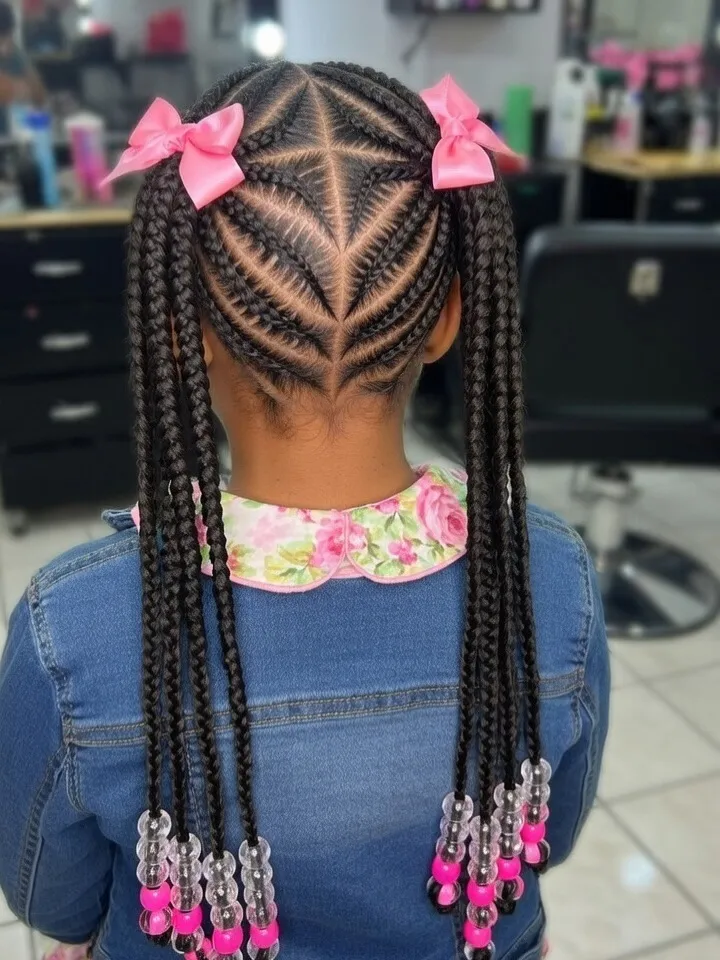
Source: the_daily_hairandhome
Sections spread outward across the back of the head, forming a wing-like layout before dividing into two pigtails. The base pattern carries shape even before the ends come into focus. Each part connects in a way that builds a clear outline across the scalp.
The pigtails sit evenly on both sides, giving balance to the overall arrangement. This placement keeps the weight distributed without pulling in one direction. The design remains stable throughout daily movement.
Beads at the ends introduce motion and subtle sound. The added weight helps the braids fall more neatly while enhancing the visual rhythm. The style keeps its character over time.
14. Stitch Cornrow High Ponytail
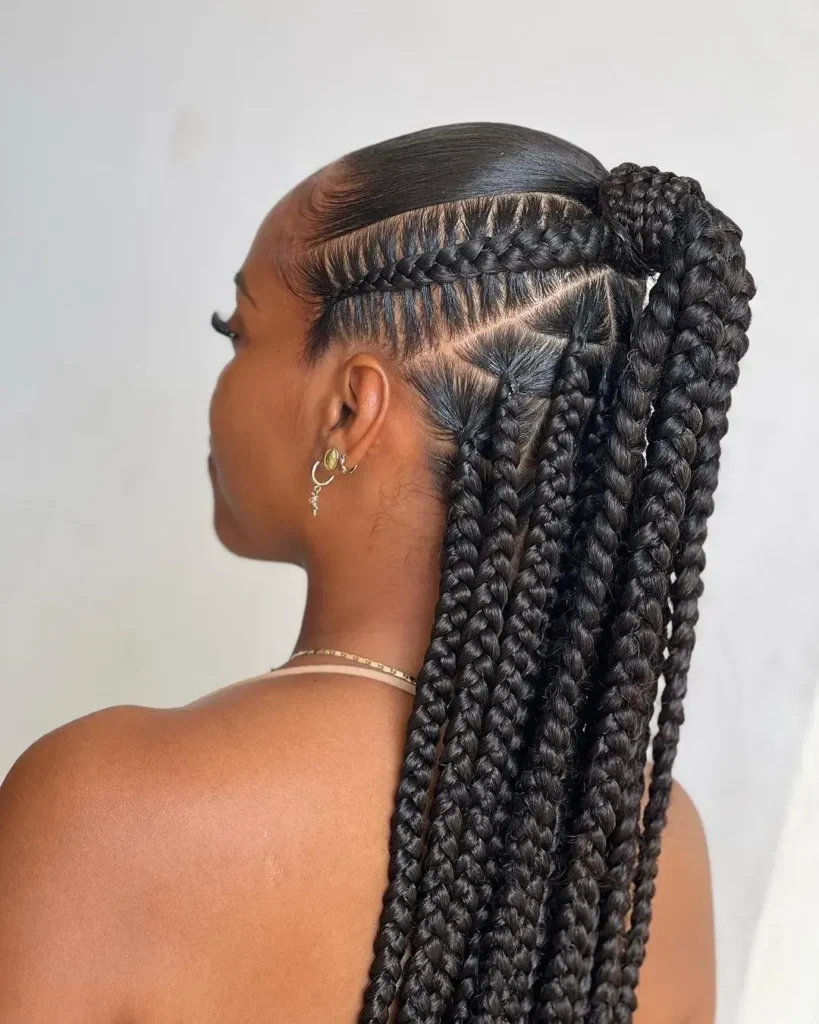
Source: braidsambassador
Defined stitch sections run along each braid, forming a consistent pattern that leads toward the crown. The spacing between each segment gives the rows a clear rhythm across the scalp. Every section remains visible without blending into the next.
As the braids gather into a ponytail, the direction becomes more focused. The placement at the crown lifts the entire arrangement without adding complexity. The design stays sharp from front to back.
Wrapping one braid around the base refines the finish. This small detail keeps the transition clean and avoids visible bands. The overall appearance remains intentional.
15. S-Curve Cornrow Passion Twists
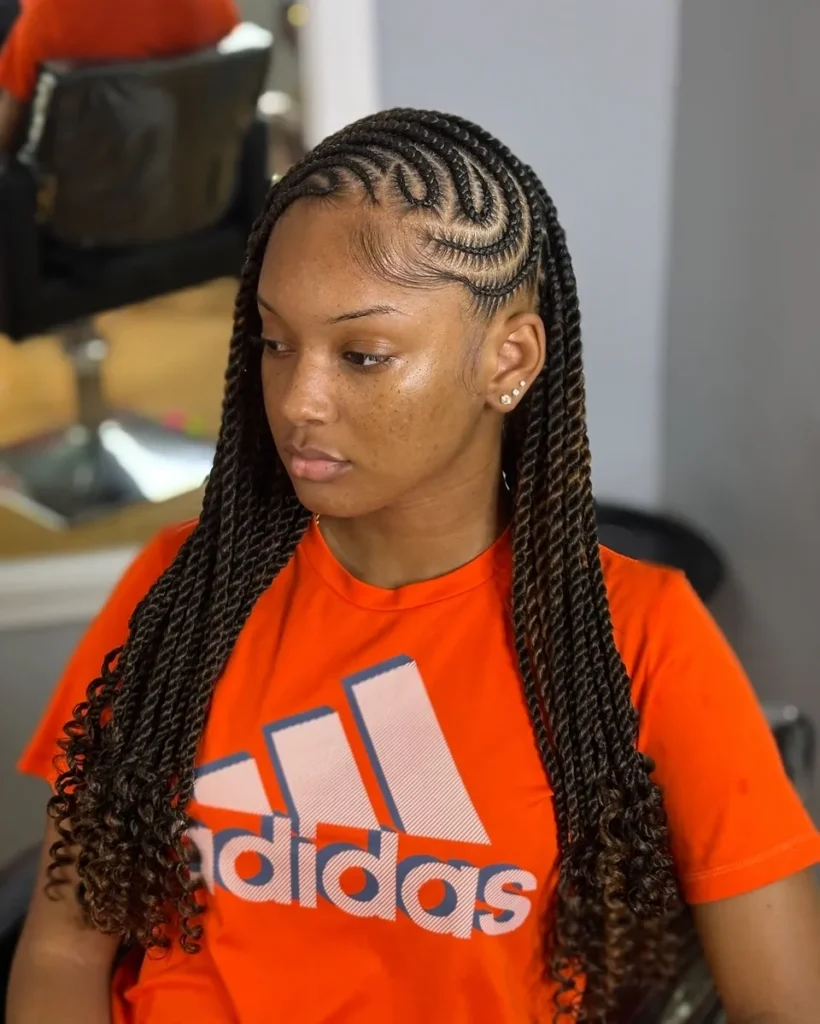
Source: _sweethairstyles_
Curved cornrows form the base, while twists extend from them, introducing a shift in texture. The pattern across the scalp moves in an S-shape, creating flow before transitioning into looser ends. This combination keeps the design engaging from root to tip.
The twists provide flexibility in movement compared to fully braided lengths. Each section falls naturally without leaving visible gaps between parts. The layout remains consistent across the head.
Spacing between sections ensures the twists sit evenly. Proper placement prevents overcrowding and keeps the pattern readable. The design maintains clarity over time.
16. Diagonal Swirl Cornrow Bun
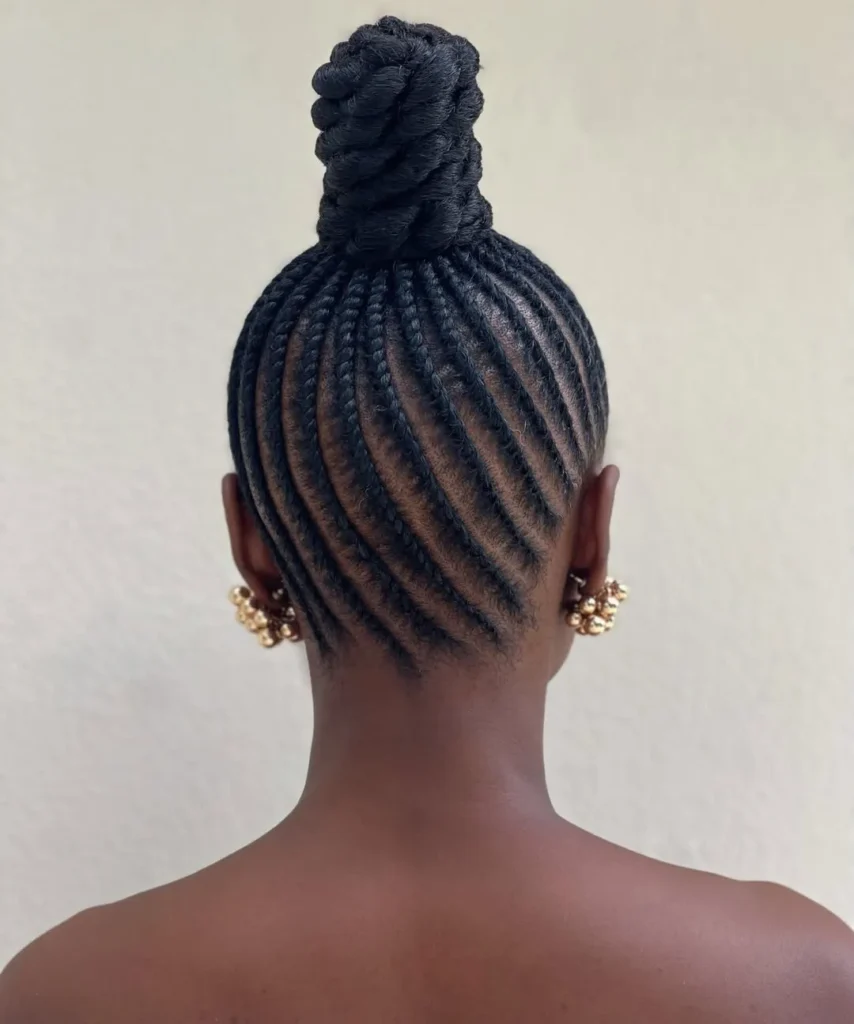
Source: bellanaijabeauty
Braids follow an angled direction across the scalp instead of moving straight back. This shift changes how attention travels, guiding the eye diagonally toward the bun. The arrangement introduces variation without increasing complexity.
The bun sits slightly off-center, which adds a subtle change in balance. This placement can alter how facial features are framed without needing extra design elements. The structure remains controlled throughout.
Adjusting the angle of each part changes the overall outcome. Even slight variations in direction can produce a different visual effect. The design stays adaptable while maintaining consistency.
Read More : 19 French Curl Braids Styles That Feel So Luxe
17. Crown Stitch Cornrow Updo
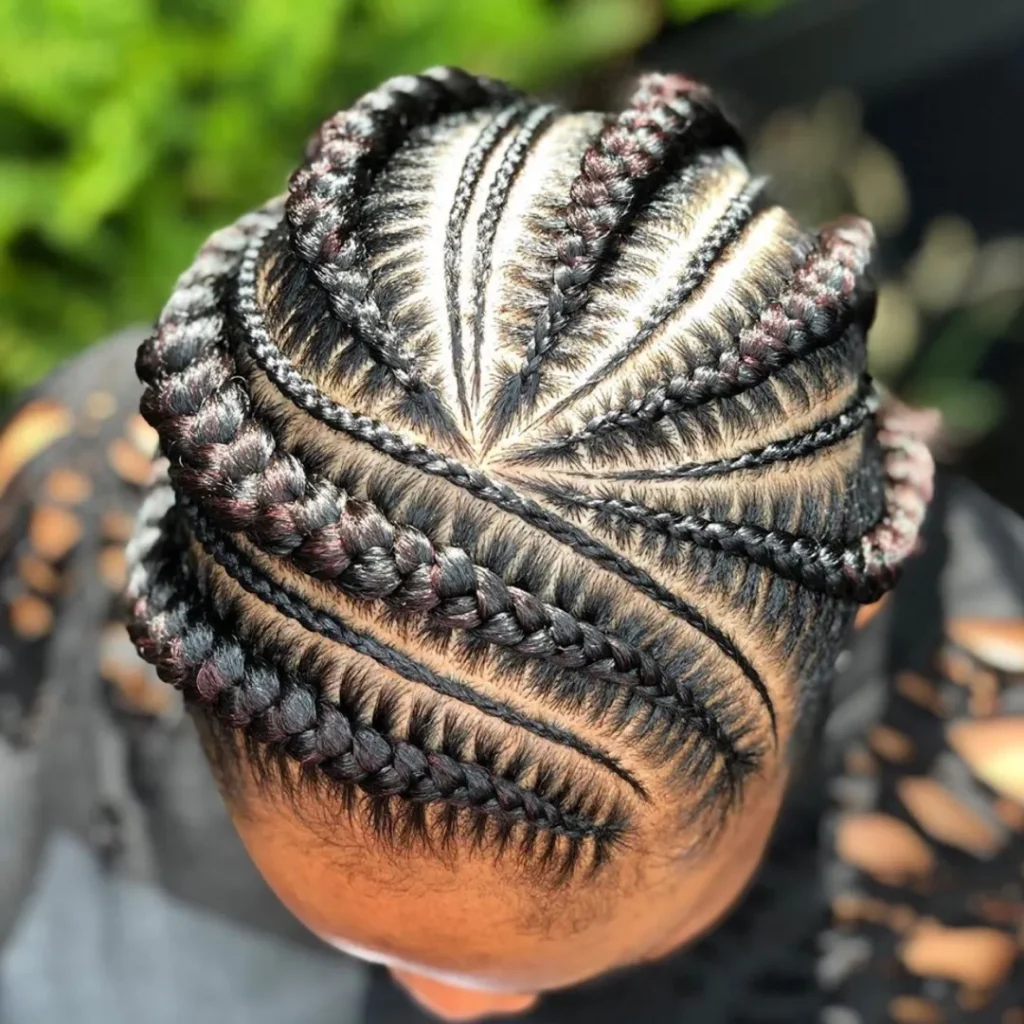
Source: naturalhairindustry
Braids extend outward from a central point, forming a circular arrangement that wraps around the head. The direction keeps everything lifted away from the face, allowing the pattern to stay clearly visible. Each section follows a path that builds a unified shape across the scalp.
The gathered ends form an updo that sits securely without shifting during movement. This placement keeps the neck free while maintaining a controlled structure throughout the day. The arrangement holds without requiring constant adjustment.
Consistent spacing between rows keeps the pattern readable from every angle. Maintaining the scalp during wear supports both comfort and longevity. The style remains defined over time.
18. Criss-Cross Cornrow Box Braids
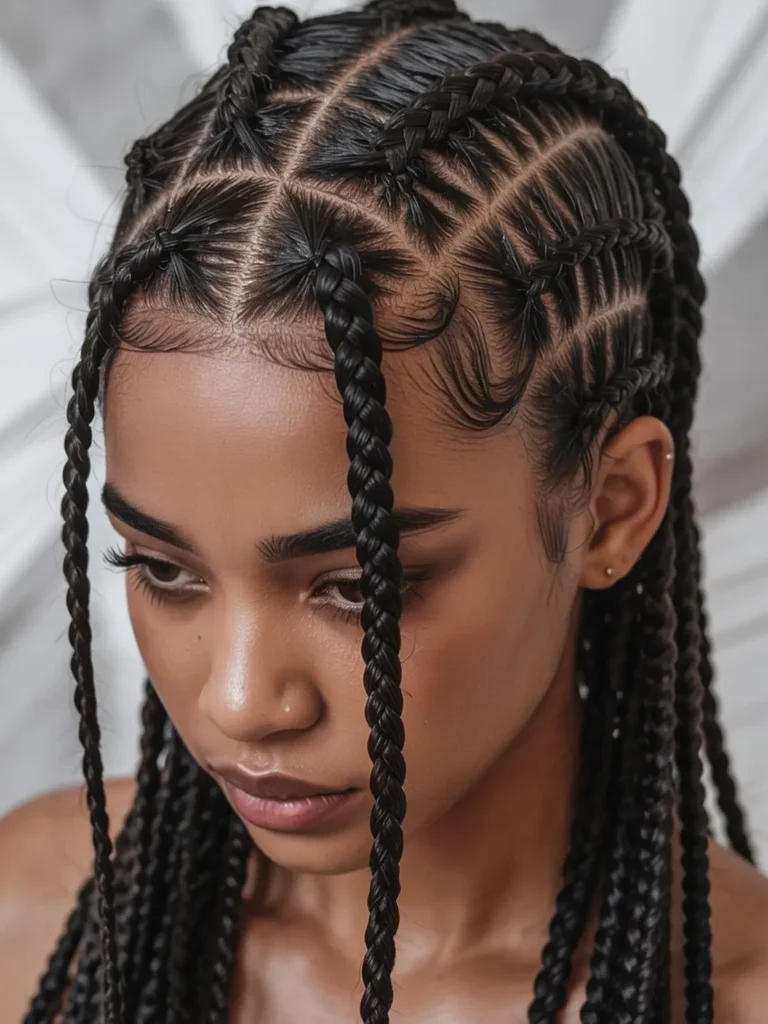
Source: unicornboxbraids
Front sections intersect before transitioning into longer individual braids. The crossing pattern introduces a layered effect that stays visible even when the length moves freely. Each section connects in a way that keeps the design organized.
The combination allows flexibility in styling without disturbing the front pattern. Braids can be gathered, left down, or shifted to one side while maintaining the structure near the scalp. The arrangement adapts without losing its identity.
Placement of the intersecting sections determines how clean the pattern appears. Even spacing keeps the design consistent across the head. The layout remains clear throughout wear.
19. Wavy Layered Cornrow Ponytail
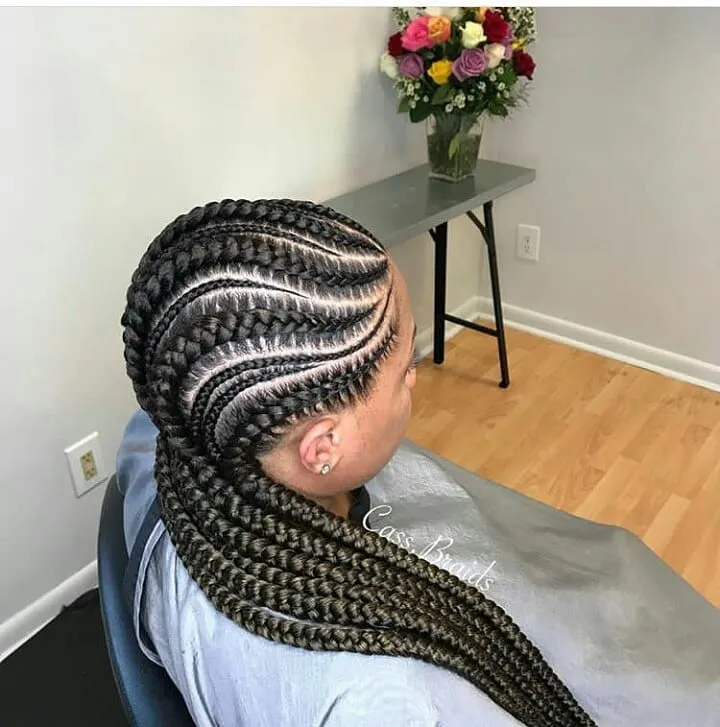
Source: ghanaianhairstyles
Wave-like rows move across the scalp in layered paths before gathering into a ponytail. The direction changes gradually, giving the pattern depth without creating sharp divisions. Each section follows a flowing path toward the back.
The ponytail introduces movement that extends beyond the scalp design. As the length shifts, the pattern remains visible at the base, keeping attention on both areas. The style balances structure with motion.
Maintaining the ponytail helps preserve the overall arrangement. Proper care keeps the braids aligned and prevents the pattern from losing definition. The design stays consistent over time.
20. Elegant Swirl Cornrow Bun
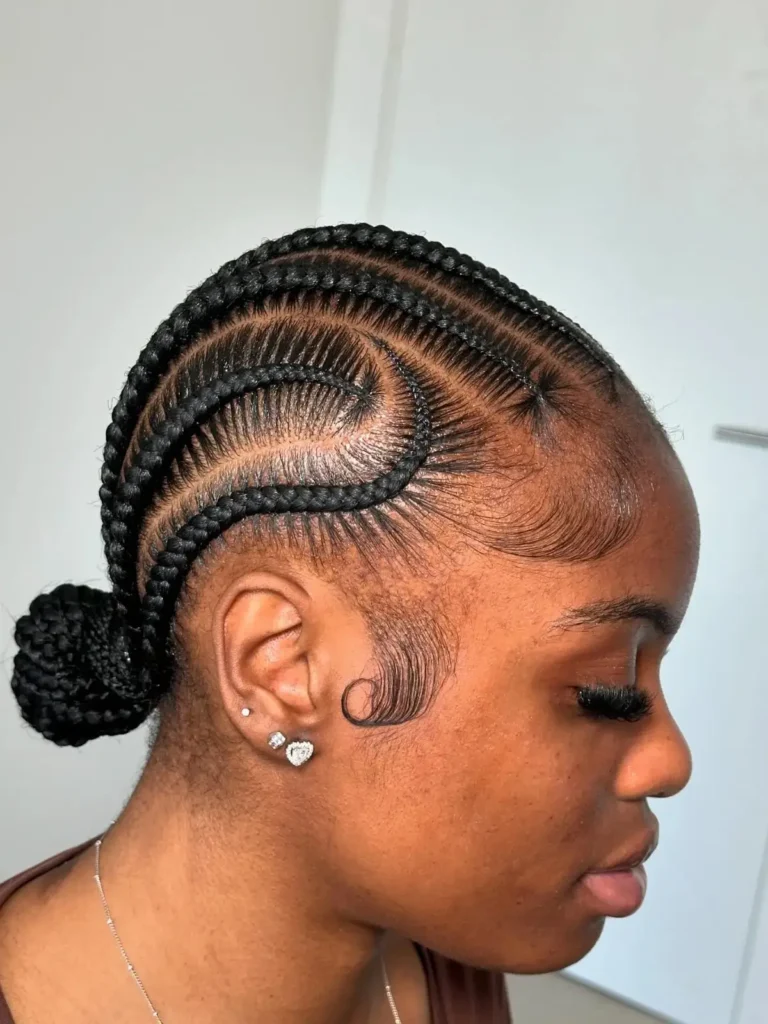
Source: crownconciergee
Circular sections begin near the front and move toward the back in a controlled swirl pattern. The direction softens the overall arrangement, avoiding sharp lines or rigid structure. Each curve connects smoothly into the next.
The bun at the nape anchors the design without drawing attention away from the pattern. This placement keeps the silhouette balanced while maintaining a clear focal point at the front. The smooth swirl pattern gives the hairstyle a polished finish suitable for special occasions.
Even tension across curved sections ensures the pattern holds its shape. Careful sectioning keeps the swirl defined as the style settles. The design stays clean for longer periods.
21. Curly Accent Cornrow Bun
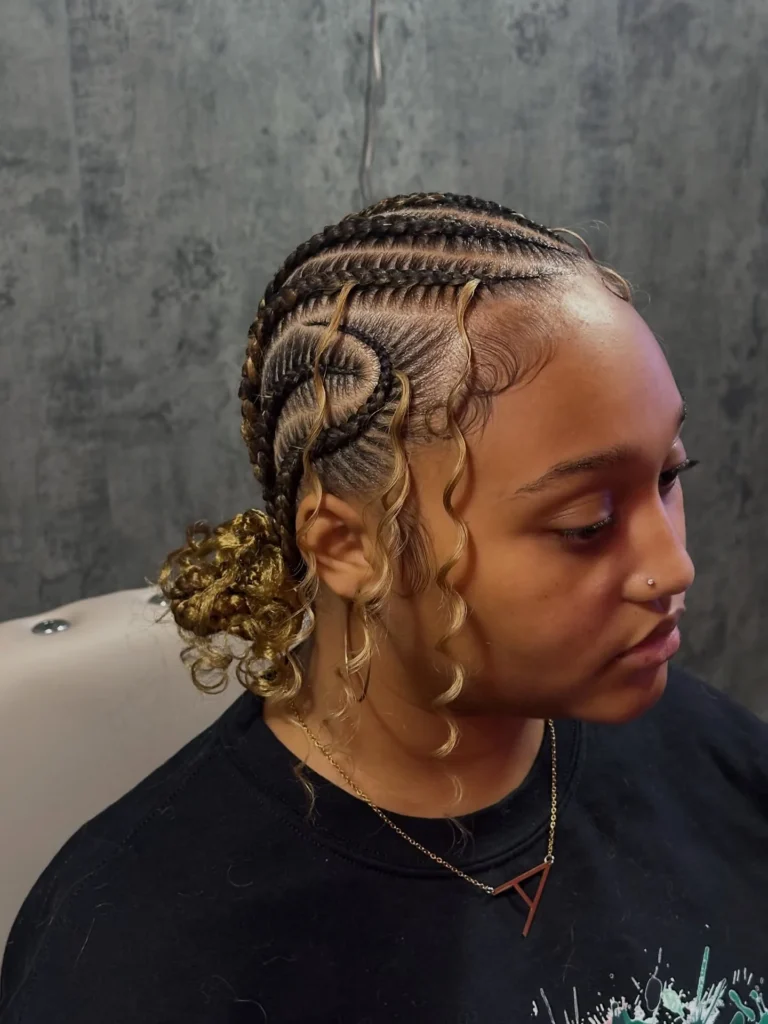
Source: ciernabeauty
Cornrows form a controlled base that leads into a gathered bun, while a few curled ends remain loose around it. The contrast between the braided base and the curled strands introduces variation without disrupting the arrangement. Each section transitions smoothly into the next.
The loose curls shift slightly with movement, bringing a lighter touch around the bun. This detail keeps the design from appearing too fixed while maintaining order at the roots. The placement stays intentional rather than random.
Managing the curled ends helps maintain consistency. Proper care keeps the strands defined and prevents them from blending into the braided sections. The overall style stays balanced over time.
22. Diagonal Cornrow Box Braids
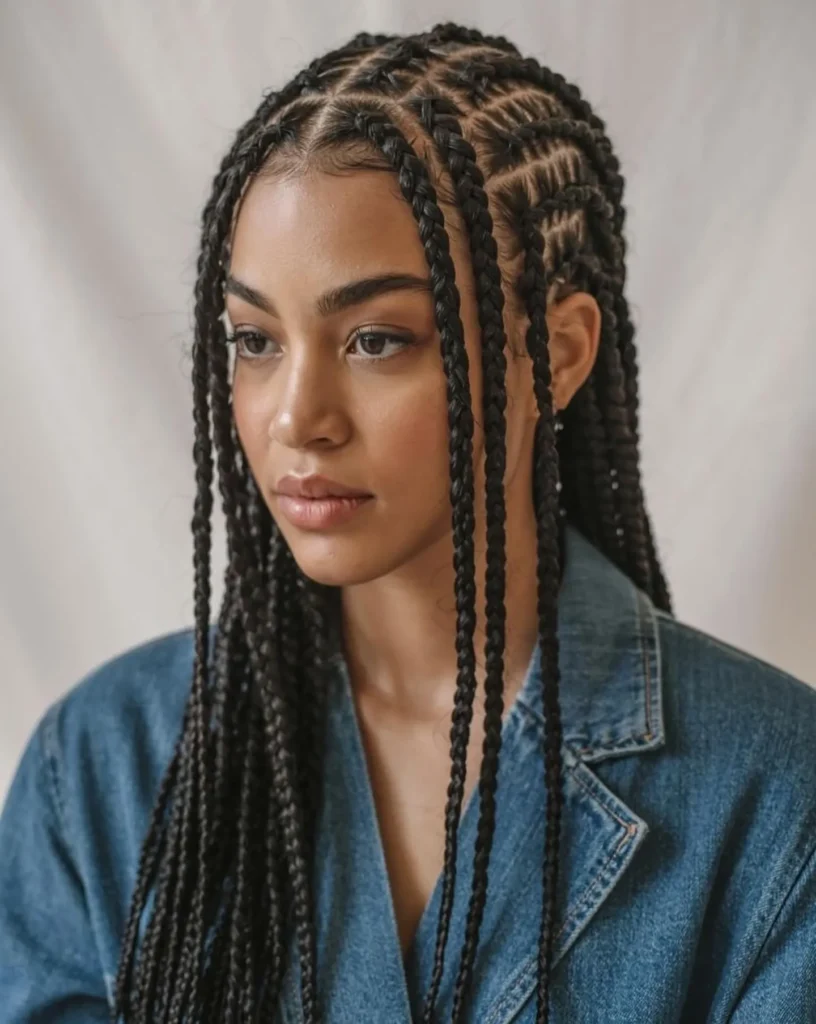
Source: narahairbraiding
Angled sections at the front guide the braids across the scalp before transitioning into individual lengths. The diagonal direction changes how attention moves, shifting it sideways rather than straight back. Each part connects in a smooth and continuous path.
The transition into box braids allows flexibility in styling without affecting the front pattern. Length can be adjusted, gathered, or left free while the base remains intact. The design stays adaptable across different occasions.
Maintaining the front sections keeps the diagonal pattern clear. Clean parting ensures the structure remains visible even as new growth appears. The arrangement holds its definition longer.
23. Alternating Thick Thin Cornrows
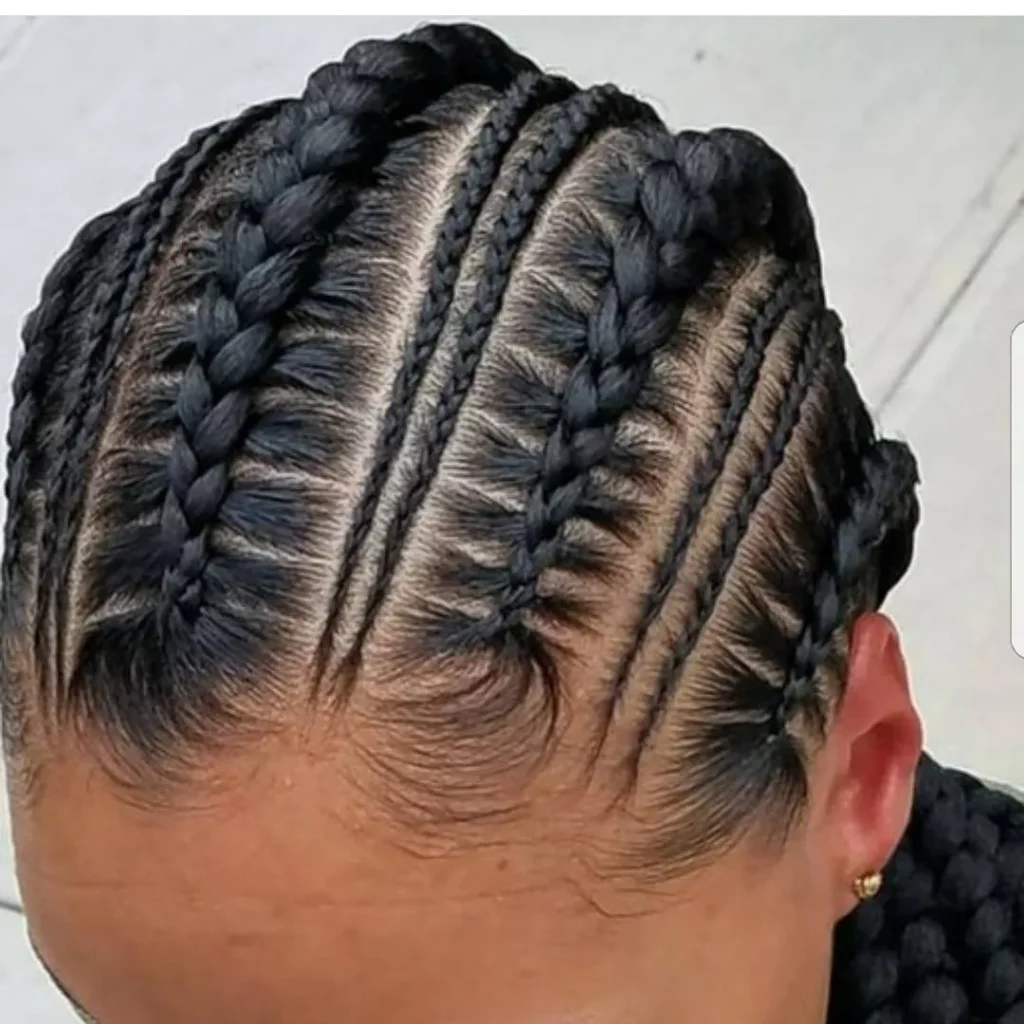
Source: magicfingersstudio
Alternating braid sizes form a pattern that shifts between wider and narrower sections across the scalp. The contrast between the two creates a layered arrangement without needing additional design elements. Each row plays a role in defining the spacing.
The thinner sections act as separators, allowing the wider braids to stand out more clearly. This balance keeps the pattern organized instead of overwhelming. The layout remains easy to follow visually.
Consistent spacing ensures the contrast stays visible over time. Maintaining the edges helps preserve the clarity of the pattern. The structure remains defined throughout wear.
How Long Should Each Style Last
After choosing a style that fits your preference, the next question usually comes down to how long it will actually hold. Wear time depends on both the pattern and how well it’s maintained from the start.
Style Type | Average Wear Time |
|---|---|
Geometric / Graphic Patterns | 3 to 4 weeks |
Straight-Back Rows | 4 to 6 weeks |
Bun Styles | 4 to 5 weeks |
Ponytail Styles | 3 to 4 weeks |
Twist Fusion | 5 to 6 weeks |
What to Tell Your Stylist Before Sitting Down
Knowing how long you want the style to last is only one part of the process. What you communicate before installation directly affects how the final result holds over time.
Go in with more than just a photo. Letting your stylist know your scalp sensitivity, how long you want to wear the style, and whether you work out regularly helps them choose the right tension and parting size from the start. A photo gives direction, but your daily routine shapes the decision.
If your edges have been through frequent styling recently, say that upfront. A skilled braider adjusts tension based on what the hairline has already been through, not just what the reference image shows.
Nightly Routine That Actually Works
Even the most detailed install will not stay neat without proper care at night. What you do after the salon matters just as much as the braiding itself.
Protective styles only stay sharp as long as you protect them at night. A satin or silk bonnet is essential because cotton pillowcases pull at the braids and cause frizz along the parts by morning. For longer ponytails or buns, fold the length loosely inside the bonnet instead of letting it press flat against the pillow.
• Wrap edges with a satin scarf before the bonnet for extra hold
• Avoid tight hair ties on the ponytail overnight because they crease the length
• A light mist of water and aloe vera along the parts helps refresh moisture without disturbing the braids
Keeping Edges Strong Through Every Install
The hairline takes the most stress in any braided style, and the effects build up over time without proper care. Applying a lightweight serum to the edges every other day keeps the follicles nourished while the hair is tucked away.
Habit | Why It Helps |
|---|---|
Scalp oil between rows | Prevents dryness and itching during wear |
Edge serum every other day | Keeps hairline follicles nourished |
Two-week break between installs | Allows scalp to recover before next session |
Loose nightly bonnet | Reduces friction on braids overnight |
Signs a Style Is Lasting Well
When the parts stay visible, the edges lie flat without constant product, and the scalp does not itch heavily, the install was done with proper care. These are the three markers worth paying attention to more than how the style looks on day one.
A style that holds its shape into week three was installed with the right tension and sealed correctly from the start. One that starts fraying at the ends or pulling at the hairline by week two is telling you something worth listening to before the next visit.
FAQs
1. How long do cornrows hairstyles last?
Most cornrows last between 3 to 6 weeks, depending on the style, hair type, and how well you maintain them.
2. Do cornrows damage natural hair?
Cornrows are protective when done with proper tension, but tight braiding can cause stress on the edges over time.
3. How do I maintain cornrows at home?
Keep your scalp moisturized, wear a satin bonnet at night, and avoid excessive pulling to maintain neatness longer.
4. Which cornrow style is best for beginners?
Simple straight-back cornrows or feed-in styles are easier to manage and require less maintenance for first-time wearers.
Conclusion
Finding the right braid is not just about style, it is about how it fits into your daily life and how it makes you feel. Cornrows Hairstyles for Black Women offer a wide range of options, from bold patterns to simple designs that hold their shape with ease.
I have seen how the right hairstyle can completely shift confidence and make everyday routines smoother. When your hair works with you instead of against you, everything feels more put together.
Save this post so you have ideas ready for your next appointment, try a style that speaks to you, and share it with someone who might need inspiration. Your next look might already be here.
Read More : 25 90s Hairstyles That Never Go Out of Style