23 Winter Protective Hairstyles for Natural Hair

Winter can be tough on natural hair, but that doesn’t mean you have to sacrifice beautiful hairstyles to keep it protected. Between dry indoor air, cold winds, and scarves rubbing against your ends, finding a style that looks good and feels manageable can become a real challenge. That’s where the right winter protective hairstyles come in.
From intricate swirl cornrows and chunky twists to elegant braided buns and Bantu knots, these looks offer plenty of inspiration for switching up your winter hair routine. Whether you prefer something low-maintenance for busy mornings or a more detailed style for special occasions, there’s a beautiful option to suit your taste.
You’ll also discover ways to keep your ends tucked away, reduce unnecessary manipulation, and make your hair easier to manage throughout the colder months. Get ready to find a look you’ll love wearing and want to save for your next salon appointment!
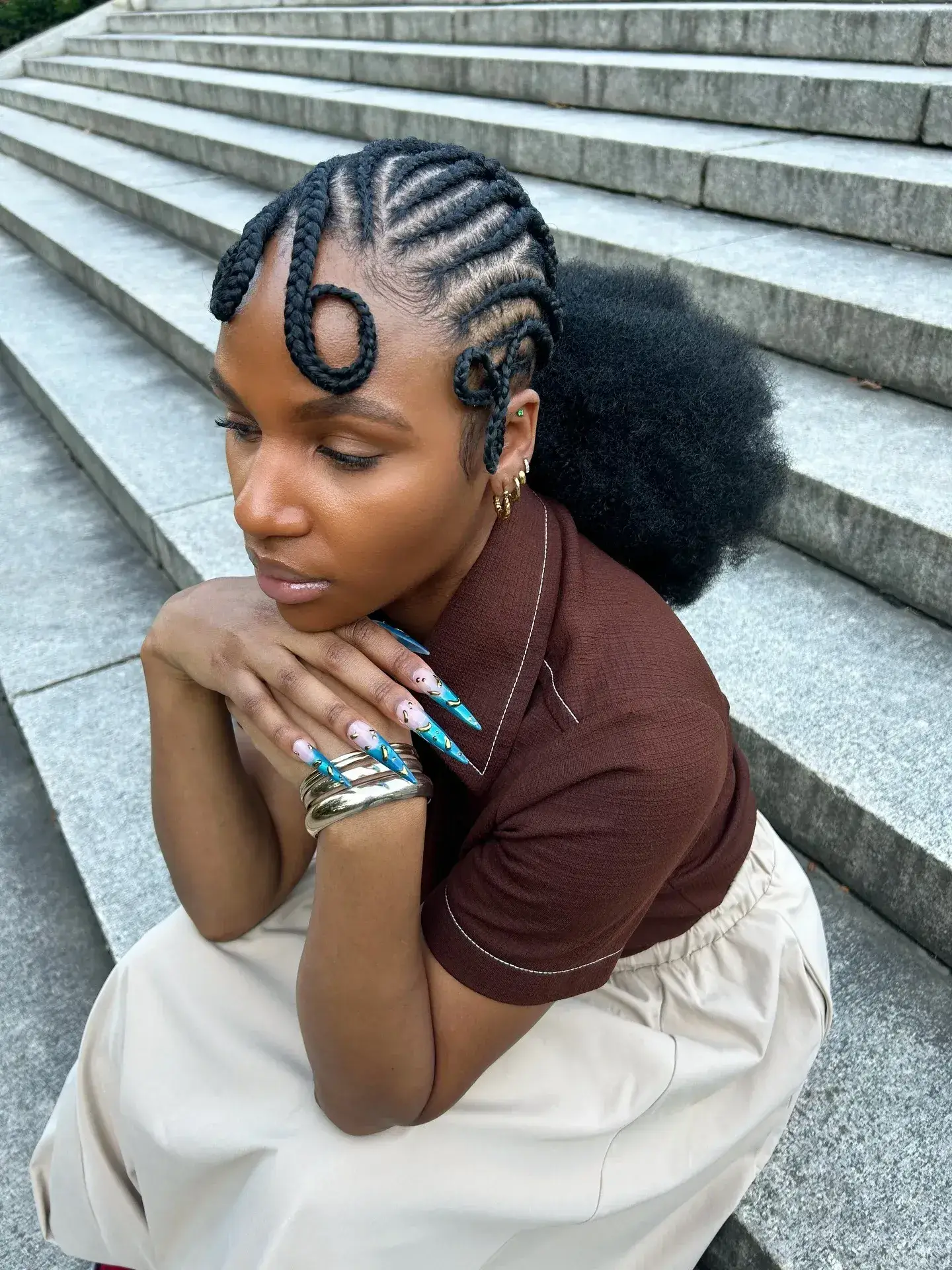
1. Swirl Cornrows with Afro Puff
Source: tressesofsoleil
Want a protective style that doesn’t look like the usual straight-back braids? These swirl cornrows bring something unexpected to your look while keeping the sides neatly tucked away. The full afro puff adds just the right amount of volume.
Swirl cornrows suit thick, coily hair best, since the texture grips the braids and holds the pattern without slipping. Among winter hairstyles for black women, swirls stand out for their detail, and the puff at the back gives the style its soft, rounded finish from every angle.
Keep the puff shaped with a pick, lifting the roots gently so the afro holds its round outline. Spray the cornrows with water and leave in conditioner twice a week, and the style sits well under a satin lined hat all winter long without frizz.
Read More : 23 Natural Hairstyles for Black Women With 4C Hair
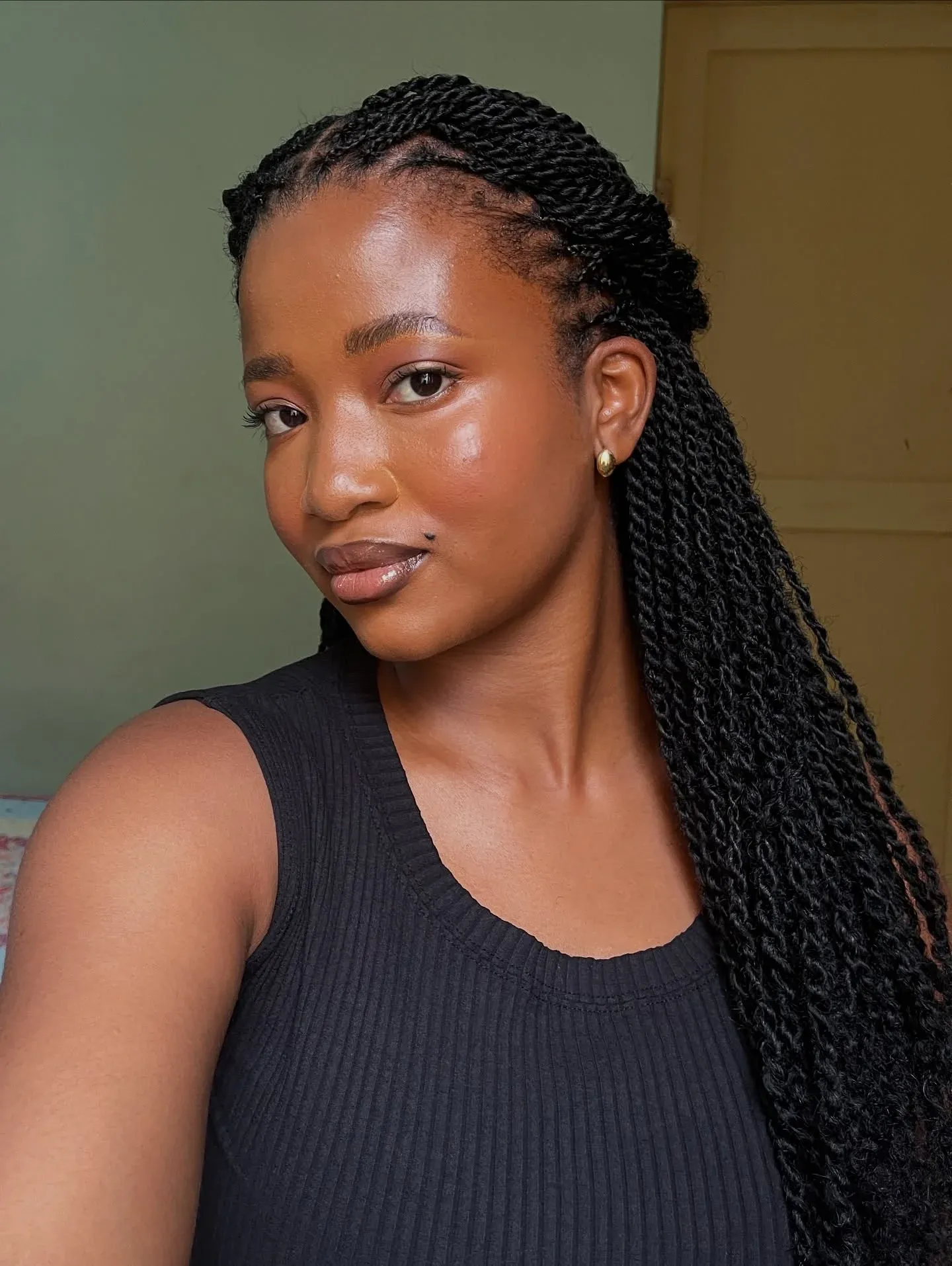
2. Side Swept Senegalese Twists
Source: petite_natural_
If you love long hairstyles but hate spending every morning trying to make them look presentable, Senegalese twists are worth considering. They give you beautiful length without the need for daily heat styling. Sweeping them over one shoulder makes the whole look feel even more effortless.
Senegalese twists are made by twisting two strands together, which gives them a smooth, rope like finish that stays neat with almost no effort. They weigh less than box braids, which means less pull on the scalp and an easier fit under a winter hat.
Sweep the lengths to one side for evenings out, or gather them into a low ponytail for busy days. Oil the scalp along the parts twice a week, and the twists need no heat at all from install day to takedown day and in between.
Read More : 23 Winter Hair Colors for Black Women
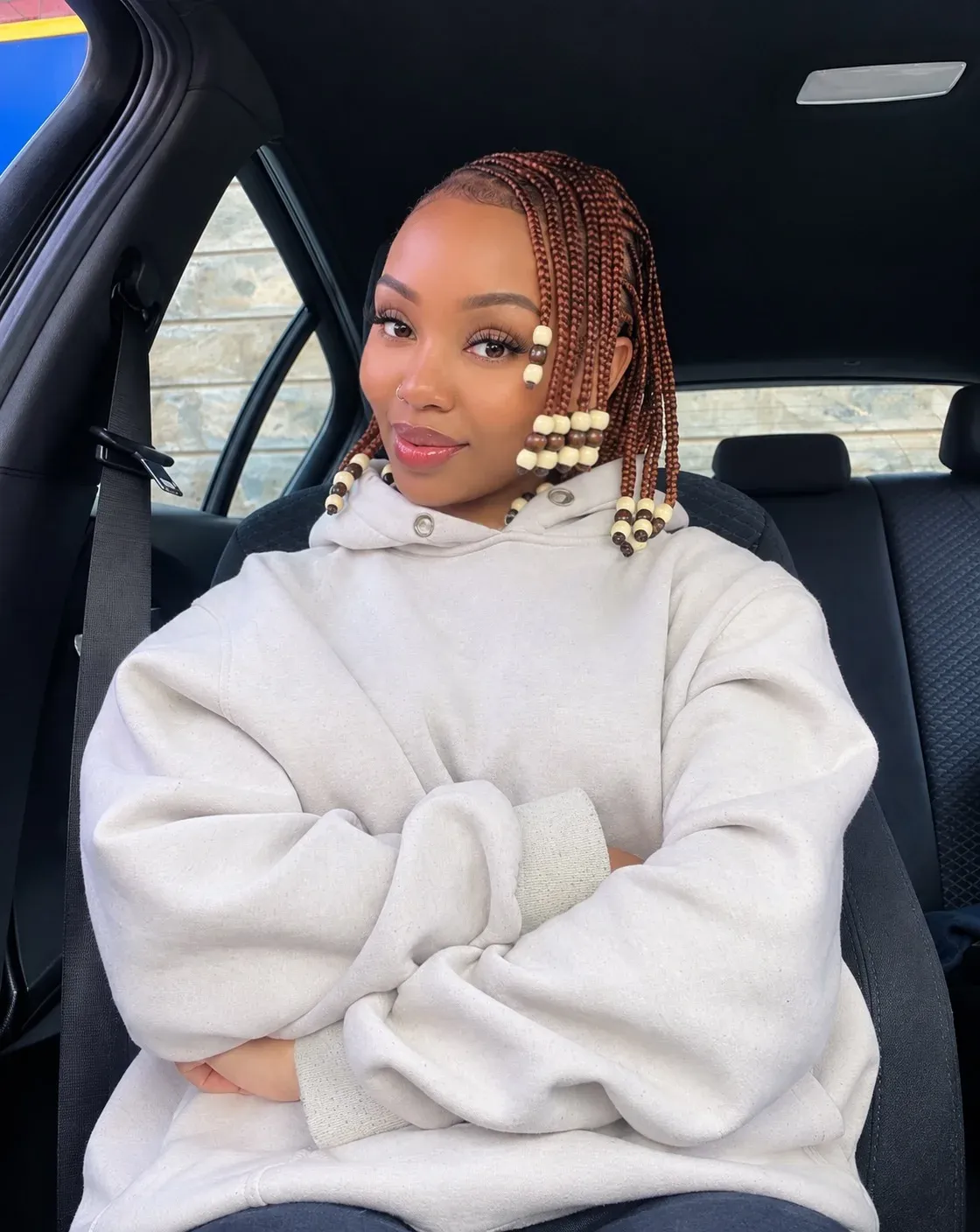
3. Copper Beaded Short Braids
Source: officialnonoo_
Not everyone wants waist-length braids, especially when winter coats and scarves are already getting in the way. A short braided style gives you that put-together look without all the extra length. Add copper tones and beads, and even a simple bob feels special.
Short braids suit fine hair well, since the bob length keeps the weight light and the scalp free of strain. Beads weigh the ends down slightly, which keeps the braids sitting neatly, and the copper shade brings warmth to the face in cold weather.
Short braids dry fast and need no styling beyond a quick shake in the morning. Spritz the scalp with water and leave in conditioner every few days, and the bob length stays clear of coat collars and scarves, which means no tangling and no frizz.
Read More : 23 Short 4C Natural Hairstyles for a Fresh New Look
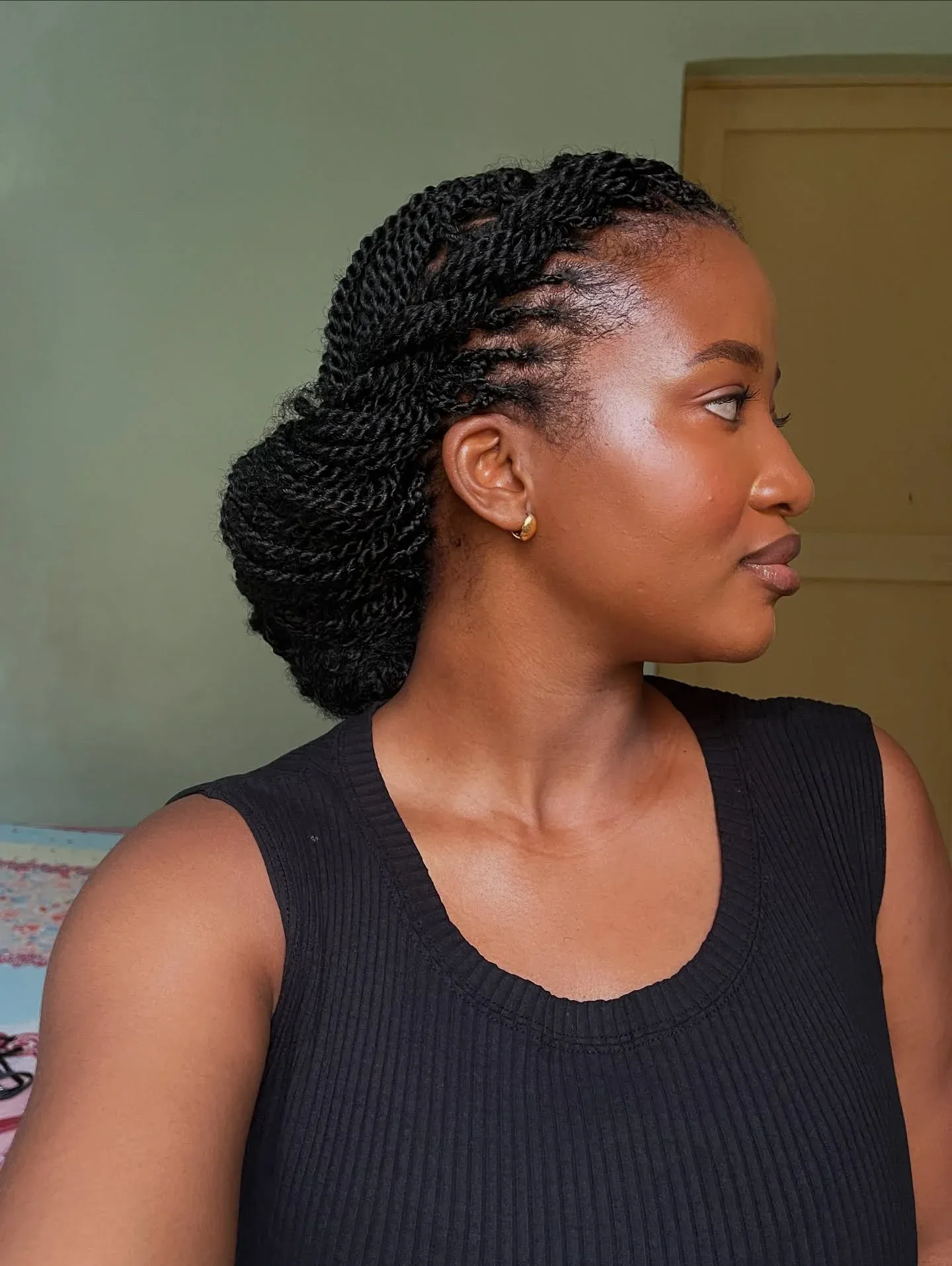
4. Low Twisted Bun
Source: petite_natural_
Some winter mornings, you just want to get your hair out of the way and move on with your day. A low twisted bun does exactly that without sacrificing a polished appearance. It’s especially lovely when you want your ends tucked away and your face free of loose strands.
Twisting the hair before pinning it up is what makes this bun hold on thick, coily hair. Twists grip each other, so the knot stays put without a dozen pins, and the low placement keeps the weight off the hairline where tension does the most damage.
Gather the twists at the nape, coil them into a knot, and pin it in place with two or three pins. Smooth the edges with gel in the morning, and the bun sits flat enough to wear under a hat without squashing the shape all day.
Read More : 23 Stylish Winter Hairstyles for Black Women
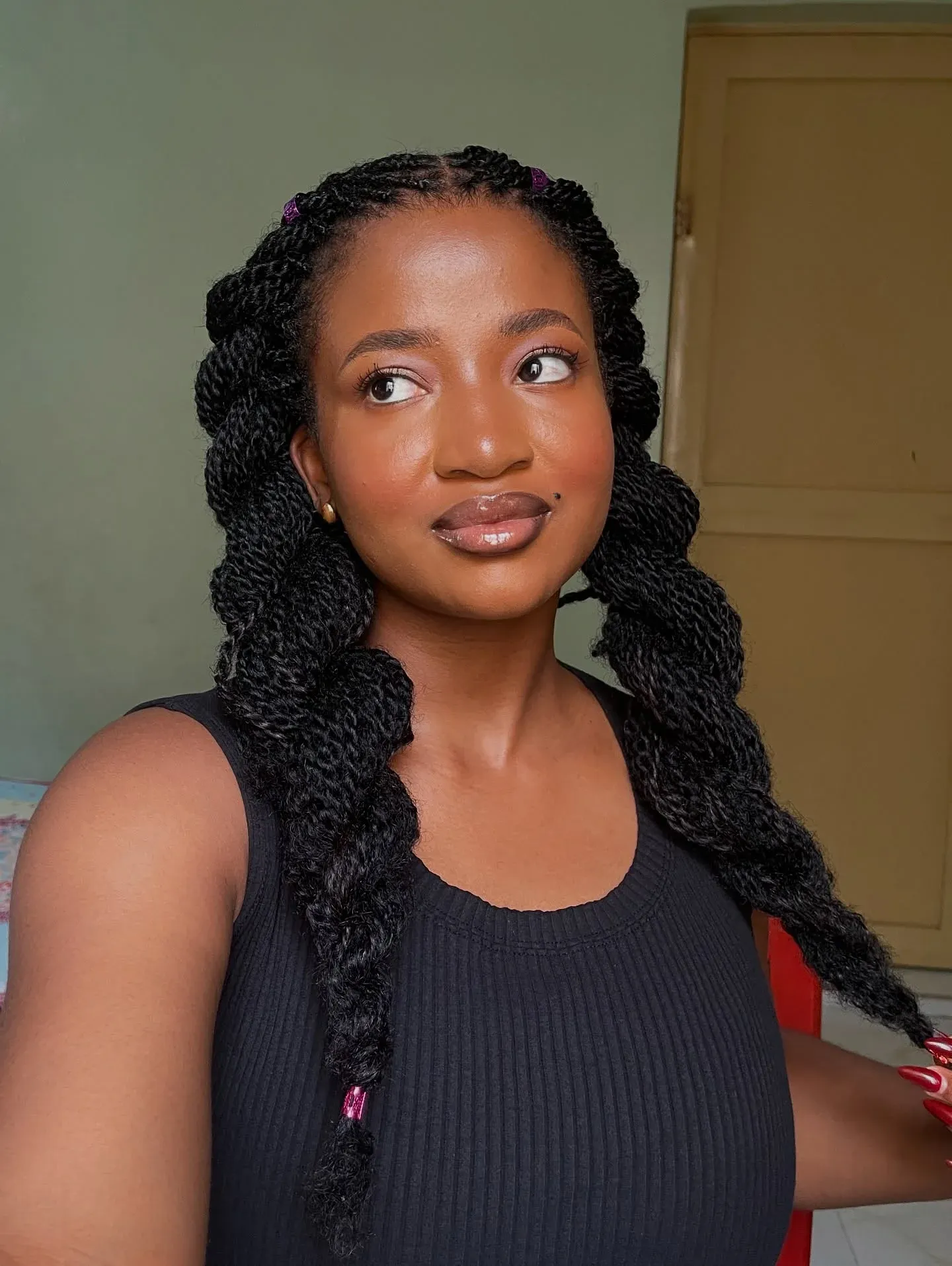
5. Chunky Face Framing Twists
Source: petite_natural_
Love protective styles but don’t want your face completely hidden behind your hair? Chunky face-framing twists give you the best of both worlds. You get the convenience of a protective style while keeping those soft details around your face.
Chunky twists suit thick hair best, since the weight of the twists sits evenly and the size shows off the texture. They take less time to install than fine ones, and they give the face a strong frame that fine twists never manage at all.
Wear the front twists loose for a relaxed finish, or pull them back and pin them behind the ears for a cleaner outline. Lengths behind need no attention beyond a nightly scarf, and a little oil on the scalp keeps the parts tidy all week.
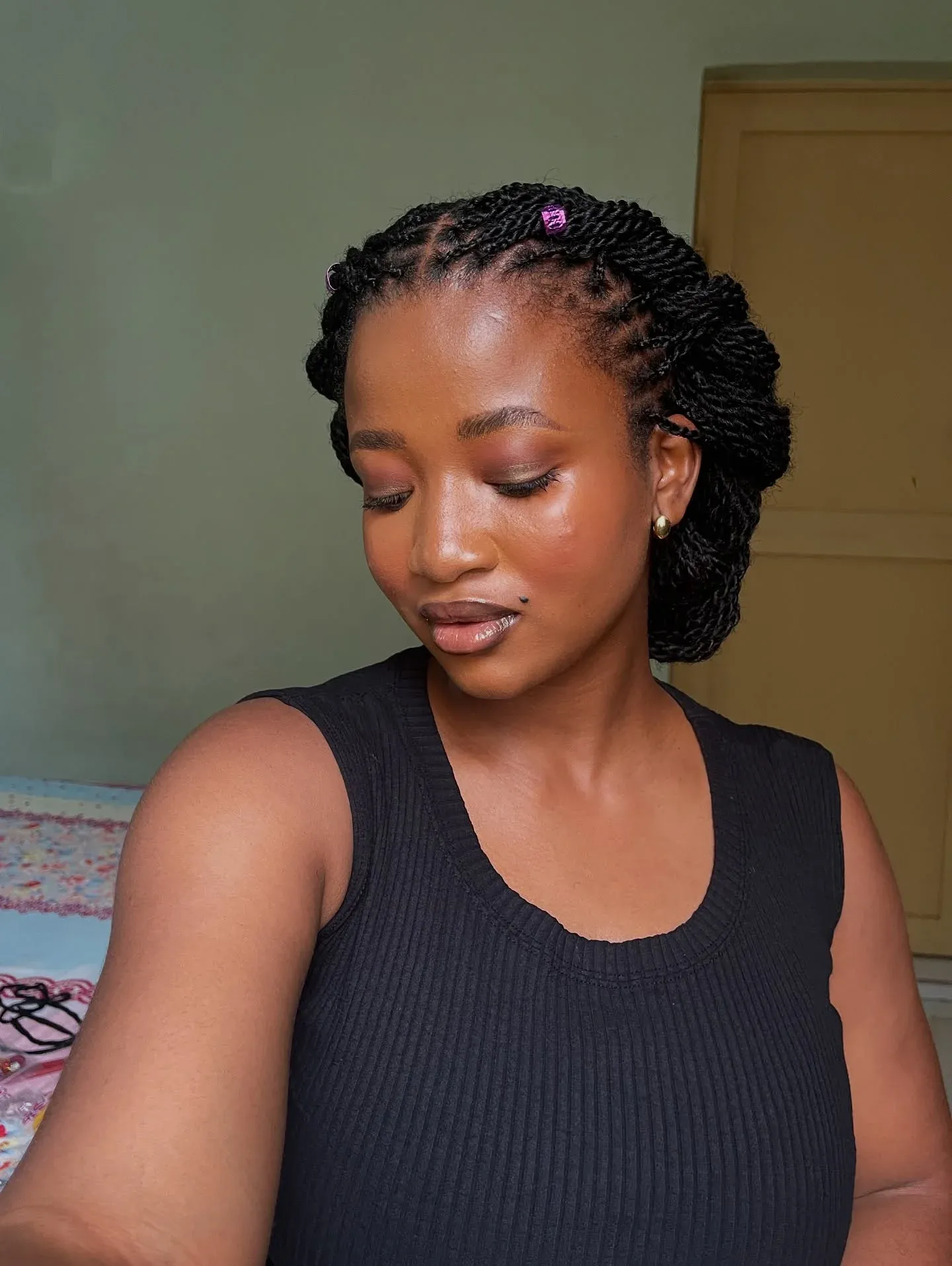
6. High Twisted Updo
Source: petite_natural_
Long twists can become frustrating when they keep getting caught in scarves, coat collars, and winter accessories. Gathering them into a high updo gets the length out of your way while creating a completely different look. It’s a lovely option when you want something more noticeable than an everyday bun.
A high updo suits long twists best, since the twisted texture grips and holds its shape without slipping. Height brings drama to an otherwise simple style, and the pinned up lengths stay protected from wind and friction all day long. It suits parties and weekdays alike.
Pile the twists on top of the head and pin them in place, leaving a few ends loose for a softer finish. Refresh the scalp with water and leave in conditioner every few days, and the updo holds through wind and hats all day long.
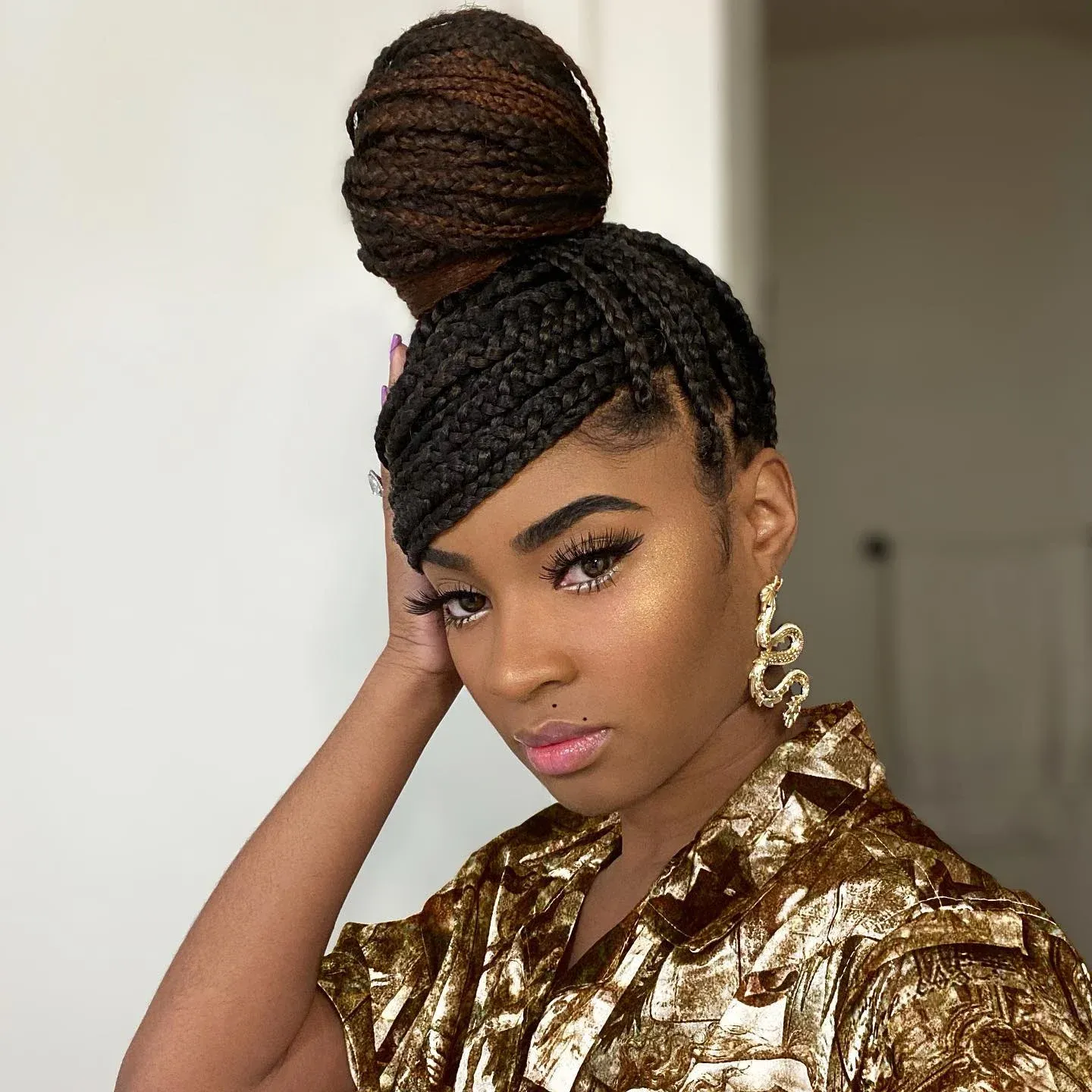
7. Braided Top Knot
Source: vanlenore
If you have an event coming up but don’t want to leave your hair loose in the cold, this style deserves a closer look. The braided top knot creates height and structure while keeping the lengths gathered neatly together. It looks just as striking with a casual winter outfit as it does with something dressier.
Sweeping the braids upward is what gives this knot its height and its drama. Cornrows hold the sides smooth and flat on any hair type, which frames the face cleanly, and the knot itself is large enough to balance bold earrings and a dressy outfit.
A braided top knot needs no restyling once installed, which is the point of a protective updo. Tame the edges down gently each morning, and the knot holds its shape through work, evenings out, and the cold walk home after dark in winter, all week.
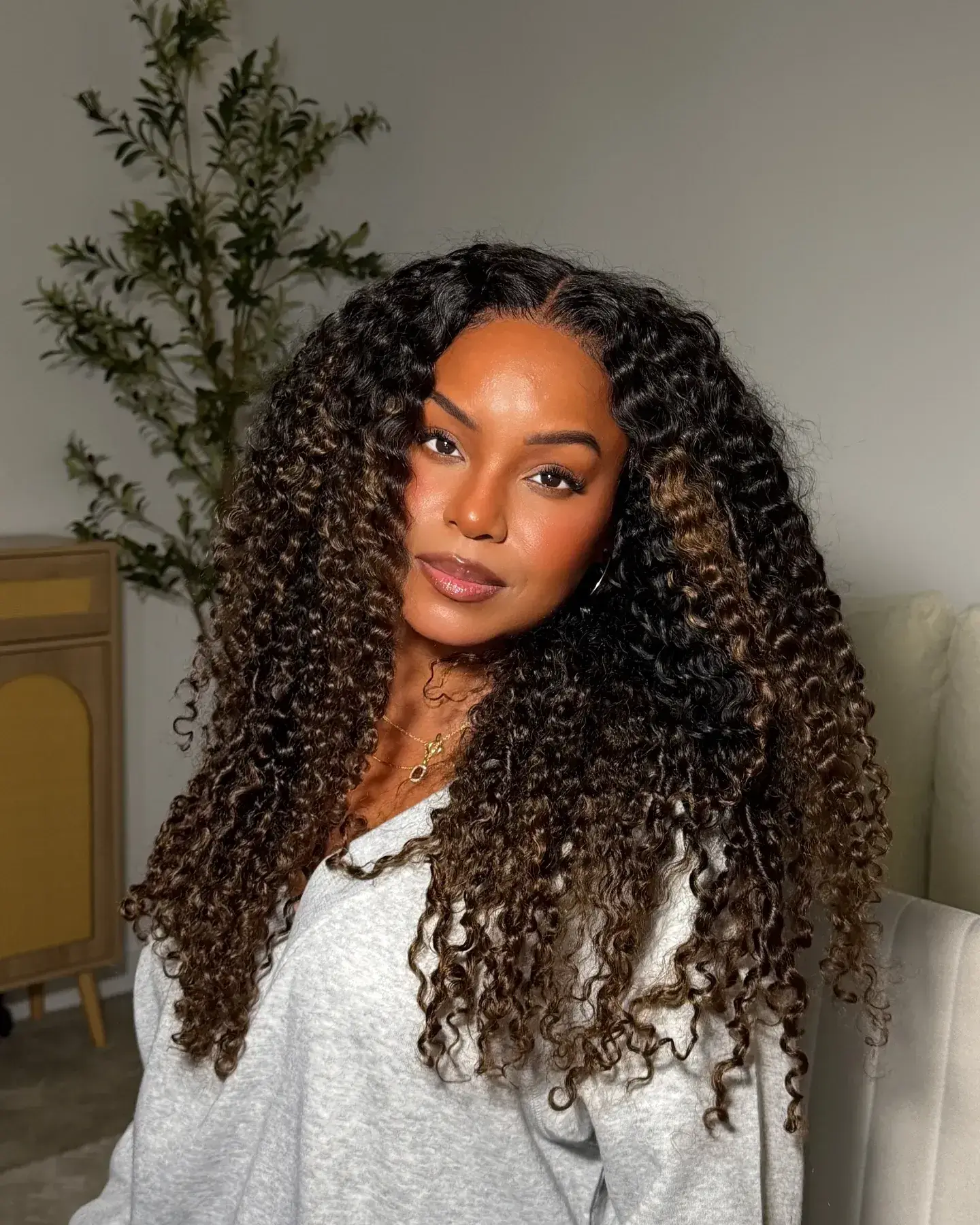
8. Long Highlighted Curly Lengths
Source: alwaysameera
Sometimes you want to show off your curls instead of hiding them away all winter. Long highlighted curls bring movement, dimension, and warmth to your look, especially when the weather outside feels dull. Just remember that loose curls need a little more protection from winter friction than tucked-away styles.
These lengths move because of the waves. Each curl falls in its own wave, full from root to tip, and the highlighted lengths give the hair depth that a single colour never manages, especially in low winter light. A centre part keeps the curls balanced.
Long curly lengths like these need a wide tooth comb and a gentle hand, never a brush, which pulls the curls apart. Scrunch the ends with a little cream to keep the waves defined, and tuck the curls under a satin scarf at night.
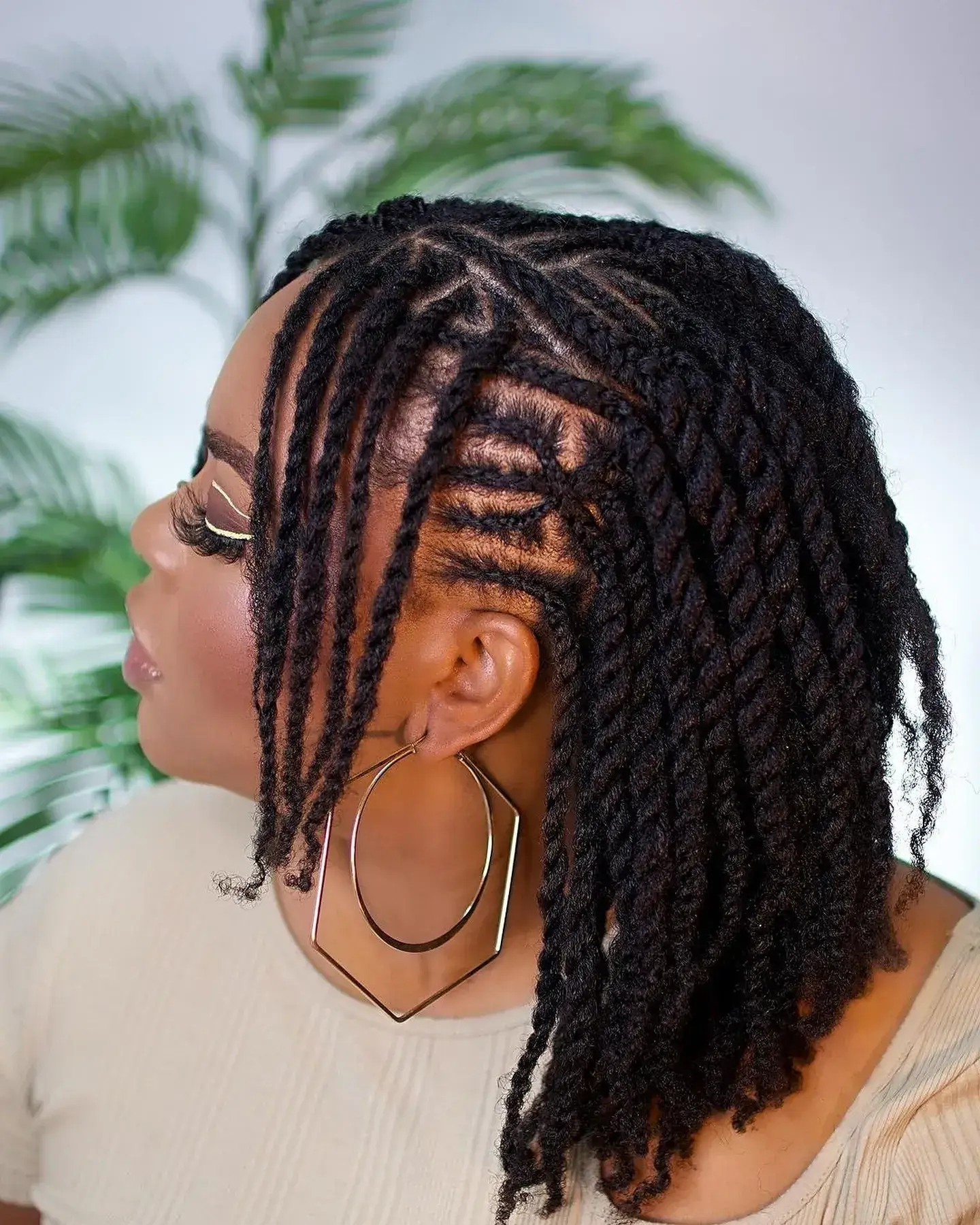
9. Shoulder Length Flat Twists
Source: afroprincesses
If long braids feel too heavy or take too much time to install, shoulder-length flat twists offer a refreshing alternative. They sit close to the scalp and create a neat shape without adding unnecessary length. The shorter finish also makes them easier to manage with winter clothing.
Flat twists suit fine and medium hair well, since two strands lie flat without the bulk of a three strand braid. Shoulder length keeps the ends clear of coat collars, and the bob shape gives the style a neat, finished outline all winter long.
A flat twist bob needs no heat and no daily styling beyond a scarf at night. Keep the scalp oiled along the parts twice a week, and when you take the twists down, the hair underneath falls into soft waves that last for days on their own.
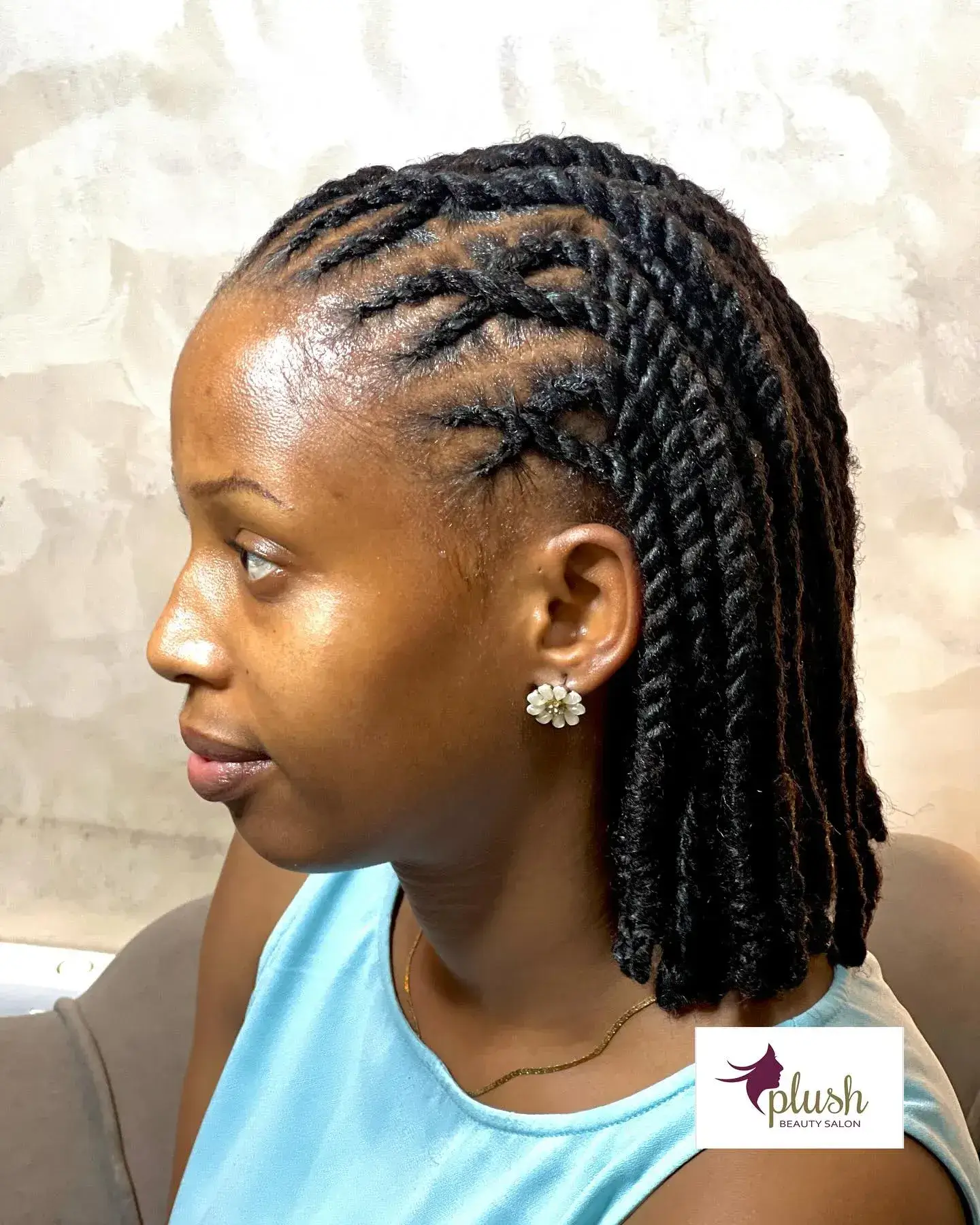
10. Flat Twist Bob
Source: plush_naturalhairtz
A protective style doesn’t have to involve long extensions or complicated styling. This flat twist bob gives you a neat, structured look while keeping the hair arranged close to the head. It’s a good option when you want something simple that still feels thoughtfully styled.
Two strand twists lie flat against the scalp, which suits thick, coily hair that needs a smooth base. The criss cross pattern at the front is the detail that sets this bob apart, and the thick twists give it weight and shape from every angle.
Bob length twists need no heat and no daily styling, just a scarf at night. Dampen the scalp with water and leave in conditioner every few days, and the shoulder length keeps the hair clear of scarves and coat collars all winter long without frizz.
11. Long Knotless Box Braids
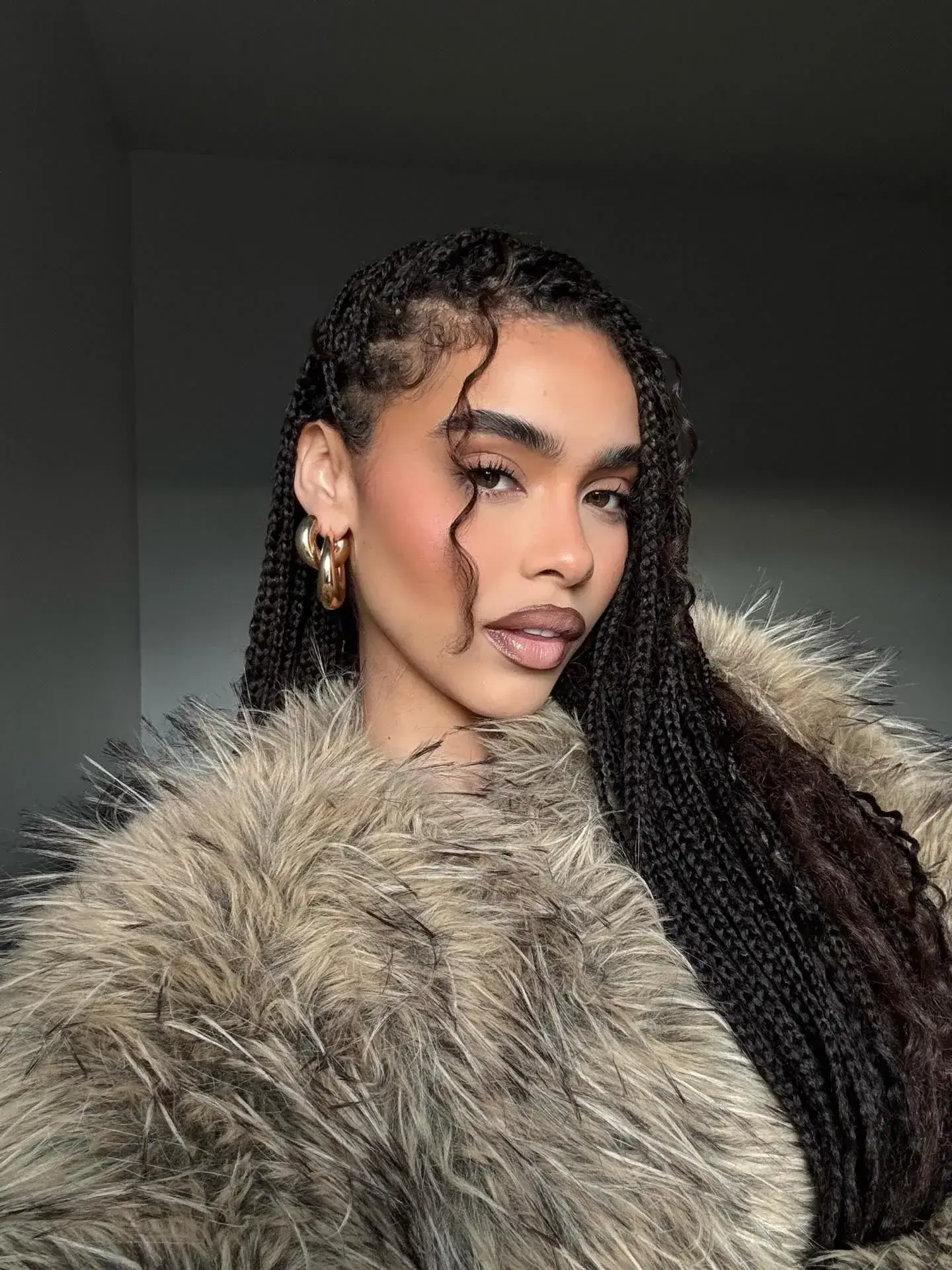
Source: jadeeregeent
Want a hairstyle you can wake up to without spending half an hour getting it ready? Knotless box braids offer that convenience while giving you plenty of length to experiment with. Their gradual, knotless installation also avoids the bulky knots associated with traditional box braids, although a gentle installation is still important.
Knotless braids start with your own hair, with the extension fed in gradually instead of knotted at the root. That makes them lighter and easier on the scalp than traditional box braids, and the lengths move more naturally when you turn your head in any direction.
Long braids like these need almost no daily work. Tie the lengths up for the gym, let them fall loose for evenings out, and keep the scalp oiled so the parts stay neat right up to takedown day. Faux locs suit every occasion in between too.
12. Bantu Knot Updo
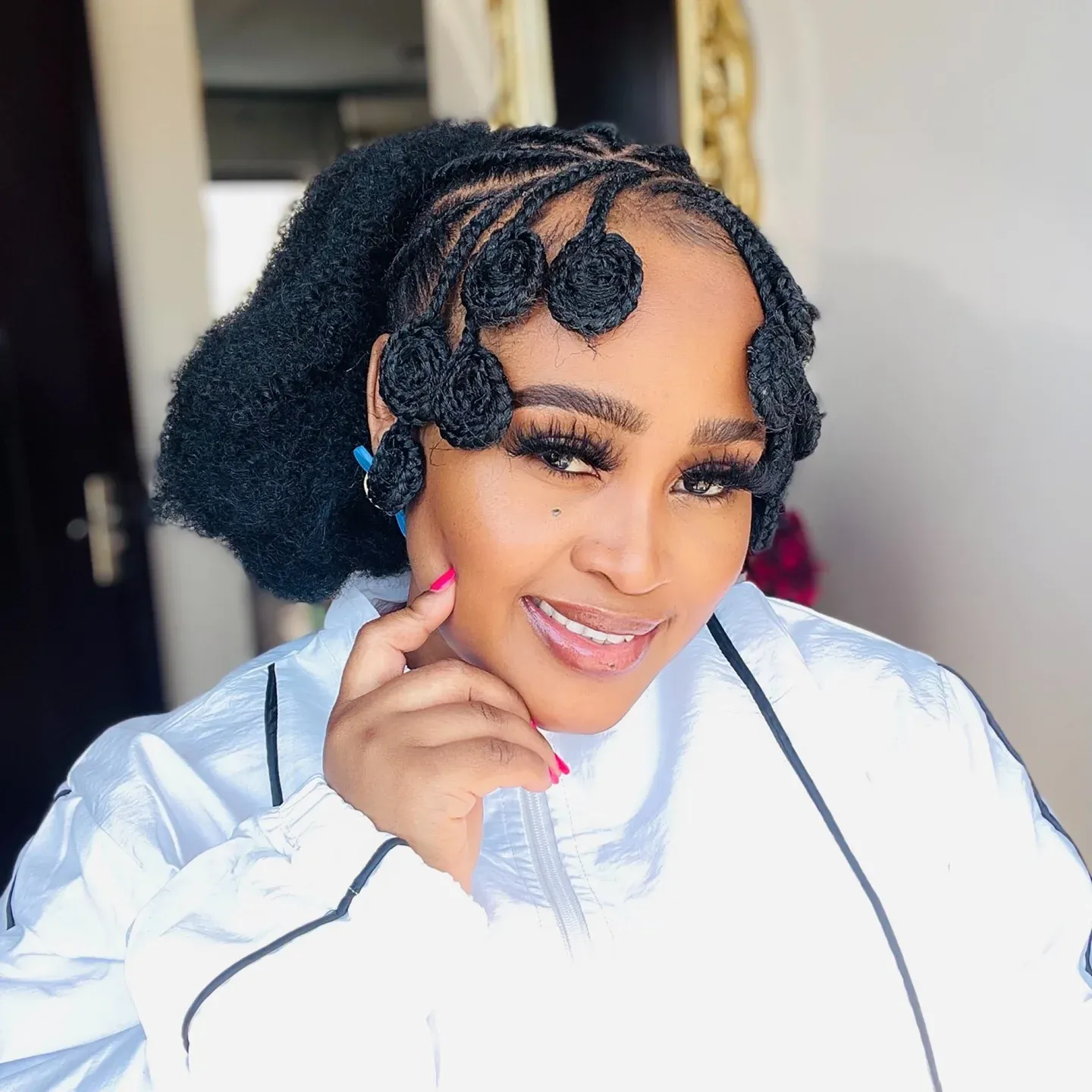
Source: mm_exotic_salon
When you want something different from the usual braids and twists, Bantu knots bring plenty of personality. Their compact shape keeps the hair secured while giving your overall look a bold, distinctive finish. And when you eventually unravel them, you can enjoy a completely different curly style.
A bantu knot is hair coiled into a small knot and secured in place, which protects the ends completely. As protective styles for 4c hair, bantu knots suit coily textures best, since the texture grips the coil and holds it tight. Rows are laid out with care.
Bantu knots need no heat and no products beyond a little oil on the scalp. They sit flat enough for a hat, and when you unravel them, the curls that fall out are the second style hiding inside the first. Wet them lightly each morning.
Read More : 23 Braided Updo Natural Hair Styles That Pop
13. Blonde Cornrow High Bun
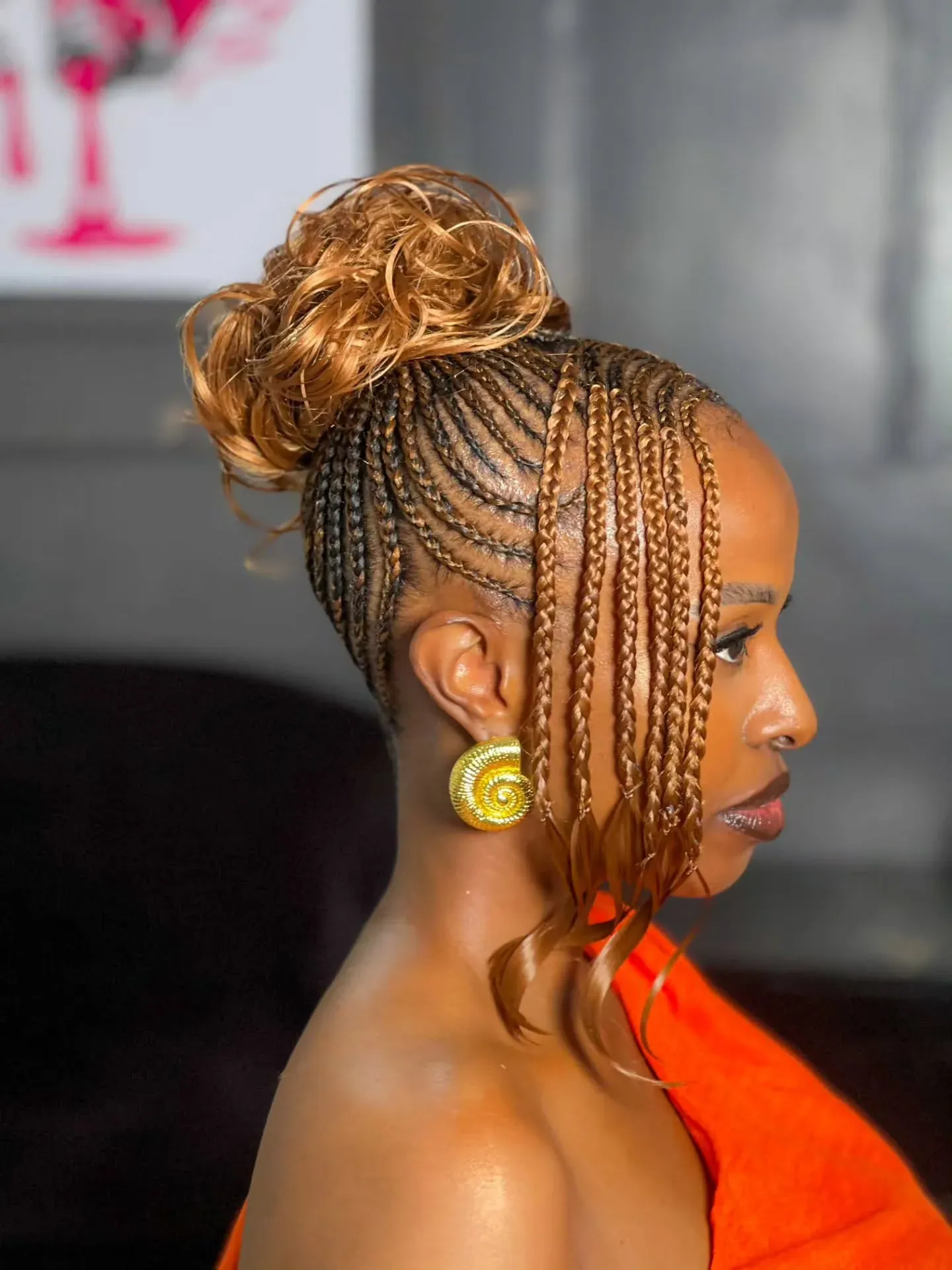
Source: mysticbeautyloungeke
Dark winter outfits can sometimes make your overall look feel a little repetitive, so why not let your hairstyle add some contrast? This blonde cornrow bun combines neat scalp braiding with a fuller, brighter finish on top. It’s a statement-making option for anyone who enjoys experimenting with color.
Cornrows hold the sides flat and neat, which makes the blonde bun the star here. Face framing braids soften the hairline, and the bun itself is large and curly, giving the updo volume from every single angle. That golden shade glows against the skin.
A cornrow bun like this stays put with no restyling. Braids need nothing in the morning beyond smoothing the edges, and the bun sits high enough to clear scarves and coat collars without a second thought. It works for work and weekends alike, every time.
14. Blonde Tipped Braided Bob
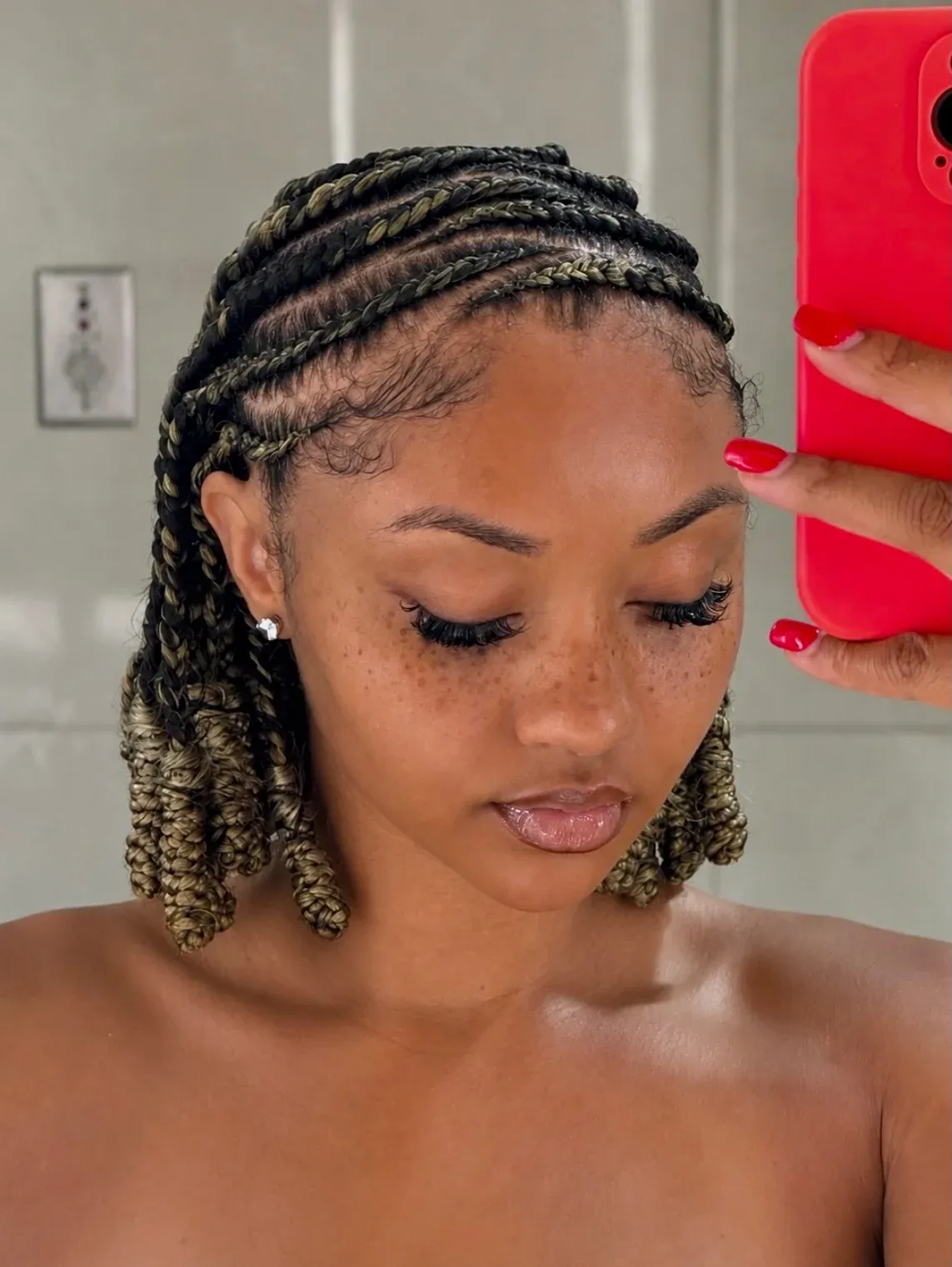
Source: brianamulzac
Thinking about adding color but don’t want to commit to an entirely blonde hairstyle? Blonde-tipped braids let you experiment with lighter shades while keeping your natural-looking roots. The short bob shape makes the color stand out without overwhelming the entire look.
Blonde tips change a dark bob completely. Only the ends carry colour, which means no roots to maintain and no colour touching the scalp, and the waves in the blonde ends give the bob movement that straight ends never manage at all. Colour fades gently, never harshly.
Short braided bobs dry in minutes and need no heat to style. Shake the ends out in the morning, and the waves fall back into place on their own, which makes this one of the easiest protective styles to live with. Gloss keeps the blonde tips bright.
15. Bantu Knots with Tendrils
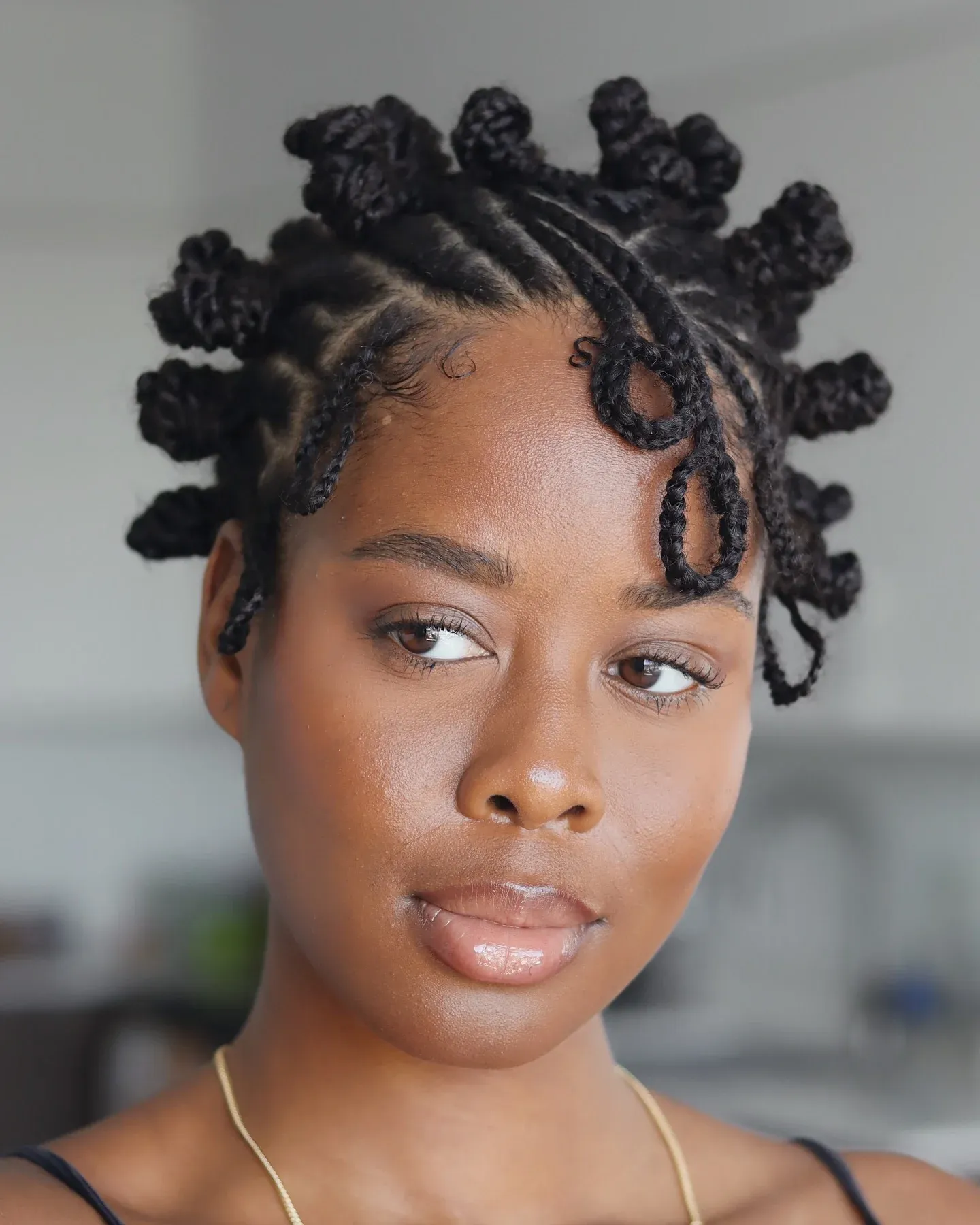
Source: goldannfrancois
Love the look of Bantu knots but find an entire head of tightly arranged knots a little too bold? Leaving a couple of curly tendrils around your face creates a softer, more relaxed finish. It’s a playful variation that adds movement without losing the distinctive shape of the knots.
Tendrils are what make this version different from a full set of knots. They are left out on purpose, curled and loose, and they draw the eye to the face while the knots behind them do the protective work of keeping the ends tucked away.
Knots like these take minutes to do at home once the hair is sectioned. Coil each section, pin it in place, and leave the front tendrils out. Spritz the tendrils with water each morning to keep the curls soft and defined. They unravel into soft curls later.
16. Short Defined Twist Out
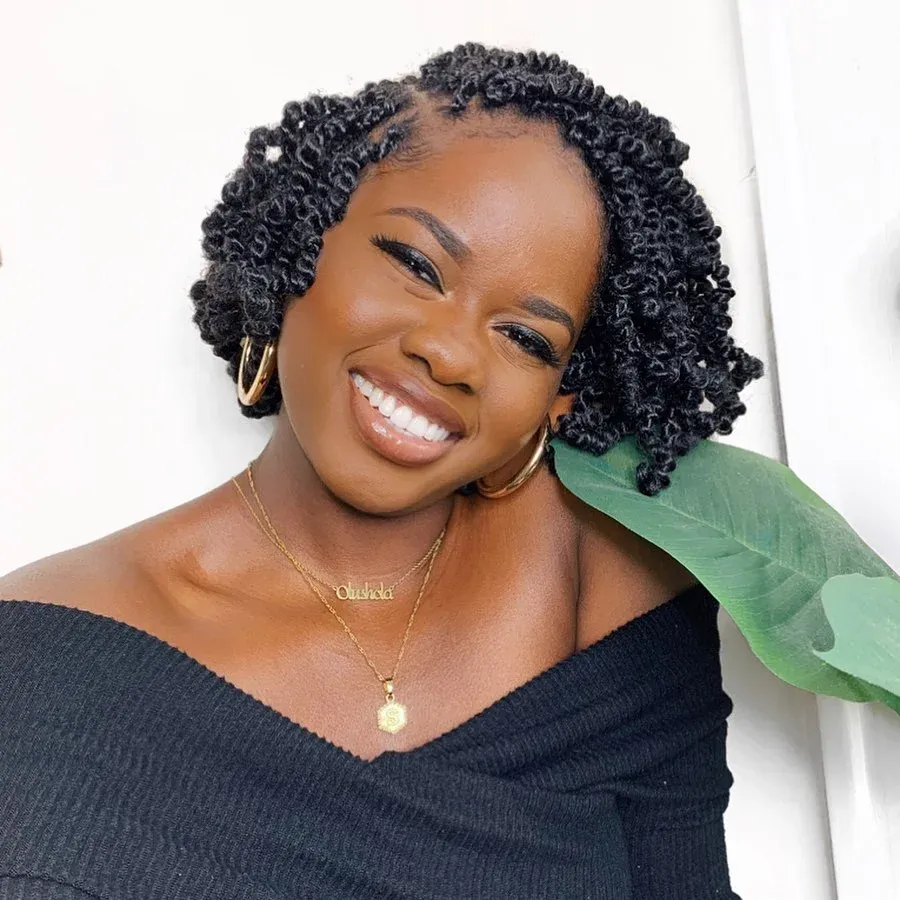
Source: olushola_
If your natural curls sometimes lose their definition after a few days, a twist-out can bring them back to life. This short, rounded style gives your coils more visible shape and volume without relying on heat. It’s a beautiful low-manipulation look, although the ends remain exposed rather than fully tucked away.
It starts as two strand twists, worn for a day or two, then unravelled to release the coils. That gives definition without heat every day, and the short length keeps the coils tight and bouncy instead of stretched out by their own weight over time.
Short twist outs need a pick at the roots to keep the shape full, and a scarf at night to keep the coils defined. Waves between the coils give the style its texture, and a little cream on the ends keeps the coils soft and defined.
17. Beaded Box Braid Bob
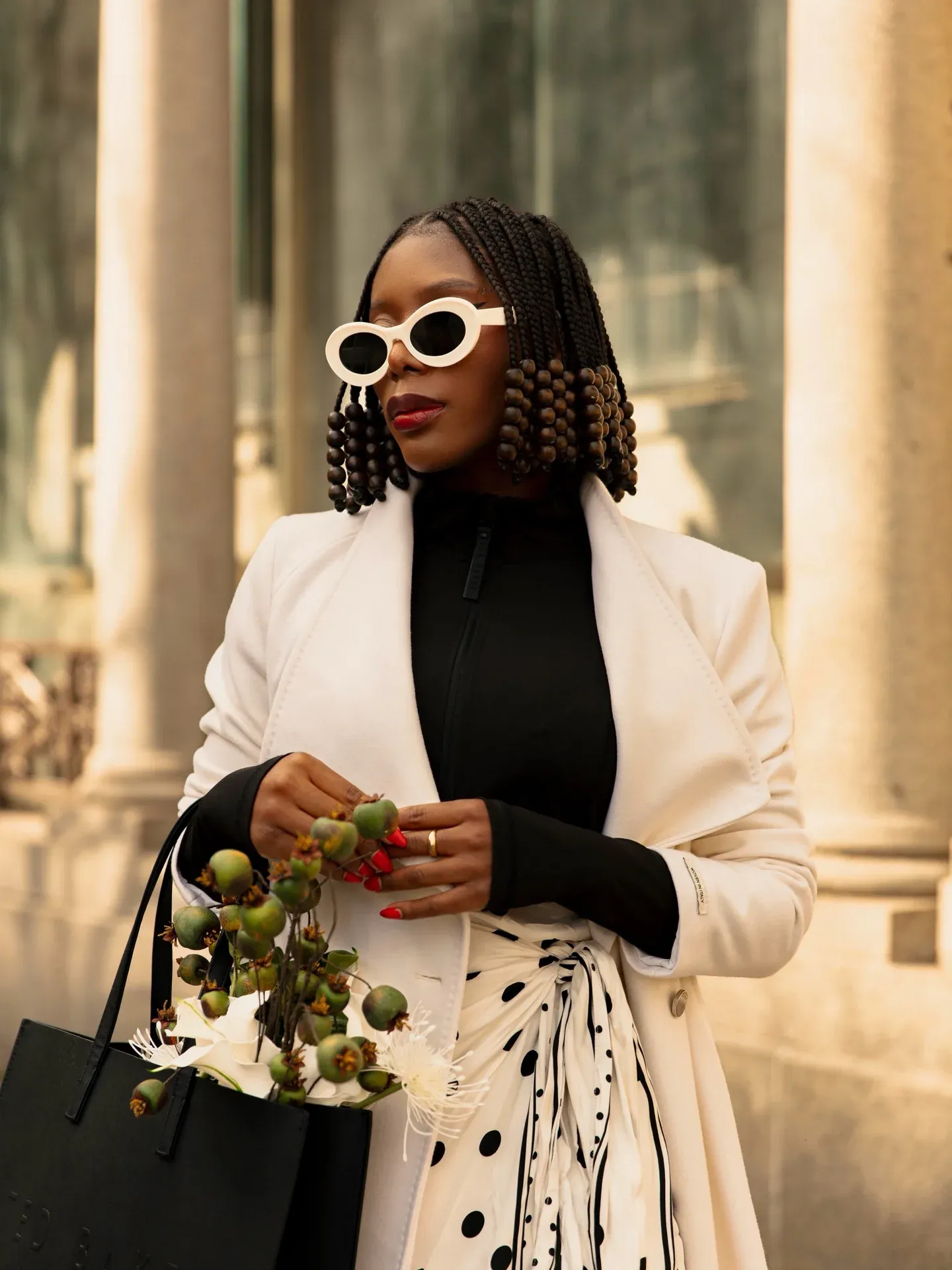
Source: beezybraidsza_
Long braids aren’t the only way to make a protective style stand out. A beaded box braid bob gives you a shorter shape with little decorative details that make the hairstyle feel more personal. It’s particularly appealing if you want something that won’t constantly fall over your winter coat.
Box braids in a bob length suit fine hair well, since the short length keeps the weight light and the scalp free of strain. Beads bring weight at the ends, which keeps the braids hanging straight instead of sticking out at odd angles all day.
A beaded bob needs no styling in the morning beyond a quick shake. Moisturize the scalp along the parts twice a week, and the short length means the ends never catch on scarves or coat collars through the winter. The beads do the decorating.
18. Stitch Braids with Curls

Source: thekrayzeeklub
Can’t decide between sleek braids and soft, flowing curls? This combination brings both textures into one hairstyle, with defined stitch braids at the front and loose curls adding movement at the back. It’s a beautiful choice when you want a more detailed look, though the exposed curls still need extra winter care.
Stitch braids are feed in braids with a clean, raised pattern stitched onto the scalp. Curly lengths behind them are left loose, which gives the style its softness, and the waves in the curls catch the light with every step. That front frames the face cleanly.
A braided front needs no daily work, and the curly lengths need only a little cream scrunched through the ends. Goddess braids work the same way, with loose curly pieces woven through the braids for a softer, more romantic finish. That finish suits evenings out best.
19. Flat Twist Curly Updo
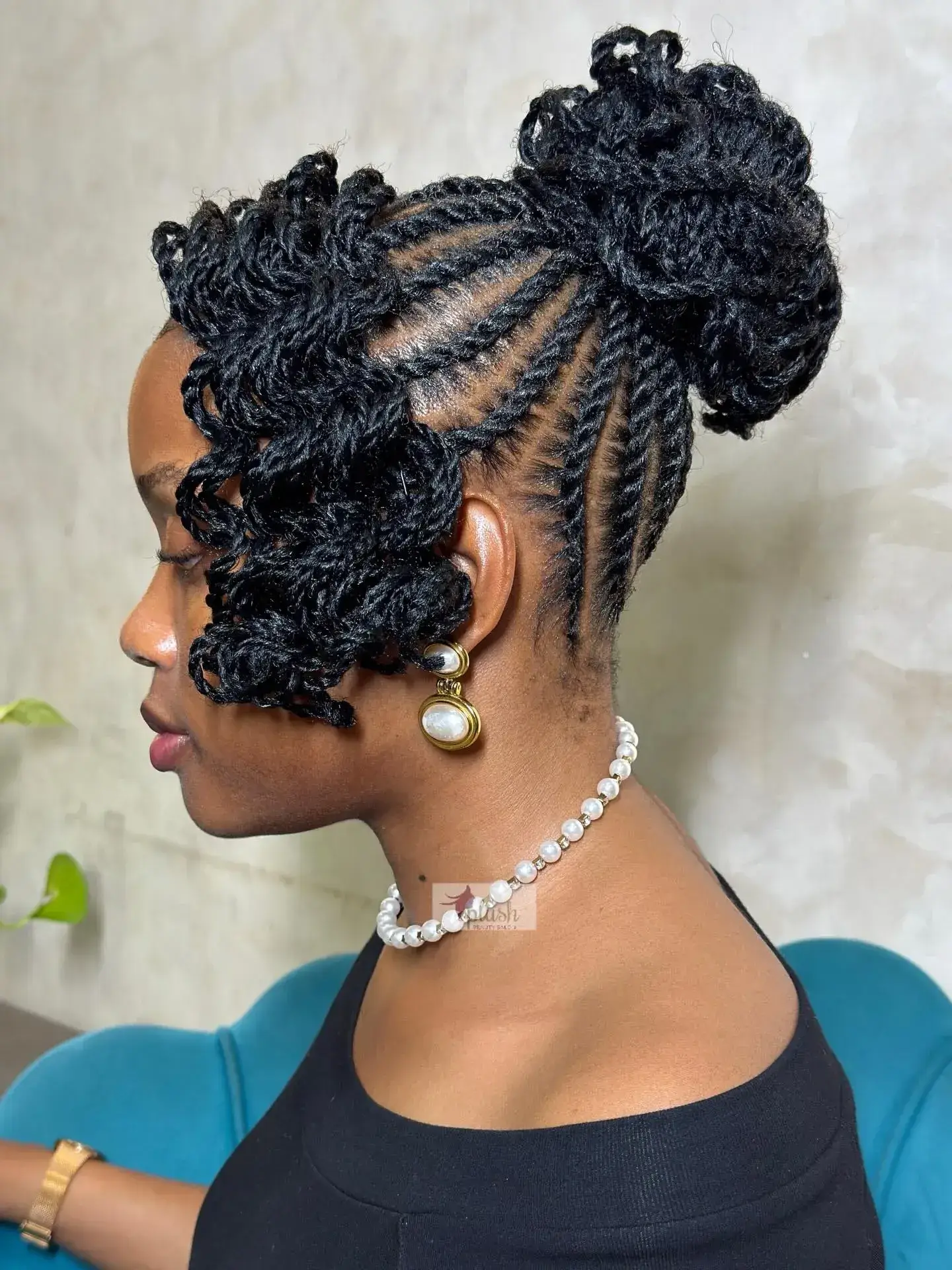
Source: plush_naturalhairtz
Want an updo that feels a little softer than a traditional braided bun? Flat twists create a neat foundation, while the curly section adds fullness and texture on top. It’s a lovely combination when you want your hairstyle to look polished without feeling too severe.
Flat twists lie closer to the scalp than braids, which gives this updo its smooth base on any hair type. A curly bun on top is the contrast, full and soft, and the combination of sleek rows and a soft bun is what makes the style work.
This updo holds with no restyling at all. Brush the edges smooth in the morning, pin any loose ends back into the bun, and the style stays neat through work, wind, and the coldest evenings of the year. It suits formal evenings as well.
20. Long Swirl Stitch Braids
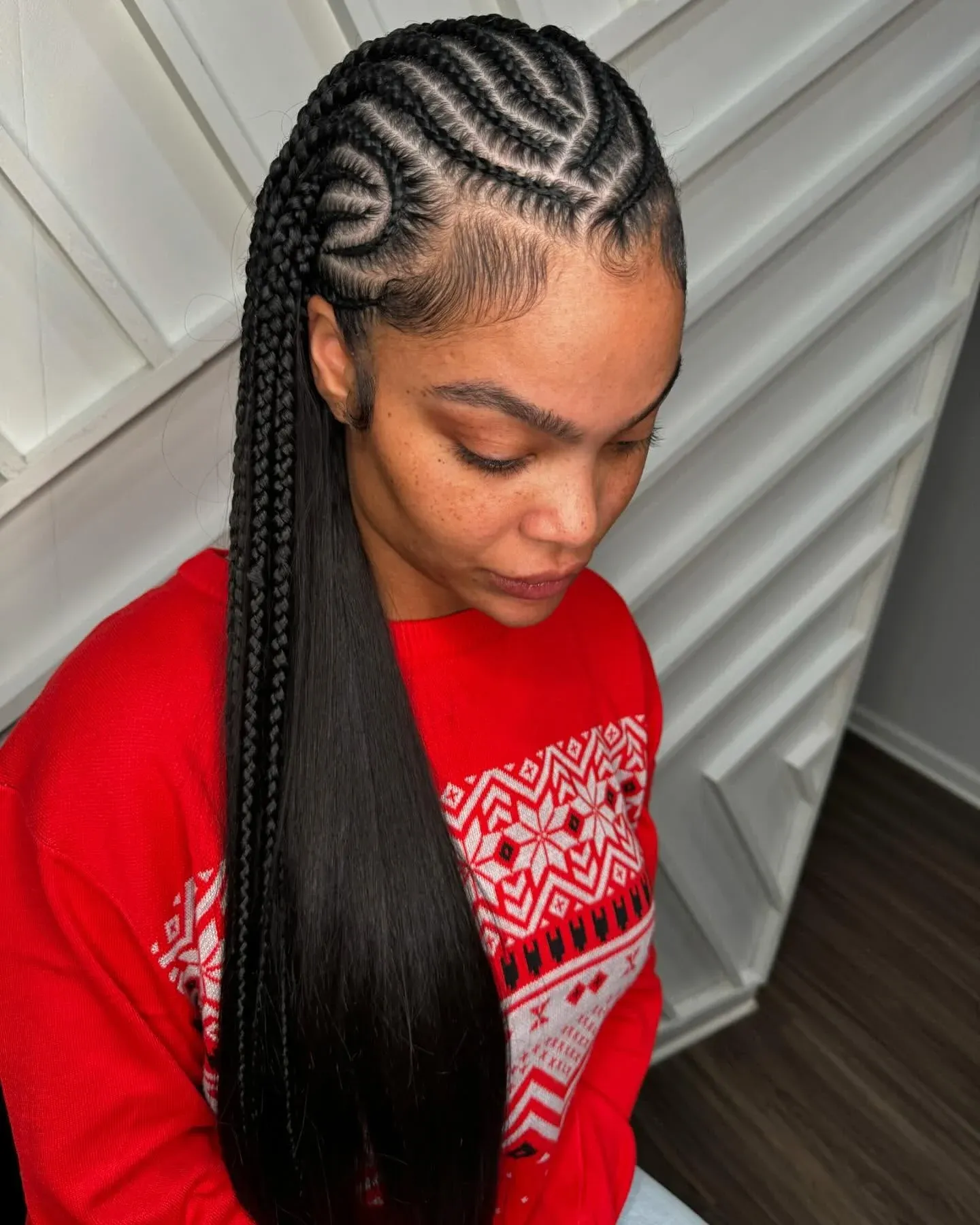
Source: qualitybycologne
Plain straight-back braids can feel a little predictable when you’re looking for something new. Swirl stitch braids add interesting patterns across the scalp while keeping the lengths neatly braided. The detailed design makes this style especially appealing if you enjoy hairstyles that look beautiful from the back as well.
Stitch braids get their name from the clean, raised lines stitched onto the scalp. Swirl patterns here take real skill, and the long straight lengths behind them give the style its drama, falling well past the shoulders. Braids sit flat and neat from root to tip.
Stitch braids need almost no daily work. Lengths can be tied up, swept to one side, or left loose, and the braided base keeps the scalp neat and the ends protected from wind and wool right through winter, all season long. Scalp oil twice a week helps.
21. Cornrow Low Ponytail
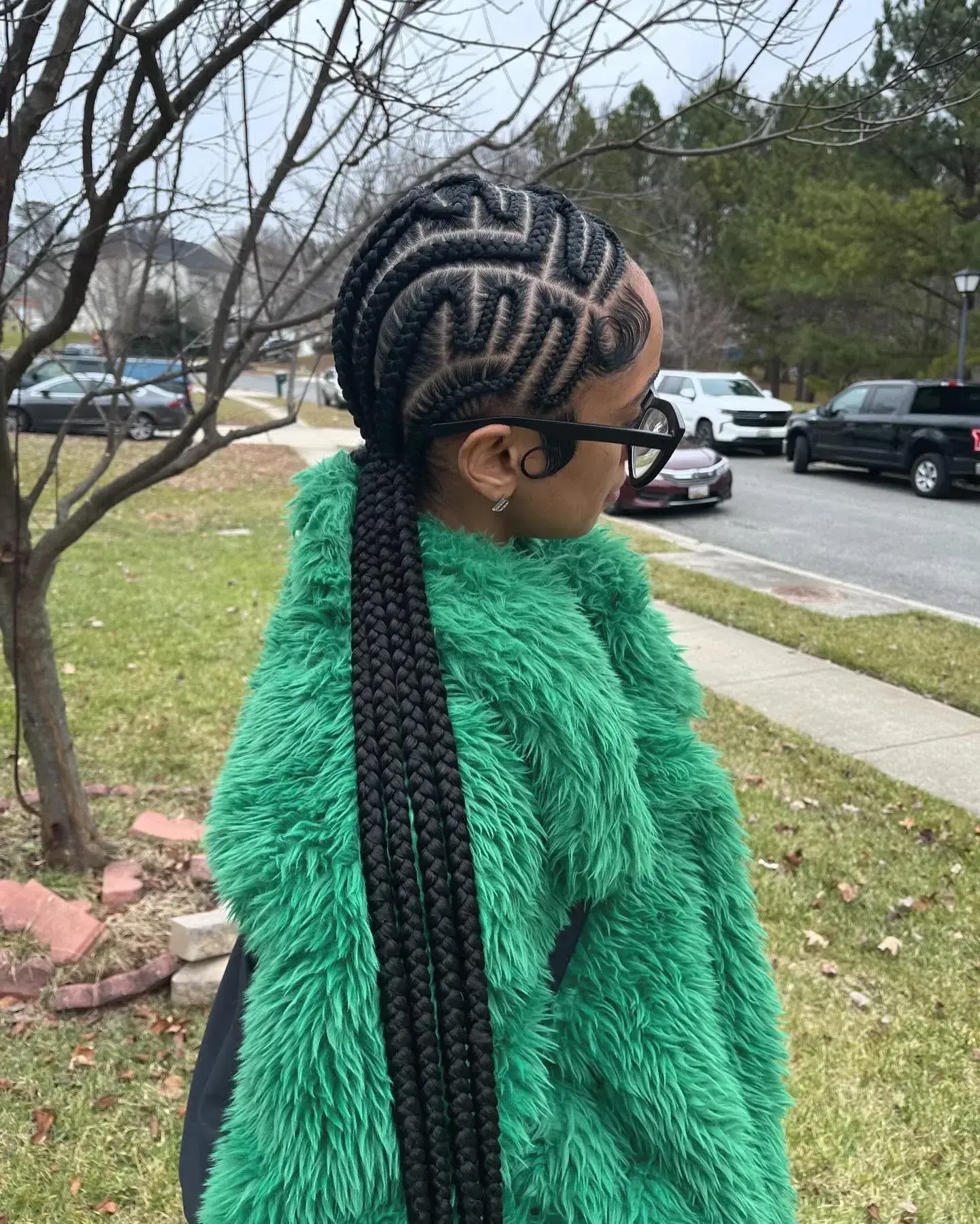
Source: yooabagail
If you prefer keeping your hair away from your face but don’t love the height of a high ponytail, this lower version may suit you better. Cornrows create a neat foundation, while the gathered lengths give you a simple style that’s easy to wear. It also sits comfortably below many winter hats.
Braids hold the hair flat against the scalp, which is what makes the ponytail sit so neatly at the back. Lengths fall straight and smooth, and the low placement keeps the weight off the hairline where tight styles do damage. That ponytail swings as you move.
A cornrow ponytail needs no restyling for days. Tidy the edges in the morning, and the lengths stay neat through work and wind, while the low ponytail keeps the ends tucked below the collar and away from scarves and coats. It suits busy weekdays best.
22. Braided High Ponytail
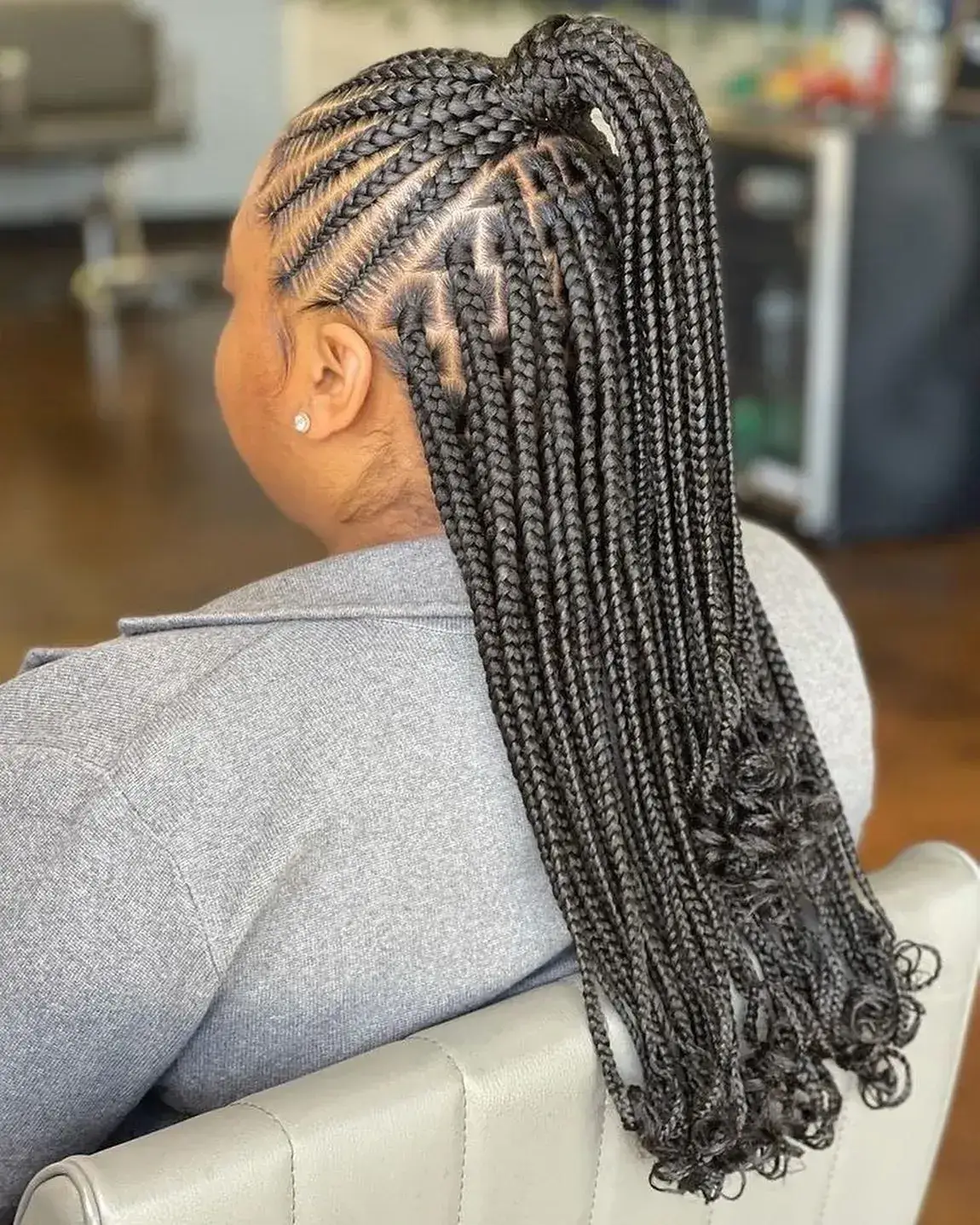
Source: cindyfashionparis
Some days, you want a hairstyle that makes you feel dressed up even when your outfit is fairly simple. A braided high ponytail adds height, movement, and a little drama without requiring loose hair all around your shoulders. The curly ends make the finished look even more eye-catching.
High placement is what sets this ponytail apart from a low one. It lifts the face, shows off the neck, and keeps the lengths clear of coat collars, while the waves in the curly ends give the ponytail movement with every step, all day long.
A braided high ponytail holds its shape with no restyling. A braided base keeps the sides smooth, the ponytail swings free, and the curly ends need only a little cream to keep the waves defined through the week. It needs no heat at all.
23. Shoulder Length Curly Twists
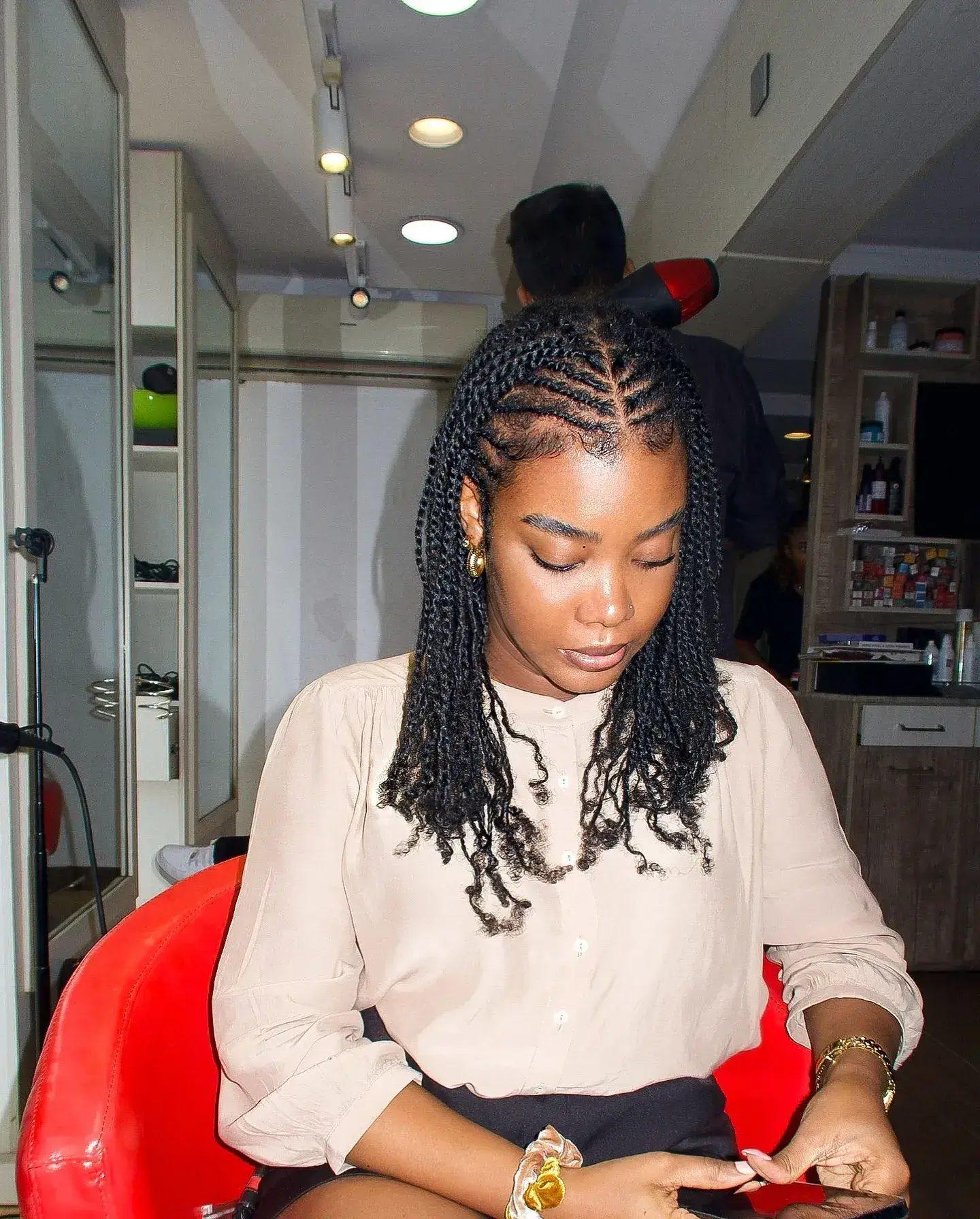
Source: crystalmaduka
If you like the texture of twists but find completely straight ends a little too plain, curly finishes can make all the difference. Shoulder-length twists keep the overall shape manageable, while the curled ends add softness and movement. It’s a lovely way to get a little more personality from a familiar protective style.
Passion twists work the same way, with a soft, springy texture that weighs less than regular twists. Curly ends here do the same job, loosening the outline and giving the lengths movement, while the twisted roots keep the style protective. Twists sit light all day.
These twists are easy to live with every day. Lengths sit clear of coat collars, the waves in the curly ends need only a scrunch of cream, and a scarf at night keeps the twists neat through winter with nothing more. Spray the scalp every few days.
Winter Protective Hairstyles for Natural Hair
Natural hair needs a little extra attention during colder months, especially when dry air and heavy winter clothing cause friction. Styles such as flat twists, chunky two-strand twists, Bantu knots, and tucked-up buns can help keep delicate ends protected without relying on extensions.
If you prefer wearing your own hair, choose a style that doesn’t require frequent restyling or excessive tension around the edges. Keep your hair moisturized before installation, and use a satin scarf or bonnet at night to reduce friction while you sleep. A protective style should make your routine easier, not leave your scalp feeling sore or uncomfortable.
Protective Hairstyles for 4C Hair in Winter
4C hair has a tightly coiled texture that can be more vulnerable to breakage when it becomes dry or is handled roughly. Winter protective styles such as chunky twists, flat twists, cornrows, and Bantu knots offer ways to keep the ends contained while reducing everyday manipulation.
Before installing a style, gently detangle your hair in sections and apply a moisturizing leave-in conditioner. Avoid making twists or braids too tight, particularly around the temples and hairline. If you choose extensions, consider their weight and how much tension they place on your natural hair. Comfort and scalp health should always come before how long the style lasts.
Easy Winter Protective Hairstyles Without Extensions
You don’t need extensions to enjoy the benefits of a protective hairstyle. Your natural hair can be styled into flat twists, chunky two-strand twists, Bantu knots, and tucked-up buns that keep the ends secured and reduce the need for daily manipulation.
These options are especially useful if you want to give your hair a break from added extension weight. Start with moisturized, gently detangled hair, divide it into manageable sections, and secure the ends without pulling tightly. You can also switch between different natural protective styles instead of repeatedly wearing the same arrangement.
Low-Maintenance Protective Hairstyles for Winter
When winter mornings are already busy, a hairstyle that doesn’t require much daily attention can be a welcome change. Cornrows, crochet braids, medium-sized twists, and braided buns are practical choices because they reduce the amount of styling needed each morning.
However, low maintenance doesn’t mean ignoring your hair. Clean your scalp when needed, moisturize your natural hair, protect your style at night, and watch for signs of buildup or excessive tension. Take the style down if it starts causing discomfort rather than keeping it in just to extend its lifespan.
How to Keep Natural Hair Moisturized in Protective Styles
Keeping natural hair moisturized is an important part of wearing protective styles during winter. Cold weather and indoor heating can leave hair feeling dry, but simply applying more oil won’t replace the moisture your strands need.
- Moisturize regularly: Use a lightweight water-based leave-in conditioner suitable for your hair.
- Seal the ends: Apply a small amount of suitable oil or cream after moisturizing if your hair responds well to it.
- Protect at night: Sleep in a satin bonnet or use a satin pillowcase.
- Clean your scalp: Remove buildup when needed using a suitable gentle cleanser.
- Avoid excessive tension: Tight braids and twists can cause unnecessary stress around the hairline.
- Give your hair breaks: Allow your scalp and strands to recover between installations.
A consistent routine is more useful than layering several heavy products onto your hair.
How to Protect Braids and Twists Under Winter Hats
Winter hats and scarves can create friction against braids, twists, and exposed natural hair. Rough wool fabrics may catch on individual strands, create frizz, and cause unnecessary pulling around the hairline.
A satin-lined beanie or a satin scarf underneath your regular winter hat can help reduce that friction. Choose a hat that fits comfortably rather than pressing tightly against your hairstyle. If you wear long braids, loosely gather them before putting on a coat or scarf so they don’t become tangled in clothing.
How Long Should You Keep a Protective Style In?
There isn’t one ideal wear time for every protective hairstyle. It depends on the installation method, your natural hair condition, scalp comfort, and how well you maintain the style.
Some simple natural hairstyles can be refreshed after a few days, while extension-based styles may last longer. Avoid treating eight weeks as a target for every installation. If you notice persistent itching, soreness, excessive shedding, buildup, or thinning around your edges, remove the style and assess your hair and scalp.
Frequently Asked Questions
What is the best protective hairstyle for winter?
Braids, twists, and faux locs are among the best, since they tuck the ends away from cold air, wool, and friction. Choose a medium size and length so the style stays comfortable under hats, and pick the one that fits your hair type and your routine.
How long should you keep braids in during winter?
Most braids last four to eight weeks with good care, and knotless braids usually hold for up to six weeks. Take them down sooner if the scalp itches, the parts turn fuzzy, or buildup gathers at the roots, since leaving them in too long causes breakage.
Do protective hairstyles make your hair grow?
Protective styles do not make hair grow faster, but they cut breakage, which means you keep more of the length your hair produces. Less handling, tucked ends, and sealed moisture all work toward longer hair over time, and that is the point of protecting it.
How do you keep your scalp moisturised under braids?
Oil the scalp twice a week with a light oil, applied along the parts with your fingertips or a nozzle bottle. Mist the lengths with water and leave in conditioner, and avoid heavy products that gather at the roots and cause buildup over time.
Can you wear a hat over braids and twists?
Yes, and a satin lined hat is the best choice, since wool and knit fabrics catch on braids and cause frizz and breakage. Choose a medium size and length for your style so it sits comfortably under the hat without squashing the shape or pulling the edges.
What are the best winter protective hairstyles without extensions?
Flat twists, two-strand twists, Bantu knots, and tucked-up buns are good options if you prefer using your natural hair. They reduce daily manipulation and can help keep your ends protected without adding extension weight.
Which protective hairstyles work best for short natural hair?
Mini twists, flat twists, Bantu knots, and short cornrows are practical options for shorter natural hair. Choose a style that works with your current length without pulling tightly on the roots.
How can I prevent hair breakage while wearing protective styles?
Keep your hair moisturized, avoid tight installations, protect it with satin at night, and remove styles gently. Don’t leave extensions in longer than your hair and scalp can comfortably tolerate.
Conclusion
Winter is the season to give your hair a break. Braids, twists, knots, and updos all do the same quiet work, tucking the ends away, cutting down handling, and holding moisture in while the cold air does its worst outside. Hair underneath stays safe and soft.
Choose the style that fits your hair, your budget, and your patience, then enjoy the weeks of easy mornings that come with it. Your best protective style is one that makes winter easier, and this list gives you twenty three ways to find it.